
Last updated: July 2026 · Written by the team at Badminton House
Quick Answer: When to Step Back
If your junior still loves training but seems tense around your feedback, stay supportive while giving decisions back to the athlete and coach.
Step back
Best choice: stop technical coaching from the sideline, ask before giving advice, and judge the day by effort, recovery, and attitude.
Stay close
Use when your child asks for help: handle logistics, meals, sleep, and encouragement without owning selections, tactics, or goals.
Intervene
Use only for safety, injury, bullying, or unhealthy pressure; then speak calmly with the coach away from the court.
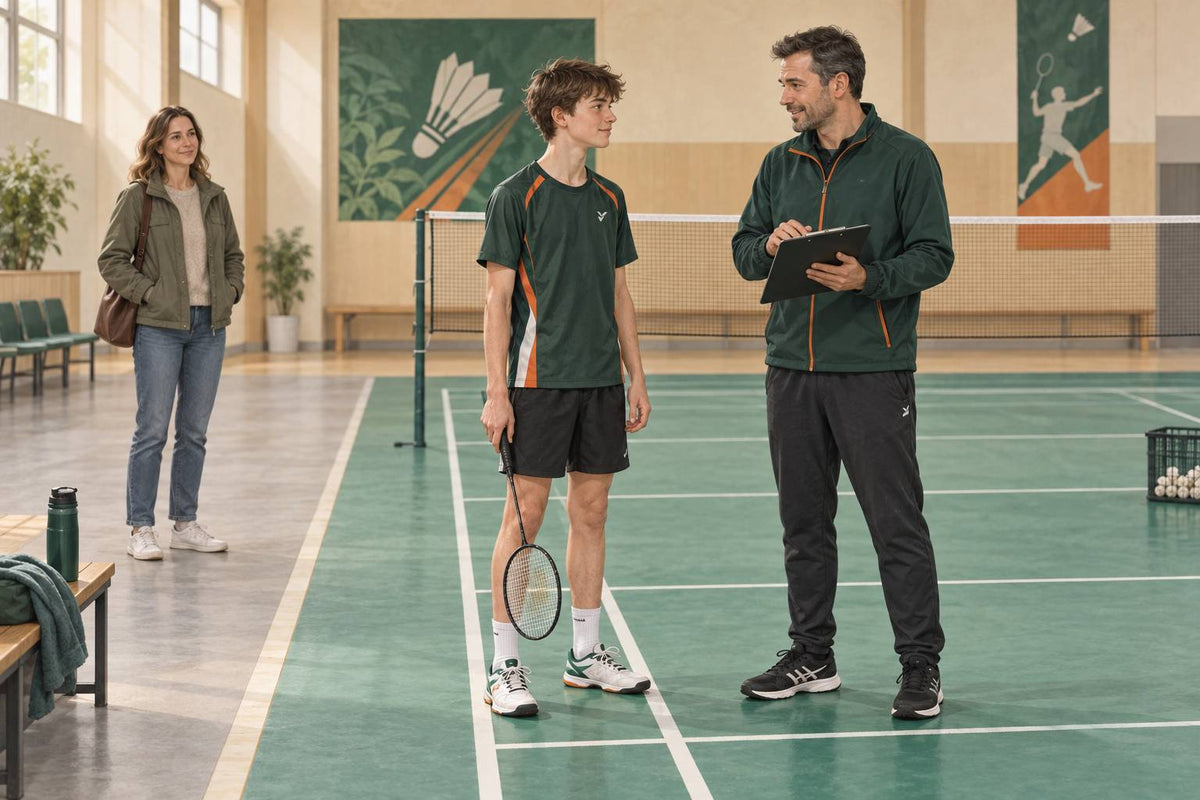
At junior tournaments, the hardest parent skill is often silence. You see the loose grip, the rushed lift, the coachable mistake after a loss — and every instinct says to fix it now. But a competitive junior still needs the match to feel like their match. If every ride home becomes a technical review, over-coaching can become a family pattern: more reminders, less ownership, more pressure around results.
Let the player lead. Even small choices — which grip feels right, which drill to repeat, whether to enter a weekend event — belong to the athlete first. Practising that habit on the small stuff makes the bigger boundary conversations easier later.
In This Guide
Why stepping back can help a serious junior

Stepping back does not mean caring less. Zhu, Li & Tang’s 2025 badminton study, “Effect of family life quality on youth badminton athletes’ identity and achievement,” surveyed 111 high-school badminton athletes aged 14–18 using the Athlete Identity Measurement Scale and the Family Quality of Life Scale. The study found an association between family quality of life and athlete achievement, with athlete identity acting as a statistical mediator; a survey cannot establish that one caused the other.
The practical message for a competitive badminton parent is surprisingly restrained: create a home environment where the junior has room to grow, rather than adding more attention, reminders, and pressure around every result. The study specifically points toward giving athletes more freedom and avoiding too much attention to their own affairs. It also stresses that the amount of support matters less than whether the athlete actually experiences it as supportive. For many serious juniors, that means less managing from the sideline and more calm psychological care.
Badminton parent over-coaching competitive junior: signs to watch

Over-coaching rarely starts as control. It often starts as commitment: lessons, travel, extra sessions, video notes, private feedback. The warning sign is when that investment turns the junior’s badminton into a stress ledger.
- Wins and losses become the scorecard. If every match feels like proof that the time, money, and effort were “worth it,” the athlete may feel judged instead of supported.
- The player feels trapped. Watch for “I have to play” language, fear of disappointing adults, or staying in training mainly because quitting would upset someone else.
- More training brings worse output. Burnout is physical and mental exhaustion from increased stress, with declining performance despite ongoing training. Overload, shortened recovery, and poor sleep are red flags; see the badminton recovery guide for recovery basics.
- Pressure stacks up from several places. Parental pressure, negative coaching behaviours, anxiety, perfectionism, and identity issues can combine until badminton feels like a test of the child’s worth.
Set boundaries at tournaments, especially after losses

Tournament days are often where supportive parents struggle most: not in getting a child to the venue, but in what happens after a flat performance, a tight loss, or a match that looked careless from the sideline.
Treat the first hour after a loss as recovery time, not a coaching window. The car ride home is a known flashpoint—the “worst 30 minutes in sports” for many families—because silence, sighs, steering-wheel frustration, or a forced technical debrief can feel like another defeat. Unless you are genuinely equipped to give technical badminton feedback, leave stroke choices, tactics, and footwork analysis for the coach.
A better boundary is simple: ask whether they want to talk now, later, or not at all. If you do speak, comment on effort, attitude, composure, and sportsmanship rather than the score or missed shots. Competitive juniors still need to learn how losses feel. Families can support the downturn without trying to remove it; some disappointment, anger, and embarrassment belong to the athlete to process.
Support without taking ownership of the career

The better replacement for over-coaching is not silence; it is support the athlete actually experiences as support. After a flat training block or painful loss, start with encouragement and presence: “I’m proud of how you kept fighting,” or “Do you want to talk about it later?” Then respect the answer. If your junior has asked you not to analyze tactics, argue with coaches, or hover around teammates, treat that as a boundary, not rejection.
The same research flags a detail worth knowing if you are raising a daughter in the sport: female athletes tend to report lower sport identification than male athletes but higher anxiety, so families of female competitive juniors may need to lean harder on spiritual and emotional care rather than logistics or advice.
The final ownership test is participation. Parents can fund, drive, schedule, and listen — but the junior should still decide whether this season, event, pathway, or piece of gear is theirs.
Decision helper: which role fits this week?
Use this as a role check before training blocks, tournament days, and the car ride home.
| Choose this role | Best when | Parent role |
|---|---|---|
| Step back | Your junior is motivated but seems weighed down by scrutiny, outcome talk, or constant technical correction. | Ask one open question, offer encouragement, then let the coach-athlete process lead. |
| Stay present | They want you nearby after losses or low moods, but not managing tactics, friendships, or participation decisions. | Comment on effort and attitude; keep technical feedback for the coach unless you are truly qualified. |
| Intervene gently | You notice anxiety, feeling trapped, overtraining signs, injury risk, or identity tied too tightly to results. | Pause the schedule conversation and prioritize psychological care, recovery, and shared decision-making. |
Explain the agreed role clearly, and revisit it with the athlete and coach when the situation or the athlete’s needs change.
Get 10% off your first order
Join the Badminton House list and we’ll email you a 10% welcome code — plus training guides, technique advice, and badminton updates.
By subscribing, you agree to receive Badminton House emails and can unsubscribe anytime.
As players ourselves, we know how hard it is to care deeply without crowding the athlete. If you want a second opinion on badminton gear or a parent-friendly setup question, contact us and we’ll help you think it through calmly.
Let your junior lead the next gear choice.
If a new racket is part of the plan, invite them to compare weight, balance, and feel first.
Browse Badminton RacketsCheck live availability and choose together without rushing the decision.


Leave a comment
This site is protected by hCaptcha and the hCaptcha Privacy Policy and Terms of Service apply.