
Last checked: August 2026 · Written by the player-led team at Badminton House
Quick answer: badminton breathing technique
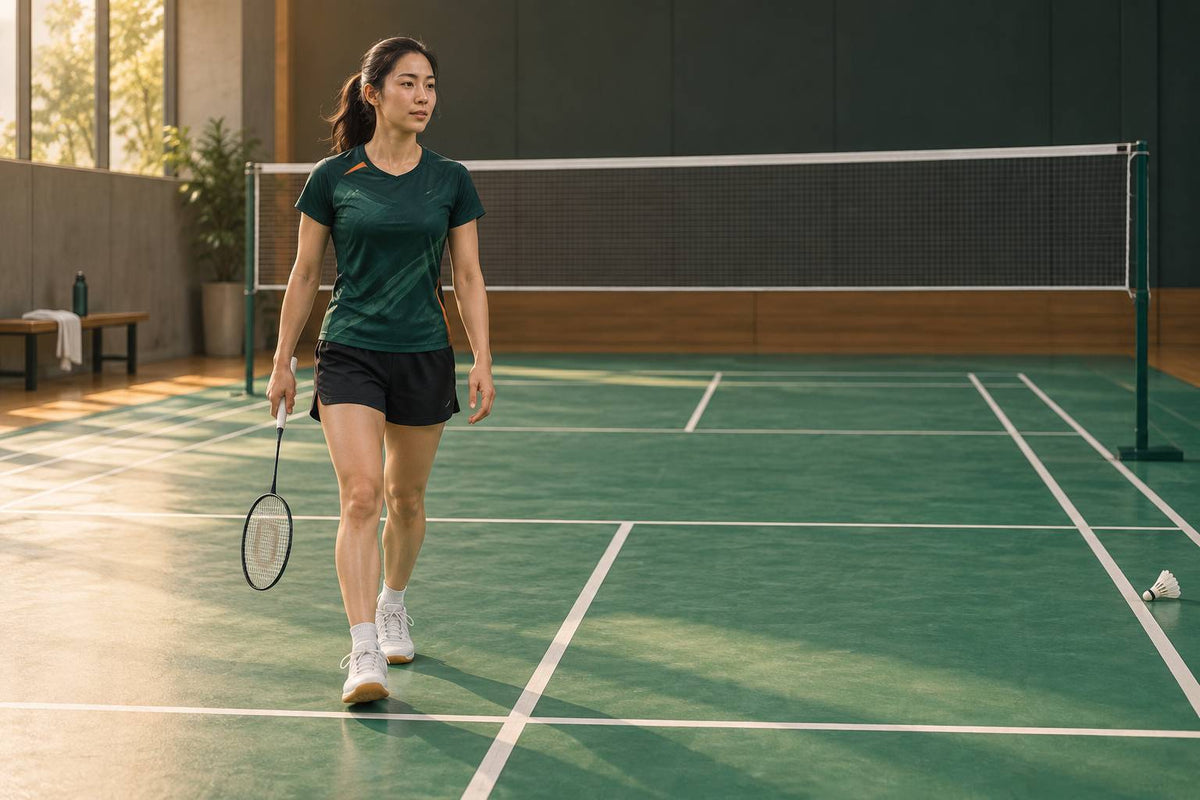
Use breathing as a low-distraction rhythm cue. Let a soft exhale leave on a hard effort when it fits, then use a comfortable longer-exhale reset while you collect the shuttle and return to position. Do not force every breath, hold your breath to hit harder, or use breathing as a reason to extend the break.
During play
Use one cue: a quiet exhale as effort rises, then put your attention back on the shuttle and your next movement.
Between rallies
Walk, let your shoulders drop, then use a gentle inhale and a slightly longer exhale until you are ready to serve or receive.
Stop cue
Chest pain, faintness, dizziness, very uncomfortable breathlessness, or an irregular heartbeat are not technique problems to breathe through.
A useful badminton breathing technique should make the next action simpler. It should not ask you to count through a smash, stare at your chest, or chase a promise of instant recovery. The practical target is smaller: notice an accidental hold, release it, and arrive at the next rally with your attention available for badminton.
Keep the scope clear: this guide is about respiratory rhythm and pacing. For the broader habit of noticing breath-holding without chasing a perfect pattern, see our practical badminton breathing rhythm guide.
Why can hard hitting interrupt your breathing rhythm?
Hard strokes can interrupt breathing because the trunk, grip, timing and impact all compete for attention at once. That does not mean every hard shot requires a fixed exhale. It means an accidental breath-hold is worth noticing, especially when several overheads, lunges, or late defensive shots arrive in one rally.
The closest direct evidence is from tennis, not badminton. In a 2025 study of 15 elite tennis players, breathing plateaus appeared more often in ball-machine tennis stages than in treadmill running matched for oxygen uptake. The researchers found the difference while overall oxygen uptake and several general breathing measures were similar, which points to the hitting task itself as part of the disruption. Read the tennis respiration study.
Do not turn that result into a claim that badminton has the same measured pattern or that one breath cue improves power. Use it as a sensible reason to check your own rhythm. If your shoulders rise, your jaw clamps, or your next inhale arrives only after the shuttle is already away, you may be stacking effort on top of a hold.
Start with a single phrase: “exhale through effort.” On a smash, fast clear, defensive lift, or deep lunge, let a small unforced breath leave if the timing allows. The cue is successful when it keeps you moving naturally. If it makes you late, noisy, tense, or focused on counting instead of the shuttle, drop it and return to ordinary breathing.
How should you practise an exhale-on-effort cue?
Practise the cue below match speed first. Shadow work and predictable feeds let you notice whether the exhale arrives with effort without sacrificing contact, balance, or recovery. Once the cue feels unremarkable, keep it for one short game rather than trying to regulate an entire club night.
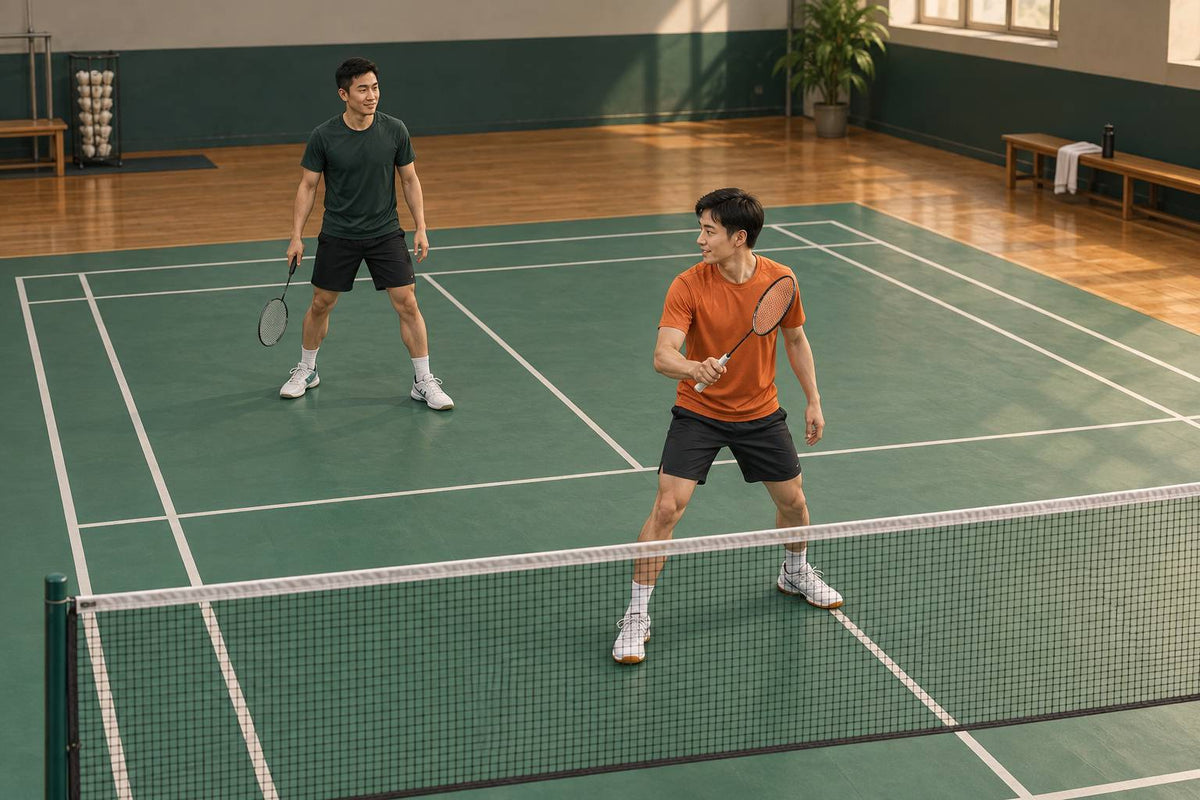
- Shadow one movement. Choose a rear-court overhead or a forecourt lunge. Make six to eight relaxed repetitions. Let a small exhale leave near the effort, then return to base with normal breathing.
- Add a predictable feed. Ask for the same safe feed at a pace where you can still finish balanced. Your only check is whether the exhale is quiet and optional.
- Add one recovery movement. Hit, recover, and say the next landing zone to yourself. This prevents the cue from becoming the whole drill. Good breathing leaves room for a good next decision.
- Test it in a short game. Use the cue only on hard overhead efforts for one game. Afterwards, ask whether it helped you notice holds or simply gave you another task. Keep only the version that stays out of the way.
Avoid forcing a big theatrical exhale. A loud breath can change your timing, distract another player, and make you rush the stroke. The useful version may be almost silent. Its job is to make breathing easier to notice, not to announce effort or manufacture power.
This is also why nose-versus-mouth rules are rarely useful in a rally. Use the route that lets you breathe comfortably at the pace you are actually playing. Between rallies, a gentler nasal inhale may feel comfortable for some players, but it is a preference rather than a badge of fitness.
What is a useful between-rally breathing reset?
A between-rally reset works when it fits inside the ordinary return to position. Use the walk to collect or receive the shuttle, a relaxed shoulder drop, and one or two comfortable breaths with the exhale a little longer than the inhale. Stop the reset as soon as you need to prepare for service or receive.
| Moment | Simple action | What to avoid |
|---|---|---|
| Rally ends | Release the jaw and hands while you turn toward the shuttle. | Standing still to complete a count. |
| Walk back | Try an easy two-count inhale and three- or four-count exhale if it stays comfortable. | A forced deep breath that creates light-headedness or tension. |
| Ready position | Stop counting, look at the server or receiver, and let normal breathing continue. | Using the routine after you should already be ready to play. |
The count is only a practice tool. If two in and four out feels strained, shorten it. If you need only one uncounted exhale while returning to position, use that instead. A repeatable reset should reduce extra effort, not become a test you fail after a long rally.
In a formal match, keep this reset inside normal continuous play unless an official has allowed an interval under the Laws. The current BWF Laws permit up to 60 seconds when a leading score reaches 11 and up to 120 seconds between games. In wheelchair badminton, they also allow one additional interval during a match for catheterisation. The Laws otherwise prohibit delaying play to recover strength or wind. Use an official interval to drink, towel, breathe normally, and return ready; do not manufacture a longer pause because your breathing routine has another round to complete. Read the current BWF Laws.
When should you stop treating breathing as a technique problem?
Breathing cues are for normal training effort, not for pushing through symptoms that need assessment. Stop the session for chest pain or tightness, faintness, dizziness, an irregular or pounding heartbeat, or breathlessness that stops you speaking comfortably. If symptoms are severe, new, unexplained, or do not settle promptly, seek appropriate medical help rather than repeating the drill. See the NHS exercise-safety advice.
Players with a respiratory, cardiac, or other health condition should follow the plan already agreed with their qualified clinician. A court-side breath count cannot diagnose asthma, exercise-induced breathing problems, anxiety, or poor fitness. For the same reason, do not turn an unusually hard session into a self-test. Record what happened, stop when appropriate, and get advice suited to your history.
Inspiratory-muscle training is a separate training intervention, not a replacement for this between-rally habit. A systematic review found improvements in inspiratory-muscle measures in most included athlete studies, while also noting small samples and varied protocols. That makes it a topic to discuss with a qualified coach or clinician when it is relevant to a wider programme, not a reason to buy a device or copy an online protocol. Read the respiratory-muscle training review.
Use this next session
- Choose one hard movement for a quiet optional exhale cue.
- Use one longer-exhale reset while walking back after each rally.
- Stop counting before you take your service or receive position.
- After the session, keep the cue only if it made your rhythm easier without taking attention from play.

Leave a comment
This site is protected by hCaptcha and the hCaptcha Privacy Policy and Terms of Service apply.