
Last checked: August 2026 · Written by the player-led team at Badminton House
Quick answer
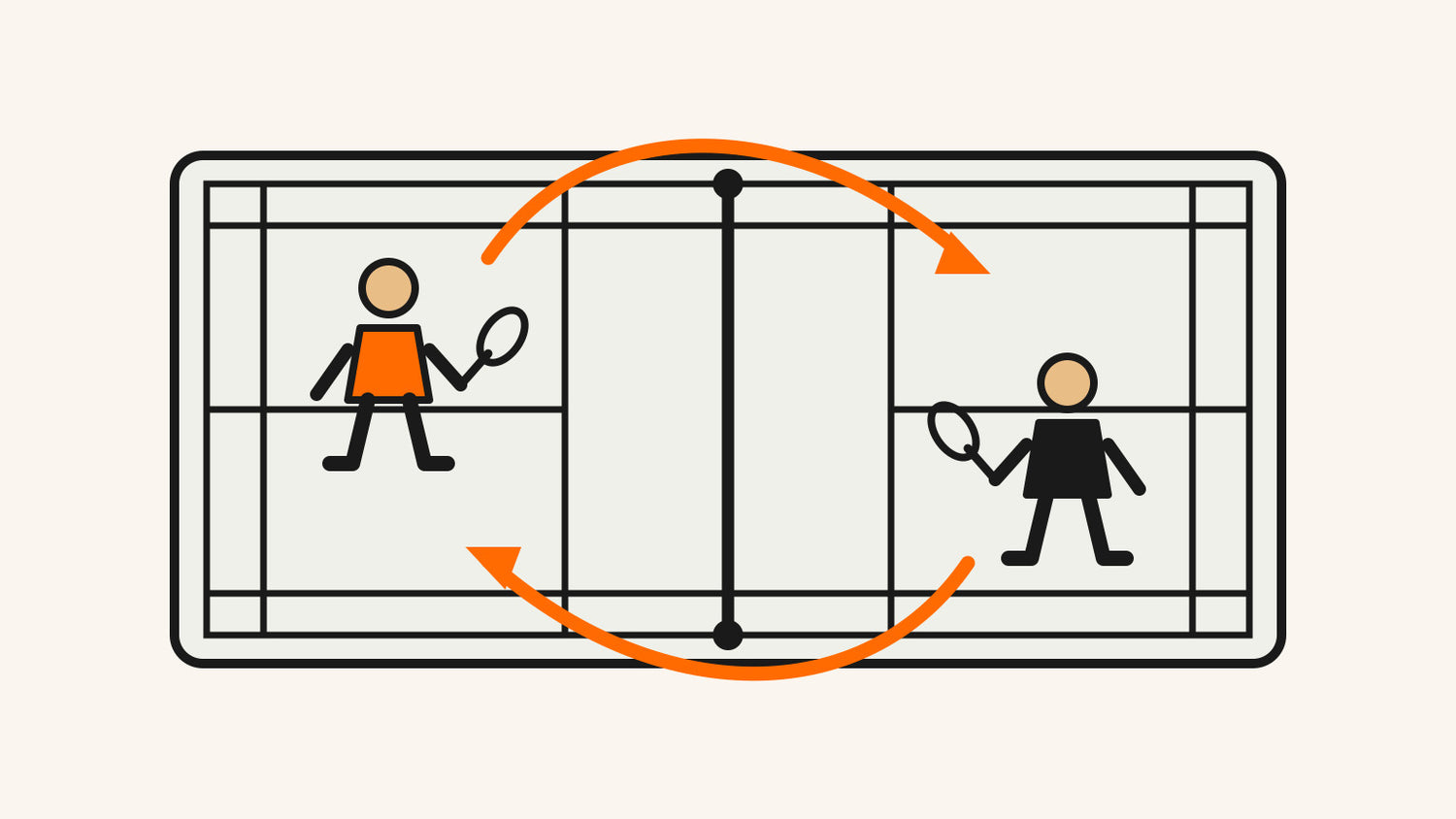
Under the BWF Laws in force from 26 April 2025, players change ends after the first game, after the second game if a third will be played, and when a side first reaches 11 in a non-handicap third game. If the change is missed, correct it while the shuttle is not in play and keep the score.
Start with Change ends after completed games
Treat changing ends as a match-state check, not a replay. Under the BWF Laws in force from 26 April 2025, players change after the first game, after the second if a third is played, and when a side first reaches 11 in a non-handicap third game. A missed change is corrected while the shuttle is not in play, with the score left intact.
- At the end of the first game, change ends before the next game begins.
- If a non-handicap third game is played, change ends after the second game and when a side first reaches 11 in the third.
- If the change was missed, wait until the shuttle is not in play before correcting it.
- Keep the score and do not treat a correction as a replay of prior rallies; consult the applicable handicap rule when that exception applies.
Related reading: Badminton Umpire Calls Explained: Service Over, Fault, Let and Out — for the live-match vocabulary around corrections and decisions.
Change ends after completed games
Under the BWF Laws in force from 26 April 2025, players change ends after game one and after game two only if a third game will be played. Those between-game changes are separate from the third-game change described in the next section. BWF Laws of Badminton

The first two changes belong to completed game boundaries. In non-handicap play, the third-game change belongs to the moment a side first reaches 11, which is a different match state from the interval between games. Law 8.1.3 separately identifies Handicap Matches as an exception.
Use the third-game 11-point change in non-handicap play
In a third game under the BWF Laws in force from 26 April 2025, other than a Handicap Match, players change ends when a side first scores 11 points; Law 8.1.3 makes that handicap-match exception explicit. BWF Laws of Badminton

A missed change does not rewrite the rallies already played. The Law says to correct it when the shuttle is not in play and lets the existing score stand, so a club should not turn the correction into a local replay or a score adjustment.
Correct a missed change without changing the score
If the required end change was missed, correct it as soon as discovered while the shuttle is not in play and leave the score unchanged. BWF vocabulary includes the call Change ends; Law 8.2 gives the correction timing and says the existing score stands. BWF Laws of Badminton and BWF vocabulary

Changing ends and the next game’s service sequence are separate matters. This guide does not add a service instruction beyond the cited change-of-ends rules.
Use this distinction on court
Think of end changes as checkpoints in the match sequence, not as a vague halfway signal. Before play begins, make sure both sides know which game is first and which conditions will trigger the next change. The important distinction is between the completed-game changes and the special third-game change. Naming those separately makes it easier to notice the moment without turning every pause into an argument about sides. A simple between-game routine can keep the rule visible. When a game ends, confirm whether another game will be played, collect what is needed, and move to the appropriate end before play resumes. If the match reaches a third game, treat the score point that triggers the additional change as a separate check. This is especially useful when players are focused on the score or returning from a short interval; the check is a reminder, not a new scoring event. If everyone notices a missed change, keep the correction narrow. Wait for the shuttle not to be in play, move to the correct ends, and leave the score as it stands. There is no need to reconstruct earlier rallies through a club-made replay procedure. If an officiated event is in progress, take the live direction from the appointed official instead of attempting to negotiate an alternative process between players. For club play, a neutral reminder before a deciding game can be helpful, but it should not be mistaken for a replacement rule. The practical purpose is to help players follow the current match state with less disruption. Keep the server and score questions separate from the end-change question, and return to ordinary play after the correction. That leaves the current scoring sequence visible to both sides throughout.
Questions the cited sources do not settle
- A club-specific reminder, replay, or restart procedure after a missed end change.
- The specific change-of-ends arrangement for a Handicap Match.
- A local service instruction beyond the cited change-of-ends rules.
What to do next
In a standard match, change ends after game one, before game three, and at 11 in game three unless Handicap Match rules apply. If an error is found, pause when the shuttle is not in play, change ends, keep the existing score, and resume ordinary play.

Leave a comment
This site is protected by hCaptcha and the hCaptcha Privacy Policy and Terms of Service apply.