
Last updated: July 2026 · Written by the team at Badminton House
Quick Answer: Badminton Jumper's Knee
If knee pain builds around jump smashes, treat it as a load problem first: reduce painful spikes, check landing mechanics, and get assessed if symptoms persist.
Default
Best next step: Temporarily reduce jump-smash volume and rebuild with guided, progressive tendon loading, not complete rest.
Landing
Use softer, longer landings with more knee bend instead of stiff single-leg landings after rear-court attacks.
Assess
If pain is sharp, sudden, or unlike your usual overuse pattern, see a clinician to rule out ligament or meniscus injury.
That ache just below your kneecap after jump smashes is worth taking seriously—especially if it warms up, then returns when you load the knee again. In badminton, patellar tendinopathy is usually a repeated-load problem: takeoffs, single-leg landings, fast recovery steps, and a sudden jump in training can exceed what the tendon is ready to tolerate. It is different from a twist, pop, or locking feeling that may need a clinician to rule out ligament or meniscus injury. The useful starting point is not panic or total rest; it is tracking load, landing softer, and rebuilding tendon capacity progressively.
In This Guide
Badminton jumper's knee patellar tendinopathy: what it is

Jumper's knee is the common name for patellar tendinopathy: an overuse condition involving the tendon that connects the kneecap to the shinbone. It is linked to repeated energy storage-and-release actions, especially jumping, landing, sprinting, stopping, and changing direction.
In badminton, symptoms often appear when the tendon is asked to handle more load than it is currently prepared for. That increase can be sudden, such as adding more jump smashes or extra sessions, or gradual, such as playing through fatigue week after week.
Patellar tendinopathy is a frequent cause of anterior knee pain in jumping athletes. The classic pattern is localized tenderness around the patellar tendon and activity-related pain during knee-extensor loading: movements where the quadriceps work hard, such as jumping, landing, squatting, or pushing out of a deep lunge.
Why jump smashes load the patellar tendon

In badminton, the jump smash is not just an arm action. The take-off asks the knee extensors to control and produce force, including eccentric loading as the leg moves through flexion before extension. Then the landing has to be absorbed quickly so you can recover for the next shot. Smash landing is a common attacking movement, and the knee and ankle are the main joints absorbing impact at foot contact.
The riskier part is that a badminton jump smash often finishes on one leg rather than two. As landing height increases, peak vertical ground reaction force also increases, which raises load through the lower-limb joints. A stiff landing with less than 30 degrees of knee flexion has also been associated with greater knee abduction angle and higher injury risk. For technique context, see the badminton jump smash guide.
How to recognize the pattern without self-diagnosing

Think in patterns, not labels. Patellar tendinopathy is typically activity-related pain at the front of the knee, with a localized tender spot around the patellar tendon. In badminton, the pattern often shows up when the knee extensors are asked to work hard: jump-smash take-offs, single-leg landings, repeated recovery steps, or pushing up from a deep lunge.
That does not mean every anterior knee pain is “jumper’s knee.” Meniscus and ligament problems can also create knee pain, and clinical assessments for anterior knee pain routinely include rule-out tests for those sources, such as Apley’s and McMurray’s tests for meniscal injury and valgus/varus stress tests for the collateral ligaments.
Use recognition to make a smarter next decision: reduce provocative loading and get assessed if the pain persists, escalates, or changes how you move on court. Sudden pain with an inability to straighten the knee after a landing is a different problem: that suggests a tendon tear, so stop play and seek urgent medical assessment rather than self-managing it as jumper's knee.
Load management and prevention cues for badminton players

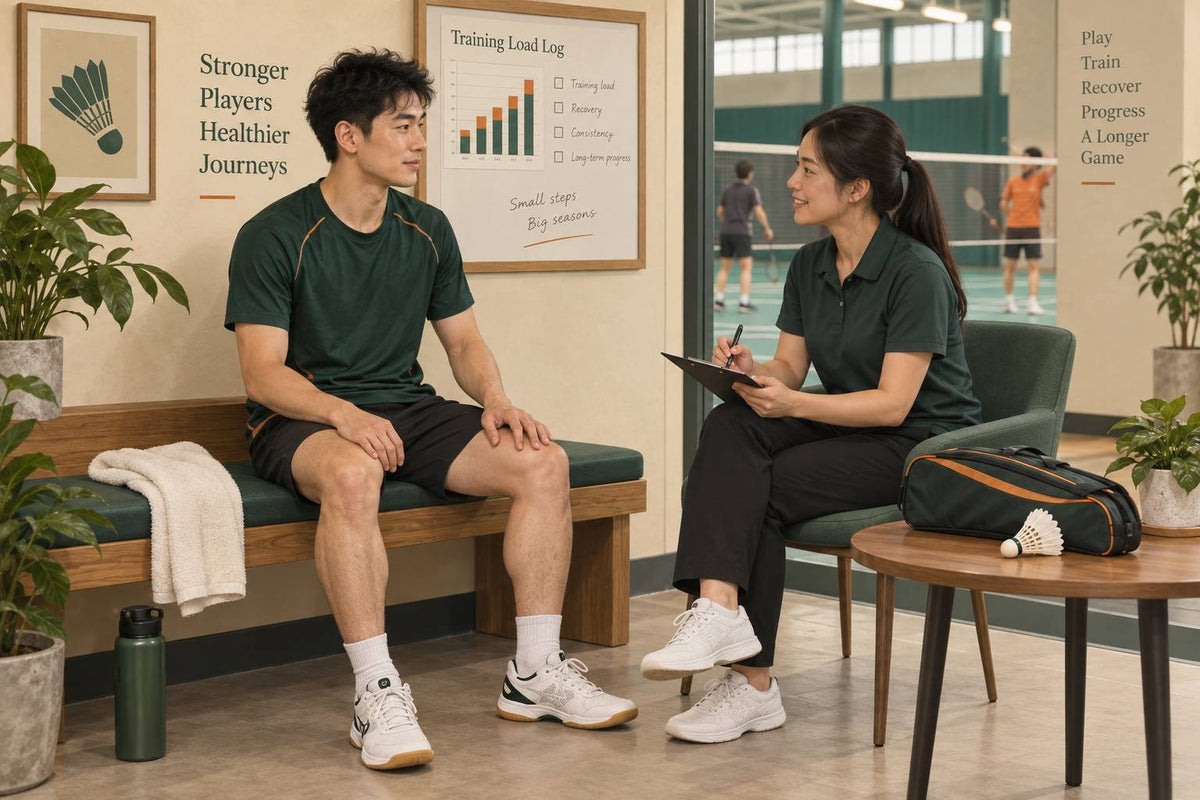
Think of prevention as keeping weekly badminton load close to what your patellar tendon is already prepared to tolerate. The common mistake is not one jump smash; it is a sudden spike: extra matches, more rear-court jumping, harder multi-shuttle, or added gym jumps without a gradual bridge.
Exercise loading should be progressive, not random. Eccentric loading is considered first-line for patellar tendinopathy, and modern tendon-loading plans often move in stages: isometric holds, isotonic strength work, explosive loading, then sport-specific badminton movements. The move to the next stage should match symptoms, strength, and court tolerance, not the calendar.
- Land less stiff: soften first contact so landing time is slightly longer or ground reaction force is lower, while still recovering to base.
- Train both sides of the knee: include neuromuscular work for knee flexors and extensors to support takeoff, landing, and braking.
- Plan easier weeks before pain forces them; use the badminton recovery guide to structure rest and deloads.
Risk factors and court setup details worth noticing

Risk is not one thing. Patellar tendinopathy is reported most often in males, with higher incidence among adolescents and young adults. Across jumping sports, prevalence rises as repeated takeoffs and landings dominate: one review reported 6.1% in soccer, 20.8% in basketball, and 24.8% in volleyball. That does not mean badminton players should copy volleyball training assumptions; it means jump-smash volume, recovery, and pain response deserve attention.
Court setup also matters. Athletes playing on concrete have been reported with higher prevalence, 38%, than those on other surfaces, 20%, so notice what is under the mat, not just how grippy the top layer feels. Worn-flat or sliding shoes reduce cushioning and stability at the exact moment of jump-smash landing, which is one more reason to replace footwear before it becomes part of the load problem. Keep the bigger picture restrained: evidence is limited or conflicting for modifiable factors such as ankle dorsiflexion, quadriceps flexibility, jump-training volume, and total activity volume.
Which Should You Choose?
Use this as a badminton-specific decision aid, not a diagnosis. The key question is whether your tendon is tolerating the current jump, landing, and direction-change load.
| Situation | Choose | Why |
|---|---|---|
| Pain is mild and predictable with heavy jump-smash days | Reduce jump volume and rebuild progressively | Symptoms often begin when load rises beyond the tendon’s current capacity. |
| Pain is localized at the patellar tendon and worsens with knee-extensor loading | Use a structured loading plan with professional guidance | Eccentric loading is a first-line approach; progressive tendon loading moves from isometric to sport-specific stages. |
| Pain follows a twist, collision, or unclear knee event | Get assessed before treating it as jumper’s knee | Clinical knee exams may rule out meniscal or ligament sources of pain. |
Get 10% off your first order
Join the Badminton House list and we’ll email you a 10% welcome code — plus training guides, technique advice, and badminton updates.
By subscribing, you agree to receive Badminton House emails and can unsubscribe anytime.
We play badminton ourselves, so we treat knee-load topics as performance conversations, not fear tactics. If your symptoms are changing how you train, play, or recover, get assessed by a qualified clinician and use us for practical gear questions around court setup, shoes, and returning to play sensibly. Contact Badminton House for advice when you want a second set of player eyes.
Support your next landing setup
Explore badminton footwear for cushioning and stable foot contact during court movement.
Check Live Footwear Availability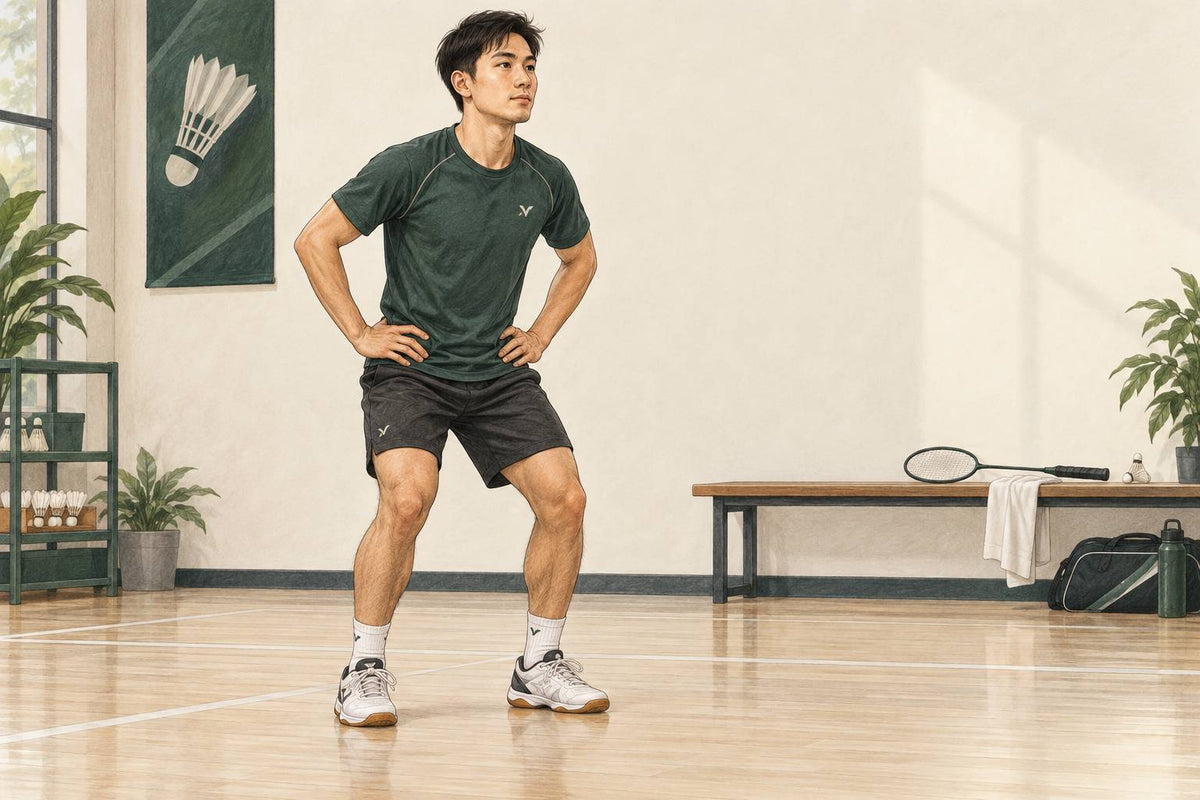

Leave a comment
This site is protected by hCaptcha and the hCaptcha Privacy Policy and Terms of Service apply.