
Last updated: July 2026 · Written by the team at Badminton House
Quick Answer: Hong Kong Badminton Culture
Read Hong Kong’s court-booking scramble as a space-and-demand story: badminton is hugely popular, but prime courts are limited.
Core
Best lens: court access explains the 7am booking pressure, real-name rules, and anti-touting crackdowns.
Culture
Badminton’s appeal cuts across ages and levels, from casual public-court play to organized competition.
System
SmartPLAY, quotas, and penalties show how seriously Hong Kong manages scarce recreation space.
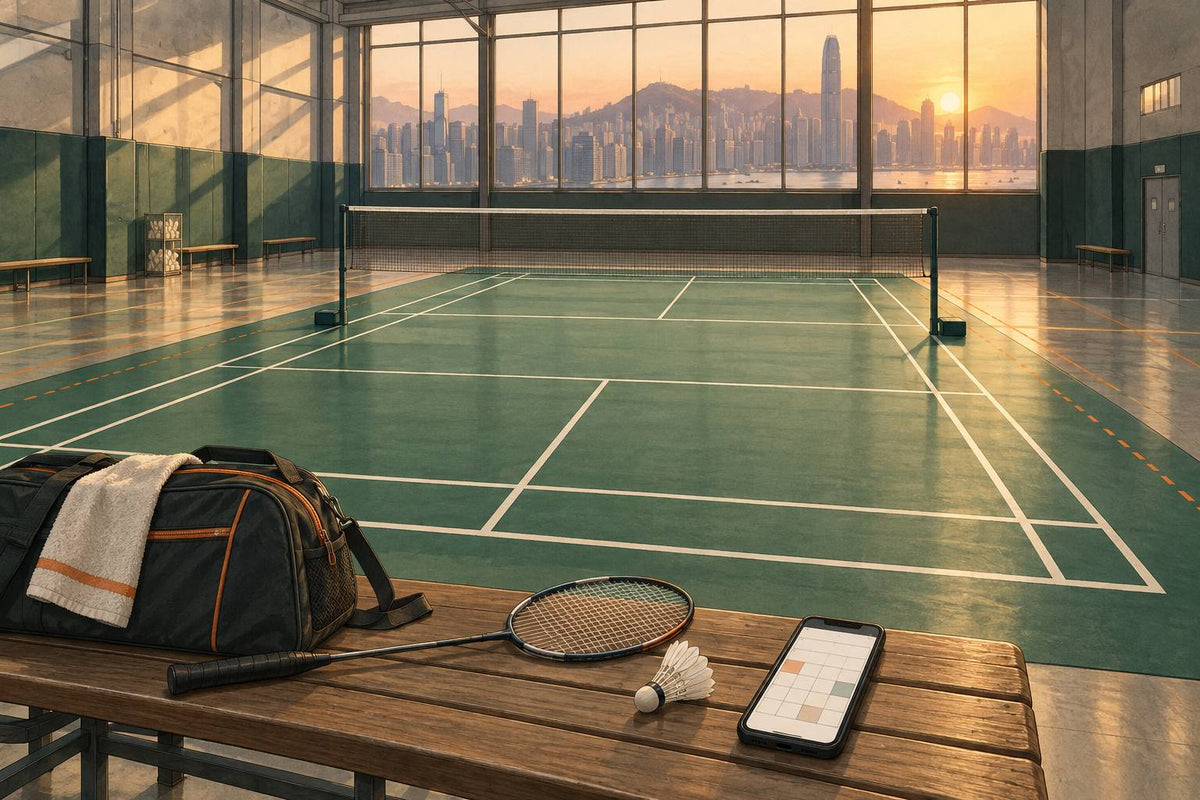
Hong Kong’s badminton culture includes the effort of securing court time. Strong demand for public venues has shaped LCSD booking quotas, identity checks and anti-touting rules. The practical details matter: since July 2026, the early booking window depends on how a user signs in, not simply whether the booking is online.
In This Guide
Why badminton is so big in Hong Kong

Badminton is widely played in Hong Kong, from recreational sessions to organized competition. The pressure around popular public-court slots shows why access deserves attention alongside the sport itself.
Part of the appeal is cultural and practical at the same time. Badminton spans generations, works for recreational players and competitive athletes, and can be played in a relatively compact indoor space. Hong Kong’s badminton ecosystem includes public sports centres, private clubs, and school gyms, while the Hong Kong Badminton Association governs the sport and organizes events from local tournaments to international competitions. That broad base matters: booking pressure is not just a tech problem or a policy problem. It starts with a huge player population trying to share limited court time.
Limited space and the LCSD booking pressure

“Venues are limited in Hong Kong, and the number of badminton players has always been large, so we have to strike an appropriate balance,” a Legislative Council member said when discussing pressure on sports venue allocation. That sentence captures the practical root of the city’s badminton booking culture: public court time is not just popular; it is rationed by design because demand keeps pressing against available space.
The Leisure and Cultural Services Department, or LCSD, manages Hong Kong’s public sports venues and sets the booking rules for individual hirers. For fee-charging facilities, the daily quota is a maximum of two hours of play per day during peak hours for the same type of facility across all venues; during non-peak hours, it is also a maximum of two hours for the same type of facility at an individual venue. In other words, LCSD policy reflects scarcity before a player even starts searching for an open slot.
From overnight queues to SmartPLAY


The booking scramble moved from venue counters to SmartPLAY. Under LCSD’s measure effective 7 July 2026, users logging into the My SmartPLAY app through iAM Smart can book facilities available within seven days from 7am. Other app logins, the website, self-service stations and counters start at 7:15am. Users under 11 retain 7am app access because iAM Smart is for ages 11 and above.
SmartPLAY also makes the hirer harder to hide. The enhanced iAM Smart login checks strengthen identity verification; users must not give their accounts to someone else for booking. If a hirer has not taken up a session 10 minutes after start time, the court is immediately reallocated to walk-in players. If they cannot use a fee-charging booking, they must cancel at least one day before the day of use.
Even concessions are controlled. A student using a badminton court with an adult must pay the normal rate; failing to top up the shortfall before check-in can mean a 90-day suspension of booking rights.
Scalpers, bots, and anti-touting crackdowns

The pressure around public court access has produced a real anti-touting arms race. SmartPLAY added a legally binding declaration that hirers will not transfer booked sessions to someone else. Enforcement has gone beyond warnings: suspected sports-facility scalpers have been arrested, and identity-card impersonation at check-in has been prosecuted. In January 2024, one man who used another person’s identity card for a tennis court check-in and another who lent his card were each sentenced to 80 hours of community service.
The next escalation was automation. Authorities detected robot-operated SmartPLAY accounts booking public indoor sports venues, while reported scalper bots were entering the system within 10 seconds of bookings opening. In January 2026, LCSD explicitly banned computer programs or bots for venue booking, with violators facing 360-day account suspensions without prior notice. The additional-user requirement introduced in January 2026 applies to indoor basketball and volleyball bookings; it should not be assumed to be a badminton rule.
What the booking culture reveals about Hong Kong badminton culture

Hong Kong’s badminton booking culture is easy to frame as a scalper story, but touting is only the most visible symptom. A lawmaker put the root cause more plainly: the problem is a lack of facilities. Even if every reseller disappeared, experts have noted that full-time coaches and organized leagues would still compete with casual players for the same public court hours.
That pressure is also no longer only badminton-versus-badminton. Since 15 January 2025, designated non-fee charging outdoor badminton courts have been opened for pickleball activities under an LCSD trial, adding another claim on scarce space.
So the real story is a city where court time itself has become part of the sport, worth more effort to secure than almost anything a player brings onto it. Once players finally step on court, good badminton court etiquette matters just as much as the booking that got them there.
Which Should You Choose?
Use this decision lens if you are trying to understand—not copy—Hong Kong’s court routine: the best option is the one that keeps access legal and realistic.
| Choice | Choose this if | Watch-out |
|---|---|---|
| Authenticated app priority | You can use the authenticated app priority and meet the applicable quota. | Popular slots may vanish quickly. |
| Counter or kiosk | You prefer in-person booking and accept the 7:15am start. | Check the channel-specific opening time; early priority uses authenticated app access. |
| Walk-in backup | You are nearby enough to claim a no-show after 10 minutes. | Too uncertain for a fixed weekly session. |
| Group organizer | You coordinate attendance, check-in details, and shuttle supply. | The named account holder carries the liability if a session is misused. |
| Avoid touts/bots | You want the safest choice. | Transfers, ID sharing, and bots risk enforcement; bot violations can trigger a 360-day suspension. |
Get 10% off your first order
Join the Badminton House list and we’ll email you a 10% welcome code — plus training guides, technique advice, and badminton updates.
By subscribing, you agree to receive Badminton House emails and can unsubscribe anytime.
We play badminton too, so we read Hong Kong’s booking culture as players first: every hour on court has to be earned, protected, and used well. If you want practical gear advice for your own club nights, message us through contact and we’ll help you choose without overcomplicating it.
Getting ready for your next session?
Keep fresh shuttles in your bag so the rally quality matches the effort it took to get on court.
Check Shuttlecocks


Leave a comment
This site is protected by hCaptcha and the hCaptcha Privacy Policy and Terms of Service apply.