
Last updated: July 2026 · Written by the team at Badminton House
Quick Answer: Sports Boarding School Badminton Training
Use Bukit Jalil as a real-world model for how a boarding school can combine academics, hostel life, and national-level badminton development.
BJSS
Best lens: Malaysia's Bukit Jalil Sports School is a residential, selective, multi-sport school where badminton sits inside an academics-plus-elite-training routine.
Not camp
Key distinction: admission is talent-based through identification, scouting, and nominations, not a pay-and-join holiday program.
Takeaway
Practical use: copy the structure—planned training blocks, school support, coaching, and recovery habits—without assuming every player needs boarding school.
Bukit Jalil Sports School combines academic study, hostel life and structured sport development. For parents and juniors, the useful lesson is coordinated support rather than a prescription to copy elite training volume.
Building a more structured junior practice plan? Start with consistent coaching and movement quality first; if your player’s setup is holding them back, check live availability in our badminton racket collection.
In This Guide
- What sports boarding school badminton training looks like at Bukit Jalil
- Academics, hostels, and badminton inside a multi-sport school
- How selection, coaching, and the national pipeline fit together
- Badminton alumni: useful examples, with one important caution
- Portable takeaways for serious youth programs
- Which Path Should You Choose?
What sports boarding school badminton training looks like at Bukit Jalil

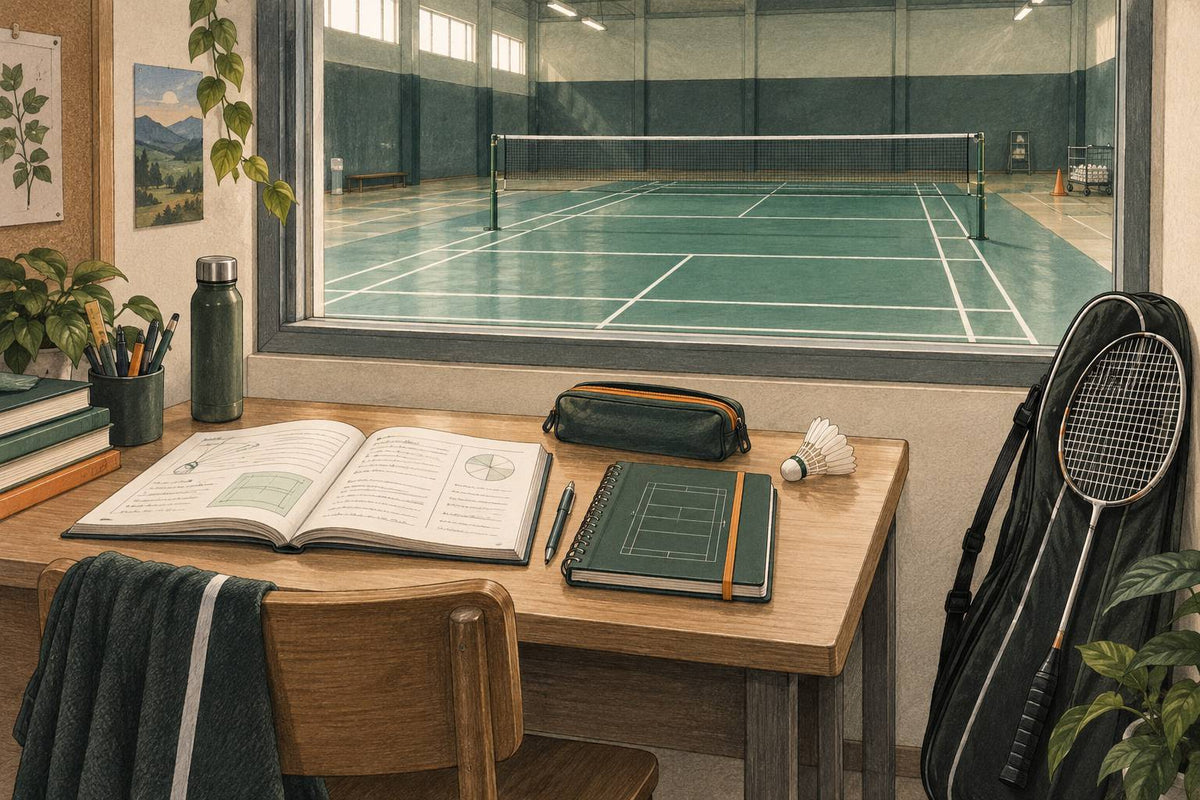
Bukit Jalil Sports School, also known as Sekolah Sukan Bukit Jalil or BJSS/SSBJ, is Malaysia’s pioneer elite national sports school. It sits inside the National Sports Complex compound in Bukit Jalil, Kuala Lumpur, which gives the school a very different feel from a normal secondary school with an after-class team.
Opened in 1996, BJSS operates as a full boarding institution under Malaysia’s Ministry of Education. Student-athletes live on campus, attend academic classes, and build their day around structured elite sports development. Badminton is one of the school’s sport programs, alongside many other disciplines, so the environment is multi-sport rather than badminton-only.
In practical terms, sports boarding school badminton training at Bukit Jalil means school life and training life are deliberately combined: classes, hostel routines, coaching, conditioning, and structured daily training all sit inside one residential system.
Academics, hostels, and badminton inside a multi-sport school

The key difference in a sports boarding school badminton training model is that badminton is built into the school day, not bolted on after regular classes. At Bukit Jalil Sports School, students live in hostels, attend academic lessons, and follow structured elite sport sessions as part of the same residential environment.
That matters because recovery, study time, meals, coaching, and training loads can be organized around the athlete’s week. A developing player is not rushing from a full school day to a late-night court booking; the sport and the classroom are designed to coexist.
Badminton is also only one stream inside a wider multi-sport school. Bukit Jalil has offered programs across disciplines including athletics, basketball, football, hockey, swimming, taekwondo, volleyball, and wushu. That makes the model less like a private badminton academy and more like a national residential school where several sports share an elite-development setting.
How selection, coaching, and the national pipeline fit together

BJSS is selective, not a pay-to-enter badminton academy. Student-athletes enter Malaysia’s sports-school system through talent identification, talent search and scouting, plus nomination by national sports associations and the National Sports Council. The Ministry of Education’s sports-school information sets out the school system and nomination route; selection depends on sporting need, places and athlete potential.
The target student is already representing the country, or is viewed as having the potential to do so. Once inside, badminton players train in a setting connected to the National Sports Complex, with access to Olympic-standard facilities managed by the National Sports Council. Coaching is described by BJSS as certified and world-class, including former national athletes, with modern tactics, movement science, and sports science built into the program.
BJSS has been described as a feeder stage in Malaysia’s badminton pathway. That is a development relationship, not a guarantee of senior selection or a fixed chart of today’s national-team organization.
Badminton alumni: useful examples, with one important caution

The clearest way to understand BJSS is not to treat it as a mystery academy, but as a documented step in several elite badminton pathways. Verified badminton names listed as having passed through Bukit Jalil Sports School include:
- Lee Zii Jia
- Aaron Chia
- Goh Liu Ying
- Soh Wooi Yik
- Pearly Tan
- Thinaah Muralitharan
Lee Zii Jia is the safest example to discuss in more detail because his BJSS pathway is independently corroborated: he began training at Bukit Jalil Sports School before joining the national team.
Important caution: do not call Lee Chong Wei a BJSS alumnus. His documented pathway was different: Misbun Sidek discovered him and drafted him into the national squad at 17.
Portable takeaways for serious youth programs

BJSS is one real example of a state-run residential sports-school model, not proof that boarding is the only or best pathway. Malaysia also has another sports school at Bandar Penawar, so Bukit Jalil fits inside a wider national approach rather than standing alone.
- Build a repeatable week: set training, match play, strength, and rest days before adding more volume.
- Coordinate school and sport expectations: juniors need adults aligned on homework, travel, fatigue, and tournament priorities.
- Use qualified coaching and good courts: better feedback and reliable facility access beat random extra sessions.
- Create senior-player exposure: controlled sparring with stronger athletes can raise standards without overwhelming younger players.
- Plan recovery: sleep, food, deload weeks, and injury checks are part of development, not optional extras.
Keep gear decisions secondary until the training structure itself is solid. For a practical club-level framework you can start using this week, see our badminton weekly training plan.
Which Path Should You Choose?
Use BJSS as a decision filter, not a template to copy blindly. Its model fits athletes who are already inside a talent pathway; it is not open enrolment for any motivated junior.
| Path | Choose this if... | Watch-out |
|---|---|---|
| BJSS-style boarding model | The athlete is selected through talent identification, scouting, or nomination, and can handle hostel life, academics, and structured daily training. | It depends on a national pipeline, specialist coaches, and facilities around the National Sports Complex. |
| Non-boarding pathway | The player needs development without moving into a hostel; not all elite players come through BJSS. | The training environment must still be intentional: coaching, fitness, match play, recovery, and school routines need coordination. |
Either path can produce a strong player — match the structure and support to where your player is right now, not to a label.
Get 10% off your first order
Join the Badminton House list and we’ll email you a 10% welcome code — plus training guides, technique advice, and badminton updates.
By subscribing, you agree to receive Badminton House emails and can unsubscribe anytime.
At Badminton House, we play badminton too, so our advice starts with what feels right on court. If you are building a junior's routine or choosing a racket for more disciplined practice, contact us and tell us the player's age, level, and goals.
Structured training works best when the setup is simple and reliable. Start with one dependable frame, then adjust strings and grip as the player improves.
Check Live Racket AvailabilityChoose by weight, balance, and flex — not by hype.

Leave a comment
This site is protected by hCaptcha and the hCaptcha Privacy Policy and Terms of Service apply.