
Last updated: July 2026 · Written by the team at Badminton House
Quick Answer: How to Wrap Badminton Overgrip
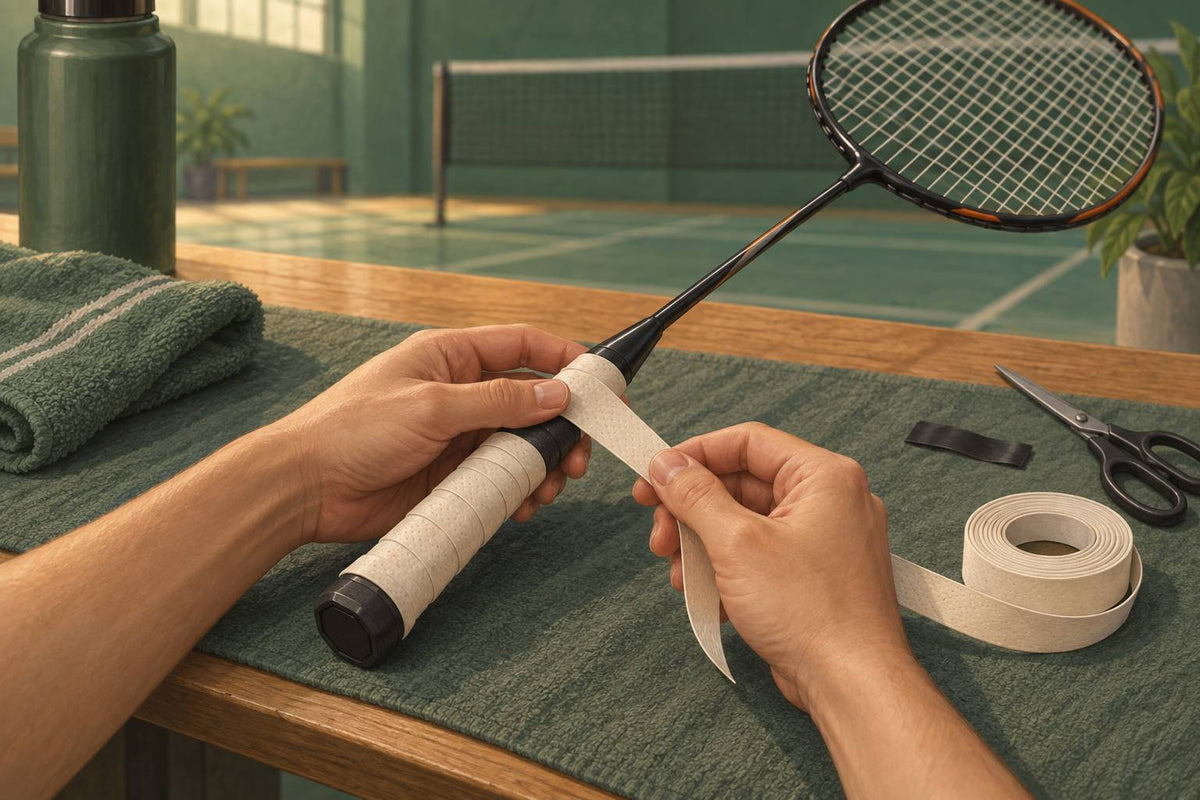
For most Canadian club players, start at the thin tapered end at the bottom of the handle, wrap upward snugly with a small overlap, then trim and secure the top edge.
Default
Standard overgrip: remove any plastic lining, place the sticky tapered end at the butt of the handle, pull with light tension, and overlap each turn enough that the grip sits snugly without bunching.
Lefty
Either hand can use either spiral direction; compare the seam feel and follow the grip’s starting-end instructions.
Thicker
Match the overlap to the material and manufacturer’s instructions; thick grips build bulk more quickly.
If your racket keeps twisting on defence, your hand feels like it is sliding during smashes, or the handle has turned shiny and slick, the problem may not be your technique — it may be your overgrip. A badminton overgrip is a thin, stretchy grip tape — usually around 0.6 mm thick — wrapped over the handle to add texture and manage moisture, and it only works properly when it is wrapped snugly and in the right direction.
Refresh the whole racket, not just the grip. If your overgrip is worn, it is also a good time to check your strings and frame condition — Badminton House offers Canadian racket support through our stringing service.
In This Guide
- Why Does Overgrip Wrapping Matter?
- Before You Start: Prepare the Overgrip
- How to Wrap Badminton Overgrip Step by Step
- Wrap Direction for Right-Handed and Left-Handed Players
- Common Overgrip Wrapping Mistakes
- When Should You Replace Your Badminton Overgrip?
- Related Racket Care and Canadian Store Links
- Which Overgrip Setup Should You Choose?
Why Does Overgrip Wrapping Matter?
The wrap itself matters because overgrip is thin and stretchy. If it is pulled too loosely, overlapped unevenly, or finished poorly, the handle can feel lumpy or start to shift during rallies. If it is wrapped cleanly, the grip sits snugly and gives you a more consistent contact point for serves, drives, net shots, and defensive blocks.
Overgrips are also one of the easiest ways to tune handle feel without changing your racket. You can keep the handle slimmer, build it slightly thicker, or create a small swell near the butt cap so the racket is less likely to slip out of your hand. That customization is especially useful for Canadian club players who rotate between drop-ins, league nights, and tournaments and want the racket to feel familiar every time they step on court.
Not sure which grip type you need? This guide focuses on wrapping technique. For the deeper comparison of overgrip, replacement grip, and towel grip, read our badminton grip guide.
Before You Start: Prepare the Overgrip
Before you wrap, take 30 seconds to set up the overgrip properly. Most messy badminton overgrip jobs start because the player begins from the wrong end, leaves the protective film on, or tries to fix the angle after the tape is already stretched around the handle.
Prep check: Have the overgrip, finishing tape, and your racket ready before you start. For the grip itself, look for Canadian badminton specialty retailers or ask your local club pro shop so you can match the feel to your hand size and sweat level.
- Find the thin tapered end. Badminton overgrips usually have one narrow, angled starting end. This is the end that goes at the butt cap, not at the top of the handle.
- Peel off the small sticker. The tapered end normally has a small adhesive section. Pull off the sticker or backing to expose the glue before placing it on the handle.
- Line it up with the bottom of the handle. Set the glued tapered end at the bottom edge of the grip, close to the butt cap, so the first wrap anchors cleanly and does not bunch up.
- Remove any plastic lining. If you are using a PU or tacky overgrip, check for a clear protective plastic layer on the outside surface and peel it off before wrapping. Leaving it on makes the grip feel slippery and prevents the tacky surface from doing its job.
- Decide before you stretch. Overgrips are thin and stretchy, so once you pull tension into the material, it is harder to restart without wrinkling the surface. Get the start position right first, then begin wrapping from bottom to top.
If your old overgrip is loose, dirty, or sliding under your hand, remove it fully before starting. Avoid wrapping over lumps or torn sections; the new grip will copy whatever uneven shape is underneath.
How to Wrap Badminton Overgrip Step by Step

- Anchor the tapered end at the bottom of the handle. Place the starting edge against the bottom of the racket handle, right above the butt cap. Hold it in place with your thumb so the first turn does not slide.
- Make the first full wrap tight and secure. Turn the racket handle while keeping the overgrip under steady tension. This first wrap sets the angle for the rest of the grip, so keep it smooth rather than bunched.
- Wrap from bottom to top. Continue spiralling upward along the handle. For a standard tacky overgrip, use some overlap on each pass so the grip stays covered and feels consistent in the hand.
- Keep the overlap even. Do not leave gaps between wraps. A clean, even overlap gives the handle a more predictable feel when you switch between forehand, backhand, and panhandle-style positions during rallies.
- Stop when you reach the top of the handle. As the overgrip approaches the cone area, check that the edge lines up cleanly with where you want the grip to finish.
- Trim diagonally and secure the finish. Mark the intended finish line around the handle, unwind the final turn and cut the loose tape diagonally so its edge lies level when rewrapped. Secure it with finishing tape.
Overlap: keep a thin overgrip’s overlaps small and even; use the product’s specified amount. Towel and replacement grips may need different treatment to avoid bulky ridges.
Wrap Direction for Right-Handed and Left-Handed Players

Wrap direction changes the way seams meet your fingers. A mirrored spiral can feel better for some left-handed players, but neither hand has a compulsory direction: follow the product’s starting end and test comfort before finishing.
| Player | Wrap direction cue | What to check |
|---|---|---|
| Right-handed | Start with the product’s intended tapered end and compare the seam feel. | After a few turns, pause and look at the diagonal pattern before continuing up the handle. |
| Left-handed | Try a mirrored spiral if the usual seam direction feels awkward. | If you are replacing the original factory wrap, do not assume the original direction is the best direction for your hand. |
Quick check before you finish. Wrap only a few centimetres first, hold the racket normally, and confirm the seams feel comfortable for your hitting hand. It is much easier to correct the direction early than after you have taped the top edge.
Common Overgrip Wrapping Mistakes
A good overgrip wrap should feel secure, even, and natural in your hand. Most problems come from rushing the overlap, wrapping onto the wrong base, or assuming there is only one “correct” handle shape.
| Mistake | Why it matters | Better habit |
|---|---|---|
| Using too little overlap | If the layers barely overlap, the tape can start coming off the handle over time. That can become unsafe if the grip loosens during a rally. | Keep a consistent overlap as you move from the bottom of the handle toward the top, and maintain steady tension while wrapping. |
| Wrapping straight onto bare wood | Putting grip directly over the wooden handle can contribute to long-term handle deterioration, especially for players who sweat a lot. | Avoid leaving the wood exposed under your playing grip. If the original grip has been removed, think carefully about building a protective base before adding your overgrip. |
| Copying the factory wrap without checking your hand | The factory spiral may not suit your preference; some players prefer a mirrored direction. | Check the wrap direction before you finish the tape. If the grip ridges feel like they are fighting your fingers, re-wrap in the opposite direction. |
| Treating customization like a mistake | Different players like different handle shapes. A grip that feels perfect for one doubles player may feel too thin, too thick, or too short for another. | Adjust the thickness, back-end swell, and wrap length until the racket feels secure through clears, drives, net kills, and defensive blocks. |
Customization is allowed — as long as the grip stays secure
Overgrip wrapping is not only maintenance; it is also handle tuning. You can make small adjustments to match your hand size, sweat level, and playing style.
- Thickness: Overgrips are thin and stretchy, so players can build up the handle feel by how they wrap and layer the grip.
- Back-end swell: Some players create a slightly thicker area near the butt end of the handle to reduce the chance of the racket slipping out of the hand.
- Wrap length: You do not have to wrap higher than you use. Some players prefer a shorter wrap for a cleaner handle, while others like more coverage for grip changes and doubles defence.
Canadian gear note. If you are buying overgrip today, choose a genuine badminton overgrip from a Canadian badminton specialty retailer or your local club’s pro shop. For bigger racket maintenance, Badminton House also offers badminton stringing and racket service.
When Should You Replace Your Badminton Overgrip?
Check the grip before each session. Its useful life depends on the material, playing hours, sweat and storage; no single three-week deadline fits every player.
Replace a grip that slips, tears, shifts or no longer manages moisture adequately. Playing twice weekly does not by itself establish a fixed replacement interval.
| Check | What it means | What to do |
|---|---|---|
| Surface worn or slick | The surface no longer provides the grip or moisture handling you need. | Replace before playing if the racket slips or the surface is damaged. |
| Playing twice weekly | This is enough court time that the grip should be treated as a regular maintenance item. | Inspect before each session and replace according to condition. |
| Grip moves or slips | The overgrip is no longer fitted snugly enough to stay secure during play. | Replace it sooner. A loose grip can affect performance and safety. |
| Discomfort | The handle may feel too slick, uneven, thin, or worn for your hand. | Rewrap before you start compensating with a tighter grip pressure. |
Quick fit check before you play: hold the racket normally and make a few shadow swings. The grip should stay snug with no movement or slippage. If it shifts in your hand, feels uncomfortable, or makes you squeeze harder than usual, replace it before your next serious session.
For Canadian players building a simple racket-care routine, treat overgrips the same way you treat strings: small maintenance, big difference in feel. If your strings are also due, Badminton House offers badminton stringing service, and our badminton gear maintenance checklist can help you keep strings, grips, shoes, and shuttles organized through the season.
Related Racket Care and Canadian Store Links
Need help with the rest of your racket setup? Browse badminton rackets, book stringing service, or use our badminton gear maintenance checklist to keep your strings, grip, shoes, and shuttles in match-ready condition.
| What you need next | Where to go | Best for |
|---|---|---|
| A fresh racket setup | Shop badminton rackets | Players replacing an old frame, building a backup racket, or changing weight, balance, or flex. |
| New strings or tension help | Book stringing service | Players whose grip is fresh but whose string bed feels loose, dead, or unreliable. |
| A full maintenance routine | Read the maintenance checklist | Canadian club players who want a simple habit for checking strings, grips, shoes, and shuttles before league night. |
Which Overgrip Setup Should You Choose?
Choose based on the handle feel you want first, then wrap it in a way that matches the material. Thin overgrips give the most customization; thicker grips change the handle feel more quickly but need a slightly different wrapping approach.
| Choose this | Best if you want | Wrapping note | Keep in mind |
|---|---|---|---|
|
Thin overgrip Around 0.6 mm |
Moisture wicking, added texture, and a comfortable racket feel without dramatically changing the handle size. | Wrap from bottom to top with some overlap, keeping the grip snug so it does not move or slip during play. | Thin overgrips are stretchy and customizable, but they wear and tear quickly compared with thicker options. |
|
Extra thickness with overgrip Wrap more than once |
A more customized handle thickness while still using a thin, stretchy overgrip style. | Use consistent tension and overlap so the handle stays even instead of forming ridges. | More layers can change how the racket feels in your hand, so test the shape before committing to the final tape. |
|
Thicker replacement-style grip 1.6 mm or more |
A noticeably fuller handle feel compared with a thin overgrip. | Because thicker grips build size faster, keep each wrap clean and even as you work up the handle. | Overgrips are much thinner than replacement grips, so do not expect both to feel the same after one wrap. |
| Towel or thicker grip | A thicker grip surface where an even handle shape matters more than creating layered overlap. | Follow the product’s overlap guidance and avoid bulky ridges. | Do not copy the same overlap pattern you would use for a standard thin overgrip. |
| Back-end swell | A handle shape with less chance of the racket slipping out of your hand. | Build the shape at the back of the handle before finishing the wrap cleanly at the top. | Grip thickness, back-end shape, and wrap length are personal setup choices, so adjust carefully instead of overbuilding all at once. |
Need help choosing the feel? Compare overgrip, replacement grip, and towel grip in our badminton grip guide. If your grip change is part of a bigger racket refresh, you can also browse badminton rackets. Check current model specifications and availability in the listings.
Get 10% off your first order
Join the Badminton House list and we’ll email you a 10% welcome code — plus subscriber-only restock alerts, giveaways, and honest gear advice from players.
By subscribing, you agree to receive Badminton House emails and can unsubscribe anytime.
A clean overgrip wrap is one of those small racket-care habits that makes every rally feel better. We play badminton ourselves, so if your handle still feels too thick, too slippery, or just not right in your hand, contact us for advice and we’ll help you think through grip size, racket feel, and your next setup.
Canadian badminton specialty shop

Leave a comment
This site is protected by hCaptcha and the hCaptcha Privacy Policy and Terms of Service apply.