authenticity

How to Spot a Fake Badminton Racket: Yonex, Li-Ning & Victor Authentication Guide

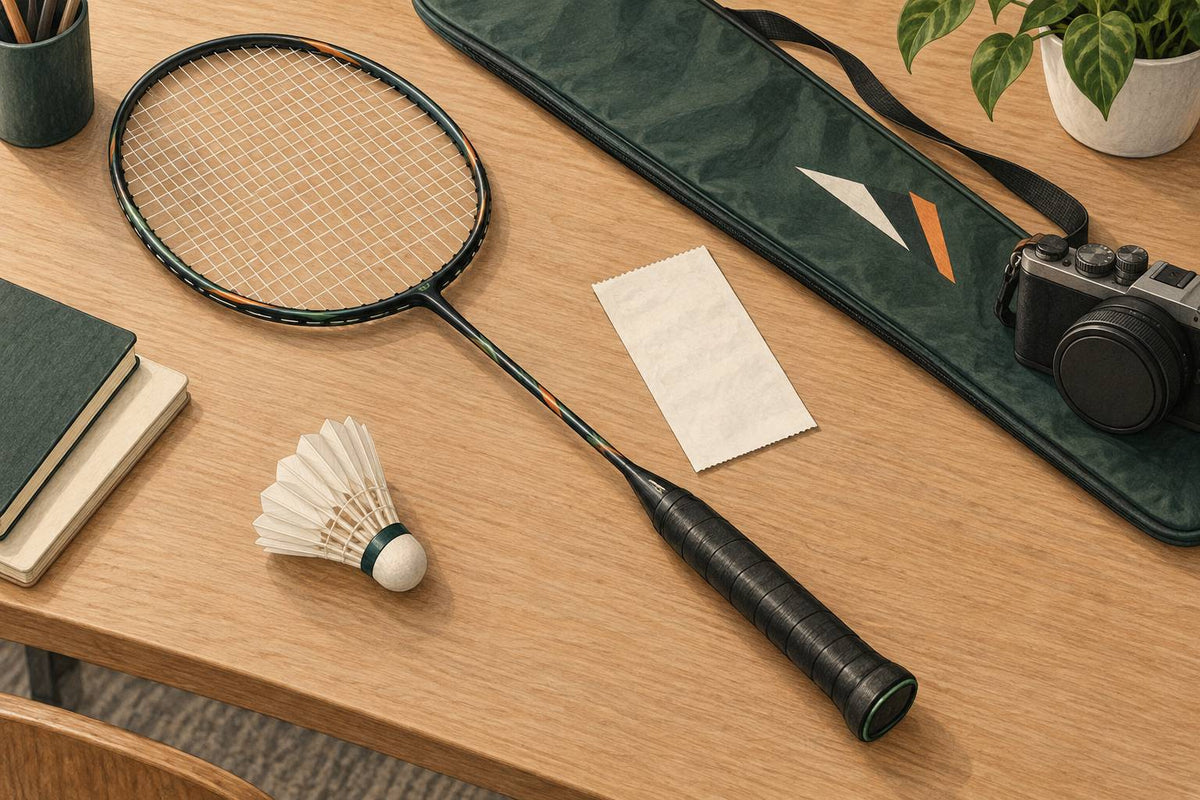
Badminton racket inspection setup with a magnifying glass and shuttlecock.

Last updated: July 2026 · Written by the team at Badminton House

Quick Answer: Spot a Fake Badminton Racket

Check the seller first, then inspect the physical authentication details before you trust the deal. Yonex has no official online code checker — verification is physical.

Price

First warning: compare against authorized retailers. If it is far below normal pricing, walk away.

Yonex

Check hologram adhesion, laser-engraved production code, logo print, butt cap colour, and weight.

Li-Ning

Use the 16-digit anti-counterfeiting code when the racket has an authenticity label.

Victor

Check the anti-counterfeit hologram sticker and the laser-etched shaft number at the bottom of the shaft — its first letters show the sales region (e.g. TW, CN). No online checker; buy through certified distributors.

To spot a fake badminton racket, check six things: the price against established retailers, the hologram sticker adhesion, laser-engraved production codes on the cap, logo print quality, butt cap colour accuracy, and weight against official specs. Yonex is one of the most common counterfeit targets because premium models are expensive and widely searched. This guide covers practical authentication checks for Yonex, Li-Ning, and Victor rackets sold in Canada.

Before buying online

Use the price, seller authorization, warranty, and return policy checks first.

With racket in hand

Inspect stickers, codes, logos, caps, weight, balance, and brand-specific details.

Still unsure

Bring the racket to an authorized retailer and ask them to verify it.

Buying a premium racket? If you are unsure what to choose, ask us for gear advice before you buy. We can help you avoid marketplace guesswork.


Why Yonex Is the #1 Counterfeit Target

Yonex dominates the badminton market. Their rackets are used in every major BWF tournament — the World Championships, All England Open, Olympic Games. That dominance makes them the most profitable brand to counterfeit. Here's why fakes are everywhere:

  • Highest market share = highest demand. Counterfeiters follow the money. When a beginner searches "best badminton racket," Yonex models dominate every recommendation list. Fakes exploit that brand recognition.
  • Premium price gap creates opportunity. A genuine Yonex Astrox 99 Pro retails for $300–$310 CAD at Canadian authorized dealers. A convincing counterfeit can be manufactured for under $15. That margin is irresistible to counterfeit operations.
  • Complex product line creates confusion. Yonex has dozens of active racket models across Astrox, Arcsaber, Nanoflare, and Duora series — each with multiple colour variants. Most buyers can't tell the difference between a genuine racket and a fake just by looking at a photo online.
  • Global supply chain gaps. Genuine Yonex rackets are manufactured in Japan, Taiwan, and China. Counterfeit operations, often located near legitimate manufacturing regions, produce convincing copies that enter the grey market through unauthorized resellers.

Yonex takes counterfeiting seriously — they maintain an official counterfeits warning page, provide authorized retailers with authentication tools, and enforce minimum market pricing (MAP) across their dealer network. If a deal looks too good to be true, Yonex's MAP policy is your first clue — authorized dealers cannot sell below the set price.

"If a Yonex racket is priced dramatically below what every other retailer charges, it's almost certainly counterfeit. Yonex enforces minimum pricing across all authorized dealers."

Yonex Authentication Checklist

A single badminton racket shown vertically with callout labels pointing to the hologram sticker, laser-engraved production code on the cap, YONEX logo on the shaft, dark green butt cap, and the weight code printed on the shaft.
The five physical checkpoints on a genuine Yonex racket.

Run through these six checks in order. A genuine Yonex racket passes all of them. A fake will fail at least one:

  1. Price check — compare against MAP pricing at authorized Yonex retailers
  2. Hologram sticker — genuine stickers resist peeling; fakes lift off easily
  3. Production code — must be laser-engraved (not printed) into the cap above the handle
  4. YONEX logo quality — crisp font, correct proportions, centred on the shaft
  5. Butt cap colour — genuine caps are a specific dark green; fakes get the shade wrong
  6. Weight and balance — must match the official spec printed on the shaft (3U, 4U, etc.)

Can you check a Yonex racket code online? No — Yonex offers no official online serial-number or code checker. The laser-engraved code on the cone is an internal production code, not a code consumers can verify on a website. Only certain regional distributors (such as Sunrise in South and Southeast Asia) run their own scratch-code checkers, and those do not apply to rackets sold in Canada. Verification is physical: hologram, engraving, weight — or an authorized dealer's check.

1

Price Check

Compare the price against official Yonex retailers. Yonex enforces MAP (Minimum Advertised Price). If it's 30%+ below every authorized dealer, walk away.

Red flag: Astrox 99 Pro for under $180 CAD

2

Hologram Sticker

Every genuine Yonex racket has a hologram sticker applied with special adhesive. Try to peel a corner with your fingernail — genuine stickers resist peeling. Fakes peel off easily.

Red flag: Sticker lifts cleanly at the edge

3

Production Code (Laser-Engraved)

Check the cap above the handle. Genuine codes are laser-engraved into the plastic — you can feel the indentation with your fingernail. Fakes have codes that are only printed (flat, no texture).

Red flag: Code wipes off or feels smooth

4

YONEX Logo Quality

Examine the YONEX text and YY mark printed on the shaft and frame. Genuine logos are crisp, centred, and use the correct font. On fakes, the "O" in YONEX is often too round and wide, with extra space inside the letter.

Red flag: Blurry text, off-centre logos, wrong font weight

5

Butt Cap Colour

Genuine Yonex butt caps use a specific shade of dark green with a clean YY logo. Counterfeits consistently get the colour wrong — either too light (lime-ish), too dark (almost black), or slightly off-hue.

Red flag: Green shade doesn't match other genuine Yonex rackets

6

Weight & Balance Feel

If you can hold the racket, check the weight (printed on the shaft — 3U, 4U, etc.) against Yonex's official specs. Fakes often feel slightly heavier or lighter, and the balance point may be off. A head-heavy racket that feels head-light is a dead giveaway.

Red flag: Weight doesn't match the printed spec

The definitive test: Yonex authorized retailers have a tool called the Hologram Examinator — a small plastic card with two viewing windows. On a genuine racket, the hologram sticker is visible through one window and invisible through the other. On a fake, it appears the same through both windows. If you're unsure about a racket, bring it to an authorized retailer and ask them to check.


How to Tell if a Yonex Racket Is Real or Fake

Side-by-side, the differences become obvious. Here are the key areas to inspect on any Yonex racket:

✓ GENUINE

✗ FAKE

Genuine Yonex hologram sticker — iridescent colours, strong adhesive, cannot be peeled

Hologram Sticker
Iridescent, firmly glued, resists peeling

Fake Yonex hologram sticker — dull colours, weak adhesive, peels off easily

Hologram Sticker
Dull, peels off easily with fingernail

Genuine YONEX logo — crisp lettering, correct font, centred on shaft

YONEX Logo
Crisp font, correct proportions, centred

Fake YONEX logo — wide round O, blurry text, off-centre on shaft

YONEX Logo
Wide "O," blurry text, off-centre

Genuine Yonex production code laser-engraved into cap above handle

Production Code
Laser-engraved — feel the indentation

Fake Yonex production code only printed on cap — no engraving

Production Code
Only printed — smooth, no indentation

Genuine Yonex butt cap — correct dark green, centred YY logo

Butt Cap
Correct dark green, clean YY mark

Fake Yonex butt cap — wrong green shade, misaligned YY logo

Butt Cap
Wrong green shade, misaligned logo

Photos show the most common differences between genuine and counterfeit Yonex rackets. Actual appearance may vary by model and production year.

Ask Badminton House for Racket Advice

Genuine gear from trusted sources · Canadian badminton specialty shop · Player-to-player advice


Yonex Serial Number Check: How to Read the Code

A genuine Yonex racket carries two separate laser-engraved identifiers: a unique serial number on the shaft just above the cone, and a short production code on the cone itself (the flared section above the grip). The shaft serial is sequential and unique to each individual racket; the cone code describes when and where the batch was made. Neither can be looked up on a Yonex website — but you can decode the cone code yourself and sanity-check it against the racket in your hands.

Where to Find Each Code

Marking Location What it tells you
Shaft serial number On the shaft, just above the cone A sequential ID unique to that individual racket
Cone production code Laser-engraved on the cone, above the handle Production date, batch, and (on pre-2024 stock) the distribution region

Both marks must be engraved into the material — you can feel them with a fingernail. A printed or sticker-only "serial number" is a counterfeit sign on its own.

How to Decode the Cone Code (Pre-2024 Format: DDMMYXCC)

On rackets made before Yonex's 2024 code change, the cone code follows the pattern DD-MM-Y-X-CC. Take the example code 150238CD:

Segment Meaning Example: 150238CD
DD Day of manufacture 15 — the 15th
MM Month of manufacture 02 — February
Y Last digit of the manufacture year 3 — 2023
X Internal batch / production digit 8
CC Distribution country code CD — Canada

Read together: a racket coded 150238CD was made on 15 February 2023 for the Canadian market. Note that the code identifies the distribution region, not the factory — genuine Yonex rackets are made in Japan, Taiwan, and China regardless of which market they ship to.

What Changed in 2024: No More Country Letters

Starting in 2024, Yonex began phasing out the lettered country codes. Newer rackets carry an all-numeric cone code used for internal batch tracing instead. The rollout has been gradual, so in 2026 you will still find genuine rackets with both styles on Canadian shelves. An all-numeric code on recent stock is not a fake sign — a code that is printed rather than engraved is.

Yonex Country Codes on Pre-2024 Stock

These are the most commonly documented Yonex distribution codes. Yonex does not publish an official list, so treat this as a community-verified reference:

Code Distribution market
CD Canada — what new Canadian retail stock should show
US United States
JP Japan
SP Southeast Asian markets (the "SP version" common on import listings)
CH China
TW Taiwan
UK United Kingdom

Grey-import warranty warning: a racket sold new in Canada with an SP, CH, or other non-CD code can be perfectly genuine — but it is grey-market (parallel-import) stock. Yonex Canada's warranty support generally applies to Canadian-market stock, so confirm warranty coverage with the seller in writing before buying a non-CD racket, and expect no manufacturer coverage on marketplace grey imports.

The Year-Digit Sanity Check

The single year digit is your fastest logic test: the manufacture year can never come before the model's release year. An Astrox 100ZZ, released in 2020, with a cone code year digit of 8 would imply 2018 production — two years before the racket existed. That racket is fake, no matter how good the paint looks. Counterfeiters copy code formats but rarely keep the dates consistent with the model's actual release timeline.

Bottom line: there is no public Yonex online lookup — a serial number check means decoding the cone code yourself, then confirming anything doubtful with Yonex Canada or an authorized dealer. Bought a racket second-hand and not sure what the code tells you? Send us the cone code and a few photos — we're happy to give a second opinion.

Two verification systems you may read about do not apply to Canadian-market rackets: the QR-code labels Yonex introduced for mainland China in 2017, and the silver scratch-code stickers used by Sunrise, Yonex's Southeast Asia distributor. A Canadian-market racket without a QR label is completely normal. If you want a human check, Yonex Canada in Calgary fields authenticity concerns at 1-800-661-9262 — have the cone code, your receipt, and the seller's name ready. (Yonex also runs a retailer finder at yonex.com/storefinder, though its Canadian coverage is patchy — the phone line is the surer route.)


How to Check Li-Ning Rackets

Li-Ning rackets are gaining popularity in Canada — and counterfeits are following. The good news: Li-Ning built a digital verification system directly into their intermediate and professional rackets. The bad news: beginner-series rackets may not include it.

Li-Ning Verification in 3 Steps

1

Find the authenticity label on the racket. Look for a sticker with a scratchable Li-Ning logo covering a hidden code.

2

Scratch the logo to reveal a 16-digit anti-counterfeiting code underneath.

3

Go to Li-Ning's verification page and enter your code. A genuine racket returns a confirmation with model details.

If there's no authenticity label: Check the overall build quality — clean paint, even finish, correct weight specs, and properly aligned logos. Li-Ning's beginner rackets (under ~$80 CAD) may not include anti-counterfeiting labels, so buy those from authorized retailers only.

Checking a specific Li-Ning code? Our Li-Ning authenticity check guide walks through the QR and colour-code portals step by step.


How to Check Victor Rackets

A single badminton racket with callout labels marking the laser-etched shaft number near the bottom of the shaft, the anti-counterfeit hologram sticker, the recessed V throat logo, and the matte graphite shaft finish.
Where to inspect a Victor racket for authentication.

Victor rackets are popular across Canada, especially among doubles players. As Victor's market share grows, so does the counterfeit supply. Victor's authentication is physical — there is no online serial checker.

Victor Authentication Methods

Check Genuine Fake
Serial Number Unique shaft number laser-etched near the bottom of the shaft. Victor has no online serial checker — a certified distributor can verify the shaft number Shaft number missing or printed instead of laser-etched
Throat Logo Recessed "V" logo on the throat — you can feel the indentation Embossed (raised) or flat-printed "V" logo
Shaft Finish Matte-finish graphite with consistent grain pattern Glossy or uneven surface, visible paint inconsistencies
Hologram Sticker Anti-counterfeit hologram sticker present on the racket or packaging Hologram missing, dull, or an obvious flat print

Victor Serial Number Check: Reading the Shaft Number

Victor's serial number is the shaft number printed at the bottom of the shaft — Victor describes it as the exclusive ID of each individual racket. The first Roman letters of the shaft number show the sales area: on Victor's own shaft-number page, TW marks Taiwan-market stock and CN marks China-market stock. Other markets, including Canada, use their own prefixes — a certified Victor distributor can confirm what your region's stock should carry.

For Canadian buyers the shaft number matters twice. First, a missing or printed-on (not laser-etched) shaft number points to a counterfeit. Second, a shaft number coded for another sales area means the racket is a parallel import — Victor's own guidance warns this affects your warranty rights even when the racket is genuine. There is no public online shaft-number checker for North America: to verify a racket, contact Victor's North American distributor or a certified dealer with the shaft number, clear photos, and your receipt. Verification tools you may see in other regions — such as QR-code or app-based checks used in some Asian markets — cover stock sold in those regions, not Canadian retail stock.

Pro tip: Victor does not sell directly to consumers online. If someone claims to sell "direct from Victor factory" on a marketplace, that's a red flag. Always buy through Victor's certified distributors.

Verifying a specific Victor racket? Our Victor authenticity check guide covers the hologram tilt test, shaft numbers, and laser-engraved specs step by step.


Where to Buy Authentic Rackets in Canada

The simplest way to avoid a fake racket is to buy from the right place. Here's how to protect yourself:

  • Buy from authorized retailers. Yonex maintains a store locator on their website. Victor sells through certified distributors listed on their site. For any brand, a Canadian badminton specialty shop is safer than a general marketplace.
  • Avoid marketplace "deals." The vast majority of counterfeit rackets are sold on general marketplaces, auction sites, and social media sellers offering suspiciously low prices. If the seller doesn't specialize in badminton, they're unlikely to verify authenticity.
  • Ask the seller for proof of authorization. Legitimate retailers can tell you their distributor relationship. If a seller gets defensive when you ask where they source their rackets, look elsewhere.
  • Check for return policies and warranty. Genuine rackets come with manufacturer warranties. If the seller offers no warranty or a "no returns" policy, you're taking a risk.

At Badminton House, we sell genuine badminton gear from trusted sources, inspect products before shipping, and keep clear return policies for eligible items. Every model in our racket collection ships from Canadian stock in CAD — no marketplace guesswork, no grey imports. We are a Canadian badminton specialty shop working toward formal brand partnerships, and our team can help you check any racket you buy from us. Once you own a genuine racket, protect your investment with our badminton gear maintenance checklist. Racket sorted? Pair it with the right birdie using our feather vs nylon shuttlecock comparison.


Bought a Fake in Canada? Do This

Report it to the Canadian Anti-Fraud Centre at reportcyberandfraud.canada.ca — reports can be anonymous. If you paid by credit card, ask about Project Chargeback: the CAFC confirms the item is counterfeit with the brand and works with Visa, Mastercard, and your bank to reverse the charge.

Then contact the brand directly: Yonex Canada at 1-800-661-9262, VICTOR Rackets North America at 1-877-875-1070, or Li-Ning through the verification portals covered above. Keep the listing, your receipts, and photos — every channel asks for them.


Fake Badminton Racket FAQ

How can I tell if my Yonex racket is real?+

Check the price against authorized retailers, try peeling the hologram sticker (genuine ones resist), feel for a laser-engraved production code on the cap (not printed), inspect the YONEX logo for crisp font and correct proportions, compare butt cap colour to genuine dark green, and verify weight against official specs. For a definitive test, visit an authorized retailer with the Hologram Examinator tool.

Can I check a Yonex serial number or code online?+

No. Yonex does not provide an official online checker for racket serial numbers or production codes — the engraved cone code identifies the production batch and cannot be looked up by consumers. Some regional distributors (for example, Sunrise in South and Southeast Asia) issue their own scratch-code stickers with an online checker, but those do not apply to rackets sold in Canada. Use the physical checks in this guide or ask an authorized dealer to verify the racket.

How do I do a Yonex serial number check?+

A Yonex serial number check is done by hand, not online. Find the unique serial engraved on the shaft above the cone and the production code engraved on the cone itself. On pre-2024 stock the cone code reads DDMMYXCC — day, month, year digit, batch digit, then a country code (CD means Canadian-market stock). Newer rackets use an all-numeric code with no country letters. Confirm both marks are engraved (you can feel them), the date makes sense against the model's release year, and the country code matches where the racket was sold. See the full decode guide above.

Are fake rackets dangerous?+

Yes. Counterfeits use substandard materials — lower-density graphite or blended fibreglass — and lack quality testing. Frame fractures during match play have been documented. Beyond safety, fakes have wrong balance, inconsistent flex, and poor string tension retention.

How do I verify a Li-Ning racket?+

Scratch the logo on the authenticity label to reveal a 16-digit code. Enter it at Li-Ning's verification page. Beginner-series rackets may lack this label — buy those from authorized retailers only.

How do I check a Victor racket?+

Check for Victor's anti-counterfeit hologram sticker and the unique shaft number laser-etched near the bottom of the shaft. Victor has no online serial checker, so if you are unsure, ask a certified Victor distributor to verify the shaft number — and remember Victor does not sell rackets directly online.

How do I do a Victor serial number check?+

Find the shaft number at the bottom of the shaft — it is the exclusive ID of that individual racket. The first Roman letters show the sales area (TW is Taiwan-market stock, CN is China-market stock, per Victor's shaft-number page); a code from another region on a "new Canadian" racket means parallel-import stock, which affects warranty rights. There is no public online checker for North America: send the shaft number, photos, and your receipt to a certified Victor distributor to verify. Details in the Victor serial number section above.

What percentage of online rackets are fake?+

There is no reliable public percentage for badminton rackets specifically. The risk is highest on general marketplaces, auction sites, and social media sellers where prices are far below normal retail. Buying from established specialty retailers, authorized retailers, or trusted local pro shops greatly reduces the risk.

Can I get a refund if I bought a fake?+

Most marketplaces have buyer protection for counterfeit goods — file a dispute with proof of inauthenticity. Social media sellers and overseas sites are much harder. This is why buying from an established retailer with a return policy matters.

"Finally, a Canadian store with real stock. Shipping to Vancouver was faster than ordering from the US."

— Sarah C., Vancouver, BC

Ask for Gear Advice

Genuine gear from trusted sources · 14-day returns on eligible items · Canadian badminton specialty shop

Get Canadian badminton gear checks + availability updates

Join the Badminton House list for buying checklists, availability updates, and practical gear advice for Canadian players.

By subscribing, you agree to receive Badminton House emails and can unsubscribe anytime.

Reading next

Flat-vector illustration of indoor badminton play in Winnipeg, in Badminton House's cream and orange editorial style
Feather and nylon badminton shuttlecocks beside a racket on an indoor court.

Leave a comment

This site is protected by hCaptcha and the hCaptcha Privacy Policy and Terms of Service apply.