
Last updated: July 2026 · Written by the team at Badminton House
Quick Answer: Portable Badminton Net Set
For most Canadian backyards and cottage lawns, choose a full-size staked portable badminton net set that gets close to regulation width and height; Badminton House does not carry net sets, so compare Canadian specialty retailers and pair the net with durable badminton shuttlecocks.
Default
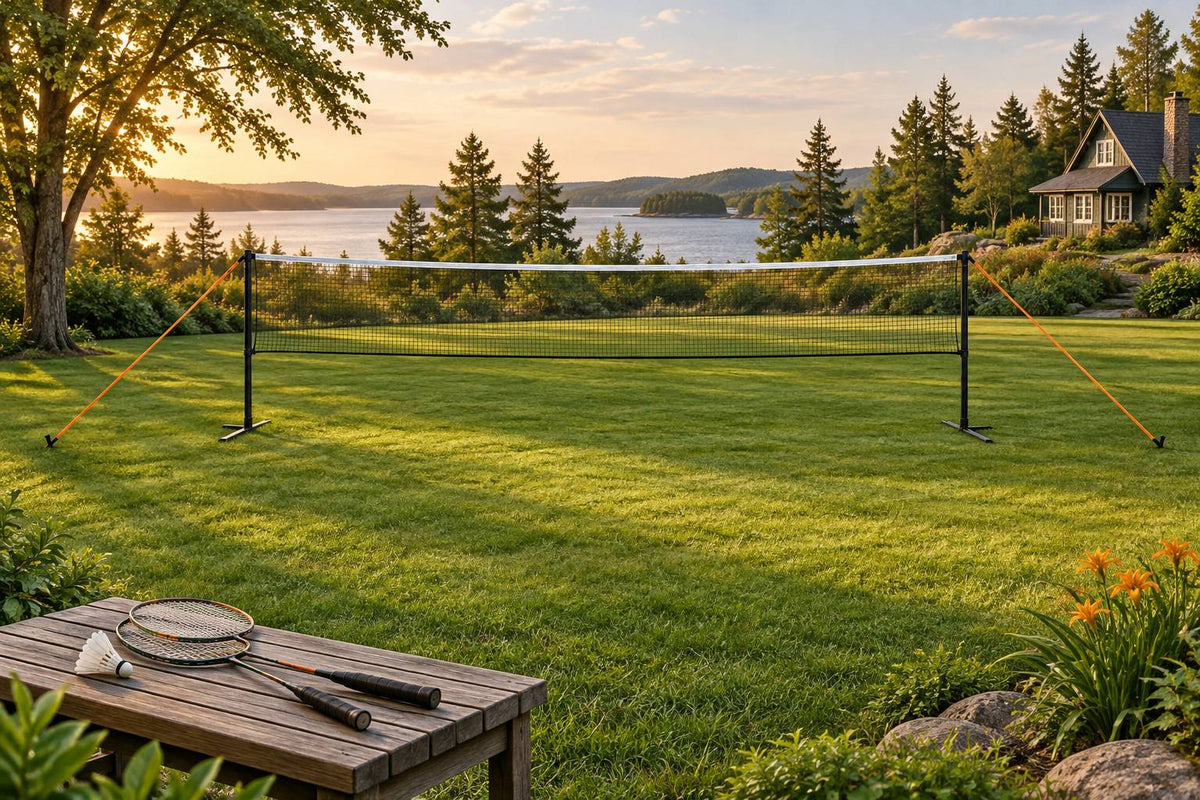
Full-size staked set: best for grass, lawns, and cottage yards. Look for a net near 20 ft wide, 5 ft 1 in at the posts, steel poles, guy ropes, metal stakes, and some form of anti-sag tensioning.
Patio
Freestanding base set: choose this for patios, driveways, or places where you cannot stake into the ground. It is convenient on flat surfaces, but it needs low wind and may need added weight such as sand or rocks.
Budget
Measure before buying: many budget and big-box “badminton” sets are only 10–14 ft wide instead of the 20 ft regulation width. They can still be fun for kids and casual rallies, but do not expect a real court feel.
Shopping for a portable badminton net set in Canada sounds simple until you start comparing listings: some are full backyard systems with staked poles, some are short freestanding nets meant for kids or casual rallies, and many “badminton” kits are really multi-sport nets that trade stability for convenience.
The goal is not to turn your cottage lawn into a tournament venue. It is to buy a set that fits your space, stays upright, gives the shuttle a fair flight, and does not feel disposable after one windy long weekend. This guide separates the useful outdoor sets from the flimsy big-box kits.
Net shopping note. Badminton House does not carry portable net sets, so use this guide to choose the net from Canadian specialty retailers. Then match it with the right shuttle from our shuttlecocks collection, which ships across Canada.
In This Guide
- What Size Is a Regulation Badminton Net?
- Best Full-Size Staked Sets for Lawns and Cottage Yards
- Best Freestanding Sets for Patios, Driveways, and Low Wind
- Budget Sets: What Is Worth Buying vs Big-Box Junk
- Do Not Ignore the Shuttle: Wind Changes Everything Outdoors
- Setup Tips for Canadian Backyards and Cottages
- When Your Family Outgrows the Backyard Set
- Which Portable Badminton Net Set Should You Choose?
What Size Is a Regulation Badminton Net?

Before comparing any portable badminton net set, start with the real badminton dimensions. A proper badminton net is about 6.1 m, or 20 ft, wide. The top of the net sits at 1.55 m at the posts and 1.524 m at the centre, which is why a net that looks “close enough” in a product photo can still feel wrong once you start clearing, driving, and serving.
The BWF Laws specify a net at least 6.1 m wide and 760 mm deep, with 15–20 mm mesh and a 75 mm white top tape doubled over its supporting cord or cable. For backyard play, the exact mesh and top-band spec matters less than the two big buying checks: is the net close to 20 ft wide, and can it stay reasonably tight at the correct height?
| Item to Measure | Regulation Reference | Backyard Buying Takeaway |
|---|---|---|
| Net width | At least 6.1 m wide, commonly described as about 20 ft | If you want a real-feeling game, avoid very narrow “badminton” nets that are far under 20 ft. |
| Net height | 1.55 m at the posts; 1.524 m at the centre | Look for poles and tensioning that can hold height without the middle sagging badly. |
| Doubles court | 13.4 m × 6.1 m, or 44 ft × 20 ft | This is the footprint to picture if four people will be playing proper doubles. |
| Singles width | 5.18 m, or 17 ft | Singles uses a narrower court, but the posts still sit on the doubles sidelines. |
| Recommended total area | About 50 ft × 30 ft including 2–4 ft clearance around the 44 ft × 20 ft court | Useful for deciding whether a cottage lawn, school field, or backyard has enough safe run-off space. |
Quick fit test. If you cannot mark roughly 44 ft by 20 ft for the court, then add a little clearance on all sides, choose a portable net set for casual rallies rather than expecting club-style doubles.
For a family cottage setup, you do not need painted lines and perfect court geometry to have fun. But the 50 ft × 30 ft guidance is a practical reality check. It gives players room to step backward, lunge sideways, avoid fences or fire pits, and recover after a clear without running straight into a deck chair.
The post position also matters. In proper badminton, the posts are placed on the doubles sidelines no matter whether you are playing singles or doubles. That means a portable set with a much shorter net changes the geometry of the game: serves, drives, and cross-court angles all become compressed.
Once you know the space will work, think about the shuttle as part of the setup rather than an afterthought. For backyard and cottage play, durable nylon shuttles are usually the practical starting point; you can browse current options in our shuttlecocks collection, and compare flight, feel, and durability in our feather vs nylon shuttlecock guide. Badminton House ships across Canada, which can help if you are combining shuttles with rackets, grips, or other club-night gear.
Finally, keep expectations realistic: indoor badminton requires a suitable clear playing space without outdoor wind. A portable badminton net set in a Canadian backyard can be excellent for rallies, family games, footwork practice, and summer fun, but it will never play exactly like a marked indoor court.
Best Full-Size Staked Sets for Lawns and Cottage Yards
For a portable badminton net set that actually feels like badminton, the best backyard category is a full-width staked set: steel poles, high-density PE netting, guy ropes, metal stakes, and some form of anti-sag tensioning. This is the style to prioritize for grass lawns, cottage yards, and parks where you can drive stakes into the ground.
Badminton House does not stock net sets, so buy this category from Canadian specialty retailers. Measure the listed net width first, because many convenient outdoor kits are nowhere near a real badminton setup.
What to look for in a proper staked outdoor set
The biggest upgrade over department-store backyard kits is tension. A better staked set should let you pull the top of the net tight enough that the centre does not droop badly after a few rallies. Quality examples use a 20 ft × 2.5 ft net, 18-ply PE mesh, push-lock steel poles, and tool-free setup. Some outdoor systems add a handle-winch or similar anti-sag system, which is worth paying for if the set will stay up for full weekends at the cottage.
| Feature | Why it matters outdoors | Buyer check |
|---|---|---|
| Full-width net | A real doubles badminton court is 20 ft wide, so a full-width net makes clears, drives, and side-to-side movement feel more realistic. | Look for about 20 ft of net width. Be cautious with 10 ft, 13 ft, 14 ft, 15 ft, or 16.5 ft sets if you want real-court spacing. |
| Steel poles | Steel poles resist bending better than very light recreational frames when the net is pulled tight. | Choose push-lock or telescopic steel poles when possible. Very thin plastic or PVC poles are a warning sign for long-term use. |
| PE mesh | High-density PE netting is commonly used in better outdoor sets, with 18-ply PE mesh appearing on quality examples. | Look for the material and ply count in the listing, not just “durable net” wording. |
| Guy ropes and metal stakes | On grass, guy ropes and stakes are what keep the poles upright and the top line under tension. | Confirm the kit includes stakes and ropes. If it only shows poles and a net, expect more sag and movement. |
| Anti-sag tensioning | A handle-winch or tensioning system helps keep the net line cleaner, especially on a full-width outdoor setup. | Worth prioritizing if the set will be used often, shared by multiple families, or left assembled during a cottage weekend. |
Compare dimensions and construction
Compare the net’s width, pole construction, anchoring equipment and tension adjustment before comparing prices; a compact recreational set and a full-width system are different purchases.
For most families, the sweet spot is not the absolute lowest price. It is the set that gives you close to 20 ft of width, metal support, proper staking, and enough tension control that the net still looks like a badminton net after setup. A 15 ft all-ages backyard set can be fun for kids, but it is already 5 ft short of a full doubles-width badminton net.
Who should choose this style?
- Choose a full-size staked set if you have a grass lawn, cottage yard, or park space where stakes are allowed.
- Choose steel over lightweight PVC if adults will play, the set will be used regularly, or you care about keeping the net tighter.
- Choose anti-sag tensioning if you want the closest backyard version of real badminton instead of a loose recreational net.
- Skip this style if you need to play on concrete, a patio, or a driveway where stakes cannot go into the ground.
If your main playing surface is grass, this is the first category to shop. Start with full width, then compare pole material, stake quality, and tensioning. The net that stays upright and reasonably taut will get used far more than the one that folds into a tiny bag but sags across the middle.
Best Freestanding Sets for Patios, Driveways, and Low Wind

Freestanding base-style portable badminton nets make the most sense when you cannot drive stakes into the ground: paved patios, driveways, decks, school gym floors, or a cottage area where you do not want guy ropes crossing the yard. Instead of relying on tensioned ropes and ground stakes, the net stands on a base frame.
The trade-off is stability. A freestanding portable badminton net set is convenient, but it is not magic: it works best on a flat surface in low wind. On uneven grass, gravel, or a breezy cottage lot, the base can twist, rock, or slide unless you add weight.
| Use case | Freestanding net verdict | What to check before buying |
|---|---|---|
| Driveway or patio | Best fit: no stakes needed, fast setup, easy pack-down. | Look for a wide base, straight poles, and enough net width for the game you want to play. |
| Flat lawn in calm weather | Works, but a staked full-size set is usually steadier. | Bring rocks, sandbags, or other safe weights if the base shifts. |
| Uneven cottage ground | Acceptable for casual rallies, frustrating for anything competitive. | Avoid narrow bases and very light poles; expect to re-level the frame. |
| Windy open space | Not ideal. The net and shuttle will both become the problem. | Use weighting if you still play, and lower expectations for flight quality as covered above. |
PVC vs metal poles: choose convenience or durability
Many easy-carry freestanding sets use PVC telescopic poles. They are lighter and easier for kids or casual family players to move around, but they are less durable than metal poles. If the set will live in a garage, get packed for cottage weekends, or be used by teenagers who hit hard and trip over things, metal is usually the safer bet.
At the better end of the outdoor category, premium systems may use 1.5-inch telescopic aluminum poles and pack into a zippered equipment bag. That combination is worth looking for if you want something that feels less like a toy and more like repeatable backyard sports equipment.
Quick buying filter for freestanding nets
- Flat surface first: if your setup area is sloped or bumpy, a freestanding base will be harder to keep upright and square.
- Metal over PVC for repeat use: PVC is lighter, but metal poles are the better durability choice.
- Bring weight for wind: rocks or sandbags can help stabilize the base when stakes are not an option.
- Measure the net width: as covered above, a real badminton net is about 20 ft wide, and many portable sets sold for casual play are narrower.
- Check the bag: a zippered equipment bag is a small detail that matters when you are hauling the set between home, cottage, and park play.
Badminton House does not carry portable net sets, so for the frame itself, check Canadian specialty retailers and compare the pole material, base stability, packed size, and true net width before buying. For the shuttle side of the setup, check current availability in our shuttlecocks collection, including the Yonex Mavis 350 Nylon Shuttlecocks, sold in tubes of 6.
If you are unsure whether nylon or feather makes more sense for family play, the practical differences are explained in our feather vs nylon shuttlecocks guide. For most backyard and cottage rallies, the net matters, but the shuttle you choose will decide how playable the session feels once the breeze picks up.
Budget Sets: What Is Worth Buying vs Big-Box Junk
A budget portable badminton net set can be perfectly fine for family games, cottage weekends, and casual driveway rallies. The problem is that many sets labelled “badminton” are not close to badminton size. The first spec to check is the net width, not the number of rackets in the box.
Quick budget rule: if the listing does not clearly state the net width, assume it is a toy-style backyard set until proven otherwise. A real badminton net is about 20 ft wide; many online and department-store sets are only 10–14 ft wide.
Red flags before you buy
| Red flag | Why it matters | What to look for instead |
|---|---|---|
| 10–14 ft net width | This is far below the regulation 20 ft width, so doubles positioning, serves, clears, and side-to-side movement all feel compressed. | Choose a set that clearly lists a full-size or near-full-size net, ideally around 20 ft wide. |
| “All sports” adjustable net | Convertible badminton/tennis/volleyball nets often compromise tension and stability, especially when advertised for several sports at once. | Prioritize a badminton-first setup with poles that reach about 5 ft 1 in at the posts and hold tension without sagging. |
| No pole material listed | Light PVC telescopic poles are easy to carry, but they are generally less durable than metal poles. | For a staked lawn set, look for steel poles, guy ropes, and metal stakes. For a better freestanding set, look for a stable base and a carrying bag. |
| No tension system | A loose net droops quickly outdoors, especially after kids pull on it or wind catches the mesh. | Better outdoor sets may use guy ropes with stakes, push-lock steel poles, or an anti-sag winch system. |
| Bundle looks like a bargain because it includes everything | Cheap rackets and throw-in shuttles can make the box look better than the net actually is. | Judge the net, poles, stakes, and bag first. Rackets and shuttles can be upgraded later. |
Budget context: compare what the set includes
Check the dimensions in the listing: a 15 ft net is 5 ft narrower than a full doubles court, while a 9.5 ft net is suited to a much smaller casual playing area.
For the net itself, compare current listings by dimensions and construction instead of assuming the most complete-looking bundle gives the best playing setup.
What is actually worth buying on a budget?
- For grass or cottage lawns: a staked set is usually better value than a light freestanding frame because the guy ropes and stakes help control sag and movement.
- For patios and driveways: a freestanding base-style set can work, but keep expectations realistic in wind. On uneven ground or breezy days, weighted bases help.
- For families who want “real badminton feel”: avoid short 10–14 ft nets and choose the widest, most stable badminton-first set your space allows.
- For cottages where storage matters: check whether the set packs into a proper bag. Premium outdoor systems often include a zippered equipment bag, and that matters when gear is being moved between the shed, dock, car, and yard.
Also keep part of the budget for shuttles. Outdoors, the shuttle often ruins the rally before the net does. If you are choosing between feather and nylon for casual backyard play, start with our feather vs nylon shuttlecock guide, then check the current shuttlecocks collection for options that fit your session.
Do Not Ignore the Shuttle: Wind Changes Everything Outdoors

A portable badminton net set can give you the right shape for a backyard court, but the shuttle decides whether the game is actually playable. Outdoor badminton is not just indoor badminton moved onto the lawn: wind changes the flight path, timing, and rally length immediately.
That is why the BWF created AirBadminton and the AirShuttle as an official outdoor version for parks, gardens, grass, hard surfaces, sand, streets, playgrounds, and beaches. The important reality check is the wind limit: the AirShuttle was designed for playability only up to 12 km/h wind, also listed as 7.5 mph. If even the purpose-built outdoor shuttle has that ceiling, regular feather and synthetic shuttles will struggle sooner.
| Shuttle type | Outdoor reality | Best use |
|---|---|---|
| AirShuttle | About 8 g, compared with about 5 g for feather or plastic shuttles. Its five-pillar design is made to be more wind-resistant, with a stated wind tolerance up to 12 km/h. | The most purpose-built option for true outdoor play when you can source it from Canadian specialty retailers. |
| Nylon shuttle | More durable than feather for family rallies, but still affected by wind because it is not an AirShuttle. | Backyard, cottage, school, and casual outdoor games where durability matters more than perfect flight. |
| Feather shuttle | Excellent indoors, but easy for light wind to move outdoors and less practical for casual yard play. | Indoor club nights, training, and competitive play where flight feel matters most. |
Practical backyard rule: if leaves, napkins, or light plastic bags are moving across the yard, expect the shuttle to drift too. For better rallies, play early morning or evening, set up side-on to the prevailing wind, and treat windy days as skill games rather than normal badminton.
For most Canadian cottages and backyards, start by choosing the right shuttle for the kind of game you are actually playing. Browse our badminton shuttlecocks, and if you are unsure whether nylon or feather makes sense, read our full guide: Feather vs Nylon Shuttlecocks — What’s the Difference?
The most relevant backyard and cottage shuttle in the Badminton House lineup is Yonex Mavis 350 Nylon Shuttlecocks: a tube of 6 with a nylon skirt, cork base, and three speed options (green for slow, blue for medium, and red for fast). Check the shuttlecocks collection for current availability before planning your order.
One more caution: do not bring your best high-tension club racket outside just because you bought a net. BWF’s AirShuttle guidance points to around 18–20 lbs string tension for AirBadminton, which is lower than many indoor club players use. If your family is just rallying outdoors, use durable gear, keep expectations realistic, and save your match setup for the gym.
Setup Tips for Canadian Backyards and Cottages
A portable badminton net set is only as good as the space you put it in. Outdoor badminton will never feel exactly like an indoor club court: indoor court play uses a suitable clear playing space without outdoor wind. In a Canadian backyard or at the cottage, the goal is safer, more enjoyable rallies, not recreating tournament conditions beside the firepit.
Backyard Setup Checklist
Surface
Choose flat, dry grass first: avoid rocks, holes, exposed roots, sprinkler heads, and slippery wet patches.
Wind
Set the court side-on to the prevailing wind so neither side gets a constant tailwind advantage.
Sun
If the yard allows it, orient the court north-south to reduce direct sunlight in players’ eyes.
Clearance
Give players room behind and beside the court so no one backs into a deck, tree, dock edge, clothesline, or patio furniture.
1. Walk the space before you stake anything down
Before you unroll the net, walk the playing area like you would inspect an indoor court. Look for ankle-roll hazards: loose stones, divots, gopher holes, exposed roots, uneven patio edges, toys, garden hoses, and wet grass. Dry grass is usually the friendliest backyard surface because it gives some traction without the hard impact of concrete.
At cottages, be extra strict near slopes, docks, fire pits, and gravel driveways. A casual rally can turn into a fast backward step, and outdoor players often look up at the shuttle instead of down at the ground.
2. Set the court side-on to the usual wind
As noted in the shuttle section above, wind changes outdoor badminton quickly. If the breeze usually comes from the lake, street, field, or open side of the yard, try to place the net so that wind crosses the court from side to side instead of blowing directly from one end to the other.
This does not eliminate drift, but it keeps one team from getting the same push on every clear and lift. If the wind keeps flipping the shuttle, shorten the rally game: play half-court, rotate sides often, or switch to simple target games instead of forcing full-court scoring.
3. Use north-south orientation when the sun is low
For evening cottage games and summer backyard play, sunlight can be just as annoying as wind. When possible, run the court north-south so players are less likely to stare directly into the sun during serves, lifts, and clears.
If the yard shape forces an east-west setup, adjust the format: rotate sides every few points, lower the pace for younger players, or pause during the worst glare. A missed shuttle is fine; a player sprinting blind into a chair or fence is not.
4. Keep the net stable, but do not overbuild the court
For staked lawn sets, push stakes fully into firm ground and tension the guy lines evenly so the posts do not lean inward. For freestanding sets on patios or driveways, keep the base on the flattest part of the surface and stop play if the net starts tipping or sliding.
You do not need painted lines for a fun backyard game. Cones, flat markers, chalk, rope, or natural yard landmarks can work. Just avoid raised objects that players can trip over while moving backward or sideways.
5. Match the game to the conditions
A perfect indoor setup has a full court, proper net height, overhead clearance, and no wind. A good backyard setup has a safe surface, visible boundaries, a stable net, and a rally format that fits the day.
If the shuttle section above points you toward a more durable nylon option for casual play, use that same logic here: choose the setup that keeps rallies going, especially for kids, newer players, and mixed-skill family games.
When Your Family Outgrows the Backyard Set
A portable net is perfect for rallies at the cottage, family games on the lawn, and getting kids excited about badminton. But once players start asking about serves, clears, drops, footwork, or club nights, the next upgrade usually is better playing gear, not a more expensive backyard net.
For the net itself, check Canadian specialty retailers and measure the width before buying. For the gear that carries over from backyard play to indoor badminton, start with proper shuttlecocks and a racket that matches the player’s strength, timing, and goals.
- Upgrade the shuttle first: backyard sets often include shuttles that fly inconsistently. Nylon shuttles are usually the practical choice for family play, while feather shuttles make more sense once you are training or playing club-style games indoors. If you are unsure, compare the differences in our feather vs nylon shuttlecock guide.
- Upgrade the racket second: a lightweight, well-matched badminton racket makes learning clears, drives, and net shots easier than using the basic rackets included in many recreational sets. Browse badminton rackets when the family starts moving from casual rallies into real games.
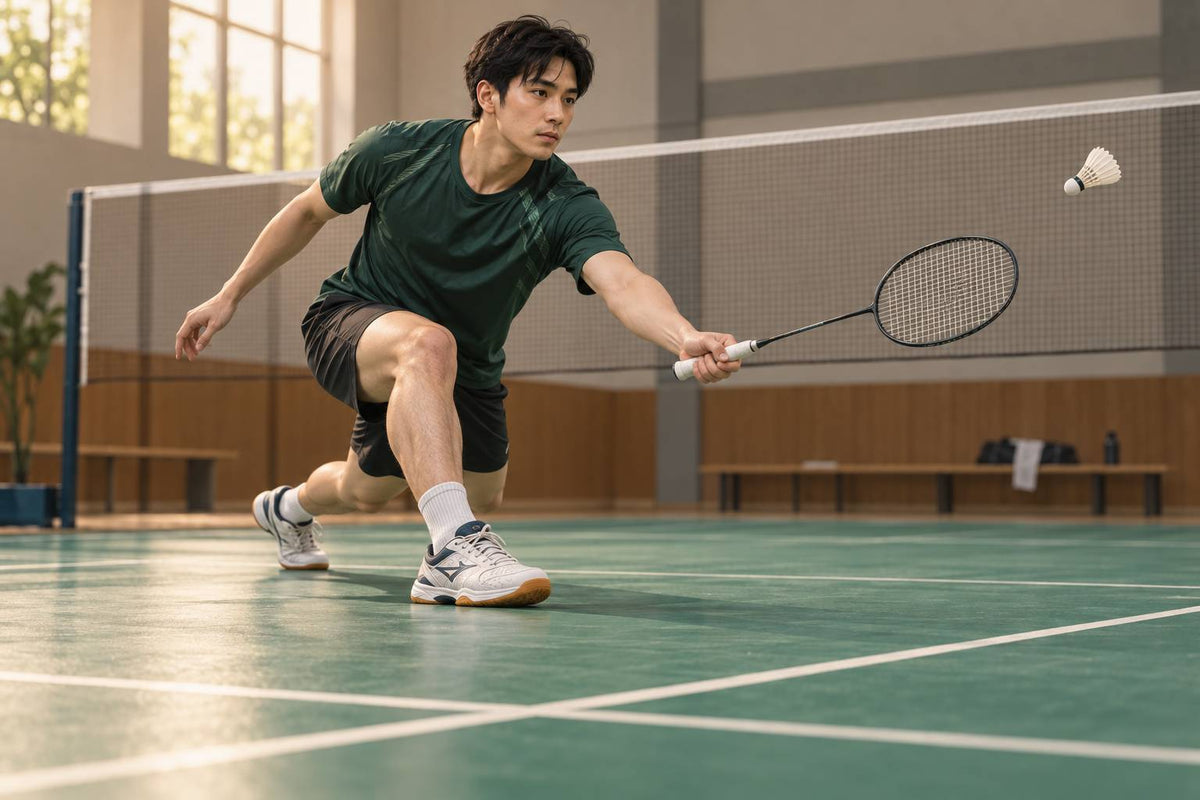
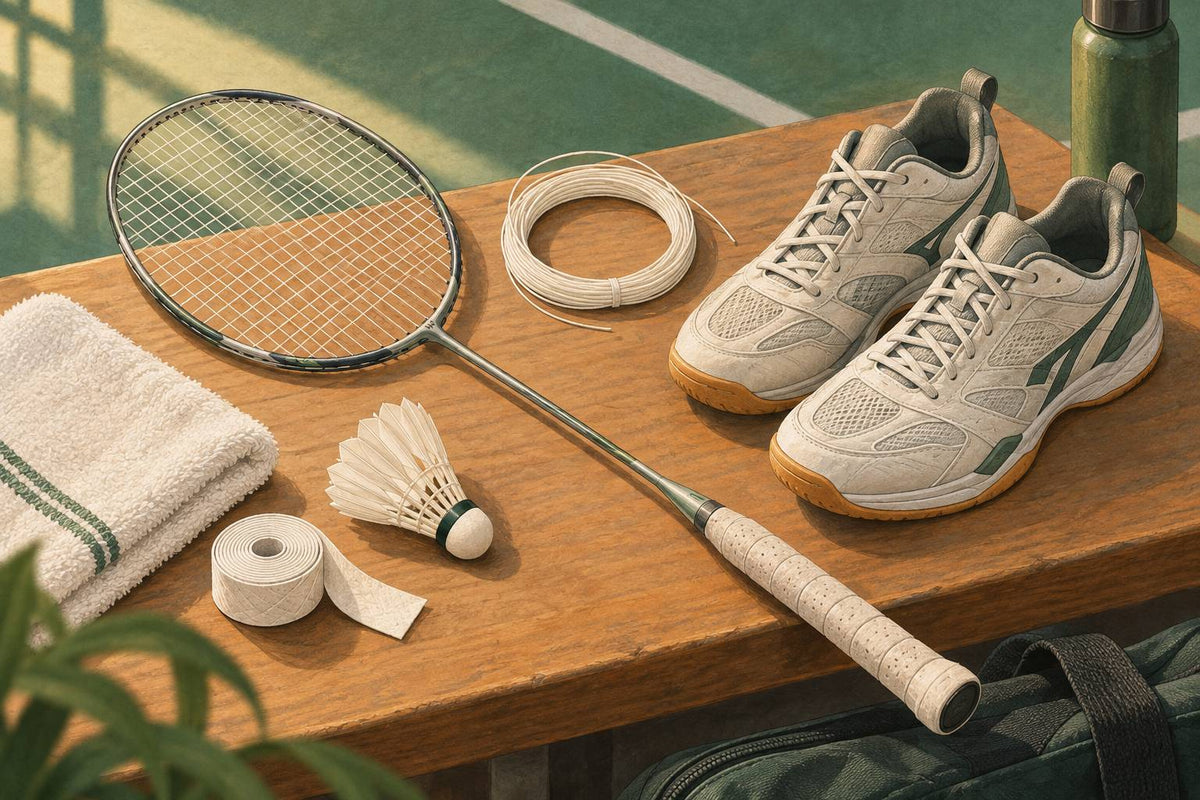
- Think in stages: keep the portable net for outdoor fun, then build an indoor-ready kit with shuttles, rackets, grips, and court shoes as the players improve. Badminton House ships across Canada.
If you are choosing gear for a parent-child pair, a new adult beginner, or a family member who is starting club play, contact Badminton House for personalized advice before buying. The safest upgrade is a racket that fits the player now, not the stiffest or most advanced frame on the shelf.
Which Portable Badminton Net Set Should You Choose?
For most Canadian backyards, the right answer depends less on the brand name and more on where the net will sit: stakeable grass, hard patio, driveway, or a windy cottage yard. Use the table below to narrow it down before you buy.
| Choose this type | Best if... | What to check | Watch out for |
|---|---|---|---|
| Full-size staked lawn set | You have a lawn or cottage yard where stakes and guy ropes can be anchored. | Aim for a net close to regulation width: about 20 ft / 6.1 m, with the top around 5 ft 1 in at the posts and 5 ft at the centre. Better outdoor sets use steel or aluminum poles, PE netting, metal stakes, guy ropes, and an anti-sag tension system. | It needs space. A doubles court is 44 ft × 20 ft, and a practical backyard layout needs about 50 ft × 30 ft including clearance. |
| Freestanding base set | You are playing on a patio, driveway, or another flat surface where you cannot stake into the ground. | Freestanding base-style sets work best on flat surfaces in low wind. If wind picks up or the ground is uneven, the bases may need extra weight such as rocks or sand. | PVC telescopic poles are lighter, but metal poles are the more durable choice. |
| Budget family set | You only want easy backyard rallies and are not trying to replicate a real badminton court. | Measure the listed net width before buying. Some department-store and online sets are much narrower than regulation, including listings around 15 ft wide, 9.5 ft × 5 ft, or in 10 ft, 13 ft, and 16.5 ft versions. | A small net can still be fun, but it changes spacing, serve feel, and doubles positioning. |
| AirBadminton-style setup | You want an outdoor-first game for hard, grass, or sand surfaces in places like parks, gardens, streets, playgrounds, or beaches. | AirBadminton uses a 16 m court, a 1.5 m net height, and a 2 m front dead zone. The AirShuttle was designed for playability in winds up to 12 km/h, and BWF recommends roughly 18–20 lbs string tension when using it. | Even the purpose-built outdoor shuttle has a light-wind ceiling, so regular feather or synthetic shuttles will be more affected by breeze. |
Quick pick: choose a full-size staked set if you have grass and enough room; choose a freestanding set if you are on a hard surface; choose a budget set only if casual play matters more than court realism.
Badminton House note. We do not currently carry portable net sets, outdoor sets, or AirShuttles, so check Canadian badminton specialty retailers for the net itself. For the shuttle side of the setup, start with our shuttlecocks collection and our guide to feather vs nylon shuttlecocks.
Get 10% off your first order
Join the Badminton House list and we’ll email you a 10% welcome code, plus subscriber-only restock alerts, giveaways, and honest gear advice from players.
By subscribing, you agree to receive Badminton House emails and can unsubscribe anytime.
Backyard badminton is meant to be fun, but the right setup still matters. We play badminton ourselves, so if you are unsure whether to spend on a portable badminton net set, upgrade your shuttles, or move your family toward indoor club play, contact us and we will point you in the right direction. For shuttles, rackets, grips, and court-ready gear, we can help.
Ready to move beyond the backyard set?
Shop Badminton RacketsShips across Canada · 14-day returns · Canadian badminton specialty shop

Leave a comment
This site is protected by hCaptcha and the hCaptcha Privacy Policy and Terms of Service apply.