
Last checked: August 2026 · Written by the player-led team at Badminton House
Quick answer
A weekly badminton group survives on five decisions made before the first session: which hall will actually grant a standing weekly slot instead of a one-off booking, when that hall's calendar opens so you can grab it, how the court cost splits per player, what happens the first time someone no-shows, and who is buying shuttles. Get those five right and the group runs itself.
Start with Find a hall that takes recurring bookings
Work the checklist below in order: lock the hall and its booking window first, because every other decision, price, roster size, rotation, depends on knowing how many courts you actually have each week.
Related reading: Badminton Court Rental Cost in Canada — full city-by-city pricing if you want more than the two worked examples below.
Find a hall that takes recurring bookings and lock in its release window
Municipal community centres, school gyms and private clubs each run separate booking systems, and only some of them offer a standing weekly slot instead of a one-off booking you win fresh every week. Call or check the facility's own page, ask specifically for a season or recurring permit, and write down exactly when its calendar opens.
The three venue types behave differently enough that treating them the same is the first mistake. A city-run community centre often separates day-to-day online bookings from standing group time, routing recurring slots through a season or league permit that a real person has to approve, rather than the same instant-booking calendar. The City of Toronto's online booking system, for example, only shows gymnasium availability "up to 14 days from today." Fourteen days is Toronto's number, not a rule every city follows, so confirm your own venue's window directly instead of assuming it matches.
School gyms run on a third system again. Board-run permits, like the Toronto District School Board's community permit process, are submitted through an online application portal and approved "on a first come, first served basis" once space and resources are confirmed, with no fixed countdown clock published at all. For that kind of system, applying early in the school term matters more than refreshing a booking page at a set hour.
Before you commit to a venue, phone or email and ask three questions: does this location offer a recurring or season permit for community groups, how far ahead does its calendar or application process open, and will you get the same room at the same time every week or a rotating one. Put the answer in your calendar, not your memory, because a missed release window usually means waiting another full cycle.
Price the court per player before you promise a spot
Booking outside weekday evenings and weekends usually costs less, but treat "off-peak" as a real discount rather than a half-price one: published municipal rates typically run 58 to 70 percent of the prime-time rate, not 50 percent. Do the per-player math on the actual hourly figure before you quote a price to the group.
Cities define the split the same basic way. Ottawa's gymnasium rental definitions set prime hours as "Monday-Friday from 4 pm to midnight, plus all day Saturday and Sunday," with everything else on weekdays counted as non-prime. That is the block most weekly groups are choosing between: a Tuesday 1 p.m. slot against a Tuesday 7 p.m. slot at the same gym.
The dollar gap between those two blocks is real but smaller than most players assume. Ottawa's published 2026 gymnasium rates list a regular gymnasium at $48.93 non-prime versus $69.95 prime, and a small gymnasium at $28.68 non-prime versus $49.43 prime, discounts of roughly 30 and 42 percent rather than half. Run your own venue's numbers the same way instead of assuming a flat 50 percent cut.
Split that hourly figure by the players actually on court, not by however many people said they might come. A regular gym at Ottawa's non-prime rate works out to about $6.12 per player across eight players for the hour; the same gym at prime time is closer to $8.74 per player. Booking two adjacent courts for a bigger group keeps the per-head number similar while doubling how many people can play at once, which is usually the better fix once a single court is full every week. Round the number up slightly when you collect it (charge $7 instead of $6.12, say), and let the small surplus fund the shuttle kitty covered below. For a wider set of city and venue comparisons beyond these two Ottawa examples, see our full badminton court rental cost breakdown.
Set roster and no-show rules before the first session
Fix the roster size to the courts you actually booked, keep two or three names on a standing waitlist, and agree the no-show rule in writing before anyone has skipped a week. A group that waits until the first no-show to argue about who owes what rarely agrees on anything afterward.
Start with the number that matches your booking. Two courts running doubles plays eight at a time, so a roster of eight to ten regulars, with the extra two as first-call substitutes, keeps every week close to full without turning it into an open drop-in. If your hall only released one court, six or seven names is closer to right, since someone is always due to sit out a game.
The waitlist does the actual work of covering no-shows. Keep two or three names who get a message the moment a regular cancels, in the order they're listed, so nobody has to scramble the group chat at the last minute. A waitlist that only exists in someone's head disappears the first time that person is busy.
Write the no-show rule down before session one, not after the first awkward case. A simple version: regulars still owe their share of the court unless they give notice by a fixed point the day before, or find their own replacement from the waitlist. State it once in the group chat's pinned message so new players read the rule instead of hearing three different versions of it secondhand.
Run a shuttle kitty and confirm what the hall actually provides
Ask the venue directly whether a badminton net and court markings are already set up in the room you've booked, because that answer varies by facility and changes what your group needs to bring in week one. Collect a small flat shuttle contribution every session instead of tracking who bought the last tube.
Do not assume the hall supplies anything beyond the room. Toronto's own online booking conditions, cited above for the 14-day window, state it plainly: "Equipment rentals are not available. Permit holders are responsible for bringing their own equipment." That can include the net itself at some gyms, not just rackets and shuttles, so confirm it by phone or in your first email rather than discovering it standing in an empty gymnasium.
A shuttle kitty avoids the recurring argument over who buys the next tube. Collect a fixed small amount from every player at every session, whatever they played or not, and have one person responsible for keeping a working stock on hand. Rolling the shuttle cost into the same collection as the court fee, rather than a separate ask, means nobody forgets to pay it and nobody has to chase anyone mid-session for two dollars.
Rotate players so nobody sits out twice
Pick one rotation rule before the first session and post it where everyone can see it, because an unwritten system quietly favours whoever asks loudest for the next game. Whether you run winners-stay, a timed changeover, or a sign-up sheet, the point is that it applies the same way to every player, every week.
A roster of eight to ten with two courts means someone is always waiting, and the fairest groups make that visible instead of leaving it to memory. A simple queue list pinned to the wall or the group chat, where the next pair up is always known, removes almost all of the friction that breaks up new groups in their first month.
This is deliberately the short version. Our full guide to fair court rotation systems covers pegs, sign-up sheets, winners-off and timed play in detail, including how to run mixed levels on the same rotation without the strongest players parking themselves on court all night. Pick one method from that guide, write it into your group's pinned rules, and revisit it only if it stops working.
Put your group's first session on the calendar
- Call two or three halls, ask about recurring or season permits, and note exactly when each one's booking window opens.
- Price the actual hourly rate you were quoted per player on court, and round it up slightly to seed a shuttle kitty.
- Write the roster size, waitlist order and no-show rule down before the first session, not after the first skipped week.
- Post one rotation rule everyone can see, and point new players to it instead of explaining it from scratch each week.
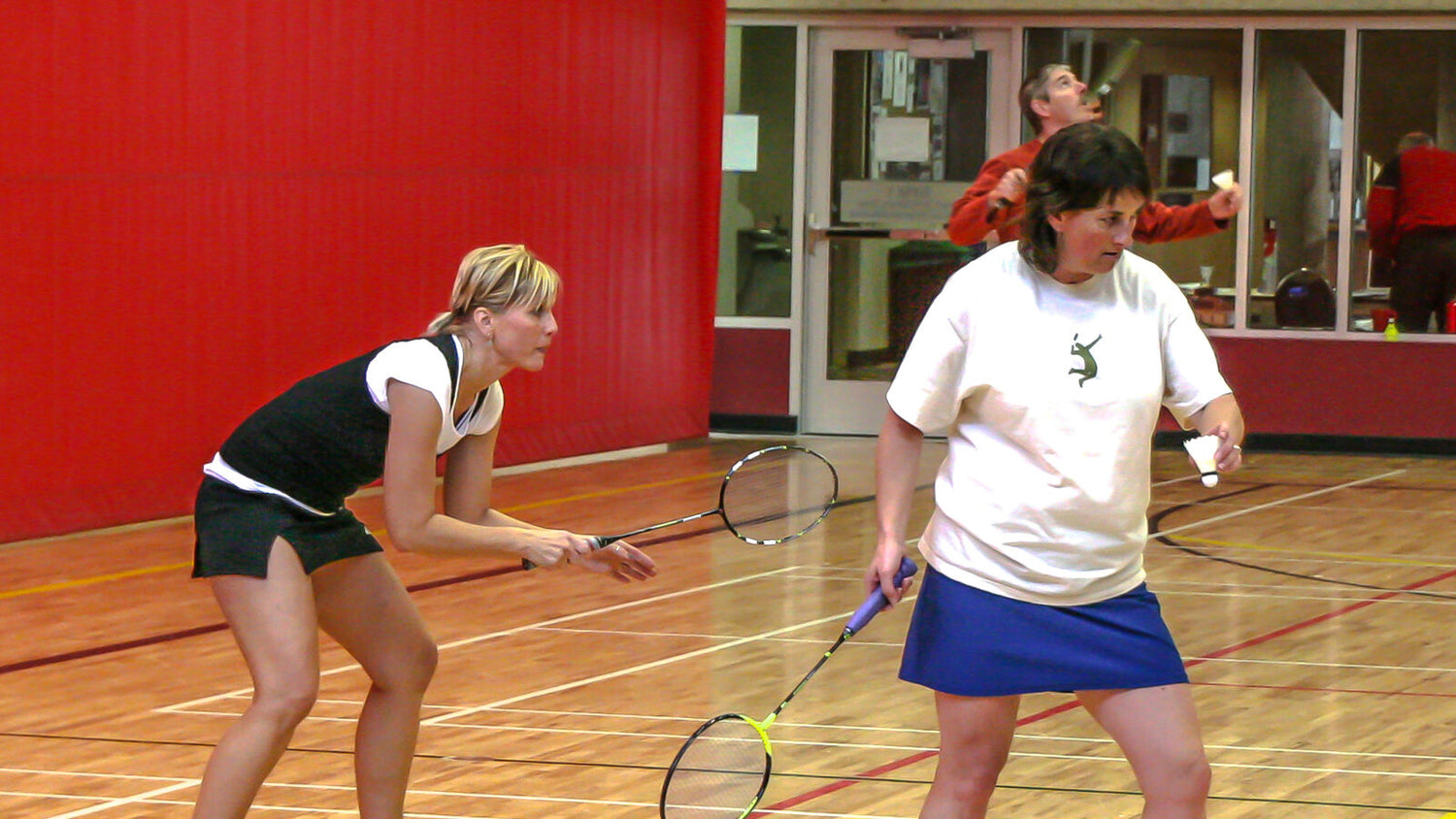
Banner photo: Murray Foubister, Wikimedia Commons, CC BY-SA 2.0, cropped.



Leave a comment
This site is protected by hCaptcha and the hCaptcha Privacy Policy and Terms of Service apply.