
Last updated: July 2026 · Written by the team at Badminton House
Quick Answer: Victor Badminton Brand History
Read Victor as a shuttlecock-born Taiwanese brand whose carbon-racket breakthrough explains why its heritage matters beyond current model comparisons.
Carbon
Key milestone: the Columbia full-carbon racket marked Victor’s move beyond iron/aluminum-era frames; the published timeline places the carbon-racket launch in 1983.
Origin
Founded in Taiwan in 1968, Victor began with shuttlecocks before expanding into rackets and broader badminton equipment.
Today
Victor products sell in more than 60 countries, with modern visibility through BWF team-event and World Tour Finals partnerships.
VICTOR started in Taiwan in 1968 with shuttlecocks before expanding into rackets and other badminton equipment. Its history provides context for the brand; choosing a current racket still requires comparing the actual weight, balance and flex.
Compare racket options. Browse badminton rackets when you are ready to compare weight, balance, and flex.
In This Guide
From Shuttlecocks to a Taiwan Badminton Brand

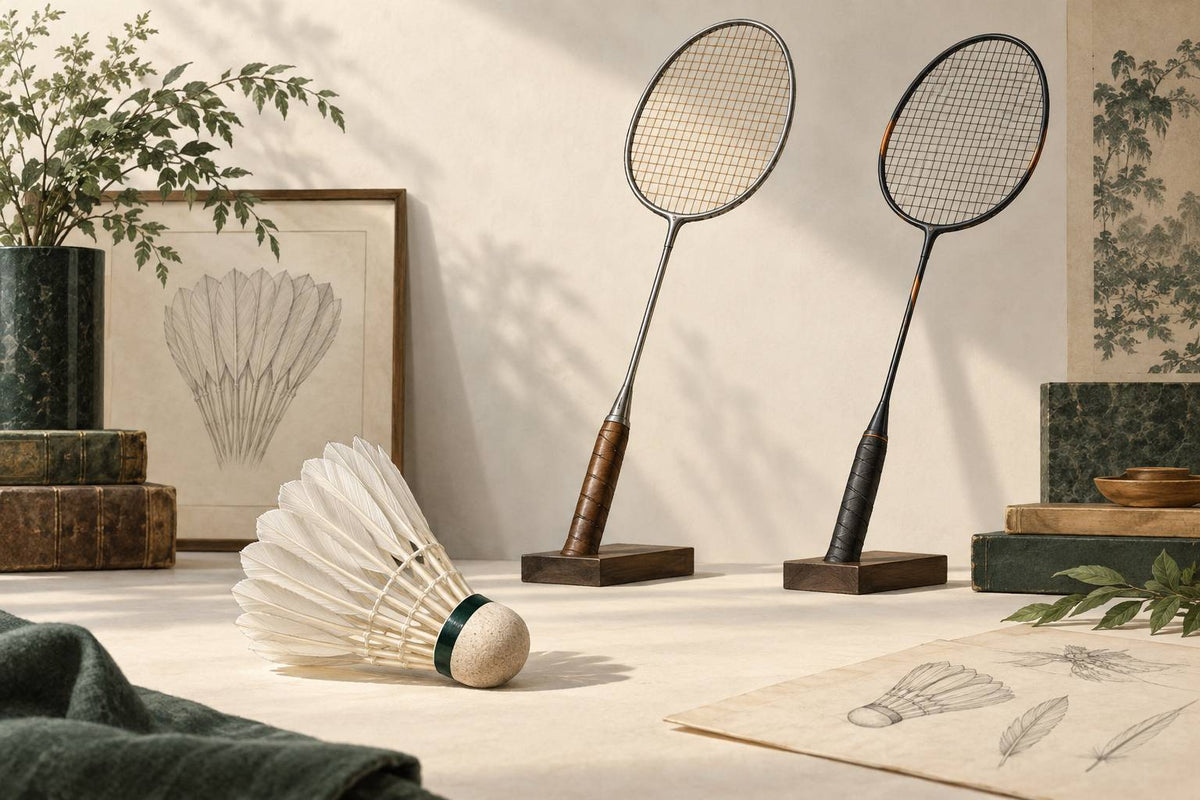
Before Victor became associated with high-performance rackets, its story started with the shuttle. VICTOR was founded in 1968 in Taiwan by Chen Den-li, who built the company around shuttlecock production rather than beginning as a full-line equipment maker. That origin matters because shuttlecocks are brutally revealing products: inconsistent weight, feather quality, or balance shows up immediately in flight.
Within two years, Victor's shuttlecocks became bestsellers in Taiwan, giving the young brand credibility before it moved deeper into badminton equipment. It is a useful reminder that victor badminton brand history does not begin with a famous racket silhouette or a sponsored star. It begins with a focused manufacturer solving the sport's most disposable but most essential item, then using that early momentum to grow into a broader Taiwan-based badminton brand.
The Full-Carbon Racket Milestone

Victor’s most important equipment milestone is its early move into full carbon fiber badminton rackets. Sources describe the shift as happening when iron or aluminum alloy rackets were still prevalent, making carbon fiber a meaningful break from heavier metal-frame construction rather than just a cosmetic update.
VICTOR’s published history separates the 1976 trademark registration from the first carbon-made racket and apparel-line launch in 1983. Its 2013 catalogue names Columbia as its first all-carbon racket. The dates should not be combined into a single 1976 equipment milestone.
For players, the point is the material direction: carbon changed how rackets could balance strength, weight, and feel. If you want the playing-side comparison, see our carbon vs aluminum vs steel racket guide.
International Expansion and Manufacturing Scale

Victor’s shift from a successful Taiwan shuttlecock maker to an international badminton brand came through export reach and manufacturing control. Its products were sold to markets including Austria, West Germany, and Malaysia, helping the company build an international marketing network rather than staying confined to its home market. Today, Victor describes its badminton equipment business as reaching more than 60 countries across five continents.
Manufacturing expanded with the brand: VICTOR’s timeline records the opening of its Nanjing production centre in 1992. That places the company’s growth beyond its original Taiwanese shuttlecock operation without inventing a separate factory milestone.
Sponsorships, Global Presence, and Today’s Victor Heritage

Victor’s heritage did not stop at materials and factories. The brand built visibility through athlete and event partnerships, including signing top professional Fung Permadi and launching the FUNG-2000 signature racket line. In 2009, Victor began an official partnership with the Korea National Badminton Team and became title sponsor of the BWF Korea Open. Its federation presence expanded again from 2022 as official equipment partner for BWF team events including the Thomas Cup, Uber Cup, and Sudirman Cup, followed by the BWF World Tour Finals from 2023.
That line from shuttlecock maker to full-carbon pioneer to global equipment partner is why Victor still carries a distinct challenger heritage today. Its published partner list includes Tai Tzu Ying, Ahsan/Setiawan, Naraoka Kodai, Lee Zii Jia and the Danish national team. For a side-by-side look at how that heritage plays out in today's rackets, read our Yonex vs Victor vs Li-Ning racket guide.
Which Should You Choose?
Use Victor’s history as context, not as the only buying reason. The brand’s strongest heritage signals are its 1968 Taiwan founding, early shuttlecock success, the full-carbon racket milestone, and its modern presence across rackets, shoes, apparel, shuttlecocks, and other gear.
| Choose this angle | Best fit |
|---|---|
| Victor heritage | You want a badminton-focused brand with roots in shuttlecocks, rackets, and international growth. |
| Full-carbon milestone | You care about the transition away from iron and aluminum-alloy frames; the Columbia racket is the key reference point. |
| Modern Victor | You prefer a brand with BWF event partnerships and collaborations with elite players and national teams. |
If that heritage points you toward a new setup, explore badminton rackets.
Get 10% off your first order
Join the Badminton House list and we’ll email you a 10% welcome code — plus training guides, technique advice, and badminton updates.
By subscribing, you agree to receive Badminton House emails and can unsubscribe anytime.
If Victor’s history has you thinking about your own setup, we’re happy to help. We play badminton ourselves, so our advice starts with how you move, swing, and score points — not just a spec sheet. If you’re unsure about weight, balance, flex, or string tension, contact us and tell us what you’re using now. We’ll point you toward a sensible shortlist.
Compare racket shapes, weights, and playing styles before your next upgrade.
Explore Badminton RacketsCheck live availability and choose with player-focused guidance.

Leave a comment
This site is protected by hCaptcha and the hCaptcha Privacy Policy and Terms of Service apply.