
Last updated: July 2026 · Written by the team at Badminton House
Quick Answer: Junior Badminton Burnout Warning Signs
Treat burnout signs as a load-and-pressure problem first: reduce demands, restore recovery, and ask what your junior still enjoys.
Pause
Best choice: if several warning signs (see below) start clustering together or persist, stop chasing extra reps and create a rest window.
Adjust
If motivation is present but training feels stale, lower volume, add variety, and keep organized badminton hours below the athlete’s age per week.
Watch
If pressure is mostly external, shift goals from ranking and selection to effort, learning, and choice in the training plan.
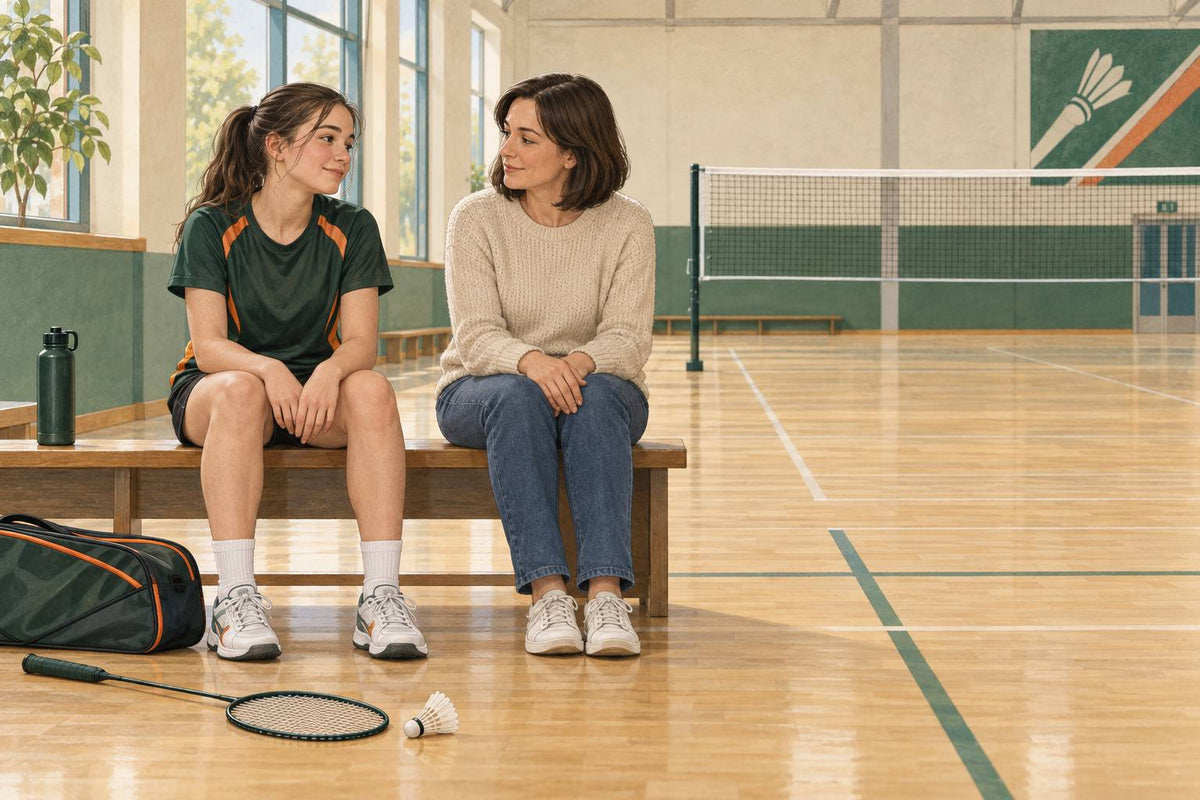
When a junior player starts dreading the bag check, dragging through footwork, or looking flat even while training harder, do not treat it as laziness. Burnout tends to build quietly, and a talented 12-16-year-old may hide it because they think "good players" never complain.
This guide helps parents and coaches spot junior badminton burnout warning signs early, before a talented athlete connects their whole identity to results or quits to get relief.
In This Guide
What Junior Badminton Burnout Warning Signs Look Like

Junior badminton burnout is not something to label from one bad practice. Think of it as a pattern: fatigue and declining performance even though the player keeps training, or trains more, combined with a clear loss of fun and accomplishment on court.
- Persistent tiredness that does not improve after normal rest.
- Unexplained drops in speed, timing, accuracy, or match focus.
- Frequent illness, more aches, or a higher injury risk.
- Mood changes, irritability, sleep disturbances, or appetite changes.
- Decreased enthusiasm: skipping warm-ups, dreading practice, or no longer feeling proud after effort.
There is no single test for burnout; the warning sign is the cluster and the direction it is moving. If recovery basics are unclear, start with The Badminton Recovery Guide before adding more training load.
Why Talented Juniors Are Especially at Risk Before 18

Talented juniors often get rewarded with more court time, tougher tournaments, and earlier single-sport focus. In badminton, that can mean the same footwork patterns, multi-shuttle pressure, match travel, and technical correction repeated for years before the athlete has adult recovery habits or emotional stability.
Badminton-specific evidence links burnout with lack of training variety, too-fast specialization, intense training, heavy pressure, and psychological instability. Dropout reasons in adolescent badminton also include education conflicts, difficulty dividing time, switching sports, negative impressions, environmental influence, early specialization, and feeling too much pressure. Broader badminton evidence points the same way: higher competition level, longer training history, and higher perceived pressure are associated with higher athletic burnout.
That is why junior badminton burnout warning signs deserve extra attention in single-sport specialists. One adolescent-athlete study also found females generally showed higher burnout scores, although it did not find a specialization-by-gender interaction.
Training-Volume Red Flags for Ages 12–16

For 12–16-year-olds, use a simple parent gauge: organized sport hours per week should not exceed the athlete’s age. That means a 13-year-old doing 14 organized sport hours is already past the recommended line, even before homework, commuting, sleep loss, or tournament weekends are considered. Overuse-injury risk also rises when athletes train more than 16 hours per week or more hours than their age.
- Weekly guardrail: keep at least 1–2 days off from organized training each week.
- Yearly guardrail: plan 3 months away from badminton each year, ideally in 1-month blocks.
- Specialization guardrail: delay single-sport specialization as long as possible, play one organized sport per season, and limit the chosen sport to no more than eight months per year.
If performance drops, do not automatically add volume or intensity. More training can worsen the fatigue-performance cycle that burnout feeds on.
How Parents Can Help Without Adding Pressure

Parents prevent burnout best by becoming a pressure-release valve, not another performance voice. Use this checklist before the season feels urgent:
- Check in weekly: ask about energy, mood, sleep, soreness, and how hard training feels, not just results.
- Protect autonomy: let the player help choose events, rest days, and goals so badminton still feels like theirs.
- Test motivation: ask whether they want more badminton because they enjoy it, or because they feel they must please adults or keep up.
- Keep variety: mix in other sports, movement games, and age-appropriate workouts instead of year-round repetition.
- Defend downtime: if warning signs are present, do not add training to “fix” poor performance; rest is the core treatment, and a break from training or competition may need four to 12 weeks.
Which Path Should You Choose?
| Choose this path | Use it when | Parent action |
|---|---|---|
| Stay steady | Training hours are below the athlete’s age per week, enthusiasm is still present, and performance is not sliding. | Keep regular check-ins about energy, mood, sleep, and perceived effort. |
| Deload now | Two or more of the warning signs above start showing up together. | Reduce volume instead of adding extra sessions to chase lost performance. |
| Pause and recover | Performance keeps declining despite continued or increased training. | Prioritize rest; burnout recovery can require a set break from training and competition. |
| Change the setup | Training feels monotonous, pressure is high, or the junior has little say in their schedule. | Add variety, protect downtime, and ask whether specialization is passion-led or pressure-led. |
Get 10% off your first order
Join the Badminton House list and we’ll email you a 10% welcome code — plus training guides, technique advice, and badminton updates.
By subscribing, you agree to receive Badminton House emails and can unsubscribe anytime.
We play badminton too, so our advice is simple: protect the player before the results. If your junior’s energy, mood, sleep, or enthusiasm has changed, pause the performance conversation and ask what would make badminton feel healthy again. Contact us anytime with questions along the way.
When training resumes, a well-fitted, appropriately weighted racket can keep sessions comfortable without turning recovery into a gear chase.
Check Live Availability in Badminton Rackets

Leave a comment
This site is protected by hCaptcha and the hCaptcha Privacy Policy and Terms of Service apply.