
Last checked: August 2026 · Written by the player-led team at Badminton House
Quick answer
Use court geometry, not colour alone: a boundary line is in, and singles and doubles use different long service boundaries. Regulation badminton lines are 40 millimetres and preferably white or yellow, but that does not create a universal shared-gym colour code.
Start with A boundary line counts as in
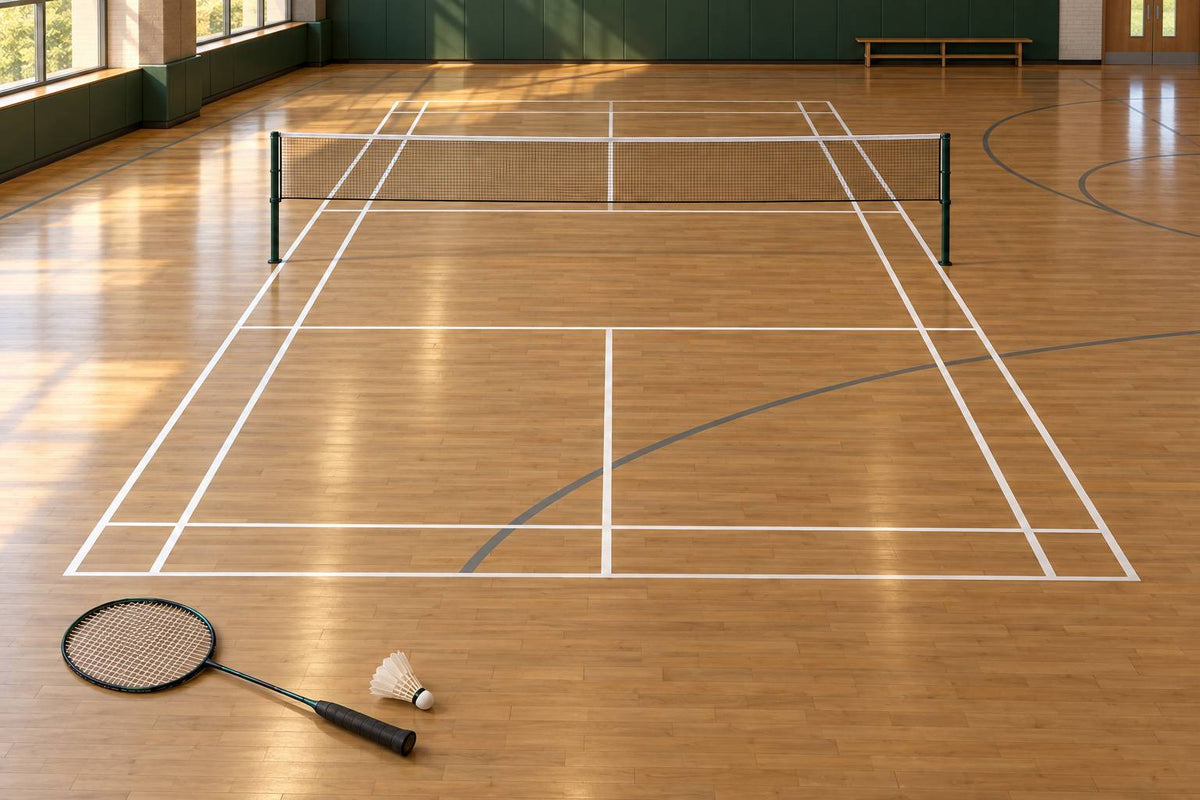
Read a multi-use gym from court geometry first. The aim is to identify the badminton court before serving, then agree a temporary local reference if the paint cannot be read confidently; it is not to infer a universal colour code from one hall.
- Find the net posts first and trace the two sidelines they define.
- Find the short service line and centre service line, then follow each service court toward the back boundary.
- Choose singles or doubles before deciding which long service boundary applies to the serve.
- If a necessary marking is obscured, agree a visible temporary reference with opponents before the first serve and ask the facility how it wants the floor protected.
Related reading: Badminton Court Dimensions: Lines & Net Height — for the court geometry behind the markings.
A boundary line counts as in
A badminton boundary line is part of the area it marks, so a shuttle landing on the relevant line is in. That rule resolves the basic call; it does not by itself identify which overlapping gym marking belongs to the chosen badminton court. BWF Laws of Badminton

Singles and doubles use different service boundaries
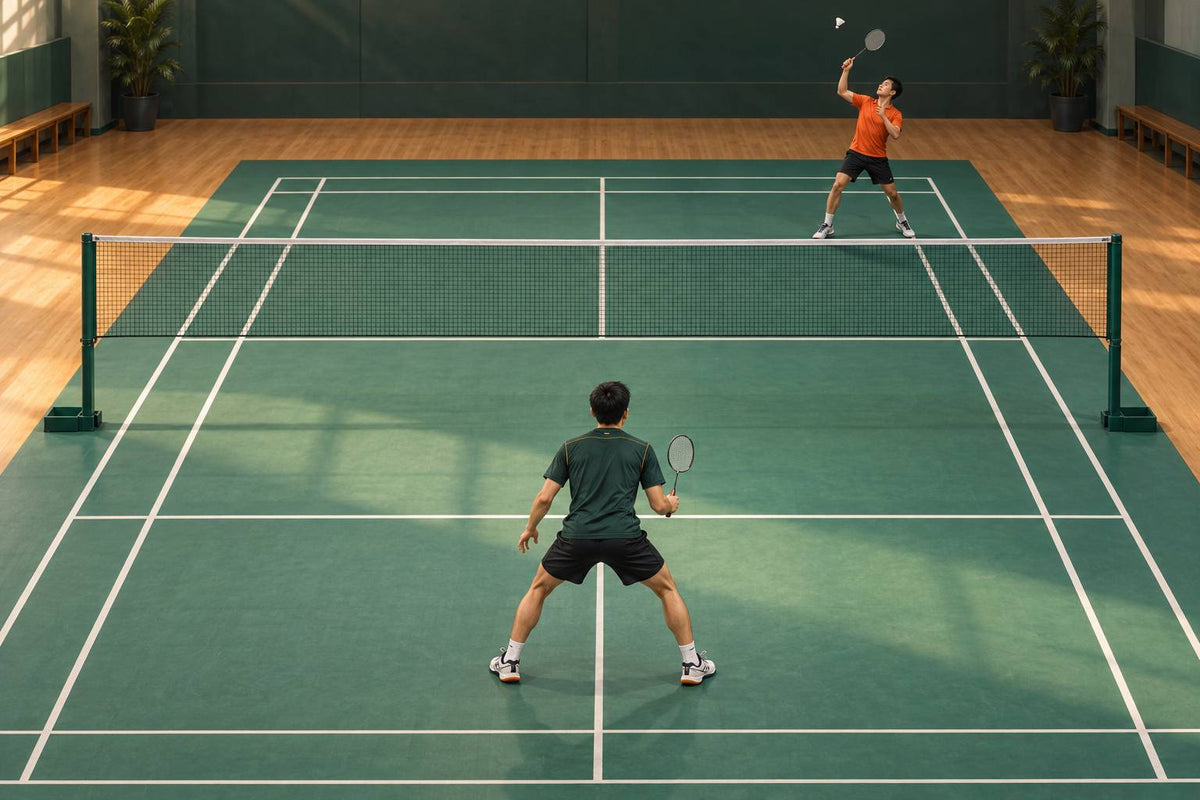
Singles and doubles use different long service boundaries, so identify both the event and service situation before calling a serve long. The same painted gym court can therefore have a different relevant rear line without changing the rule that the line itself is in. BWF Laws of Badminton and BWF Shuttle Time Manual
| Format | Long service boundary | Line call |
|---|---|---|
| Singles | Back boundary | The relevant boundary line is in |
| Doubles | Rear doubles service line inside the back boundary | The relevant boundary line is in |

Make a shared gym-court reference
BWF specifies 40-millimetre, distinguishable court lines and prefers white or yellow; that helps a group recognize intended badminton markings among other gym lines. Before play, trace the agreed boundaries together rather than deciding an ambiguous mark only after a disputed rally. BWF Laws of Badminton

Use this distinction on court
Before serving, separate three questions: which painted shape is the badminton court, which boundary applies to this format and service, and whether the shuttle touched that line. Trace the sidelines from the net posts, then identify the short, centre and long service lines together. If a marking remains unclear, ask the organiser rather than deciding from its colour or position alone.
Source-bound context
Questions the cited sources do not settle
- A universal colour convention in every multi-sport gym.
- A claim that the outermost visible line always belongs to badminton without checking the court layout.
What to do next
Before the first serve in a multi-use gym, agree the badminton boundaries and the relevant long service line with the other players; ask the facility when the markings remain unclear.


Leave a comment
This site is protected by hCaptcha and the hCaptcha Privacy Policy and Terms of Service apply.