
Last checked: August 2026 · Written by the player-led team at Badminton House
Quick answer
BWF Shuttle Time, a schools and beginner-teaching curriculum, places Swing and Throw before Throw and Hit. Level 1 describes coach-led overarm hand-feeding for overhead-stroke habits, but neither source validates a standalone no-racket programme, dose, or smash-power claim.
Start with Use Swing and Throw before Throw and Hit
Local observation activity: use a racket-free throw only to make one visible overhead feature easier to discuss. It is not presented here as a BWF drill, a progression requirement, or a test of smash power.
- Identify the cited teaching order: Swing and Throw comes before Throw and Hit in Shuttle Time.
- For a local observation activity, name one visible feature such as a side-on setup, rear-leg contribution, transfer, or high reach.
- Keep the observation separate from a claim about power, injury prevention, or a prescribed number of throws.
- Use current coach material when choosing a coached hand-feed or any later racket-and-shuttle task.
Related reading: Badminton Forearm Pronation: Smash Power Guide — for a separate racket-and-shuttle overhead-action topic.
Use Swing and Throw before Throw and Hit
BWF Shuttle Time, a schools and beginner-teaching curriculum, places Swing and Throw before Throw and Hit in its teaching progression. That order supports only the cited teaching sequence. It does not establish an adult no-racket dose, a readiness threshold, or a rule that every reader should move to a fed-shuttle task. BWF Shuttle Time Manual

The Level 1 manual also describes practice progressions from simple to complex, slow to fast, and predictable to unpredictable. That general principle does not prescribe a transition point for this page’s local activity. It simply explains why a sequence can be discussed without turning a throwing exercise into a test of smash speed. BWF Level 1 Manual
Within Shuttle Time, Swing and Throw is a two-lesson mid-court section designed for children who are preparing for overhead hitting. The manual says teachers can move to later sections when appropriate for the individual or group and should evaluate children’s progress after each lesson. That is flexibility inside a schools programme, not a numerical readiness threshold, adult throwing dose, or rule that a local racket-free activity must progress to a fed shuttle. BWF Shuttle Time Manual
The two cited sources do different jobs. Shuttle Time provides the named order inside a schools and beginner-teaching curriculum. Level 1 provides a broader coaching principle about changing practice conditions. Neither source says that a reader’s racket-free throw is the same activity as a curriculum module, or that a visible throw selects the next coached task.
Observe the overhead-feed positions
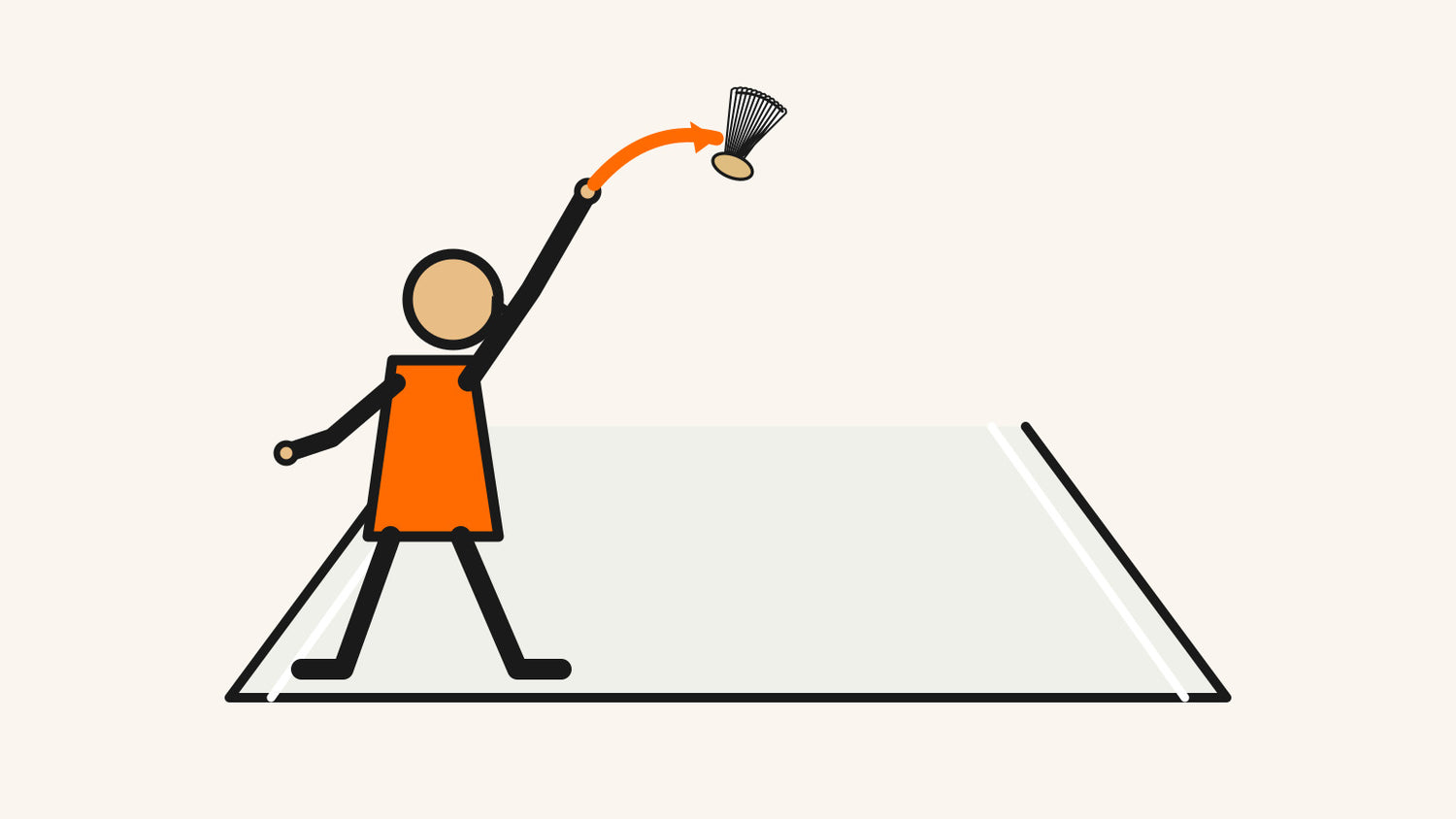
The Level 1 manual presents an overarm hand-feed as a coach-led teaching activity for overhead-stroke habits, including a side-on setup, rear-leg contribution, weight transfer, and high reach. It does not validate a reader’s standalone no-racket programme, dose, or effect. BWF Level 1 Manual

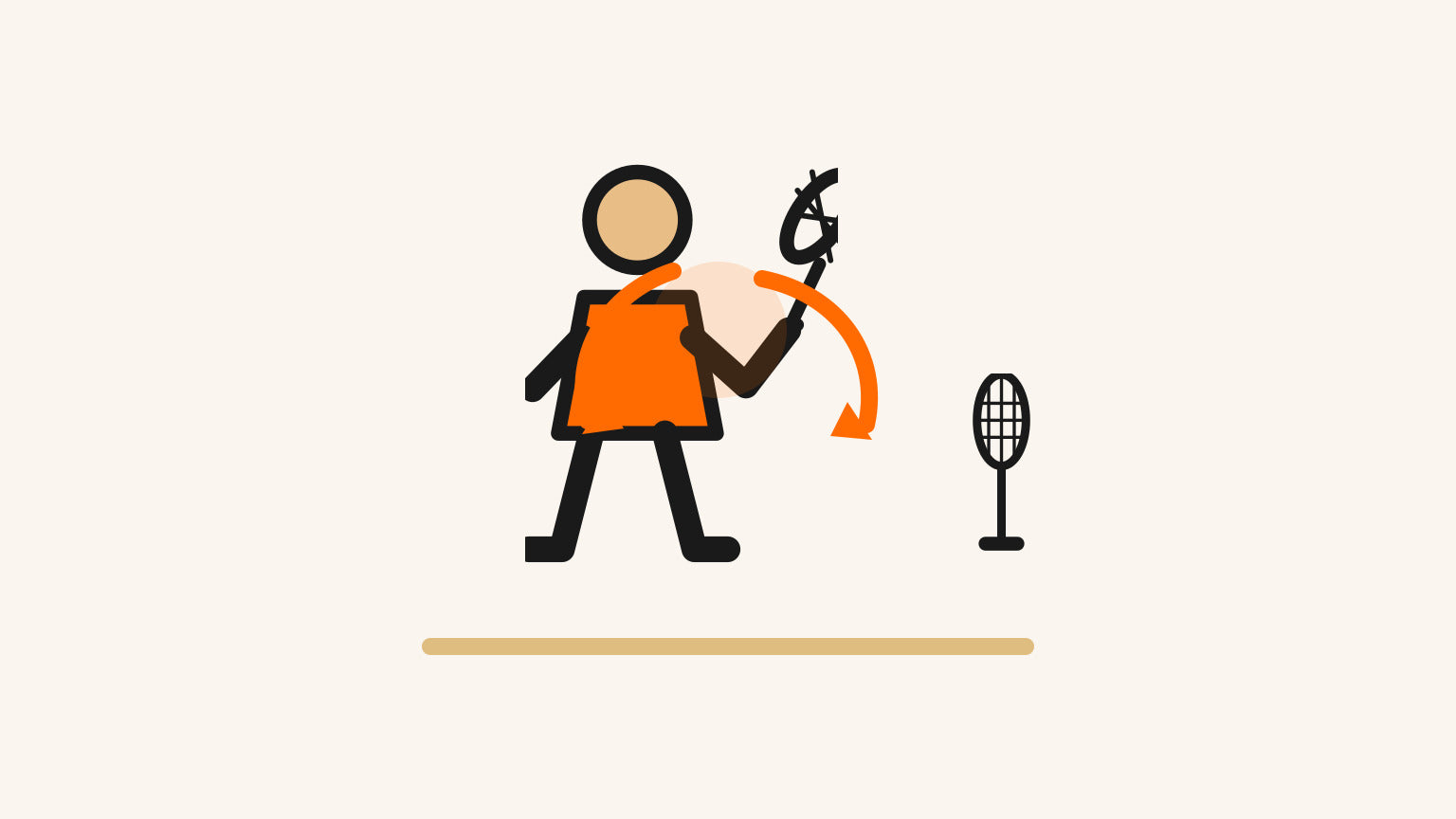
Local observation activity: a player and partner may choose one of those visible features to discuss during a racket-free throw. This is a deliberately narrow review method, not a substitute for the cited coach-led hand-feed and not evidence that the action reproduces live shuttle contact or predicts later power.
The Level 1 manual gives both advantages and limits of hand feeding. It says hand feeding can provide many practice opportunities in a short time and can mimic upward or downward shots. It also notes that an overhead hand feed is difficult to deliver accurately and provides only limited opportunity for a player to pick up the shuttle’s flight. Those limits reinforce that the cited feed is a coached teaching context, not the same thing as a rally or a local no-racket observation. BWF Level 1 Manual
The difference between a hand-feed and a reader throw is practical as well as evidential. The cited hand-feed is a coach-led activity with an overhead-stroke teaching purpose. A reader who uses a throw for observation can only record what is visible in that throw. The reader cannot use that observation to claim that the movement has been coached, transferred to a live shuttle, or measured for performance.
Keep no-racket power claims out of scope
The cited guidance describes practice progression and coach-led hand-feeding; it does not validate a no-racket power programme. Keep a local throwing activity bounded to observation rather than claiming it increases smash power, prevents injury, establishes a dose, or replaces coached racket-and-shuttle work. BWF Level 1 Manual

In this article’s local observation format, the note answers only a descriptive question such as whether a side-on setup or high reach was visible. Shuttle timing, contact quality, and later power remain outside what the cited manuals establish for this activity.
The Level 1 progression guidance says players should not move through practices until they are reasonably competent at each level. It gives no number of throws, success percentage, or power measure for that judgement. The usable source-bound conclusion is therefore modest: keep the curriculum sequence and general progression principles visible, while leaving the exact activity, repetitions, and next task to the local coaching context. BWF Level 1 Manual
Keep the source boundary visible
Local observation checklist: record whether a side-on setup, rear-leg load, forward transfer, and high reach are visible in a racket-free throw. It is a local observation, not a BWF module, a prescribed dose, or a smash-power test.
Shuttle Time provides the named module order, and Level 1 describes a coach-led overarm hand-feed. A later coached task is a local coaching decision; record the visible feature and task context without treating the local pose as a programme result.
Questions the cited sources do not settle
- An adult no-racket programme with prescribed repetitions.
- A claim that a throwing drill increases smash power or prevents injury.
What to do next
Record one visible overhead cue. If a later feed is chosen, use appropriate coaching material; the cited sequence does not identify a mandatory follow-up task.

Leave a comment
This site is protected by hCaptcha and the hCaptcha Privacy Policy and Terms of Service apply.