
Last updated: June 2026 · Written by the team at Badminton House
Quick Answer: Wide Feet Badminton Shoes
Choose a badminton-specific wide-fit court shoe when length feels right but the forefoot still feels squeezed.
Default
Try wide fit first if your pinky toe or ball of foot feels compressed in regular court shoes.
Heel
Do not size up only for width if your heel starts sliding during lunges or recoveries.
Support
Flat feet or orthotics usually need a stable base and removable insole, not just extra space.
Online
Measure in centimetres, test indoors on a clean floor, and confirm the return window before court play.
The best badminton shoes for wide feet are wide-fit indoor court shoes that give your forefoot room without letting your heel slide. For many Canadian players, the real problem is not the size number. It is the shape: the shoe is long enough, but the toe box narrows too quickly or the midfoot presses down when you move.
If you get forefoot squeeze, hot spots, blisters, black toenails, arch fatigue, or anxiety about ordering shoes online, do not just size up blindly. A longer shoe can create heel slip and extra rubbing. The goal is simple: room across the ball of the foot, a secure midfoot, and enough side support for lunges and quick direction changes.
Before you choose a size: use the size guide and contact us if you are between sizes, using orthotics, or unsure whether a wide-fit model is right for you.
Which Wide-Foot Fit Problem Do You Have?
Wide feet do not all create the same shoe problem. Use the path below that sounds most like your last pair, then check the details before you buy.
Best for forefoot squeeze
Start with a clearly labelled wide model or a rounder toe-box shape. This is the most common wide-foot badminton fit problem.
Best for heel slip
Do not solve width by buying too long. Look for forefoot room with a secure heel counter and midfoot lockdown.
Best for flat feet or orthotics
Prioritize a stable base, removable insole, and enough shoe volume to fit your usual orthotic without crowding the toes.
Best for online sizing anxiety
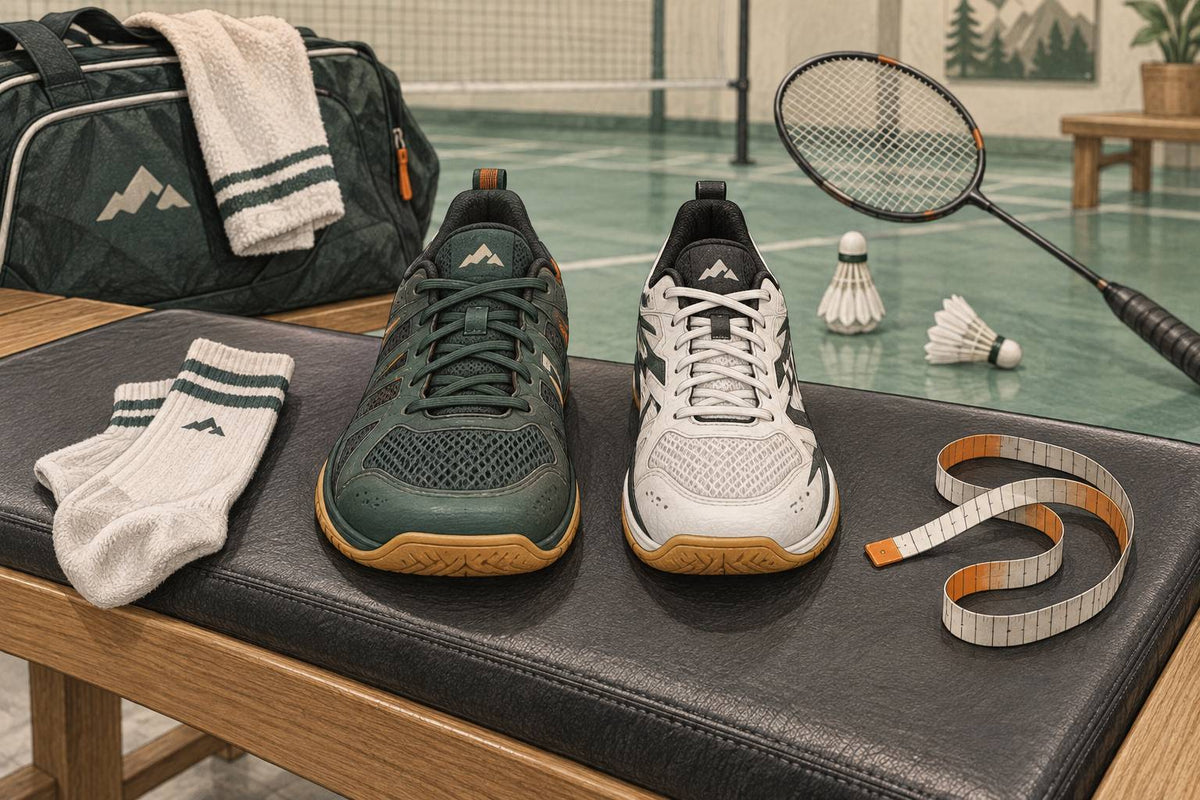
Use centimetres, compare both feet, test at home with badminton socks, and keep shoes clean until you are sure.
What Should Wide-Foot Players Buy First?
Start with a badminton-specific wide-fit shoe if one is available in your size. Yonex currently lists wide versions in popular performance lines such as Power Cushion 65 Z Wide, and some models are explicitly built around extra forefoot room. Victor uses a shoe-last system that includes U-shape and V-shape lasts, with narrow, standard, and wide options depending on model.
The key is not brand loyalty. It is matching your foot shape to the last. A shoe can be excellent and still wrong for you if the forefoot tapers too aggressively or the midfoot presses on the top of your foot. When you are ready to compare current models and sizes, browse our badminton footwear collection.
| If This Happens | Look For | Avoid |
|---|---|---|
| Pinky toe pressure or forefoot squeeze | Wide fit, rounder toe box, softer upper over the forefoot | Narrow speed shoes with a sharply tapered front |
| Blisters after lunges | Secure heel, stable midfoot, smooth sock and lace setup | Going longer just to gain width |
| Flat feet or arch fatigue | Stable base, firm heel counter, removable insole if you use orthotics | Overly soft shoes that collapse side-to-side |
| Top-of-foot lace pressure | Adjustable lacing, moderate tongue padding, enough volume | Cranking laces to fix a poor fit |
Path 1: Forefoot Squeeze

You probably need wide badminton shoes if your regular court shoes feel fine in length but squeeze across the ball of the foot. The most common clue is pressure on the outside of the forefoot or pinky toe, especially after split steps, defensive pushes, or deep lunges.
- Your shoe has enough length for toe room, but the sides feel compressed.
- You loosen the forefoot laces a lot, but the shoe still feels tight.
- You get hot spots in the same place every session.
- Your foot spreads noticeably when standing compared with sitting.
- You normally buy wide running shoes or casual shoes.
Blisters and irritation are usually friction problems, not proof that a shoe is medically wrong for your foot. HealthLink BC advises wearing shoes that fit properly and allow toe wiggle room, and MedlinePlus notes that blisters often happen where shoes rub or create pressure. If pain is sharp, persistent, or injury-related, talk to a qualified health professional.
Path 2: Heel Slip

Heel slip often appears when a player sizes up to escape forefoot pressure. The shoe feels more comfortable while standing still, but during lunges the heel lifts, the toes slide forward, and friction builds.
Wide-foot players need width and lockdown at the same time. When testing a pair, lace the shoe normally, stand tall, then do a few gentle badminton lunges indoors. Your heel should stay planted, your toes should not jam into the front, and the upper should hold your midfoot without crushing the forefoot.
Fit rule
If the only way to stop side pressure is to buy a shoe that feels too long, keep looking for a wider shape instead of accepting heel slip.
Path 3: Flat Feet or Orthotics
Wide shoes can help if your foot spreads across the forefoot, but flat feet are not only a width issue. Many players also care about platform stability, arch comfort, and whether their usual orthotic fits without making the shoe too tight.
If you use orthotics, look for a removable insole and test the shoe with your orthotic in place. The shoe should still close comfortably over the top of your foot, hold your heel securely, and feel stable during side-to-side movement. This is fit guidance, not medical advice; if your pain is persistent or injury-related, speak with a qualified health professional.
Are Yonex or Victor Shoes Better for Wide Feet?
Yonex is often the easiest place to start because its wide-fit models are clearly labelled and widely discussed by badminton players. For example, Yonex lists the Power Cushion 65 Z Wide with a wide fit, and Yonex Japan has described the 65 Z range as available in men, women, wide, and slim versions.
Victor can be a strong option if you pay attention to the last. Victor explains that its badminton shoes use U-shape and V-shape lasts, and those lasts can be further separated into narrow, standard, and wide versions. In plain English: a Victor model may feel rounder or narrower depending on the last, so check the model details rather than assuming all Victor shoes fit the same.
Fit note from the court
Yonex wide models are the simpler online-buying choice when the listing clearly says wide. Victor is worth considering when the specific model uses a last that matches your toe shape and you want a supportive, planted feel.
For more detail on support, cushioning, and brand feel, read our Yonex vs Victor badminton shoes comparison.
Path 4: Online Sizing Anxiety
Use this checklist before you order badminton shoes online in Canada. It reduces guesswork without pretending every foot is the same.
- Measure both feet at night. Feet often feel larger after a day of walking or a hard session. Use the larger foot.
- Compare centimetres, not only US size. Badminton brands can convert sizes differently. Toe clearance is a fitting check rather than a universal 1 cm rule; compare the model’s sizing guidance and confirm that toes do not jam during controlled movement.
- Check width separately from length. If your current shoe is long enough but tight on the sides, look for wide fit instead of sizing up.
- Wear your badminton socks when testing. Sock thickness changes fit more than people expect.
- Test lunges indoors on a clean surface. Your heel should stay down and your toes should not jam forward.
- Confirm the return window before playing. Keep shoes clean and try them indoors only until you are sure.
| At-Home Test | Good Sign | Warning Sign |
|---|---|---|
| Standing fit | Toes have room to wiggle without side pressure | Pinky toe is pressed hard into the upper |
| Lunge test | Heel stays down and toes do not jam forward | Heel lifts or foot slides inside the shoe |
| Orthotic test | Shoe still closes comfortably over the foot | Top of foot feels crushed or heel no longer sits right |
| Clean-floor movement | Stable side-to-side with no rolling feeling | Foot spills over the side or shoe feels unstable |
What Mistakes Should Wide-Foot Players Avoid?
Mistake 1: Buying Running Shoes for Badminton
Running shoes are built for forward motion. Badminton needs repeated lateral stops, lunges, recoveries, and court grip. If you use an alternative, it should still be a clean non-marking indoor court shoe with side support.
Mistake 2: Assuming Break-In Will Fix Width
A little upper softening is normal. Painful side pressure is not a smart bet. If the shoe crushes your toes when new, it is unlikely to become the right shape for serious play.
Mistake 3: Choosing the Lightest Shoe at Any Cost
Light shoes can feel amazing, but wide-foot players often need enough structure to stop the foot from spilling over the side. Prioritize fit and stability first, then compare weight.
Mistake 4: Ignoring Laces and Insoles
Sometimes the shoe is close, but the setup is wrong. Try a slightly thinner sock, different lacing tension, or your usual sport insole if the shoe has a removable footbed. Do not use an insole to force a too-small shoe to work.
What If Badminton-Specific Shoes Still Do Not Fit?
If you cannot find a badminton shoe that fits your width, look at non-marking indoor court shoes from nearby sports such as volleyball, squash, handball, or indoor court training. This is a backup plan, not the first recommendation, because sport-specific badminton shoes are designed around badminton footwork.
For alternatives, check three things before buying: the sole must be non-marking, the shoe must support side-to-side movement, and the outsole should grip indoor courts without deep outdoor tread. Avoid outdoor runners, trail shoes, casual sneakers, and anything that leaves marks on the court.
Honest fit rule: the best shoe is the one that lets you move safely and confidently on court. If a badminton model does not fit, a proper non-marking indoor court shoe is better than forcing your foot into the wrong shape.
Wide Feet Badminton Shoe FAQ
Should I size up for wide badminton shoes?
Only size up if you need more length. If the shoe is already long enough but tight across the forefoot, choose a wide fit instead. Oversizing can cause heel slip, toe jamming, and friction.
Are wide badminton shoes good for flat feet?
Wide shoes can help if your foot spreads across the forefoot, but flat feet may also need a stable platform and comfortable arch setup. If you use orthotics, look for removable insoles and test the fit with your orthotic in place.
Are Yonex wide shoes 4E?
Some Yonex wide badminton shoes are described as 4E in official Japanese materials, while North American product pages may simply label the model as wide. Always check the exact model page and size chart before ordering.
Can I wear tennis shoes for badminton?
Some indoor court shoes can work if they are clean, non-marking, grippy, and supportive for lateral movement. Outdoor tennis shoes are usually not ideal for indoor badminton courts because the outsole and movement profile may not match the surface.
How should wide badminton shoes feel when new?
They should feel secure, not painful. A little upper softening is normal, but sharp side pressure, toe crowding, or heel movement during lunges is a sign to reassess the size or model.
What should I do if I am between sizes?
Compare your foot length in centimetres, test with the socks you play in, and choose the option that keeps both the forefoot and heel controlled. If one size fixes width but creates heel slip, look for a wider shape instead.
Find a court shoe that fits your foot, not just your size label.
Get Shoe Fit AdviceUse the size guide · Free shipping on $200+ · Canadian badminton specialty shop
Get 10% off your first order
Join the Badminton House list and we’ll email you a 10% welcome code — plus subscriber-only restock alerts, giveaways, and honest gear advice from players.
By subscribing, you agree to receive Badminton House emails and can unsubscribe anytime.

Leave a comment
This site is protected by hCaptcha and the hCaptcha Privacy Policy and Terms of Service apply.