
Last updated: July 2026 · Written by the team at Badminton House
Quick Answer: Best Badminton Socks
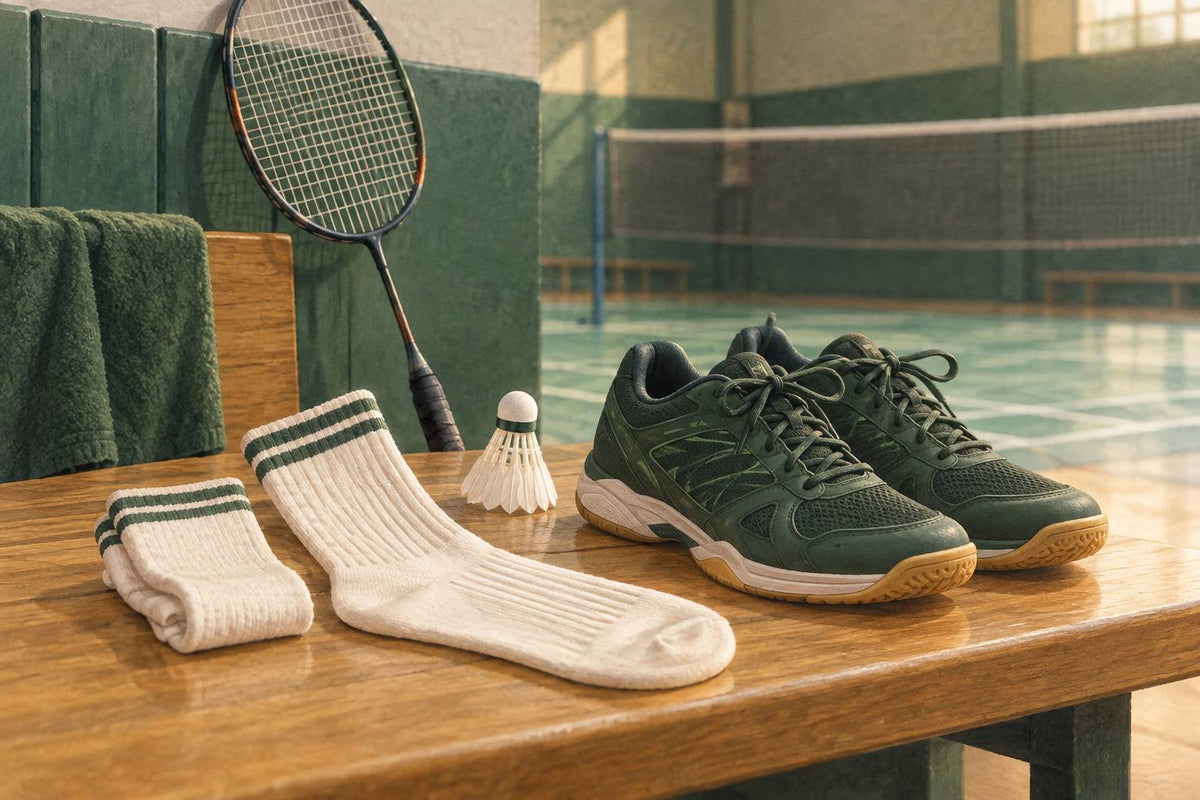
For most Canadian indoor-court players, the best badminton socks are cushioned, snug-fitting, moisture-wicking socks that reduce sliding inside your court shoes.
Default
Best choice: a medium-cushion crew sock with moisture-wicking synthetic fibres, a snug fit, and padding at the heel and ball of the foot for repeated lunges, stops, and pivots.
Grip
Choose socks with a non-slip sole or grippy in-shoe feel if your foot slides forward or sideways inside your badminton shoes during hard changes of direction.
Blisters
Prioritize seamless construction, targeted cushioning, and a snug close fit; avoid thin everyday socks and 100% cotton socks if sweat and rubbing are a problem.
Upgrading shoes too? Start with dedicated indoor badminton footwear in our badminton footwear collection, then choose socks that improve in-shoe grip, sweat control, and blister prevention. Badminton House ships across Canada.
In This Guide
- Why Do Badminton Socks Matter?
- Best Overall: Cushioned, Moisture-Wicking Badminton Socks
- Best for Grip: Socks That Stop Your Foot Sliding Inside the Shoe
- Best for Blister Prevention: Seamless Fit and Targeted Cushioning
- Low-Cut or Crew: Which Sock Height Is Best?
- Pair Socks With Proper Badminton Shoes
- Buying Socks to Match Your Shoes
- Which Badminton Socks Should You Choose?
Why Do Badminton Socks Matter?
Poor or ill-fitting socks can turn a good shoe into an uncomfortable one. If the sock is too thin, too loose, or bunches inside the shoe, it can create friction that leads to discomfort, chafing, abrasions, or blisters. A well-chosen sock helps the shoe fit and feel more stable during court movement.
- Cushioning: Extra padding under high-pressure areas like the heel and ball of the foot helps protect against repeated lunges, jumps, and hard stops.
- Moisture control: A good badminton sock should absorb or wick sweat so your foot does not stay slippery and soaked during long club nights or tournament matches.
- Ventilation: Breathable fabric helps manage heat and sweat build-up inside indoor court shoes.
- Snug fit: A sock that fits close to the foot reduces bunching and helps fill small gaps between your foot and shoe.
- Support: Quality sport socks can add a more secure feel around the foot, especially during fast starts, stops, and lateral movement.
- In-shoe grip: Non-slip or grippy sock construction helps reduce your foot sliding inside the shoe, which matters when you push hard into side lunges and recoveries.
For Canadian players who train mostly on indoor courts, socks are part of the same comfort system as your shoes. If your feet feel hot, damp, unstable, or blister-prone, do not only blame the shoe — check the sock fit and fabric too. For a deeper look at the shoe side of the equation, see our guide to badminton shoes vs running shoes, or browse our current badminton footwear.
Best Overall: Cushioned, Moisture-Wicking Badminton Socks

Choose performance socks that fit smoothly inside your court shoes and manage moisture; the right thickness depends on the space available in that shoe.
Best overall sock profile: choose a cushioned synthetic-blend badminton sock with polyester or nylon for sweat management, targeted padding under the heel and forefoot, and a secure fit that does not bunch inside your shoe.
What to look for in an all-around badminton sock
| Feature | Why it helps on court |
|---|---|
| Thicker-than-everyday cushioning | Adds protection under repeated training loads and helps reduce abrasions and blisters. |
| Moisture-wicking synthetic fibres | Polyester and nylon are better choices for sweat management than 100% cotton, which is not moisture-wicking. |
| Snug, secure fit | Reduces bunching and excess movement inside the shoe, especially during lunges, split steps, and recovery steps. |
| Targeted padding | Cushioning at high-friction zones such as the heel and ball of the foot improves comfort without making the whole sock feel bulky. |
Avoid treating a regular cotton gym sock as the default. Cotton can feel soft when dry, but 100% cotton does not wick moisture well. For badminton, a synthetic blend is usually the smarter all-around pick because it can move sweat away from the skin, dry more quickly, and hold its shape better when wet.
Fit is just as important as material. A good sock should feel close to the foot without cutting off circulation. If you can feel folds under the arch or toes once your shoe is tied, the sock is too loose or too bulky for that shoe.
If you are upgrading socks because your current shoes feel unstable or uncomfortable, check the shoe fit too. A proper indoor badminton shoe plus the right sock is the real comfort system; one cannot fully fix the other. You can browse current Canadian footwear options in our badminton footwear collection, and if you are unsure whether your court shoes are appropriate, read our guide to badminton shoes vs running shoes.
Best for Grip: Socks That Stop Your Foot Sliding Inside the Shoe
On Canadian indoor wood or synthetic courts, the shoe outsole grips the floor; the sock’s grip job is keeping your foot stable inside the shoe during lunges, pivots, and split steps.
| Grip feature | What to look for | Why it matters in badminton |
|---|---|---|
| Snug fit | A sock that hugs the heel, arch, and forefoot without bunching. | The right socks help maintain grip by reducing excess movement inside the shoe. |
| Non-slip sole | Badminton or indoor-court socks with a non-slip sole if your foot feels like it is skating inside the shoe. | A grippy sole layer cuts the skating feeling during hard direction changes and quick recoveries. |
| Targeted cushioning | Cushioning through high-friction areas such as the heel and ball of the foot. | Badminton’s stop-start footwork can create friction, discomfort, chafing, and blisters when socks fit poorly or offer too little protection. |
| Moisture control | Moisture-wicking synthetics such as polyester or nylon; avoid relying on 100% cotton for hard sessions. | Socks should absorb sweat, ventilate, and provide support; synthetic fibres are quick-drying and hold their shape better when wet. |
| Smooth construction | A smooth or seamless feel around pressure points, especially near the toes. | Seamless construction can reduce pressure points, while a snug fit helps reduce movement inside the shoe. |
Quick court test: put on your match socks and shoes, lace them as you normally would, then do a few split steps, side lunges, and recovery steps. If the shoe feels planted on the court but your foot shifts inside the shoe, look first at sock fit, cushioning, and non-slip sole design. If the whole shoe slides on the court, the issue is more likely the outsole or shoe choice.
If your bigger issue is floor grip rather than in-shoe sliding, start with proper badminton footwear. Badminton House’s footwear lineup includes options such as the Yonex SHB65Z4M Men’s Badminton Shoes – White and the Babolat Shadow Tour Men’s Badminton Shoes - Orange, both non-marking indoor court shoes. You can also browse the full badminton footwear collection.
For more on the shoe side of grip, read Badminton Shoes vs Running Shoes and Non-Marking Badminton Shoes.
Best for Blister Prevention: Seamless Fit and Targeted Cushioning
Repeated rubbing can cause blisters, and damp fabric can make friction harder to manage. For badminton players, the key sock choice is not simply “thick” or “thin” — it is whether the sock keeps your foot dry, stable, and protected at the spots that take the most rubbing.
Blister-prevention rule of thumb: choose a moisture-wicking sock with a smooth fit, snug hold, and cushioning under the heel and ball of the foot — especially if your current socks feel loose inside your badminton shoes.
What to look for in blister-resistant badminton socks
- Moisture-wicking fabric: Avoid choosing socks made from 100% cotton if blister control is the goal, because cotton is not moisture-wicking. Synthetic fibres such as polyester, nylon, acrylic, and polypropylene are commonly used because they dry quickly and hold their shape better when wet.
- Seamless construction: A smooth construction helps reduce pressure points, especially around the toes and forefoot where badminton players load hard during lunges.
- Snug close fit: The sock should hug the foot so it does not wrinkle, twist, or bunch inside the shoe. Loose fabric creates extra rubbing; overly tight fabric can feel restrictive.
- Targeted cushioning: Look for padding at high-friction zones such as the heel and the ball of the foot. Those areas take repeated pressure when you brake, push off, and recover.
| Feature | Why it helps | Fit check |
|---|---|---|
| Moisture-wicking fabric | Pulls sweat away so the sock does not stay wet and heavy during play. | Your feet should not feel soaked after a normal session. |
| Seamless or smooth construction | Reduces hard edges and pressure points that can rub repeatedly. | No raised seam should press into your toes or forefoot. |
| Snug close fit | Keeps the sock in position so it does not wrinkle or bunch inside the shoe. | The sock should stay flat when you bend your toes and move side to side. |
| Cushioning at heel and ball of foot | Adds protection where badminton players commonly load and push off. | You should feel padding under pressure points, not bulky fabric everywhere. |
If you already have a blister-prone spot, check your sock after a session: is the fabric damp, twisted, shiny from rubbing, or compressed flat at one point? Those are practical clues that the sock is not managing moisture or friction well enough for your court movement.
Also remember that socks cannot fix a shoe that is the wrong shape. If your heel lifts, your forefoot swims, or your toes hit the front on lunges, reassess the shoe fit as well. For more on why indoor badminton shoes matter, see our guide to badminton shoes vs running shoes, or browse current badminton footwear in Canada.
Low-Cut or Crew: Which Sock Height Is Best for Badminton?

| Sock height | Best fit | Watch for |
|---|---|---|
| Low-cut / sneaker socks | Good if you prefer a lower-profile look or if that style suits your foot size and outfit preference. | Make sure the heel tab or cuff does not slip under the shoe collar, because bunching can create friction. |
| Crew / higher socks | Useful for players who want more coverage, added comfort, and more coverage around the Achilles area and heel during intensive matches. | Avoid anything loose or overly bulky. The sock should feel snug, not like an extra layer sliding inside the shoe. |
For most club players, the decision is simple: if low-cut socks stay anchored and do not expose the heel to rubbing, they are fine. If you often feel irritation at the back of the shoe, play long sessions, or want more coverage around the Achilles area, a higher sock may cover the rubbing point more comfortably.
Fit check before you play: put your badminton shoes on, tighten them normally, then do a few side lunges. If the sock slides, bunches, or exposes a rubbing point, change height or fit before the match starts.
In Canadian indoor gyms, your shoes need reliable court grip, but your socks also matter because they help stop your foot from shifting inside the shoe. If you are upgrading your footwear, browse badminton shoes at Badminton House and choose socks that keep the shoe fit stable rather than changing it.
Pair Socks With Proper Badminton Shoes
Good badminton socks make a proper shoe feel better: they help manage sweat, add cushioning at the heel and ball of the foot, and reduce small fit gaps that can create friction. But socks are not a workaround for the wrong footwear. If your heel lifts, your foot rolls over the side, or the toe box pinches, a thicker sock may only hide the problem for a few rallies. If the toe box feels tight, a broader shoe is the real fix — see our wide-feet badminton shoe guide. And if you get arch or heel-strike discomfort, our guide to the best badminton shoes for flat feet and heel pain covers the support features to look for.
If you are building your setup from scratch, choose the shoe first, then fine-tune the feel with socks. Badminton House’s footwear lineup includes indoor badminton shoes such as the Yonex SHB65Z4M Men’s Badminton Shoes – White and the Babolat Shadow Tour Men’s Badminton Shoes – Orange. You can browse the current footwear selection here: Badminton House footwear.
Simple shoe-and-sock fit check
- No heel lift: your heel should stay planted during lunges and split steps.
- No toe crunch: thicker socks should not make your toes curl or jam into the front of the shoe.
- No bunching: the sock should sit smoothly under the arch and around the heel.
- No hot spots: if you feel rubbing after a short warm-up, adjust the sock thickness or shoe fit before playing a full session.
Not sure whether your current shoes are suitable for badminton? Read Badminton Shoes vs Running Shoes: Why Indoor Court Shoes Matter before you spend time comparing sock models. Once the shoe is right, the best badminton socks become the comfort layer that helps the whole setup feel secure.
Buying Socks to Match Your Shoes
Use these fit and fabric checks to compare any court-sport sock you are considering.
Where socks would fit naturally. The Yonex SHB65Z4M Men’s Badminton Shoes — White is a stable court shoe that a badminton sock would pair directly with, the kind of low-cost add-on that helps complete the on-court setup.
Choose socks alongside properly fitted indoor court footwear. You can browse current badminton shoes, including the Yonex SHB65Z4M and the Babolat Shadow Tour Men’s Badminton Shoes — Orange. If you need socks immediately, look for badminton-specific or court-sport socks from Canadian badminton specialty retailers or your local club’s pro shop.
Which Badminton Socks Should You Choose?
| Choose this type | Best if... | What to look for | Why it helps |
|---|---|---|---|
| Cushioned moisture-wicking socks | You want the safest default for regular club play, lessons, or training. | A thicker badminton-style sock with moisture-wicking fibres such as polyester, nylon, acrylic, or polypropylene. | Cushioning helps reduce abrasions and blisters from training, while synthetic fibres dry quickly, repel water, and hold their shape better when wet. |
| Non-slip sole socks | Your foot slides forward or sideways inside the shoe during lunges or lateral recovery steps. | A snug fit plus a non-slip sole or anti-slip structure designed to reduce movement inside the shoe. | Reduces in-shoe sliding during lunges, so the shoe feels more planted through direction changes. |
| Seamless blister-prevention socks | You often get hot spots, heel rubbing, or ball-of-foot irritation. | Seamless construction, snug fit, and targeted cushioning at high-friction areas such as the heel and ball of the foot. | These features reduce pressure points, limit sock movement, and protect the areas that take the most load in badminton footwork. |
| Crew or higher socks | You play intensive matches or want more coverage around the heel and Achilles area. | A higher sock height with enough cushioning and support for repeated movement. | Higher socks cover more skin above the shoe collar; ordinary crew socks do not provide structural Achilles or ankle support. |
| Low-cut or sneaker socks | You prefer a lower profile or want a cleaner look with your badminton outfit. | A low-cut badminton sock that still fits snugly and cushions the foot properly. | Low and sneaker-style socks suit different foot sizes and can complete the outfit, but they should still stay secure inside the shoe. |
One practical rule: if your shoes already fit well, choose socks based on the problem you feel most — sweat, sliding, blisters, or ankle/Achilles coverage. If your shoes do not fit well, fix the shoe first; socks can improve comfort, but they should not be used to rescue the wrong court-shoe fit.
If you are replacing footwear at the same time, compare options in our badminton footwear collection. The Babolat Shadow Tour Men’s Badminton Shoes - Orange is one court-shoe model to compare with your chosen sock thickness.
Get new badminton guides by email
Join the Badminton House list for occasional emails with new guides, technique tips and news from our club in Moncton.
By subscribing, you agree to receive Badminton House emails and can unsubscribe anytime.
The right socks are a small detail that can change how your shoes feel through lunges, split steps, and long club nights. We play badminton ourselves, so if you are choosing shoes, sizing a new pair, or trying to solve sliding, rubbing, or blister issues, contact us and we will help you think through the setup.
Ships across Canada · 14-day returns · Canadian badminton specialty shop

Leave a comment
This site is protected by hCaptcha and the hCaptcha Privacy Policy and Terms of Service apply.