
Last checked: August 2026 · Written by the player-led team at Badminton House
Quick answer
At the check date, Yonex listed Carolina Marín with a NANOFLARE 1000 Z and AEROBITE; a 2024 Yonex listing also named POWER CUSHION AERUS Z. The cited Yonex pages do not state her tension, grip build-up, weight/grip variant, balance point, or every-event setup.
Start with The public listing names racket and string, not a full specification
Treat the Yonex pages as dated product listings, not a complete personal setup. At the check date, one Yonex listing named a NANOFLARE 1000 Z and AEROBITE, while a 2024 Yonex listing also named POWER CUSHION AERUS Z; neither page publishes every tension, grip, weight or grip variant, balance point, or event-by-event choice.
- Record the exact products named on each dated Yonex page.
- Keep racket, string, and shoe listing dates beside the products instead of merging them into one assumed current setup.
- Put tension, grip build-up, chosen weight or grip variant, balance point, and event-specific choices in an unverified column.
- Use your own model fit and stringing needs for a purchase decision rather than copying an unknown professional configuration.
Related reading: How to Choose a Badminton Racket: Weight, Balance, Flex & Grip — for turning a public athlete listing into a personal equipment choice.
The public listing names racket and string, not a full specification
At the check date, Yonex USA listed the NANOFLARE 1000 Z and AEROBITE as Carolina Marín’s athlete kit. Her Yonex USA athlete profile names those model-level products. It does not establish an exact player setup or personal fit. Yonex USA athlete listing

The 2024 listing also names a shoe
Yonex’s 2024 All England equipment listing identified Carolina Marín with a NANOFLARE 1000, AEROBITE, and POWER CUSHION AERUS Z. The event report includes a player-equipment list. Current configuration and personal use remain separate questions. Yonex All England listing
| Dated public listing | What it records | What it does not publish |
|---|---|---|
| Yonex athlete page at the check date | NANOFLARE 1000 Z and AEROBITE | Tension, grip build-up, selected weight or grip variant |
| Yonex 2024 listing | POWER CUSHION AERUS Z | Current size, every-event use, or personal balance point |

Separate documented equipment from a club player’s purchase
The public Yonex pages do not state her string tension, grip build-up, selected weight or grip variant, balance point, or whether every event setup is identical. Neither page supplies a personal configuration log. A named product record is not a universal equipment verdict. Yonex USA athlete listing and Yonex All England listing

Keep the buying boundary clear. The cited pages do not publish a personal configuration log, so use current manufacturer model information and qualified fitting or stringing help for tension, grip, variant, balance, comfort, or safety choices.
Turn a public gear listing into a personal question
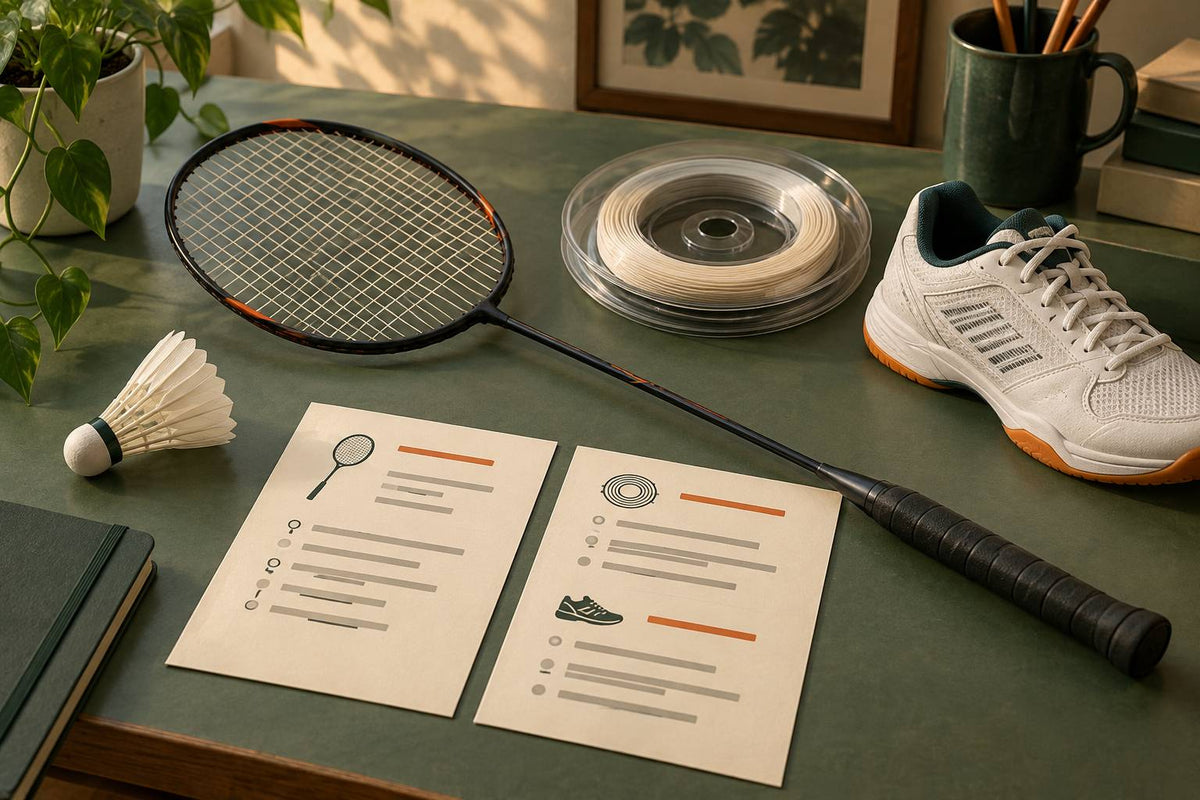
- Keep dated public listings in their own column. Record the page, its date or check date, and only the rackets, strings, shoes, or other categories it explicitly names. A public model listing is useful evidence without becoming a complete configuration record.
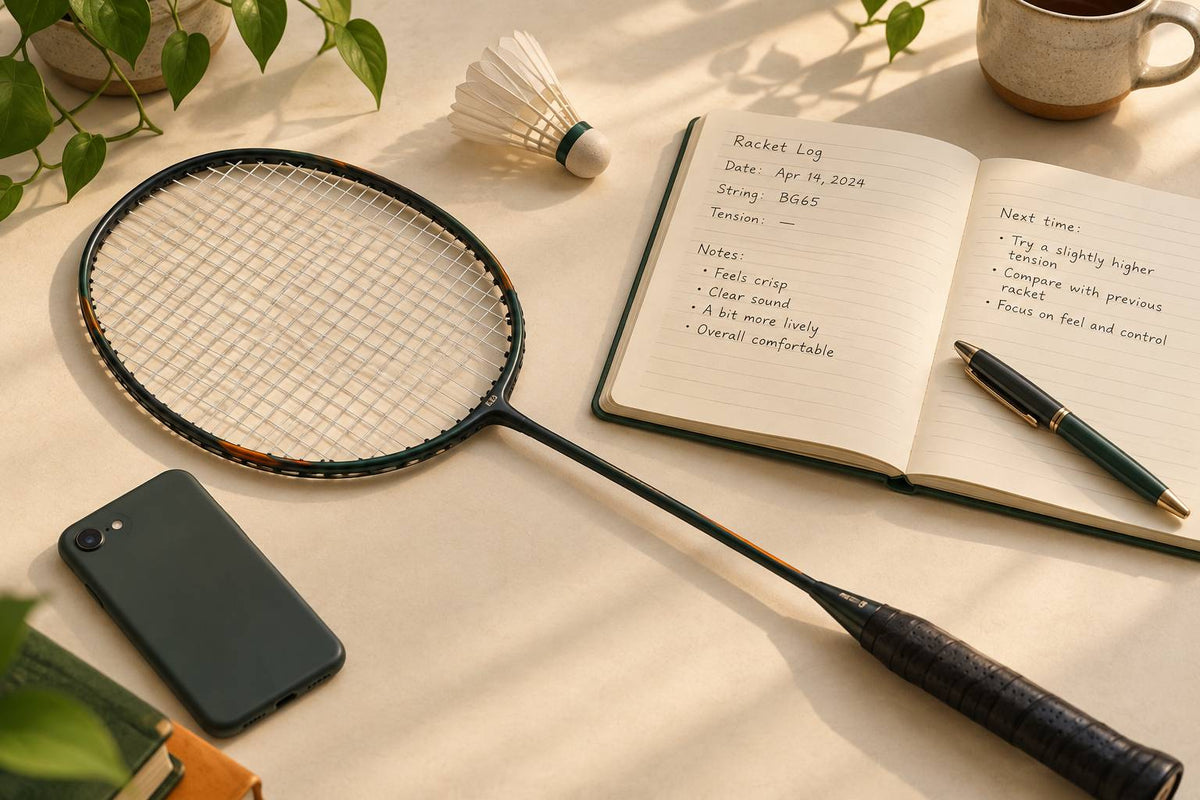
- Create a separate unknowns column for details the listing does not state, such as selected variant, tension, grip build-up, balance, or whether the same setup appeared at every event. Leaving a field unknown is more accurate than filling it from photographs or assumptions.
- For a personal purchase, begin a different card with the player’s own current racket, string, comfort, and intended use. This separates an athlete reference from a fitting decision and avoids implying that buying a listed model recreates an elite player’s setup.
- End the personal card with a practical next question for current manufacturer information, fitting, or stringing help. The goal is to identify what must be checked for the individual player, not to turn a dated public listing into a prescription.
Use this distinction on court
Keep the check-date athlete listing and the 2024 event listing in separate columns. Use a third for unpublished configuration details. The dated product lists can both be accurate records without proving that the same items were used together at every event or will suit another player.
Keep dated product records separate
| Reader’s own need | Personal hand-off | Not established by the listing |
|---|---|---|
| Current racket and string | Compare current manufacturer specifications with the reader’s own setup | A professional match configuration |
| Grip and fit | Discuss grip and comfort with a qualified retailer or stringer | An athlete’s personal grip build-up or selected variant |
- List the products named on the current athlete page with its check date.
- List the products named on the dated event page without merging them into one assumed setup.
- Keep tension, grip build-up, selected variant, balance point, and event-by-event use in an unknowns column.
- Use current manufacturer information and a fitting or stringing conversation for a personal purchase.
Questions the cited sources do not settle
- That she uses the listed equipment in every current event.
- Exact tension, customization, or a claim that buying the racket recreates her style.

Leave a comment
This site is protected by hCaptcha and the hCaptcha Privacy Policy and Terms of Service apply.