
Last updated: July 2026 · Written by the team at Badminton House
Quick Answer: Clean Slippery Badminton Shoe Soles
Match the fix to what you see: clean removable dust, report a floor that immediately recoats clean soles, or retire damaged rubber.
Clean soles
Best choice: for dusty soles mid-session; clear loose debris, let the soles dry, then test carefully.
Report court
Tell staff when freshly cleaned soles collect dust again within a few rallies.
Replace shoes
Choose this if the outsole is worn smooth, hardened, peeling, or still slippery after cleaning.
If your badminton shoes start skating during split steps or lunges, pause before you blame your footwork. A slippery sole is often a maintenance problem, not a technique problem. Most of the time, grip disappears because fine court dust and dirt coat the outsole; scrubbing harder or adding a sticky "hack" can create new problems. The safe fix is boring but effective: remove loose debris, wipe with water on a soft cloth or damp towel, rinse away any cleaner, and dry in ventilated shade. This guide shows how to clean slippery badminton shoe soles without softening rubber, leaving residue, or hiding tread that is already worn out.
In This Guide
Why badminton shoe soles get slippery

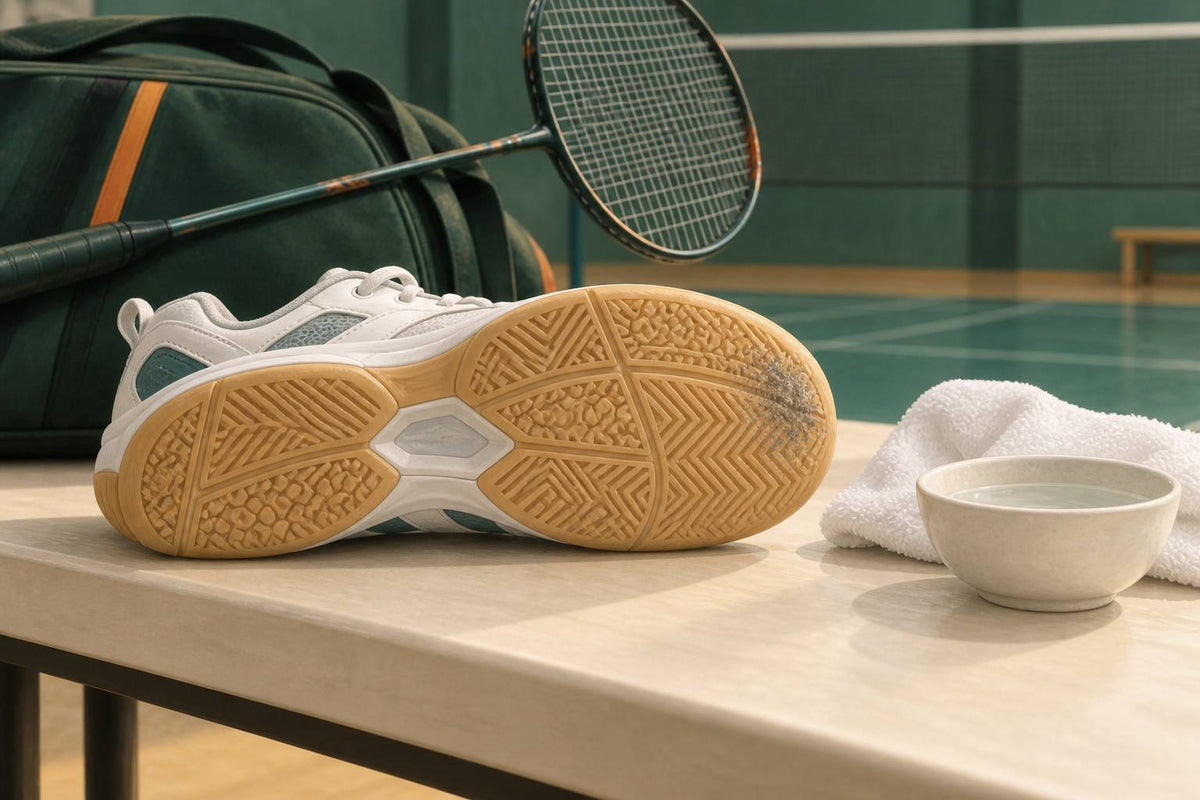
The usual culprit is not that your shoes suddenly “lost” their rubber grip — it is contamination on the outsole. Yonex warns that when dust or dirt sticks to a badminton shoe outsole, the shoe becomes slippery. That matches the basic friction problem: debris sits between the rubber and the court, reducing the sole–floor coefficient of friction, so your first push, lunge, or recovery step feels less secure.
Before you try to clean slippery badminton shoe soles, check what is actually happening. If one quick wipe restores grip for a few rallies, the outsole is probably picking up surface dust. If the same dusty film returns almost immediately after wiping, the court condition may be part of the problem too — especially on smooth indoor floors where dust or waxy buildup can quickly transfer back onto the rubber.
How to clean slippery badminton shoe soles safely

Start with the gentlest method: wipe each outsole with water and a soft white cloth. Work across the full sole pattern, not just the visibly dirty spots, because sand and dust can sit inside the grooves and keep reducing grip. Spend extra time on the toe and forefoot area, where dust tends to collect during lunges, split steps, and pushes.
If plain water does not lift the buildup, use a dedicated shoe shampoo sparingly. Lather it with a sponge, clean the outsole, then rinse thoroughly so no shampoo residue remains on the rubber. Residue is the opposite of what you want on an indoor court shoe sole.
Avoid hard scrubbing with a stiff brush; forceful rubbing can damage shoe materials. During play, a quick wipe on a damp towel between playing periods can help dislodge accumulated contaminants, but treat that as a short-term court fix, not a substitute for proper cleaning at home.
Avoid chemical and sticky grip hacks

Skip acetone, oils, sugary coatings, sticky coatings, and any other residue-based “grip hack.” They are not safer cleaning methods for indoor court shoes. Manufacturer care guidance points the other way: use water first, then a dedicated shoe shampoo only if needed, and rinse fully so no shampoo residue remains. The goal is clean rubber meeting the court, not a treated sole.
A tacky-coating device patent is a useful counter-example, not a recommendation: it describes an adhesive-type substance that forms a film on the shoe sole to add tackiness. That is the opposite of residue-free, manufacturer-safe cleaning, and it risks turning a simple sole-cleaning problem into a material-care problem. For a broader routine that keeps shoes, strings, grips, and shuttles in good shape, use the badminton gear maintenance checklist.
Dry fully, report dust, or replace worn shoes


After cleaning, let the shoes dry completely in a shaded, well-ventilated place. Remove the insole so trapped moisture can escape, then store the pair away from heat and humidity. Do not speed-dry badminton shoes in direct sun or with a hairdryer, heater, stove, or similar heat source; ASICS warns forced heat drying can deform shoes or change their materials.
Cleaning also has limits. If freshly cleaned soles keep picking up dust within a few rallies, report the court condition instead of blaming the shoe. Before each session, inspect the outsole for hardening, abrasion, and adhesive delamination. Stop using the shoes when the rubber is hardened or worn down, because grip loss can turn one hard lunge into a fall.
Which Fix Should You Choose?
Use the least aggressive option that matches what you see on the outsole. Slippery badminton shoes are usually a surface-contamination problem first, but hardened rubber or worn tread is a safety stop sign, not a cleaning challenge.
| Decision | Choose this if... | Next step |
|---|---|---|
| Clean soles | Dust or grime is visible and the outsole is still soft and intact. | Start with water; use shoe shampoo only if needed, rinse fully, and dry in shaded ventilation. |
| Report court | Freshly cleaned soles collect dust again within a few rallies. | Pause play and tell facility staff about the floor condition. |
| Replace shoes | The outsole is hardened, abraded, delaminating, or the tread is near worn out. | Retire the shoes before play; cleaning cannot restore safe rubber condition. |
Get 10% off your first order
Join the Badminton House list and we’ll email you a 10% welcome code — plus training guides, technique advice, and badminton updates.
By subscribing, you agree to receive Badminton House emails and can unsubscribe anytime.
If your soles still feel slick after safe cleaning, do not keep trying hacks. Grip should come from clean, healthy outsoles — not sticky residue.
Need a fresh pair for safer footwork?
Shop Indoor Court ShoesBrowse badminton footwear built for indoor court movement.

Leave a comment
This site is protected by hCaptcha and the hCaptcha Privacy Policy and Terms of Service apply.