
Last updated: July 2026 · Written by the team at Badminton House
Quick Answer: Playing an Aggressive Attacker
Do not trade speed with them; use depth to slow the rally, defend the body first, and counter only from controlled contact.
Absorb pace
Best choice: use quality depth when stretched and compact body defence when the smash is already coming.
Change tempo
When balanced, use controlled blocks or tight net replies so the attacker must move and hit at a different rhythm.
Counter safely
Redirect only a slower, less steep, or poorly placed attack; otherwise reset and test whether they can repeat their quality.
When an aggressive opponent starts smashing, the instinct is to rush: lift faster, defend harder, try a miracle counter. That is usually exactly what they want. To play against an aggressive badminton player, your first job is not to out-hit them; it is to take away the easy attack rhythm they are feeding on.
Think like a calm defender with a plan. Make their rear-court shots less comfortable, keep your body defence stable, slow the rally when needed, then counter only when the shuttle gives you a safe chance. This guide breaks the matchup into practical decisions you can use in singles or adapt for doubles pressure situations.
In This Guide
Play Against an Aggressive Badminton Player With Quality Depth
Stay calm, resist the urge to rush, and use a high, deep, central lift as your reset shot when you are under real pressure. An aggressive player wants quick replies they can hit early; if your lift is flat or short, you are feeding the pace they need.
The details matter. High gives you time to breathe, recover your base, and prepare your defence. Deep pushes the attacker back toward the rear court, where producing a clean, steep smash is harder than stepping in from mid-court. Central, in singles, reduces the available angles and makes the next attack easier to read.
This is not a licence to lift every shuttle. If you can play a controlled net shot, block, or clear without panic, do it. One good lift also does not “solve” every attacker; it simply gives you a safer rally shape to build from.

Build Body Defence Before You Counter
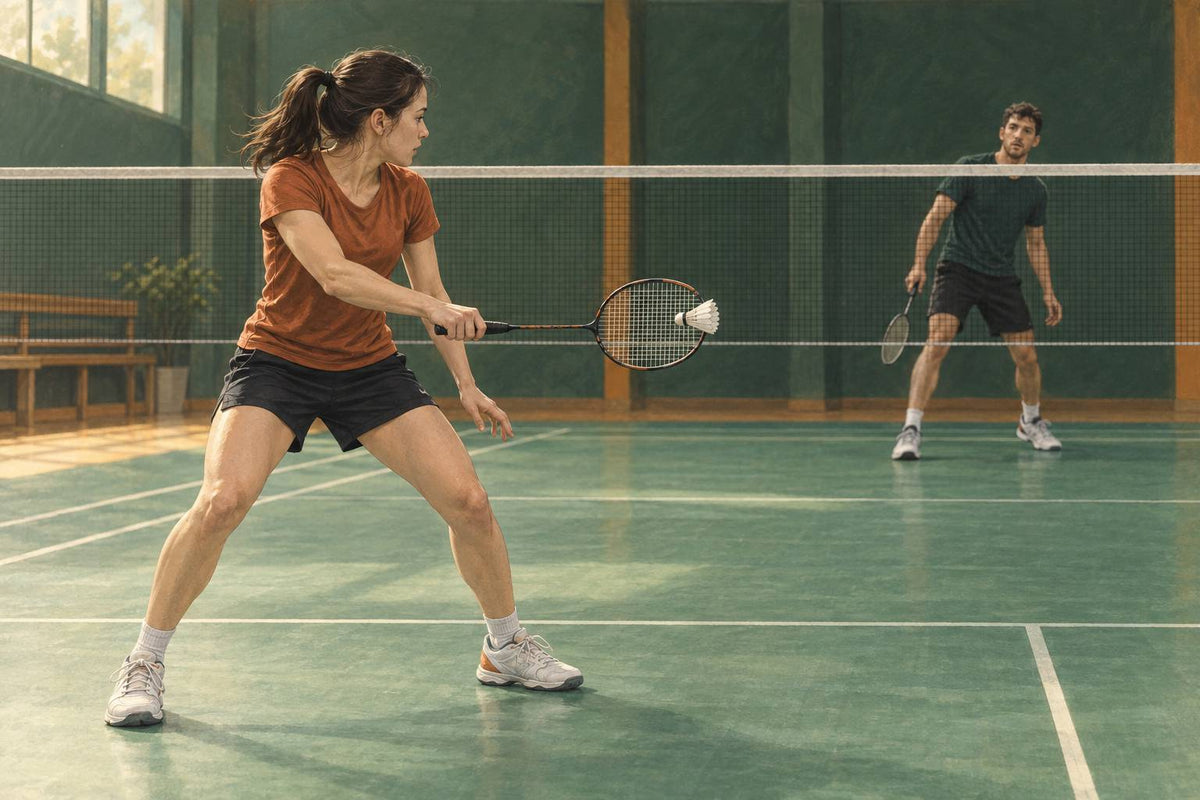
Before you try to punch a winner off their smash, make your base hard to break. Set your feet a little wider than shoulder-width, bend your knees, stay low through your hips, and keep your eyes on the shuttle. Your racket should sit around waist height, not frozen high by your shoulder, because you may need to change quickly between forehand and backhand defence.
Keep the grip loose enough to switch sides without tension. If you squeeze too early, your wrist action disappears and body smashes become rushed blocks instead of controlled returns. In singles, start slightly behind centre so you have a fraction more time to read the smash direction.
Cover three danger zones first: the straight smash, the cross-court smash, and the body attack. A steep smash is harder to counter because contact happens lower below net height; a cross-court smash usually gives more reaction time because it travels farther. For a deeper technical breakdown, see our badminton smash defence guide.
Change Tempo and Pressure the Front Court
An aggressive player wants the rally to feel urgent. If you rush your movement and decisions, you give them the speed battle they are already looking for. Instead, change the rhythm: delay the stroke before contact when you are balanced, without catching or carrying the shuttle, play controlled drops and blocks, and make them generate attack quality from a less automatic tempo.
The front court is where you can make that tempo change hurt. A tight net shot can draw the attacker forward and pressure an upward reply; after you play it, move in enough to threaten the net kill. The threat matters as much as the kill itself, because it pressures them into lifting rather than tumbling another net reply.
On serve, use a good soft low serve to deny an easy first attack. Add the occasional flick only if you can place it accurately into the corners; a loose flick is just a free smash invitation.
Counter Safely and Test Repeatability
Counterattack only when the smash gives you something to work with: a little slower, less steep, or not aimed tightly at your body or sideline. The safest first counter is a soft block. Meet the shuttle in front, keep the grip loose, and use almost no follow-through so the strings absorb the pace and the shuttle dies near the net.
After a straight smash, a cross-court block is especially useful because it makes the attacker change direction instead of simply following forward in a straight line. If the shuttle sits higher, you can also redirect their pace with a flat drive or controlled drop, but do not force these shots from a steep, well-placed attack.
When the counter is not controlled, reset with a lift. Then treat the rally as information: can they still produce quality after two deep lifts, sustained defence, front-court changes, and repeated pattern-reading?
Which Response Should You Choose?
Against an aggressive player, your best choice changes with the quality of their attack and your balance. Start with the lowest-risk answer that matches the rally.
| Choose this | When it fits | Why it works |
|---|---|---|
| Absorb pace | You are late or stretched, or the smash is already arriving. | Use high, deep, central length when you can reset; use a low stance and relaxed grip when you must defend the body. |
| Change tempo | You are balanced enough to block tightly, use the net, or vary the serve. | A controlled change of rhythm makes the attacker move and create a new attacking chance instead of repeating the same exchange. |
| Counter safely | Their smash is slower, less steep, or poorly placed. | Use a loose-grip block or controlled drive; if the contact is doubtful, lift and see whether their next attack stays accurate. |
Get 10% off your first order
Join the Badminton House list and we’ll email you a 10% welcome code — plus training guides, technique advice, and badminton updates.
By subscribing, you agree to receive Badminton House emails and can unsubscribe anytime.
Aggressive opponents feel easier once you stop feeding their rhythm. We play badminton ourselves, so if you want help matching these tactics to your footwork, level, or match problem, contact us and tell us what keeps breaking down. A deeper lift, looser grip, or calmer recovery can improve your next decision without pretending that one shot solves the matchup.
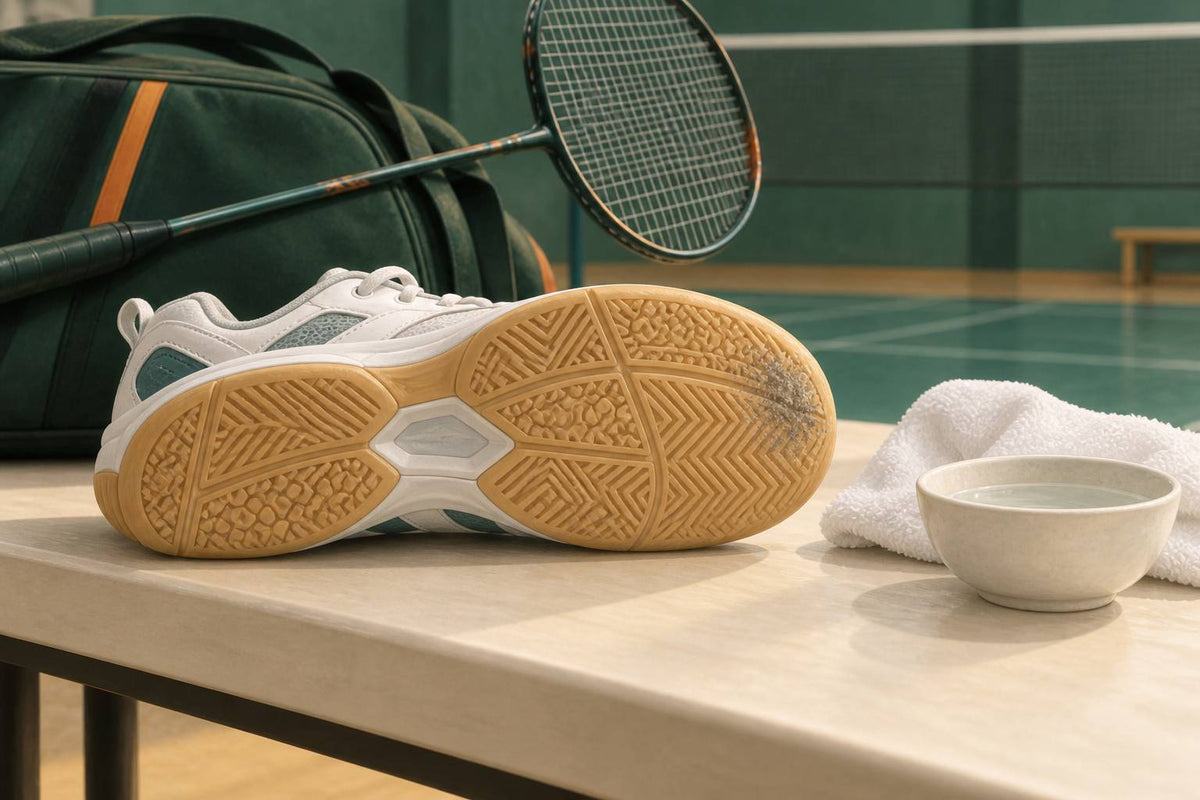
Court shoes won't win the point for you, but they can support the low, wide base and fast recovery this matchup demands.
Shop Badminton FootwearChoose a secure fit that supports a low defensive base and controlled recovery.

Leave a comment
This site is protected by hCaptcha and the hCaptcha Privacy Policy and Terms of Service apply.