
Last reviewed: July 2026 · By Badminton House’s player-led team
Quick Answer: Drying Shoes After Humid Play
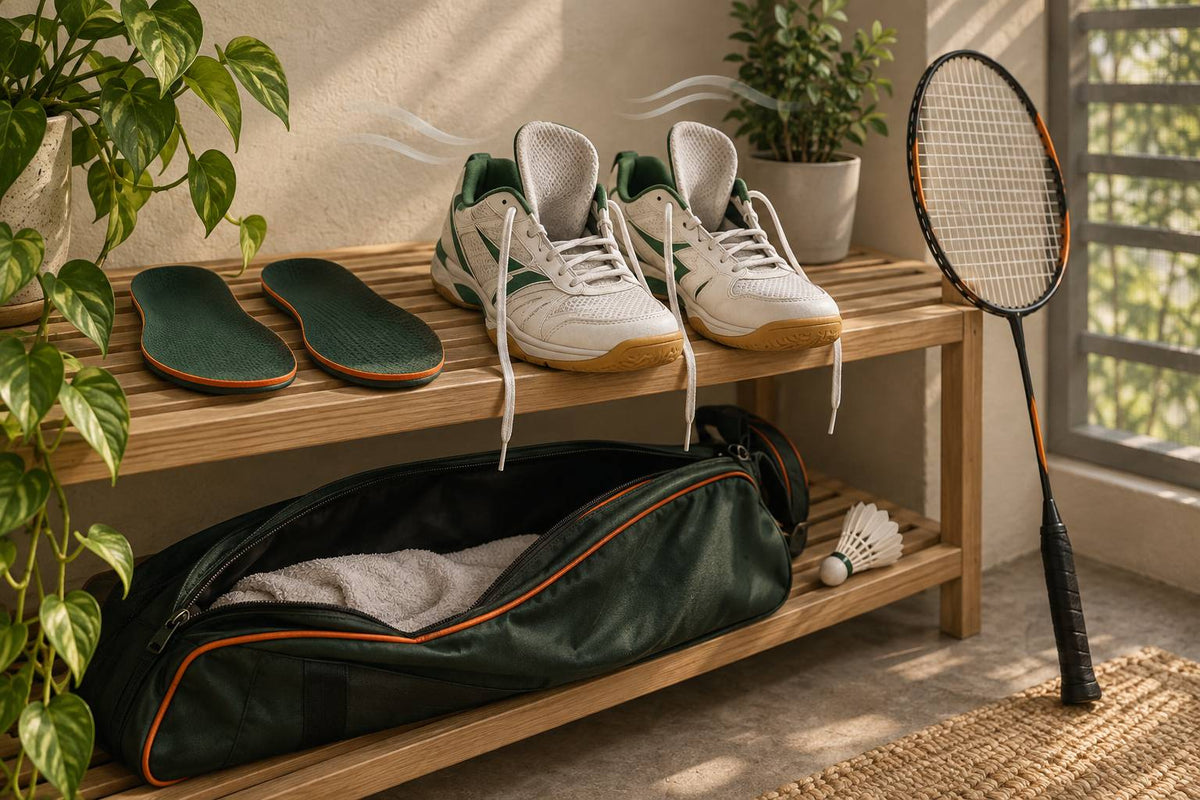
After play, remove the insoles, loosen the laces, and dry shoes in shade with airflow; never seal damp shoes in a plastic or zipped racket bag.
Every session
Best choice: Air-dry with insoles out; proper drying commonly takes 24–48 hours, per NHS podiatry guidance.
Need them tomorrow
Use paper and airflow first, then a hairdryer on its cold setting only as extra airflow.
Already smells
Clean removable parts, then dry completely; fragrance cannot replace ventilation.
That familiar musty hit when you unzip your racket bag is usually a moisture-management problem, not a sign that your shoes are dirty. After a humid session, get the shoes out of the bag, open them up, and let air move through them before odour has a chance to settle in.
Soles of the feet carry abundant sweat glands, and foot odour is linked to bacteria breaking down skin material—not sweat alone—according to research in FEMS Microbiology Ecology. This guide covers a simple dry-first routine, heat-free shortcuts, and when a persistent smell needs more than a spray.
In This Guide
How do you dry badminton shoes after every session?
After play, loosen laces, remove insoles, wipe outsole dirt, add dry paper, then separate shoes and insoles in shade with airflow. Keep your bag open until everything is dry; separating the insole lets the insole and shoe interior dry independently.

- Loosen: undo the laces; do not force the shoes off.
- Separate: take out both insoles.
- Wipe: remove court dust and moisture from the outsole.
- Absorb: place paper or absorbent inserts inside, replacing them once damp.
- Air: stand shoes and insoles apart in shade with airflow; keep the bag unzipped until dry.
Sweat moisture trapped in a warm, sealed shoe-and-bag space helps odour-producing bacteria thrive. Foot smell is bacterial metabolism rather than simply dirt: plantar-skin bacteria are associated with the odour compound isovaleric acid.
What should you never do with damp badminton shoes?
Never seal damp shoes in a plastic bag or zipped racket bag, and never rush drying with a heater, radiator, dryer, or direct sun. Leave them open in shade with airflow instead: it protects the shoe materials while moisture can actually escape.

- Do not trap them in a bag — a sealed, humid interior holds the conditions that let odour build rather than letting the shoe dry.
- Do not apply heat — dryers, radiators, and hot cars can shrink and harden the midsole and damage the glue that holds the shoe together, according to ASICS shoe-care guidance.
- Do not use direct sun as the shortcut — sunlight may have hygiene appeal, but its material risk makes shade and airflow the better regular choice.
- Do not use a hot hairdryer — if there is no time, a hairdryer on its cold setting only is the narrow no-heat exception, not the default method.
What weekly and monthly maintenance keeps badminton shoes fresh?
Each week, wipe the outsole and let the whole shoe dry completely. Once a month, gently clean the upper and insoles separately, then check whether the insole still springs back and stays fresh; this keeps grime and moisture from becoming a longer-term shoe problem.

Use a damp cloth on the outsole. For the upper, use mild soap, warm water, and a soft brush—never a washing machine, which can damage fabric and adhesives. Remove the insoles, clean them separately with soapy water and a brush, but do not soak their foam; dry every part completely before reassembling. ASICS recommends gentle cleaning, then air-drying; use absorbent powder only after drying, not as a substitute for it.
Reassess the insoles after a full dry and clean. Replace them when a heel dent stays flattened, rebound has gone, or odour returns immediately despite careful cleaning and complete drying.
How do you rescue badminton shoes that already smell?
If shoes already smell, gently clean the insoles and interior, then dry every part completely rather than masking the smell with fragrance. Remove the moisture source, clean it, and reassess only when every layer is dry.

- Remove the insoles and loosen the laces. Wash the insoles and wipe the interior with mild soapy water; do not soak the foam.
- Fill each shoe with absorbent paper or inserts, then air-dry in shade with airflow. Leave the racket bag open to air too.
- Recheck only when fully dry. Rotate two pairs where possible: drying can take 24–48 hours, and a cold-setting hairdryer is the no-heat option when needed.
If the smell comes with persistent itching, wet skin between the toes, red raw-looking skin, peeling, or cracking, speak with a clinician rather than treating it as a shoe-only issue. See athlete’s foot prevention for badminton players for prevention guidance.
Which drying approach should you choose?
Choose paper and airflow for routine dampness, cold-air assistance only when the same pair must be worn again soon, and a two-pair rotation when you play on consecutive days. All three avoid the heat that can harden cushioning and damage shoe adhesives.

| Choose | Best when | What to do |
|---|---|---|
| Paper + airflow | You have 24–48 hours. | Remove the insole, stuff with paper, and dry in shade. |
| Cold-air assist | You need the same pair again quickly. | Use a hairdryer on its cold setting only. |
| Two-pair rotation | You play hard on consecutive days. | Give each pair up to 48 hours to dry; that time also lets the foam recover. |
Drying can take 24–48 hours; use cold air only as extra airflow, never as a heat shortcut.
Get 10% off your first order
Join the Badminton House list and we’ll email you a 10% welcome code — plus training guides, technique advice, and badminton updates.
By subscribing, you agree to receive Badminton House emails and can unsubscribe anytime.
If drying and cleaning no longer restore freshness, or the shoe’s cushioning no longer feels right, explore court-specific footwear.
Explore Badminton Footwear

Leave a comment
This site is protected by hCaptcha and the hCaptcha Privacy Policy and Terms of Service apply.