
Last updated: July 2026 · Written by the team at Badminton House
Quick Answer: Finding a Badminton League in Canada
To join a badminton league in Canada, register with a local badminton club, a city sport-and-social club, or your university intramural program — most social leagues accept individual sign-ups and welcome all skill levels. A provincial membership is only required for sanctioned tournament play, not for recreational leagues or drop-ins.
Default
Social or club league: best first step for most players because recreational badminton leagues can be open to all skill levels, and some organizers let you register as an individual or as a team of two.
Campus
University intramurals: a strong option if you are a student or have campus recreation access; some programs use team-based registration, so check whether individual registration is offered.
Competitive
Sanctioned pathway: choose this route if you want sanctioned tournament play; provincial membership is mandatory for Badminton Ontario and Badminton Canada sanctioned events, and tournament entry can require a valid Player ID and current membership.
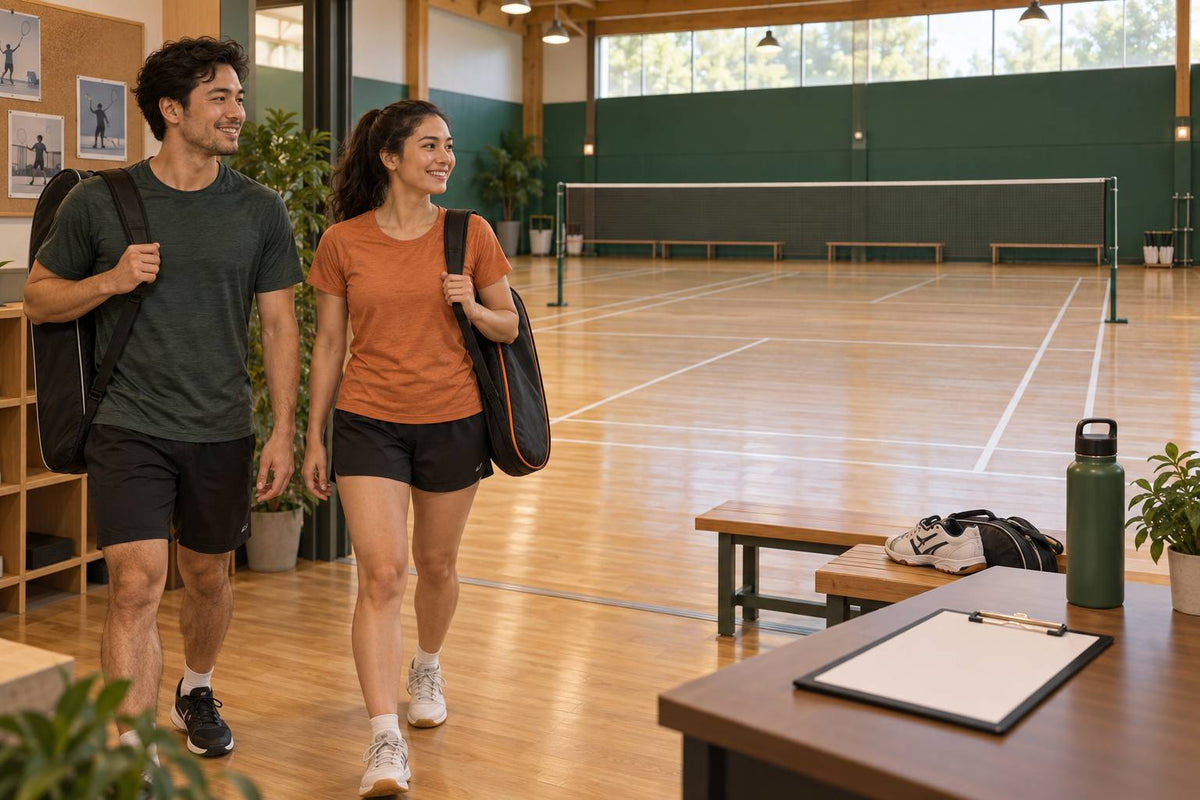
Trying to find a badminton league in Canada can feel harder than it should. Some programs are run by local clubs, some by sport-and-social organizers, some through university recreation, and competitive pathways may involve provincial memberships. If you are new to organized play, it is not always obvious whether you need a partner, a team, a membership, or just a racket and court shoes.
The good news: you do not need to be a tournament player to join league-style badminton. Across Canada, there are recreational, social, club, corporate, university, and sanctioned options, and many are built to place players with others at a similar level. This guide will help you understand where leagues live, how sign-up usually works, what skill divisions mean, and what to bring so your first night feels organized instead of intimidating.
Getting ready for league night? Indoor, non-marking court shoes are one of the most important pieces of gear to sort out before you play. Browse badminton footwear from Badminton House — a Canadian badminton specialty shop with Canada-wide shipping.
In This Guide
- Where to Find Badminton Leagues in Canada
- Club, Social, Corporate, and University League Options
- How Registration Usually Works
- How Skill Divisions and Placement Work
- What a League Season and Match Night Can Look Like
- Do You Need a Provincial Badminton Membership?
- What to Bring to Your First League Night
- Which Badminton League Option Should You Choose?
Where to Find Badminton Leagues in Canada

If you are searching for a badminton league in Canada, start locally. League play is usually organized through clubs, city sport-and-social operators, university recreation departments, or provincial badminton pathways rather than one single national sign-up page.
A good first move is to identify where badminton is already being played in your city, then check that venue or organizer for league nights, seasonal programs, ladders, and drop-in formats. If you are in a major metro area, start with our local guides for where to play badminton in Toronto and where to play badminton in Vancouver.
- Local badminton clubs. Best for players who want a badminton-first environment, regular opponents, and a route into club nights or seasonal programming.
- Sport and social clubs. Best for recreational players who want an organized schedule, easy sign-up, and a more social league atmosphere.
- University recreation departments. Best for students, staff, alumni, or eligible campus community players looking for intramural badminton.
- Provincial and national association pathways. Best when you are looking for affiliated clubs, sanctioned competition, rankings, or a more formal competitive pathway.
| Pathway | Where to look first | Best fit |
|---|---|---|
| Club leagues | Local badminton club websites, facility pages, and club notice boards | Players who want consistent badminton-specific play |
| Sport and social leagues | City sport-and-social club badminton pages | Recreational players who want simple registration and scheduled matches |
| University intramurals | Campus recreation or intramural league pages | Eligible campus players who want team-based league play |
| Association pathways | Provincial badminton associations and Badminton Canada pathways | Players moving toward sanctioned events or competitive development |
These routes overlap across the country. Ottawa Sport & Social Club lists indoor badminton in both structured league and social drop-in formats for all skill levels. UBC intramural badminton uses team-based registration, with prices reflecting the cost for a team unless individual registration is specified. Moncton Badminton Club posts Fall, Winter, Spring, and Summer programs. At the governing-body level, Badminton Canada is the national governing body for badminton in Canada and is composed of 13 member associations representing the provinces and territories.
For a practical search, try combinations like “badminton club” + your city, “sport and social badminton” + your city, “intramural badminton” + your university, or “badminton association” + your province. Then check whether the program is a league, a ladder, a drop-in, or a club night before you register.
Once you have found a league option, scan the organizer’s equipment notes before buying anything. Many players will need their own racket and proper indoor court shoes, and some club or social formats may also expect players to bring shuttles. You can browse badminton rackets, badminton footwear, shuttlecocks, and accessories before your first night.
Shop Badminton Footwear — Get League-Ready
Ships across Canada · 14-day returns
Club, Social, Corporate, and University League Options
Once you have a shortlist from the places above, the next question is fit: do you want a recreational league night, a campus intramural team, or a membership-style club where someone helps organize balanced matches? These options can all work for a first badminton league in Canada, but the experience feels different.
| Route | Best fit | What it usually feels like |
|---|---|---|
| Sport-and-social leagues | Adults who want structured, recreational matches | Open-enrolment and approachable. Ottawa Sport & Social Club, for example, offers both a structured indoor badminton league format and a social drop-in style format for all skill levels. |
| Corporate or workplace groups | Co-workers who want a predictable weekly activity | A sport-and-social league is often the simplest path because players can usually enter as a small team or individual rather than building a full club program from scratch. |
| University intramurals | Students and campus community players | More team-based. At UBC intramural badminton, registration is team-based and prices reflect the cost for a team unless individual registration is specified. |
| Membership-style clubs | Players who want regular club nights and level-matched games | Often more community-based. Some clubs run seasonal programs; the Moncton Badminton Club offers Fall, Winter, Spring, and Summer programs. Others organize play through a pro or playmaker. |
University intramurals feel different because the unit is often the team. If you are on campus, that can be a great setup: you organize a group, register together, and play within the school’s recreation structure. If you are not connected to the campus, a community club or sport-and-social league will usually be more relevant.
Club play can be more guided than you expect. At the RA Centre, a playmaker sets games at the right competitive level for each player, and matches run for 20 minutes before new games are organized. That kind of format can be ideal if you want balanced games without having to find opponents yourself.
Membership-style clubs are also where you may see the widest range of formats: scheduled league ladders, adult drop-ins, seasonal programs, or organized match rotation. The key is to read the registration page carefully and look for clues like “league,” “drop-in,” “ladder,” “playmaker,” “program,” or “intramural.” Those words tell you whether you are signing up for standings, casual rotation, or a guided club night.
Still comparing regular-play options? Read our guide to badminton lessons vs drop-in vs league play before you commit to a season.
Getting ready for league night? Most organizers expect players to bring indoor court shoes and a racket. Browse badminton footwear and badminton rackets at Badminton House; Canada-wide shipping is available.
How Registration Usually Works
Most badminton league registration in Canada falls into one of four paths: join as an individual, register with a partner, enter a full team, or sign up for a drop-in group. The right choice depends on whether you already have people to play with and whether you want a scheduled league season or a more flexible night of play.
| Registration type | How it usually works | Best for |
|---|---|---|
| Individual | You register by yourself and the organizer places you with another player or into a team structure. For example, Ottawa Sport & Social Club states that players can register as an individual and be placed on a team, or register as a team of two. | Newer players, people moving to a new city, or anyone without a regular partner. |
| Pair | You and one partner register together. This is common in doubles-focused adult leagues where the organizer builds schedules around two-player teams. | Friends, couples, coworkers, or regular doubles partners who want to stay together. |
| Team | One person usually acts as the captain and submits the team registration. University intramural programs and corporate-social leagues often use team-based signups. | Groups that already have enough players and want to manage their own roster. |
| Drop-in group | You choose the event group that fits you, then provide basic contact details. Elite Badminton’s drop-in registration asks players to choose a group and provide name, email, and phone, with limited spots available on a first-come, first-served basis. | Players who want flexibility before committing to a full season. |
Before you click register
Read the listing carefully before paying or submitting your form. Check whether the program is a full league or a drop-in format, whether you need to register alone or with a partner, and whether the organizer places players by skill after the first week. Social-league schedules can also depend on facility permits, so locations and time slots may shift when registrations, cancellations, or facility changes affect court availability.
- Have your partner’s details ready if you are registering as a pair or team.
- Be honest about your level so the organizer can place you in the right division or group.
- Register early for drop-ins when the listing says spots are limited or first come, first served.
- Confirm the gear rules before your first night. Some organizers provide nets and birdies, while players are expected to bring their own racquets and indoor shoes.
Getting ready for league night? Start with the two items players are most often responsible for: a racquet and proper indoor court shoes. Browse badminton racquets and badminton footwear, including the Babolat Shadow Tour Men’s Badminton Shoes in orange — a non-marking indoor court shoe with lateral midfoot support. Badminton House ships across Canada.
If you are unsure whether a league, drop-in, or lesson format is the better starting point, compare the options in our guide to badminton lessons vs drop-in vs league play.
How Skill Divisions and Placement Work
Most badminton league placement is meant to create better matches, not to label you permanently. If you are new to league play in Canada, expect the first week or early results to help organizers sort teams into divisions where rallies are competitive and the night still feels fun.
A common open-enrolment model is to start everyone in an Open division, then use a first-week ladder to seed the season. Ottawa Sport & Social Club lists badminton leagues where teams and individual players register in an Open skill division, play a practice ladder in week one, and are then placed into a suitable skill division based on those ladder results.
| League label | What it usually means for placement |
|---|---|
| Recreational | A social division for players who want organized games without a high-pressure competitive environment. OSSC lists recreational as one of its badminton skill-level examples. |
| Intermediate | A step up when players have more experience and stronger consistency. OSSC also lists intermediate as a badminton league skill level. |
| Open | Often used before seeding, or for programs that welcome all levels. OSSC describes Play & Social badminton programs as open skill level and inclusive to all skill levels. |
Placement is about ability, not intensity
That matters because a strong recreational player and an aggressive beginner are not the same placement problem. Organizers are usually trying to avoid mismatches: brand-new players should not spend every rally defending smashes they cannot return, and experienced players should not spend the whole night winning without rallies.
Your division can change after the season starts
Do not worry too much if your first placement is not perfect. Some leagues adjust after early results. Calgary Sports Club notes that for longer badminton leagues, division realignment can still occur even when standings are not reset after the seeding round.
How to self-place if the form asks for a level
- Choose the lower social level if you are unsure. It is easier to move up after strong results than to spend the first night overmatched.
- Be honest about match experience. A player who rallies well in drop-in may still need time to learn league pacing, score pressure, and partner rotation.
- Use the ladder week seriously, but not tensely. The point is to help the league build fair divisions, not to prove your ceiling in one night.
- Ask before registration closes. If the division names are unclear, email the organizer and describe your playing background in plain language.
Gear will not place you, but it should not hold you back
League placement comes from play, results, and organizer judgment — not from owning the most expensive racket. Before your first night, the practical priority is simple: have a reliable racket and proper indoor court footwear so you can move safely and play the matches used for seeding.
If you are kitting out for a Canadian league season, start with badminton footwear and a dependable badminton racket. The Babolat Shadow Tour Men’s Badminton Shoes – Orange is a non-marking indoor court shoe with lateral midfoot support, a reasonable choice if you need to move off running shoes before your first night. Badminton House ships across Canada.
If you are still deciding whether league play is the right next step, our guide to badminton lessons vs drop-in vs league play explains how each format fits different players.
What a League Season and Match Night Can Look Like

A badminton league in Canada can feel more organized than a casual drop-in, but it is usually still straightforward: show up on your assigned night, check your court and opponent, play your scheduled matches, report results if required, and head home.
One sport-and-social league format uses a two-player team structure where each player plays a singles match against both players on the opposing team. After those four singles games, the fifth game is doubles. In that example, singles games are first to 11, while the doubles game is first to 11 and best 2 out of 3 sets.
| Part of the night | What it can look like |
|---|---|
| Singles round 1 | Player A plays one opposing player; Player B plays the other opposing player. |
| Singles round 2 | Each player switches opponents, so both players face both opponents in singles. |
| Fifth game | The teams finish with one doubles match, played first to 11 and best 2 out of 3 sets in this example format. |
For a season, one Canadian social-league example lists 13 games total: 1 ladder week, 10 season games, and 2 playoff games. If your league uses a ladder week, treat it as a short calibration night before the regular schedule settles in; the detailed placement process is covered in the skill-divisions section above.
Typical schedule example
- Week 1: ladder or seeding week.
- Weeks 2–11: regular season games.
- Weeks 12–13: playoff games.
- Start times: some leagues rotate start times across the evening instead of giving every team the same weekly slot.
Time commitment depends on the format. In one Ottawa sport-and-social setup, league games are 75 minutes with rotating start times, while Social & Play is 105 minutes with the same start time every week. That difference matters if you are choosing between a structured league and a more open play session after work or school.
Be flexible with the posted schedule. Social-league seasons are tied to facility permits, and organizers may have to adjust timeslots or locations when registration numbers change, permits are cancelled, or facilities become unavailable. Before your first night, check the league email or app again rather than relying on the time you saw when you registered.
Gear note before league night. Players are commonly expected to bring their own racquet and indoor shoes. If you are kitting out for the season, start with badminton footwear and badminton rackets; Badminton House ships across Canada.
For example, the Babolat Shadow Tour Men's Badminton Shoes – Orange is a non-marking indoor court shoe with lateral midfoot support. If your league provides birdies on-site, you may not need to bring shuttles every week, but club and social players who practise outside league night can also check shuttlecocks and accessories.
If you want a full packing list before your first match night, see our badminton club night checklist or the badminton tournament bag checklist for a more complete league-and-event setup.
Do You Need a Provincial Badminton Membership?
Usually, not for casual league or drop-in play — but yes for sanctioned tournament play. The key distinction is whether you are joining a recreational club/social league, or entering events sanctioned through your provincial association and Badminton Canada.
Quick rule for Canadian players
- Recreational club, drop-in, or social league: you typically register with the club or league organizer, not the provincial association.
- Sanctioned tournament or competitive circuit: expect to need a current provincial membership and a valid player profile for tournament entry.
- Unsure? Ask the league organizer whether the program is recreational or sanctioned before you pay.
Badminton Ontario makes this split clear: recreational or drop-in players who play locally are not required to be Badminton Ontario General Members and may remain Affiliate Members as long as their club is affiliated and in good standing. For competitive players, Badminton Ontario membership is mandatory for Badminton Ontario and Badminton Canada sanctioned events; its 2026–2027 memberships range from $35 for a General Membership to $140 for a National Membership, valid September 1, 2026 to August 31, 2027.
| Type of play | Membership expectation | What to check before registering |
|---|---|---|
| Social league or drop-in | Usually no separate provincial competitive membership is needed. | Confirm the league fee, schedule, skill level, and whether the club handles any affiliation requirements. |
| Affiliated club recreational play | In Ontario, local recreational or drop-in players can remain Affiliate Members when the club is affiliated and in good standing. | Ask the club whether you need to complete any club-level registration form or waiver. |
| Sanctioned tournament | A current provincial membership is normally required for sanctioned entry. | Make sure you have a valid Badminton Canada Player Database ID and a valid membership for the current season before entering. |
| Competitive provincial/national pathway | Expect membership, player ID, and event-entry rules to matter. | If rankings or seeding matter to you, read our Badminton Canada rankings guide and first tournament entry guide. |
Membership seasons can differ by province
Do not assume every province uses the same membership year. For example, Badminton Nova Scotia, Badminton Ontario, and Badminton Newfoundland and Labrador use a September 1 to August 31 season, while Badminton BC’s player membership season runs from June 1 to May 31.
| Province example | Membership season noted | Practical takeaway |
|---|---|---|
| Nova Scotia | September 1 to August 31 | A fall tournament season may require a new membership even if you played recreationally in the summer. |
| Ontario | September 1 to August 31 | Recreational local play and sanctioned competitive play are treated differently, so check which category your program falls under. |
| Newfoundland and Labrador | September 1 to August 31 | Sanctioned tournament entry requires a valid Player ID and valid membership for the current season. |
| British Columbia | June 1 to May 31 | Badminton BC membership includes coverage through its Accident and Liability Insurance Program, which helps explain why sanctioned clubs and events care about membership status. |
What this means before your first league night
If you are joining a local social league, your immediate checklist is usually simple: register with the organizer, confirm the location and timeslot, and bring the gear the league asks players to supply. Many social leagues provide nets and birdies, but players are commonly responsible for their own racquet and indoor shoes.
If you are moving from league play into sanctioned tournaments, treat membership as part of your entry checklist — alongside your event registration, player ID, and tournament bag. For a packing list that applies beyond regular club night, see our badminton tournament bag checklist.
Gear note: membership is separate from equipment requirements
A membership may make you eligible to enter sanctioned events, but it does not replace the basics most players need for league night: a racquet, non-marking indoor court shoes, and any personal accessories you rely on.
Badminton House ships across Canada. Browse badminton footwear, badminton racquets, shuttlecocks, and accessories before the season starts. The Babolat Shadow Tour Men’s Badminton Shoes – Orange is a non-marking indoor court shoe with lateral midfoot support.
What to Bring to Your First League Night
Your first badminton league night should not require a tournament-sized bag. In many recreational league formats, the essential split is simple: you bring your own racquet and indoor court shoes, while the organizer may handle nets, birdies, and setup.
For example, Ottawa Sport & Social Club tells players they are responsible for bringing their own racquets, while staff take care of the remaining equipment and setup. Its league details also state that players bring their own badminton racquets and OSSC provides the nets and birdies on-site.
- Your own badminton racquet. Do not assume there will be loaners unless your organizer specifically says so.
- Non-marking indoor court shoes. This is the gear item to prioritize before league starts; indoor gyms commonly protect their floors, and badminton movement is hard on running shoes.
- Water bottle and towel. League nights can involve repeated matches or rotation blocks, so arrive ready to stay on court.
- Spare grip or overgrip. Helpful if your handle gets slippery mid-night, especially in warm gyms.
- Shuttlecocks, only if your league asks for them. Some organizers provide birdies; others may expect players or teams to supply their own.
Gear check before your first night. Start with non-marking badminton shoes, a dependable badminton racquet, and shuttlecocks if your league does not provide birds.
The Babolat Shadow Tour Men’s Badminton Shoes – Orange is a non-marking indoor court shoe with lateral midfoot support — a practical item to sort out first if you do not already own proper indoor court footwear.
If you want a fuller bag-by-bag prep list, use our badminton club night checklist for Canada. It is written for drop-in and club play, but the same basics carry over well to league nights.
Badminton House ships Canada-wide, which can help if you are kitting out before a new season.
Which Badminton League Option Should You Choose?
If you are searching for a badminton league in Canada, the best choice depends less on the word “league” and more on how structured you want the experience to be. Some programs place you by a week-one ladder, some are open-skill social formats, some are team-based university intramurals, and sanctioned competitive play usually adds provincial membership requirements.
| Choose this option | Best fit | How it usually works | Watch for |
|---|---|---|---|
| Sport-and-social league | Adults who want organized weekly games without needing a full club membership. | Some programs let you register as a team of two or as an individual to be placed on a team. Some leagues start in an Open division, use a practice ladder in week one, then place players into skill divisions. | Start times and locations can shift because social-league seasons depend on facility permits and registration numbers. |
| Open-skill social play | Players who want a lower-pressure way to meet partners, build confidence, and play across mixed skill levels. | Some sport-and-social programs describe Play & Social badminton as open skill level and inclusive to all skill levels. | It may feel less like a standings-based league and more like a structured playing night. If you want playoffs, confirm the format before registering. |
| Local club program or drop-in group | Players who want repeat play at a familiar facility, seasonal programming, or matches organized around level. | Local clubs may run seasonal programs. Drop-in groups may ask for basic contact details and have limited spots. Some membership-style programs use a playmaker or club pro to set games at the right competitive level. | Ask whether it is true league play, organized games, or casual drop-in; the sign-up page may use those terms differently. |
| University intramural league | Students and campus community members who want organized badminton through recreation programming. | University recreation leagues can be team-based, with prices listed as the cost for a team unless individual registration is specifically offered. | Check who is eligible to register and whether you need a full team before paying. |
| Sanctioned tournament pathway | Competitive players who want ranking, sanctioned events, and formal tournament entry. | Competitive players entering sanctioned events need the required provincial membership for the current season, and tournament entry can require a valid Player ID in the Badminton Canada Player Database. | Membership seasons vary by province, so check your provincial association before planning your first event. |
Gear note before you register: some league organizers require players to bring their own racquets and indoor shoes, while the organizer may provide nets and birdies. Check your league page first, then use Badminton House’s badminton rackets, footwear, shuttlecocks, and accessories collections to fill any gaps. Badminton House ships Canada-wide.
Still unsure whether to start with lessons, drop-in, or league play? This companion guide breaks down the beginner path: Badminton Lessons vs Drop-In vs League Play.
Get new badminton guides by email
Join the Badminton House list for occasional emails with new guides, technique tips and news from our club in Moncton.
By subscribing, you agree to receive Badminton House emails and can unsubscribe anytime.
Good league play starts before the first rally: choose the right level, bring the right indoor gear, and ask questions early if you are unsure. We play badminton too, so if you want help choosing shoes, a racket setup, or what to pack for your first league night, contact Badminton House and we will point you in the right direction.
Getting ready for league night?
Shop Badminton FootwearShips across Canada · 14-day returns · Canadian badminton specialty shop

Leave a comment
This site is protected by hCaptcha and the hCaptcha Privacy Policy and Terms of Service apply.