
Last checked: August 2026 · Written by the player-led team at Badminton House
Quick answer
A 45-minute solo session can be a useful personal structure, but the cited material does not validate one universal menu or prove match transfer. Use one shuttle and a pace that suits the player’s stage.
Start with Set a source-bound scope for solo self-feeding
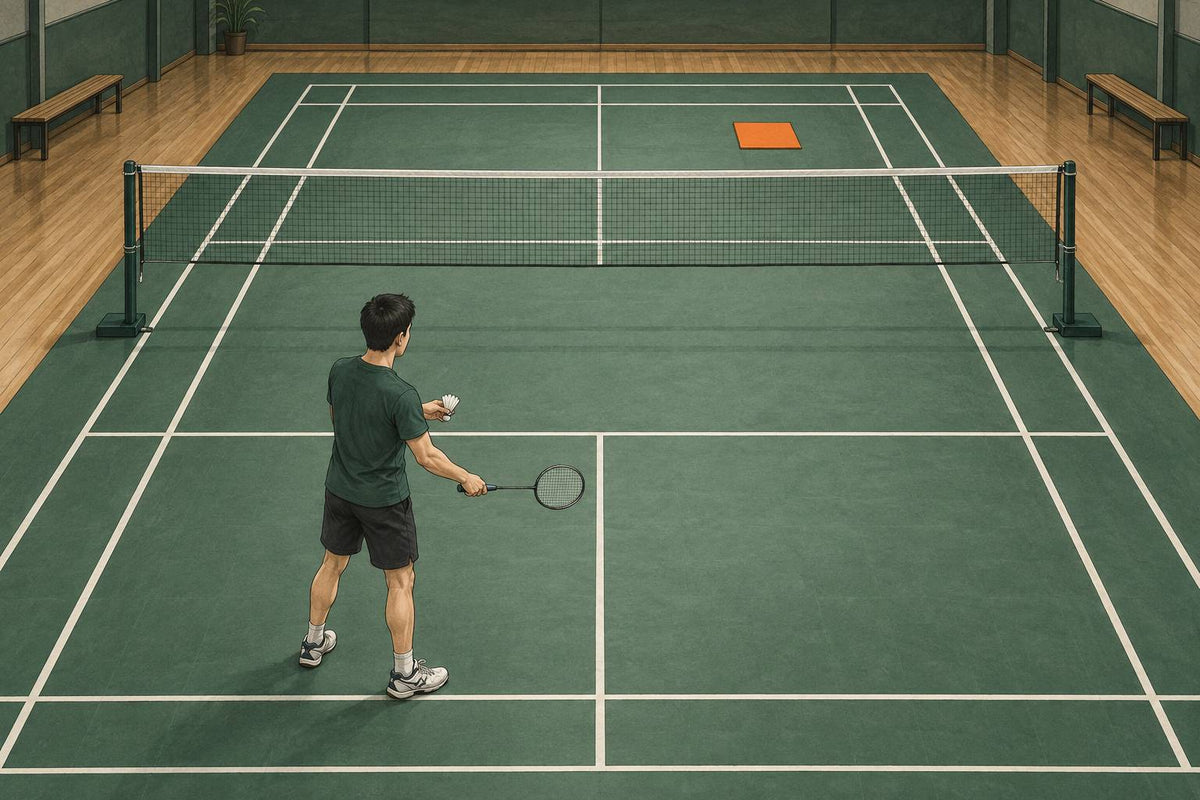
A 45-minute solo session can be an editable personal menu, not a validated universal programme. Use one shuttle, one stated goal, and a pace that keeps the player in control; this article does not present the local menu as opponent-cue or match practice.
- Use 5 minutes for a warm-up and choose one solo goal, such as controlled self-feeding to a named area.
- Use 25 minutes for one simple self-fed shot or movement sequence, pausing only to record one observation rather than chase a fixed count.
- Use 10 minutes to repeat the same cue at an easier pace or review a phone note, then 5 minutes to collect shuttles and record the next change.
- Keep the 5–25–10–5 allocation editable; it is a local 45-minute example, not a validated menu or proof of match transfer.
Related reading: Badminton Practice Session Plan for Busy Players — for planning a complete practice around one focused solo block.
Set a source-bound scope for solo self-feeding
Solo self-feeding can rehearse one-shuttle handling at a pace matched to the learner’s stage, but it cannot supply the opponent’s racket and body cues used for anticipation in live play. Use it as one part of practice, not as a substitute for opponent simulation. BWF Level 1 Manual and BWF Level 3 Manual

Set one observable solo-practice goal
BWF coaching guidance supports stated goals, evaluation, and progression, but it does not validate a fixed solo 45-minute template or match-transfer score. Set one observable goal for the session and record a simple result without treating the timing or result as a proven prescription. BWF Level 1 Manual

One local 45-minute example is five minutes to warm up, 25 minutes on one self-fed task, 10 minutes to repeat the cue or review a note, and five minutes to collect shuttles and record the next change. The allocation is editable rather than a source-backed dose, score, or proof of transfer.
Keep the local menu distinct from opponent-cue practice
Self-fed solo work does not include the opponent’s racket and body cues that support anticipation in live play. Keep cue-reading questions for partner or opponent practice, and do not use a successful self-feed sequence as evidence that anticipation has been trained. BWF Level 3 Manual

For a local solo block, write down one chosen action, one observable target or recovery path, and one change to consider next time. Keep the same start and reset long enough to see whether the selected feature remains visible. If the question changes to the opponent-racket or body cues discussed in the BWF material, label that as a different partner-practice question rather than claiming that the solo menu has tested it. The note makes a limited court session easier to review without calling it a validated match simulation.
Questions the cited sources do not settle
- A validated solo routine with exact minutes, shots, or match-transfer guarantees.
- A claim that solo practice fully replaces partner or opponent practice.
What to do next
Run one self-fed action for the planned block, then decide whether it stays useful or needs a partner-fed version for the next question.

Leave a comment
This site is protected by hCaptcha and the hCaptcha Privacy Policy and Terms of Service apply.