
Last checked: August 2026 · Written by the player-led team at Badminton House
Quick Answer: Starting Badminton at 60
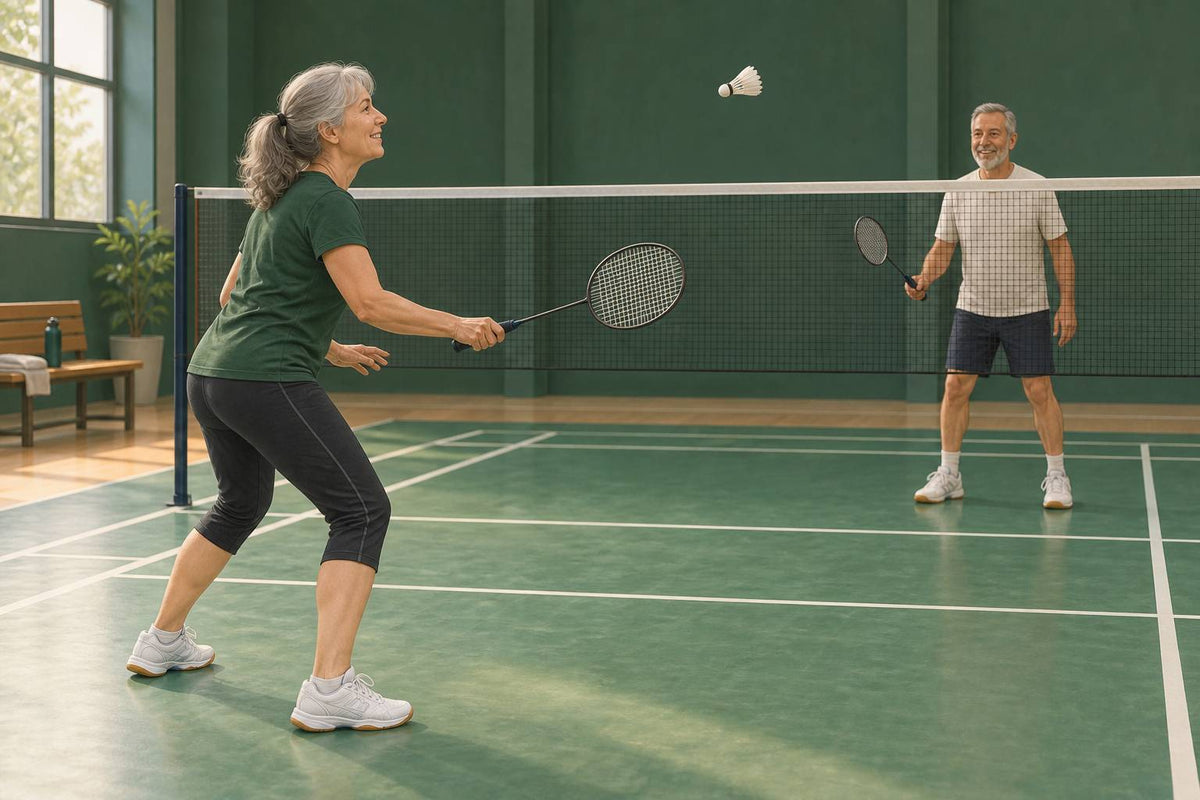
Yes, it can be a realistic place to begin. Make the first month about controlled rallies, comfortable movement and finding welcoming people, rather than trying to cover a whole court or prove your fitness on day one.
Start
Weeks 1–2: one calm coached, fed or partner session each week. Keep the court area and score small.
Build
Weeks 3–4: add short social doubles only if the previous session settled well.
Skip
Month one: jumping, frantic court coverage and playing through warning symptoms.
Badminton at 60 does not need a special entrance exam. It needs a court that feels manageable, shoes that let you move with confidence, and a partner who values a rally over a winner. Your first month is successful when you want to return, not when you have mastered every shot.
Use this as an editorial starting schedule, not a medical prescription. Move one stage later if it feels rushed. If you already play a little, our intermediate club readiness guide helps you decide when a faster session may suit you.
Choose a sensible first court
A sensible first court is indoor, dry, clearly marked and calm enough to learn on. You do not have to ask permission because of a birthday; choose a slower first setting because it gives you attention for balance, timing and enjoyment rather than turning every rally into a scramble.
If you have no current injury or chronic condition and intend to build gradually, a medical appointment is generally not a prerequisite for becoming active. If you do have a chronic condition, a recent injury, unexplained symptoms, or questions about medications and exercise, bring badminton up with the clinician who knows your history. The National Institute on Aging makes the same distinction: gradual activity is usually fine for people without those concerns, while individual conditions deserve an individual plan. Read NIA’s guidance on beginning activity gradually.
For your first booking, ask four practical questions: Is there a beginner lesson or a quiet social session? Can you borrow a racket? Are non-marking indoor shoes required? Will someone introduce you to a suitable partner? A good answer to the last question matters more than a polished facility. You want room to pause, ask what just happened, and begin the next rally without apology.
| Good first setting | Why it works | Question to ask |
|---|---|---|
| Beginner lesson | Someone can control the pace and show a safe way to stop, turn and recover. | “Can the first half be rally practice rather than games?” |
| Quiet social doubles | Four people share the court, leaving a smaller movement job for each player. | “Do you rotate beginners with patient partners?” |
| Private court with a friend | You can use half court and stop before fatigue changes your movement. | “Would you feed easy shuttles and count a ten-shot rally?” |
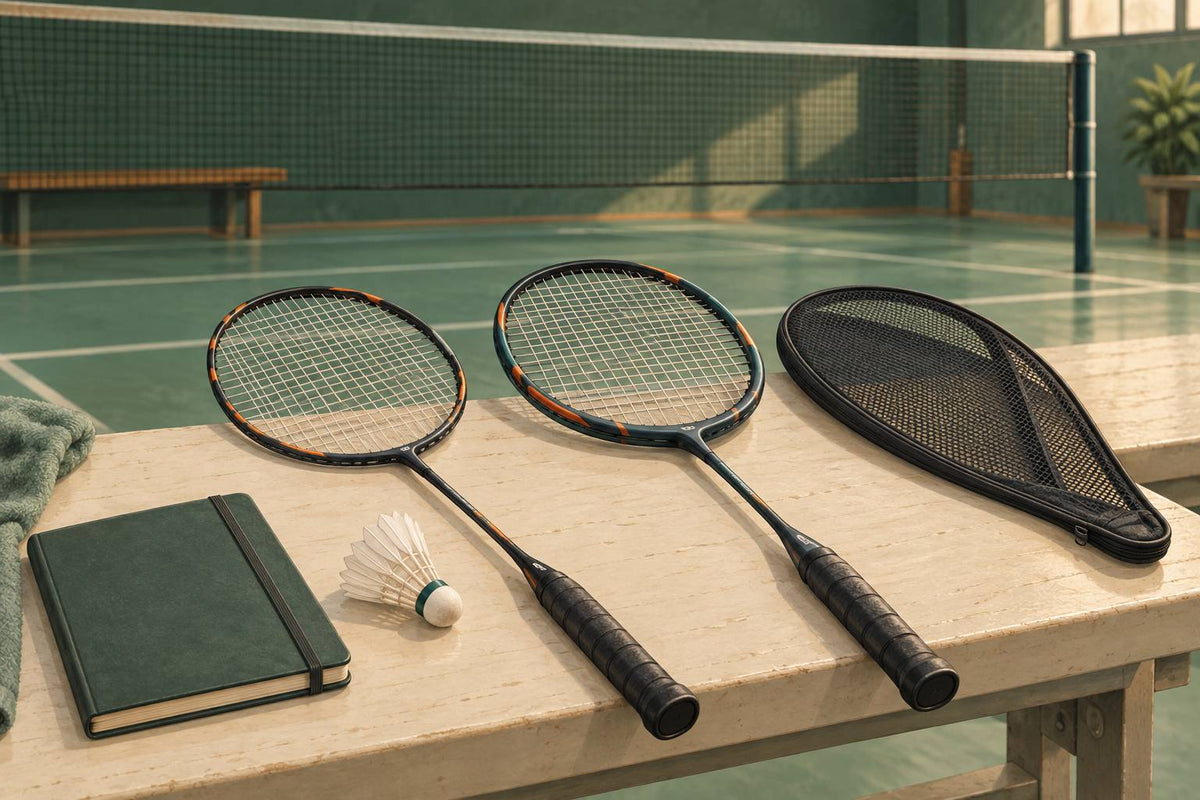
Bring non-marking indoor court shoes if the venue requires them, light clothing you can move in, water, and a small towel. Borrowing a racket for an introductory session is sensible. When you buy, favour a comfortable, manageable racket and an indoor court shoe with a secure fit over a prestige purchase. The point is to feel steady and able to practise; your preferences will become clearer after several sessions.
Before play, look at the floor as well as the court. Wet spots, loose gear at the sideline, a sole that feels slippery, or a foot problem that is changing how you walk are all reasons to pause and sort the setting first. Medication side effects such as dizziness, painful feet, unsafe footwear and environmental hazards can all contribute to falls, according to the National Institute on Aging’s falls guidance.
Make the first session small on purpose
Your first session should finish while you still feel composed. Begin with easy movement and simple contact, then use a half court or a short-service-line target so you can learn a ready position, a gentle swing and a controlled stop without needing to sprint or jump.
Take five to ten minutes to walk, gently change direction, roll the shoulders, and make a few unhurried practice swings. This is not a test of flexibility. It is your chance to notice how your feet, breathing and balance feel that day. A gradual warm-up and cool-down help the body transition into and out of activity; NIA recommends both when starting or increasing exercise. Its practical advice is to build slowly over weeks and months.
- Five minutes: find the ready position. Stand with knees soft, racket in front, then take one step forward, back and sideways. Return to the middle after every step. Keep the movements low and quiet.
- Ten minutes: feed-and-return. A partner gently feeds a shuttle within a step or two. Your job is a relaxed forehand or backhand return, then a controlled recovery. Ten good contacts teach more than ten desperate reaches.
- Ten minutes: net-height rallies. Rally across half court. Let the shuttle rise if needed. Count your longest cooperative rally, then take a breather before the next attempt.
- Five minutes: cool down and take notes. Walk until breathing feels settled. Write down one movement that felt easy, one that felt awkward, and whether anything changed during the session.
Use this as an editorial comfort check instead of chasing a universal heart-rate number: during early rally work, notice whether speaking in short, comfortable sentences feels manageable for you. If it does not, reduce the court area, slow the feed or sit out a rally. A good partner will understand that the session is practice, not an audition.
The best first-rally goal is not power. It is a calm return followed by a balanced recovery step.
Month one is also a useful no-jumping month. You can enjoy serves, clears, gentle drives and net exchanges without adding an unfamiliar take-off and landing demand. When the shuttle goes beyond your comfortable reach, let it go. The ability to stop is a badminton skill, not a concession.
Follow a four-week first-month plan
This four-week plan deliberately advances only one variable at a time: first contact, then court area, then game context, then a little more continuity. Treat it as an editorial checklist. Repeat a week, shorten it or take an extra rest day whenever your body or confidence asks for more time.
| Week | On-court focus | Session shape | Move on when |
|---|---|---|---|
| 1 | Fed returns and gentle net-height rallies. | One 25–35 minute visit, with pauses built in. | You can stop, recover and leave feeling that you could have done a little more. |
| 2 | Half-court cooperative games to 5 points, with no jumping. | One or two 30–40 minute visits, separated by at least a day. | Your movement stays controlled late in the session, not just at the start. |
| 3 | Social doubles with cooperative partners and short games. | Two short sessions, with time to sit between games. | You can communicate with a partner, track the score and recover calmly between rallies. |
| 4 | Full doubles court, still at a social pace. | Two familiar sessions; add game length before adding intensity. | You recover comfortably by the following day and have no new symptom that changes how you move. |
Keep the rest of the week ordinary and active in ways you already enjoy: walking, errands, gentle strength work or balance practice can all support a rounded routine. WHO recommends that older adults include muscle strengthening on two or more days each week and varied activity that emphasizes functional balance and strength on three or more days. Badminton can be one enjoyable part of that bigger picture; it does not have to carry every fitness goal by itself. See WHO’s older-adult activity recommendations.
Do not try to “make up” a missed session with a longer one. Consistency beats catching up. This editorial plan leaves one or two rest days between early court sessions and returns to the previous week’s size after illness, travel or a long break.
Recover well and choose people who help you learn
Early recovery is mainly feedback, not a toughness contest. Mild, short-lived tiredness after unfamiliar movement can be a normal part of starting. Pain that escalates, swelling, a limp, or a symptom that changes your usual movement is useful information to stop, rest and seek individual advice before progressing.
NIA advises people managing pain, swelling or inflammation in a specific area to rest or focus elsewhere for a day or two and to discuss appropriate activity with a clinician. During activity, stop rather than push through dizziness, chest pain or pressure, or nausea. Those are clear reasons to step off court and get appropriate help, not reasons to negotiate with yourself for one more rally. NIA’s chronic-condition exercise guidance is a helpful starting point for that conversation.
Choose a partner who feeds the shuttle to your reach, tells you the score without fuss, and smiles when a rally reaches five shots. In social doubles, agree before the game that high, slow clears and easy serves are welcome. A useful club culture makes room for learning, rotates people fairly and treats a pause as normal. If the first session is hurried or dismissive, try another time or group; that is a match with the setting, not a verdict on you.
A first-visit club checklist
- Watch the first ten minutes: Are players warming up, sharing shuttles and making space at the court edge, or are people rushing straight into hard games?
- Ask about court rotation: A clear rotation makes it easier to take a breather without feeling that you are holding a court hostage.
- Name your level plainly: “I am new and want controlled doubles” is more useful than claiming a label you do not yet know.
- Choose the patient player: Look for someone who can lift a shuttle to your forehand, slow a rally down, and explain one thing at a time.
- Leave with a next step: One welcoming contact, a session time, or a plan to practise again is enough. You do not need to join every game to belong there.
Good doubles has a built-in conversation: call “mine,” let a shuttle go when your partner is better placed, and reset after a point. In your first month, give the shuttle more height and give yourselves more time. Competitive pace can wait. A thoughtful partner helps you learn the rhythm of serve, return, recover, and encourage, which is the social side of the sport as much as the technical side.
Keep a tiny session log on your phone or a card in your bag. Record the date, the minutes you actually moved, the part that felt easiest, the part that felt uncertain, and how you felt the following morning. That is not a performance diary. It is a way to notice whether a change was helpful before adding another one. If week three feels better than week two, preserve the same session shape once more instead of immediately making it harder.
There is no age-specific technique you need to imitate. Use the same foundations any beginner uses: watch the shuttle, meet it in front of you when possible, take small recovery steps, and keep the grip relaxed until contact. The useful adaptation is in the session design: fewer rushed reaches, more pauses, a cooperative partner and enough repetition for the movement to become familiar.
After the first month, keep doubles as your default while you learn court awareness. Add a lesson, one new serve pattern, or a little more game time, but not all three in the same week. Masters badminton has a long runway for players who later want structure or competition, yet there is no deadline to enter it. The next useful milestone is simpler: play a relaxed social game, recover well, and look forward to the next one.
Ready for your first relaxed rally?
Start with court shoes, a manageable racket and a willingness to learn one rally at a time.
Explore badminton essentialsWhen you are comfortable with basic rallies, our senior doubles tactics guide can help you make the court feel smaller through positioning and communication. For equipment choices once you know your preferences, see our guide to badminton rackets for seniors.


Leave a comment
This site is protected by hCaptcha and the hCaptcha Privacy Policy and Terms of Service apply.