
Last updated: July 2026 · Written by the team at Badminton House
Quick Answer: Best Badminton Racket for Seniors
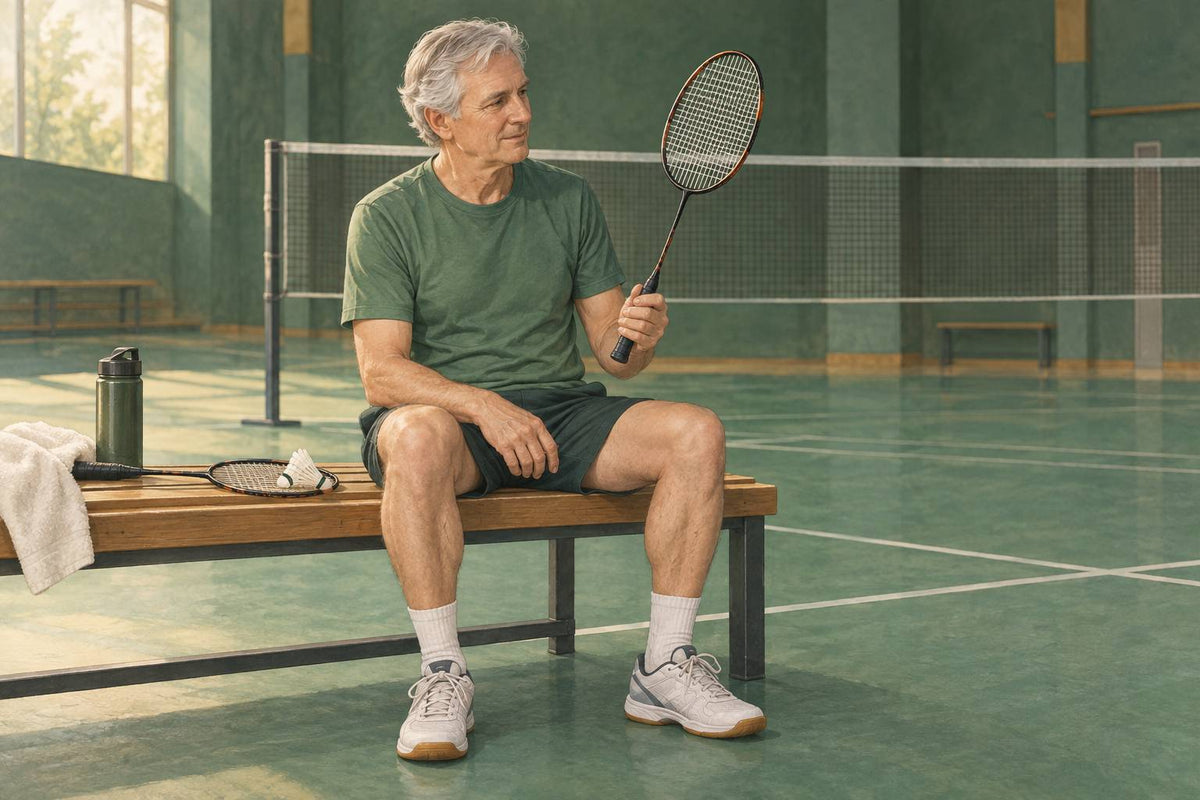
Age alone does not determine racket fit. Compare weight, balance, shaft response and grip with your usual racket, and choose a setup you can swing comfortably and time consistently.
Default
Starting point: try a 4U or 5U racket if your present setup feels slow or tiring, then compare it on court; neither weight class is automatically safer.
5U
A 5U frame is nominally 75–79.9 g unstrung; compare its handling and shot length with your current racket before choosing.
4U
A 4U frame is nominally 80–84.9 g unstrung; its balance, strings and grip also affect the finished racket’s feel.
Need a senior-friendly racket in Canada? Check the live Badminton House badminton rackets collection for lighter options as they arrive. Badminton House ships across Canada.
In This Guide
- What Seniors Should Look For in a Badminton Racket
- Best Overall Profile: Light, Flexible, and Head-Light
- Comparing Equipment When Comfort Is a Concern
- Best for Doubles, Defence, and Fast Reactions: Head-Light Balance
- Which Rackets Should Seniors Use as Spec Benchmarks?
- What to Avoid If You’re an Older Player
- Which Senior-Friendly Racket Profile Should You Choose?
What Seniors Should Look For in a Badminton Racket

Compare the complete racket setup, including strings and grip. A lighter frame or head-light balance can be worth trying if handling is your main concern, but no combination of weight and flex has been established here as an injury-prevention prescription.
If you are comparing models, start with the live Badminton House badminton rackets collection and use the specs below as your filter. For a wider explanation of balance, flex, grip size, and skill level, our full badminton racket buying guide is the broader reference.
Start with the U-rating: 4U and 5U are the key senior weight bands
Badminton racket weight is commonly shown as a number followed by “U”. The smaller the number, the heavier the frame. These U-ratings refer to the unstrung frame weight, so strings and grip tape add weight after the racket is built.
| Weight class | Unstrung frame weight | Senior fit |
|---|---|---|
| 3U | 85–89.9 g | A heavier nominal class than 4U or 5U; age or an injury history alone does not determine suitability. |
| 4U | 80–84.9 g | A common comparison point for players seeking moderate total weight; test timing and comfort. |
| 5U | 75–79.9 g | A lighter nominal class to compare for manoeuvrability and shot consistency. |
| F | 70–74.9 g | Very light. Useful for some players with low arm strength, but may feel less powerful or less stable if the player over-swings to compensate. |
Strings and additional grip layers change the final weight and balance. Weigh the finished setup if you want a useful comparison; the increase is not a fixed number of grams.
Choose head-light balance for easier reactions
Head-light rackets carry more of their weight toward the handle, which makes them quicker to move. For seniors, that usually matters more than maximum smash weight: it helps with short defensive blocks, quick drive exchanges, net interceptions, and late reactions in doubles.
Head-heavy rackets can still suit strong, attacking players, but they ask more from the forearm and shoulder over repeated swings. If comfort and consistency are the priority, head-light is the easier default.
Use a flexible shaft to get power with less effort
A flexible shaft bends more readily under load than a stiff one. Whether its response helps your shot length depends on swing timing; try both rather than selecting flex by age.
Do not ignore the grip
Choose a grip size and surface that feel secure without continual hard squeezing. Extra padding changes handle size, so add it only if it improves your fit.
Best Overall Profile: Light, Flexible, and Head-Light
Practical default: compare 4U and 5U for handling and consistent shot length, using the same string and grip setup where possible. For a deeper comparison, see our 3U vs 4U vs 5U badminton racket weight guide.
Badminton House’s broader racket selection guide notes that 4U is the most popular weight. That still makes sense for many Canadian club players: 4U is light enough for speed, but not so light that timing and power completely disappear. The senior-specific adjustment is to treat 4U as the upper end of the comfort zone, not the automatic answer.
- Start with 4U if you play regular doubles, still generate your own power comfortably, and want one racket that does not feel too specialized.
- Move to 5U if you get tired through the shoulder, feel late on defence, play mostly doubles, or want the easiest swing for repeated rallies.
- Pair the weight with flex. A flexible shaft can help produce easier length and power with less effort, while very stiff rackets demand a stronger, cleaner swing.
- Keep the balance head-light. Less weight toward the head makes blocks, drives, lifts, and defensive reactions easier when the pace speeds up.
One caution: lighter is not automatically better forever. Very light rackets can feel effortless in the shop, but some players start swinging harder to replace lost power. For seniors, the useful target is a setup that feels comfortable and produces your usual shots without compensatory effort.
When shopping the Badminton House badminton rackets collection, look for incoming 4U or 5U options with flexible or medium-flex shafts and a head-light or even-balanced profile. If the available rackets are stiff, head-heavy power models, they are better treated as performance benchmarks for strong attackers rather than the default senior-friendly choice.
Comparing Equipment When Comfort Is a Concern
Persistent elbow, wrist or shoulder pain needs assessment, not a racket prescription based on age. Stop activities that worsen the pain and discuss equipment fit alongside technique and workload with a qualified clinician.
Shaft flex changes racket response, but a flexible shaft is not established here as absorbing harmful impact or preventing arm pain.
Comfort-first starting point. If you are changing your setup, ask your stringer about a modest adjustment within your exact racket’s recommended range; 21–24 lb is an illustrative recreational range, not a treatment. For a deeper pain-focused checklist, read Badminton Elbow Pain in Canada: Is Your Racket to Blame?.
How to compare string tension
Lower tension changes string-bed response and can feel more forgiving to some players. Useful length and accuracy still depend on contact and timing; there is no universal tension for older players.
This does not mean every older player should automatically string at the lowest possible tension. If you already have clean technique and want a crisper feel, you may prefer the upper end of that range. But if your arm feels sore after clears, smashes, or backhand lifts, dropping tension is often one of the first equipment adjustments to discuss before buying a new racket.
| Ask your stringer | Comfort-focused answer |
|---|---|
| What tension should I start with? | Discuss your current setup and a modest trial change within the racket’s specified range; age and pain do not set a universal number. |
| Should I choose max tension for control? | Not if comfort is the goal. Higher tension can feel crisp, but it is less forgiving and usually demands cleaner timing. |
| What if my clears feel short? | Before moving to a heavier or stiffer racket, try a slightly lower tension and check your grip size and swing timing. |
| Where can I learn the tension basics? | See our Badminton String Tension Guide for Beginners: 20-26 lbs. |
The simple comfort formula
- Shaft: compare shaft responses with your usual swing; flex is not a medical recommendation.
- Tension: use the exact frame’s specified range and adjust gradually with your stringer.
- Weight and balance: keep the racket light and easy to move so you are not forcing late swings with your shoulder.
- Grip: use a comfortable grip build so you are not squeezing the handle harder than needed.
At Badminton House, check the live badminton rackets collection for lighter and more flexible options as the catalogue changes.
Best for Doubles, Defence, and Fast Reactions: Head-Light Balance

If most of your badminton is doubles, a head-light racket is usually the senior-friendly balance to try first. Head-light rackets place more weight toward the handle, which makes the racket head quicker and easier to manoeuvre in fast exchanges.
That matters because doubles often gives you less time to use a full swing. You are blocking smashes, driving flat, changing grips, reaching for net kills, and reacting to body shots. A racket that comes around easily can help you stay compact instead of forcing big arm movements.
- At the net: faster racket handling helps with interceptions, quick pushes, and short counter-drives.
- In defence: a lighter-feeling head is easier to lift into position when a smash is coming at your body or hip.
- In mixed or level doubles: easier manoeuvrability can reduce the feeling that you are late on every flat exchange.
Simple senior doubles benchmark
Look for a racket that combines a head-light balance with a light frame and a flexible or medium-flex shaft. The balance helps with speed; compare the complete setup for comfort and timing over a normal session.
Head-light does not mean the racket has no power. It means the racket is built more for speed, control, and reaction than for heavy rear-court smashes. For many older doubles players, that trade-off makes sense: you win more points by being on time, defending cleanly, and keeping the rally under control.
If you want the full breakdown of how balance changes racket feel, read our head-heavy vs head-light badminton racket guide. For senior players, the short version is this: choose head-light when quick hands, defence, and comfort matter more than maximum smash weight.
Which Rackets Should Seniors Use as Spec Benchmarks?
Use specific rackets as spec benchmarks, not as automatic buys. For older players, the useful pattern is the same: light overall feel, head-light handling, and a flexible shaft that does not demand a hard, explosive swing.
A commonly recommended example in that profile is the Yonex Nanoflare 700: a head-light racket offered in 4U and 5U weights with an easy-swinging, medium-flex shaft. Hands-on reviews of the Yonex Nanoflare 700 Game also found it suitable for beginners because of its hi-flex shaft, which is exactly the kind of easier-loading feel many senior players should compare against.
| Benchmark example | What to copy from it | Best fit |
|---|---|---|
| Yonex Nanoflare 700 | Original Nanoflare 700: head-light, medium flex, with 4U and 5U versions. Use it as a reference point if you want speed and easier defence without a head-heavy feel. | Senior doubles players, defensive players, and anyone who values quick handling. |
| Yonex Nanoflare 700 Game | The useful takeaway is the flexible shaft: it can feel more beginner-friendly and easier to load than a stiffer performance frame. | Older beginners, returning players, and players who want a forgiving swing feel. |
| Apacs and Karakal ultra-light styles | Compare each model’s stated weight and finished setup; brand reputation does not establish suitability for an older player. | Players with very low arm strength who need the lightest practical swing weight. |
Ultra-light 6U and 8U rackets can make sense when arm strength is very limited, but do not assume lighter is always safer or better. Very light rackets can sacrifice power, which may lead some players to swing harder and overcompensate. If you are unsure, start by comparing against the senior-friendly benchmark profile above rather than chasing the lowest possible weight number.
Shopping from Canada? Check the live Badminton House racket collection for lighter and flexible options as inventory changes. If you are still comparing specs, our racket selection guide, 3U/4U/5U weight guide, and shaft flex guide will help you narrow the choice.
What to Avoid If You’re an Older Player
Avoid buying solely on a smash-power claim or an age-based label. A 3U frame is not automatically unsuitable for an older player, and a 5U frame is not automatically comfortable.
That does not mean every senior should buy the lightest racket available. A racket that is too heavy can tire your shoulder; a racket that is too light can make some players over-swing to generate length and power. The safer starting point is usually a controlled, arm-friendly profile: light, forgiving, flexible, and easy to move.
Simple rule: if a racket makes you swing harder, grip tighter, or feel your shoulder after one session, it is probably the wrong direction for senior play.
Avoid These Racket Choices First
- Weight chosen without a trial: compare complete setups; use comfort and consistent contact rather than an age-based rule.
- Very stiff shafts: stiff rackets reward strong, fast swings, but they demand more from the arm. Match shaft response to your timing; it does not guarantee shoulder comfort.
- Head-heavy power rackets: head-heavy balance can help smashes, but it also makes the racket feel slower in defence and heavier through repeated clears, lifts, and drives.
- High string tension too soon: lower tension is more forgiving and easier to use. For many developing or comfort-focused players, the 21–24 lb range is a better starting point than a tight, unforgiving setup.
- A grip that makes you squeeze: if the handle feels too small, too slippery, or too harsh, you may grip tighter than necessary. Choose a grip size and surface you can hold securely without continual squeezing.
Use Power Rackets as Contrast, Not as Senior Defaults
Badminton House’s catalogue includes two Yonex Astrox models that are useful examples of what many older comfort-focused players should be cautious with. More importantly, they are not the light, flexible, head-light profile described in this guide.
| Racket listing | Why it is not the senior-friendly benchmark |
|---|---|
| Yonex Astrox 100 ZZ Kurenai, Dark Navy | A head-heavy, extra-stiff power racket. Better treated as an expert-style contrast than a comfort-first senior pick. |
| Yonex Astrox 100VA Game Grayish Beige | Part of the head-heavy Astrox family. Not the first place to look if your priorities are arm comfort, faster defence, and easier timing. |
For better senior-friendly options, check the Badminton House badminton rackets collection for lighter, more flexible models as they arrive. If you are unsure whether 4U, 5U, head-light balance, or lower tension makes the most sense for your arm, compare the specs in our 3U vs 4U vs 5U racket weight guide and our badminton elbow and wrist pain guide.
Browse Badminton Rackets — Canada-Wide Shipping
Ships across Canada · 14-day returns
Which Senior-Friendly Racket Profile Should You Choose?
Use the comparisons below to narrow a trial, then judge the racket with your usual shots. Age alone does not prescribe a weight class, balance or flex.
| Choose this profile | Best if... | What to look for |
|---|---|---|
| Default senior pick | You want a manageable setup for club play, lessons or casual competition. | A 4U or 5U frame, head-light balance, flexible shaft, and padded grip. 4U is also the most popular racket weight in the Badminton House racket guide. |
| Elbow or shoulder comfort | You have a history of arm pain, shoulder irritation, tennis elbow, or wrist discomfort. | Persistent pain needs clinical assessment. Discuss equipment changes as part of that assessment rather than treating weight or tension as a cure. For more detail, see Badminton Elbow Pain in Canada. |
| Doubles defence and fast reactions | You play mostly doubles and need quicker blocks, drives, net exchanges, and defensive lifts. | Choose head-light balance. Head-light rackets keep more weight toward the handle, making them quicker and easier to manoeuvre in fast defensive situations. |
| Very low arm strength | A normal 4U frame still feels tiring late in games, or you are returning after time away from sport. | Consider 5U first. Ultra-light options can help with swing comfort, but they often trade away power, so avoid going extremely light unless you truly need it. |
| More forgiveness on off-centre hits | You do not always contact the shuttle cleanly, especially on late defensive shots. | Look for an isometric head shape, which gives a larger, more forgiving sweet spot than a conventional oval profile. |
| Power-frame contrast | You are tempted by a head-heavy, stiff attacking racket. | If you see the Yonex Astrox 100 ZZ or Yonex Astrox 100VA Game in the Badminton House rackets collection, treat those Astrox power frames as contrast examples for the What to Avoid section, not the senior-friendly default. |
Simple buying rule: start with 4U or 5U, head-light, flexible, and comfortable in the hand. If you are comparing specs, use our badminton racket selection guide and check the rackets collection for current Canadian availability.
Get 10% off your first order
Join the Badminton House list and we’ll email you a 10% welcome code — plus subscriber-only restock alerts, giveaways, and honest gear advice from players.
By subscribing, you agree to receive Badminton House emails and can unsubscribe anytime.
If you are choosing a racket for yourself, a parent, or a club member, keep the goal simple: easy swing speed, comfortable contact, and less stress on the elbow and shoulder. We play badminton ourselves, and we are happy to help you compare weight, balance, shaft flex, grip size, and string tension before you buy. If you are unsure what fits your age, strength, injury history, or doubles role, contact Badminton House for advice.
Ships across Canada · 14-day returns · Canadian badminton specialty shop

Leave a comment
This site is protected by hCaptcha and the hCaptcha Privacy Policy and Terms of Service apply.