

Last updated: July 2026 · Written by the team at Badminton House
Quick Answer: Badminton Time Clock Rule 2026
BWF’s trial is simple: after the umpire updates the score, be in serving or receiving position before the 25-second clock expires.
Server
Default focus: watch the court-side clock immediately after each rally; you do not need to hit the serve within 25 seconds, only be ready.
Receiver
Stay alert once the server is ready, because the receiver cannot use leftover clock time to delay.
Pause
Long mopping, injuries, disputes, lengthy IRS reviews, or umpire interventions can pause the clock; short mopping does not.
At events using BWF’s time-clock system, the countdown changes the rhythm between rallies. Your towel, drink, coach message, shoelace fix, and reset breath now all need to fit around one question: can you be clearly ready before the clock expires? This guide explains what counts as ready, what is allowed inside the window, and where umpire discretion still matters.
Tournament prep question? If you're unsure what to pack or adjust before a faster-paced match format, ask Badminton House for practical gear guidance.
In This Guide
What the 25-Second Time Clock Changes

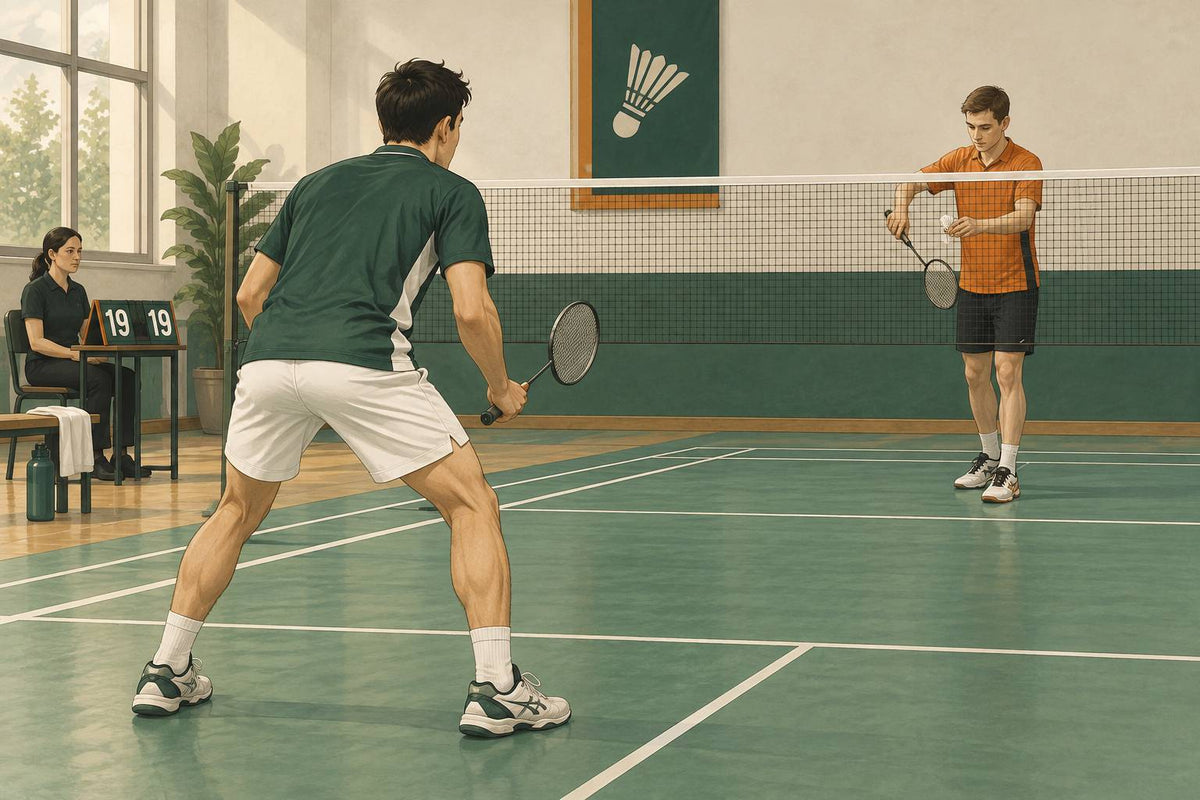
The short answer: BWF is trialing a Time Clock System for the space between rallies. Once a rally ends and the umpire updates the score, the 25-second countdown begins. The server’s job is to be ready for the next serve before the clock reaches zero.
That turns the old, more informal reset rhythm into a visible standard that players, umpires, and spectators can follow. It matters most after long rallies, towel breaks, coaching chats, shuttle-change requests, and small equipment fixes, because those actions now have to fit into the restart window unless the umpire stops the clock. If you need a baseline refresher on rally scoring and service order, start with our badminton rules and scoring guide.
The next section explains what “ready” means in practice. This guide describes the trial announced for the early 2026 events below; check your event’s current regulations to see whether the system applies.
What “Ready” Means for the Server and Receiver

Under the BWF time-clock trial, “ready” does not mean the server has already hit the shuttle. It means both players have reached a clear, playable set position before the 25-second window expires.
- The server is in a serving position and the receiver is in a receiving position.
- Both players have both feet still and on the ground.
- The server is holding the shuttle.
- The receiver’s hand is down, not raised to delay play.
- The server and receiver are looking at each other.
The receiver also gets the same 25-second reset window after a rally. The important catch is that the receiver cannot use the clock as a separate delay tool: once the server is in position and ready to serve, the receiver must be ready to receive, even if time remains on the countdown.
What Players Can Do Inside the 25-Second Window

Think of the 25 seconds as a fixed reset budget, not a permission request. Inside it, players may speak to a coach, towel off or drink, tie shoelaces, and apply cold spray or other self-treatment themselves without asking the umpire. The trade-off is simple: those actions are only safe if you can still arrive in the correct serving or receiving position before the clock runs out.
That is a practical change from the previous system, where towelling off or taking a drink often needed explicit umpire permission. Now the clock gives players more freedom, but less room to drift.
Shuttle changes are tighter too. If you want a shuttle changed, request it immediately after the rally and complete the change inside the same 25-second window — there's no separate grace period for swapping shuttles.
When the Clock Pauses — and What Happens If You’re Late


Not every delay is treated the same. For court mopping, the key distinction is length: short mopping keeps the 25-second clock running, while long mopping stops it. Once mopping is finished, players are expected to be ready to resume immediately rather than using the stoppage as a second reset.
The clock can also be paused for umpire interventions, including disputes, referee intervention, injuries, long Instant Review System decisions, and unexpected situations around the court. Umpires still have discretion to allow more than 25 seconds when the circumstances warrant it, such as medical attention or significant floor cleaning.
If a player is not ready in time without a valid reason, the umpire may call undue delay. Warnings and misconduct cards may follow, depending on the umpire’s judgment and the player’s prior offences; do not treat the clock as a guaranteed sequence of free delays.
Why BWF Is Testing the Time Clock

BWF did not choose 25 seconds at random. Its analysis of hundreds of Major Championship and World Tour matches found that, in gaps with no incidents, the average break between rallies was 22 seconds, while actual rally play averaged about nine seconds. From that, BWF concluded that 25 seconds gives players recovery time without letting the match drift.
The broader goal is twofold: make matches faster and more consistent, and reduce delay calls that previously depended heavily on individual umpire judgment. A visible countdown gives players a clearer standard and gives umpires a common reference point.
The testing path has been gradual: BWF Council approved the testing regulations on 29 August 2025, they came into effect in Week 47 of 2025, the system was used in Australian Open 2025 qualifying, and then expanded to all matches at Indonesia Masters 2026.
Decision Helper: What Should You Prioritize Between Rallies?
Use the 25-second clock as a triage tool: do the action that protects the next rally first, then use any remaining time for comfort or coaching.
| Situation | Choose this priority |
|---|---|
| You are serving | Get into serving position before the clock expires (see "what ready means" above). |
| You are receiving | Match the server's ready signal — don't try to wait out the clock. |
| You need a shuttle change | Ask right away, then be in position when the swap is done. |
| You need towel, drink, shoes, or self-treatment | Do it without asking the umpire, but only if you can still be ready in time. |
| Mopping, injury, dispute, or long review | Follow the umpire's signal rather than assuming the clock has stopped. |
Get 10% off your first order
Join the Badminton House list and we’ll email you a 10% welcome code — plus training guides, technique advice, and badminton updates.
By subscribing, you agree to receive Badminton House emails and can unsubscribe anytime.
If the 25-second clock changes how you prepare between rallies, treat it like any other match skill: practise your reset routine before tournament day. We play badminton ourselves, so if you want help thinking through gear, match prep, or shuttle choices, contact us and we’ll point you in the right direction.
Keep spare shuttles ready in your bag so court delays do not become part of your routine.
Check Live Shuttlecock Availability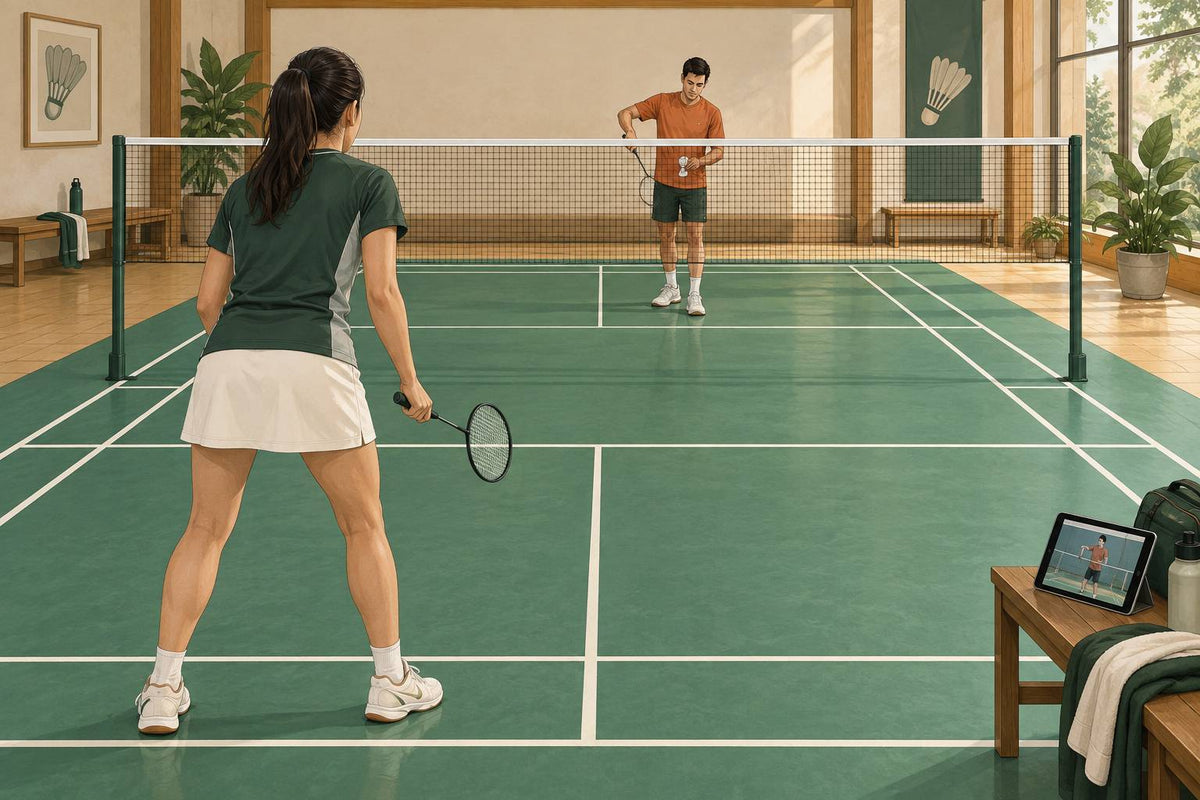

Leave a comment
This site is protected by hCaptcha and the hCaptcha Privacy Policy and Terms of Service apply.