
Last updated: July 2026 · Written by the team at Badminton House
Quick Answer: Badminton Choking Under Pressure
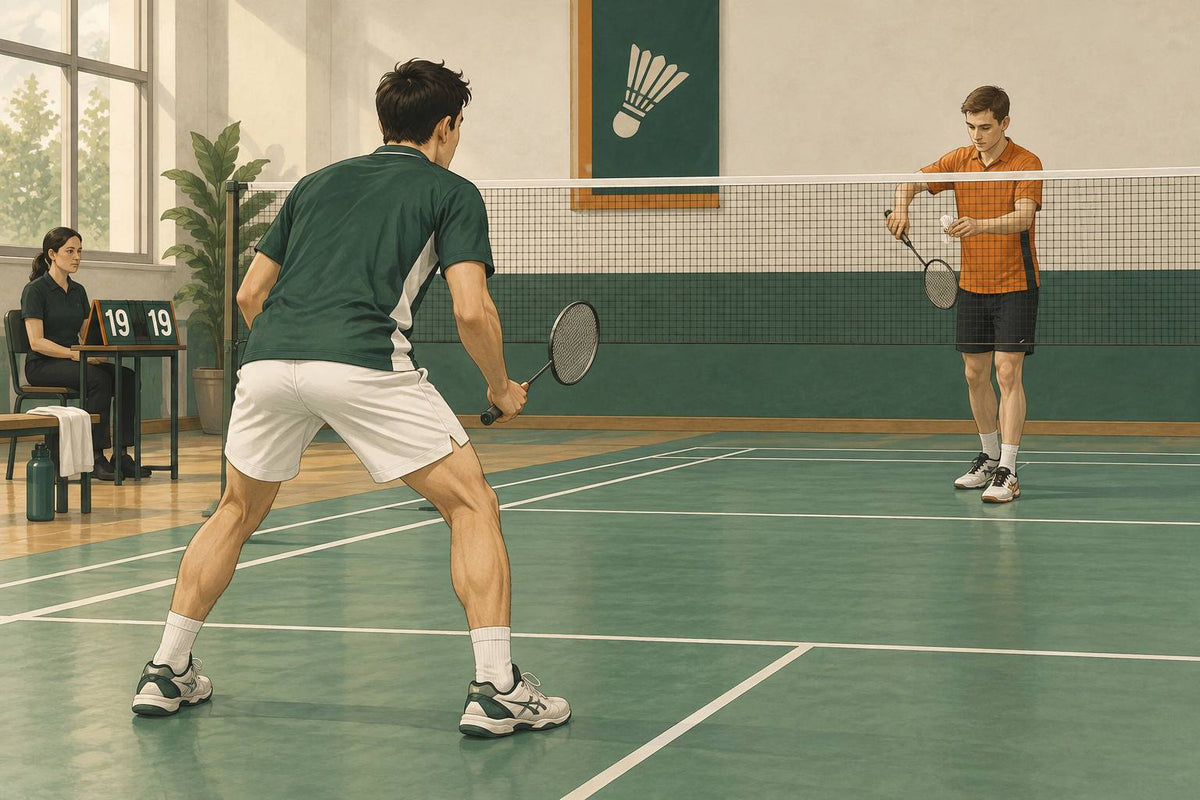
If you miss “easy” shuttles at 19-all, stop fixing technique mid-point; use an external cue and let the trained stroke run.
Default
Best choice: Pick one cue like “shuttle early” or “hit through the target” before serve/receive, then commit.
Mechanics
Use only between rallies or in practice; thinking “wrist, elbow, grip” during the shot can make automatic skills manual.
Training
Recreate pressure gradually with scoring, consequences, and observers so your normal strokes stay automatic when the point feels bigger.
You know the point: loose net kill, sitter lift, simple serve return — and your hand suddenly feels like it belongs to someone else. Badminton choking under pressure is not a character flaw, and it is not always “nerves” in the vague sense. For good players, the mistake often starts when a stroke that normally runs automatically gets pulled back into conscious control: grip, wrist, swing path, contact point, all inspected too late and too closely.
This guide explains why easy points disappear in big moments, then gives practical ways to keep attention on the shuttle and the target instead of micromanaging your technique.
Keep the setup simple. If equipment changes are making you overthink during rallies, ask us for gear guidance before changing everything at once.
In This Guide
What “choking” actually means in badminton

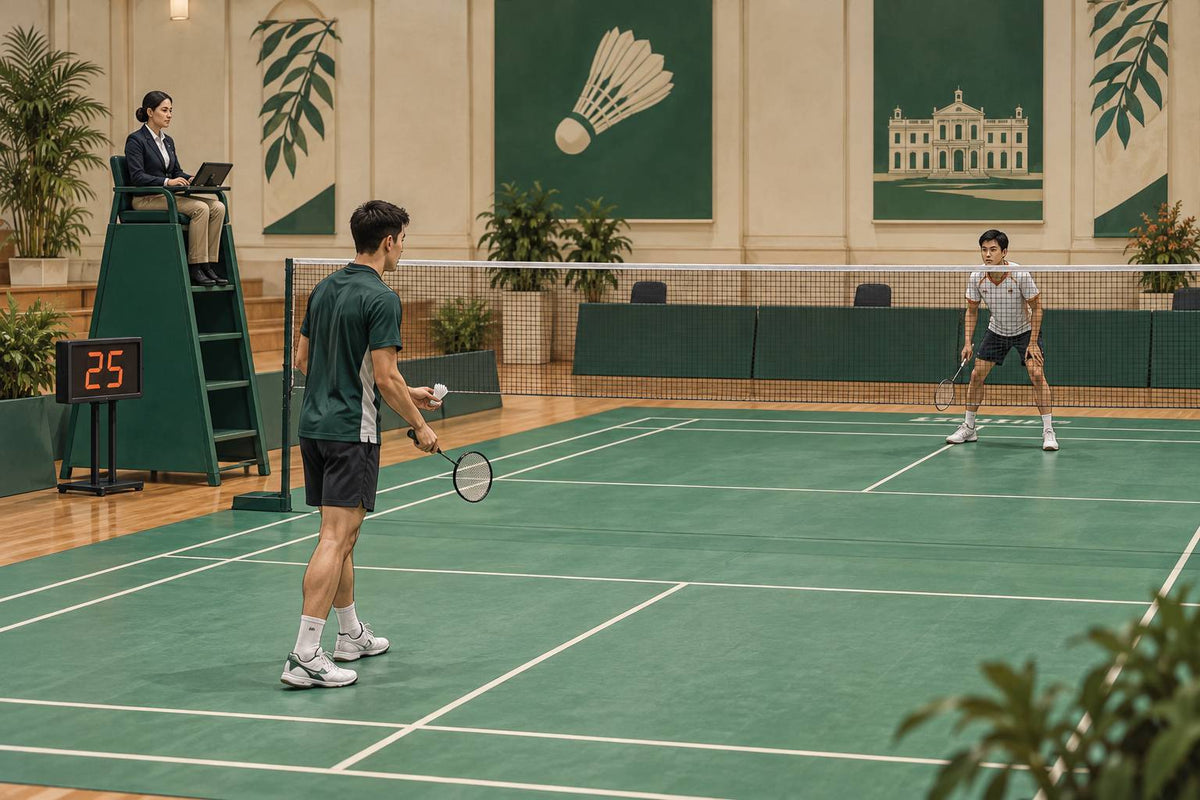
Choking is not simply “being nervous” or “having a bad day.” In sport psychology, choking under pressure means a sudden drop below your normal playing level, even though you are trying hard to perform well. The key is context: it happens in a specific high-pressure moment, such as game point, a tournament serve, or an easy lift after a long rally.
Badminton has direct evidence for this kind of pressure breakdown. In a Journal of Human Kinetics experiment, 32 right-handed college players performed forehand clear, serve, and wall volley tasks in pressure-free and under-pressure conditions. Performance dropped under pressure across all three skills. That matters because the tasks were recognizably badminton-specific, but the group was college players, not elite professionals — so the takeaway is practical for ordinary competitive players: choking is a real performance pattern, not a character flaw.
The mechanism: automatic skills become manual

For a beginner, a stroke is deliberately assembled: grip, elbow position, racket face, timing, follow-through. Those rules sit in working memory because the player still needs them. With repeated practice, the movement becomes procedural: faster, smoother, and less dependent on conscious step-by-step control.
Explicit-monitoring theory — also called self-focus or execution-focus theory — explains what can go wrong under pressure. The player becomes more self-conscious and starts checking mechanics that normally run automatically: “Is my wrist right?” “Am I swinging too hard?” Reinvestment theory describes the same trap as returning to beginner-style rule control after the skill has already been learned. The key nuance is that badminton choking under pressure is not always caused by too little focus. Often it is caused by too much attention aimed at the wrong thing: the movement details instead of the shuttle, space, rhythm, and tactical cue.
Why pressure pulls your attention to the wrong cues

The same pressure that lowered performance in that study changes how you move because it changes what your attention treats as important. Distraction theory says worry steals attention away from the normal performance cue: the shuttle, opponent shape, or intended target. Explicit-monitoring theory says the opposite-looking problem can happen: you pay too much attention to execution, checking your wrist, grip, elbow, or swing path while the rally is still moving.
In the badminton study, realistic match pressures—competition, reward, spectators, camera recording, and coach evaluation—raised somatic anxiety, the body-side feeling of pressure. For badminton, both routes are dangerous because the shuttle is an external stimulus, not a still ball waiting for you. If your focus jumps inward to body mechanics, or outward to the wrong cue, your timing window shrinks: you split-step late, reach instead of move, or guide an “easy” lift into the tape.
Countermeasures that match the choking mechanism

If choking is automatic skill becoming manual, the fix is not to think harder about technique. The useful interventions fall into three families: self-focus based, distraction based, and acclimatisation.
- Self-focus based: use quiet eye and external focus. Before serving, choose the intended target and then attend to the shuttle for delivery; when receiving, watch the server’s shuttle and follow its flight. Avoid checking body mechanics during execution.
- Attention routines: build a short pre-performance routine that points attention to task-relevant external cues. Use the routine to support a useful attentional cue, and assess whether it helps your own performance.
- Implicit learning: use analogies and simple cues so there are fewer explicit rules to reinvest under pressure.
- Acclimatisation: practise with gradually increasing stakes so pressure feels familiar.
Be cautious with “tricks.” In the badminton pressure study, hand-squeezing priming did not reduce choking, and several interventions show mixed or null effects.
How to train for automatic execution

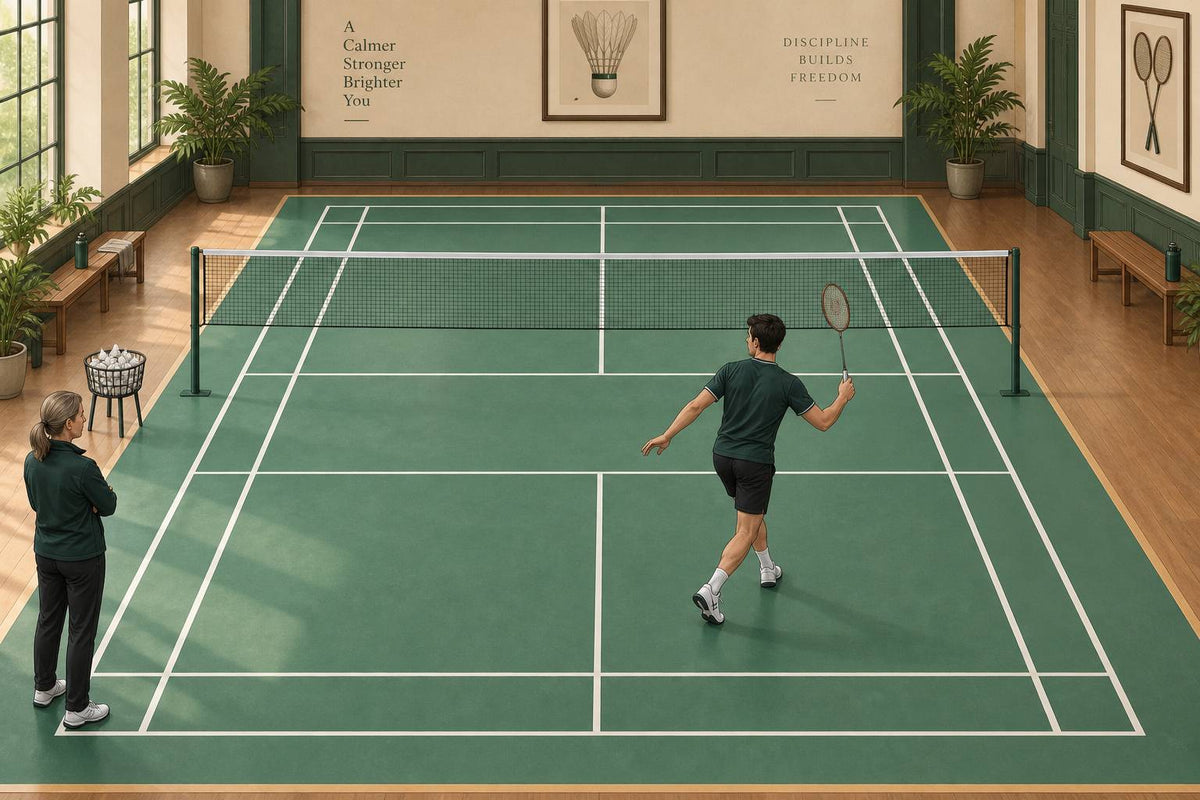
Automatic execution is trained in two layers: first make the stroke boringly familiar, then prove it survives pressure. Use high-rep, low-decision practice for one pattern at a time — for example a serve target, rear-court clear, or wall volley — until the feeling is stable without narrating each body part. For solo repetition ideas, use Badminton Wall Drills.
Next, add a pressure ladder. Start with mild constraints: ten clean contacts in a row, a small target zone, or one “match point” serve at the end of practice. Increase the consequence slowly: keep score, let a partner watch, or make the final rep count. Your attention target should stay external and controllable: shuttle height, target window, racket face through the strike — not “don’t miss.” For a broader plan around nerves, see Badminton Mental Game: Calming Match Nerves.
Which Pressure Fix Should You Choose?
Start with the fix that matches how your easy points break down. Badminton choking under pressure is usually about attention moving toward the wrong cue, not about trying less.
| Choose this | Best when | Why it fits |
|---|---|---|
| Pre-performance routine | Serves, returns, or reset moments | It narrows attention to external, task-relevant cues before execution. |
| Quiet eye | You overthink stroke mechanics | It keeps gaze on critical stimuli instead of your arm, wrist, or grip. |
| Pressure acclimatisation | You play fine until games matter | Gradually increasing stakes builds tolerance to pressure conditions. |
| Analogy learning | You collect too many verbal rules | Fewer explicit rules means less to reinvest when anxious. |
| Hand-squeeze tricks | You want a shortcut | Priming tricks show mixed or null effects, so keep external focus as the default. |
Get 10% off your first order
Join the Badminton House list and we’ll email you a 10% welcome code — plus training guides, technique advice, and badminton updates.
By subscribing, you agree to receive Badminton House emails and can unsubscribe anytime.
Pressure points are trainable. We play badminton, test these ideas on court, and care about advice that survives real rallies, not just theory. If you want help matching your practice plan or setup to the way you actually play, contact us.
Train with a racket you trust.
Automatic execution gets easier when your setup feels familiar from repetition.
Browse Badminton RacketsCheck live availability and choose the frame you can groove confidently.

Leave a comment
This site is protected by hCaptcha and the hCaptcha Privacy Policy and Terms of Service apply.