
Last updated: July 2026 · Written by the team at Badminton House
Quick Answer: Reading the Serve Early
Practise predictions from clips that stop before contact, then replay the serve to check the result and discuss which cues you noticed.
Video
Best choice: pause or cut clips before contact, predict low/flick/direction, then replay normally for feedback; this trains earlier information pickup.
Court
Use varied partner serves to test balanced, legal receiving; save spoken predictions for an agreed drill or paused video.
Match
Use opponent patterns as a secondary clue; overrelying on habits can delay cleaner reads from movement cues.
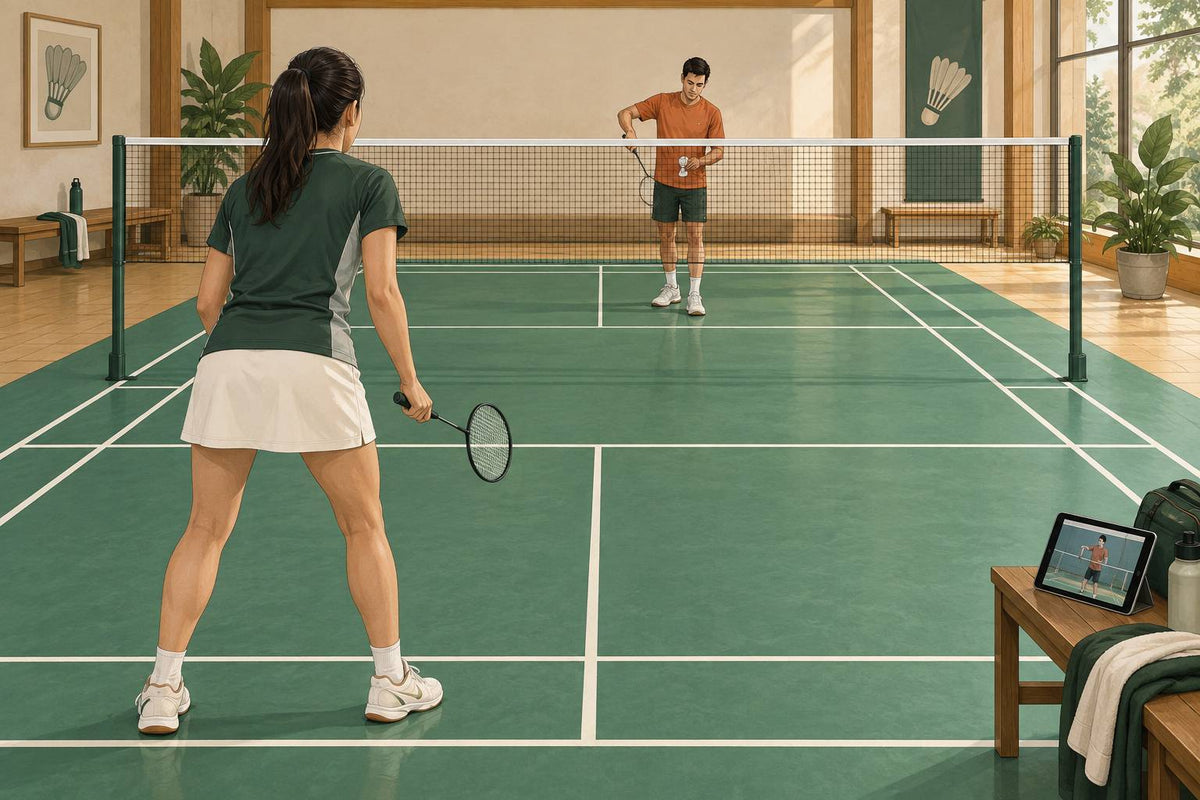
Advance cues may help you prepare, but shuttle flight remains essential for confirming the serve. Good returners are not guessing wildly; they are collecting small clues before contact — server rhythm, body shape, racket-arm path, and how the racket face arrives at the shuttle. Badminton anticipation training is about making those clues easier to notice under pressure, then testing whether your read was right.
This guide focuses on serve reading because the cue window is short and repeatable enough to train. You will learn what to watch, how to use video occlusion, and how to bring the skill back onto court without expecting mind-reading.
In This Guide
What Anticipation Training Actually Trains

Motor anticipation in badminton is not guessing. It is the perceptual process of predicting the future spatiotemporal position of the shuttle from incomplete prior information. On serve receive, that means using pre-contact evidence before the shuttle’s full flight confirms what is happening.
Serve anticipation is useful because the receiver has a short window to recognise the delivery and organise the first movement. Anticipation training builds the ability to notice kinematic information from the server’s movement: body shape, racket arm, wrist action, and racket path.
This guide is about trainable cue-reading in the moment, not building a profile of an opponent’s favourite serve patterns. Contextual tendencies can help, but they are a separate layer; for that, use How to Scout a Badminton Opponent During a Match. Here, the goal is to start earlier without blindly pre-committing.
Serve Cues to Watch Before Contact

Read the serve through two cue families. Kinematic cues come from how the server moves before impact: trunk set, shoulder lift, elbow path, forearm rotation, wrist shape, and racket approach. Do not stare only at the shuttle or the racket face at the last instant. In badminton serves, useful differences can appear across the shoulder, elbow, wrist, and racket, and the racket-holding arm can reveal intent earlier than the racket alone.
Contextual cues are the match clues around the movement: the server’s favourite serve, score pressure, formation, receiver position, and whether they have been flicking under pressure. Use them as a soft filter, not a verdict. Let context tell you what is more likely, then confirm it with the moving body. These are possible sources of information, not a compulsory trunk-to-racket scanning order; test which cues help without losing track of the shuttle.
Drill 1: Video Occlusion for Earlier Serve Reads

Temporal occlusion is simple: you remove the easy part of the information. Instead of watching the full serve and reacting to the shuttle flight, watch a clip that stops just before contact or around contact, then predict the serve outcome before you see where it goes.
- Collect short serve clips from a match video, preferably from the receiver’s view or a consistent side angle.
- Pause or cut each clip before the shuttle flight is obvious. Write down your call: low, flick, wide, body, or short-to-T.
- Replay the same clip unoccluded and check the result immediately. That feedback is the training loop.
This method is used for both testing and training anticipation. A 2024 meta-analysis found a large transfer effect for video-based temporal occlusion training, including transfer to laboratory and field-based tests, so off-court clips can still help your on-court reading. It is also cost-effective and portable: a phone, saved clips, and honest scoring are enough to start.
Drill 2: Guided-Discovery Reps with Random Serve Clips

What changes here is not the clip setup from Drill 1; it is the feedback. After each prediction, replay the serve and direct the player’s eyes to the trunk, racket-holding arm, upper limbs, and racket. Avoid stopping at “right” or “wrong.” Ask: What changed first? Did the shoulder, elbow, wrist, or racket path give it away?
- Example block: try a manageable two-week practice block and record prediction accuracy; the session length is a planning choice, not a guaranteed effective dose.
- Match sound to the task: contact sound can help in audio-visual exercises, but a strictly pre-contact prediction cannot include sound from the future contact.
- Randomize the clips: mix serve types and placements instead of batching one pattern. Varied practice supports retention better than predictable repetition.
- Add blur rounds: low-spatial-frequency or slightly blurred clips push attention away from facial detail and toward useful movement cues.
Take It On Court Without Overpromising

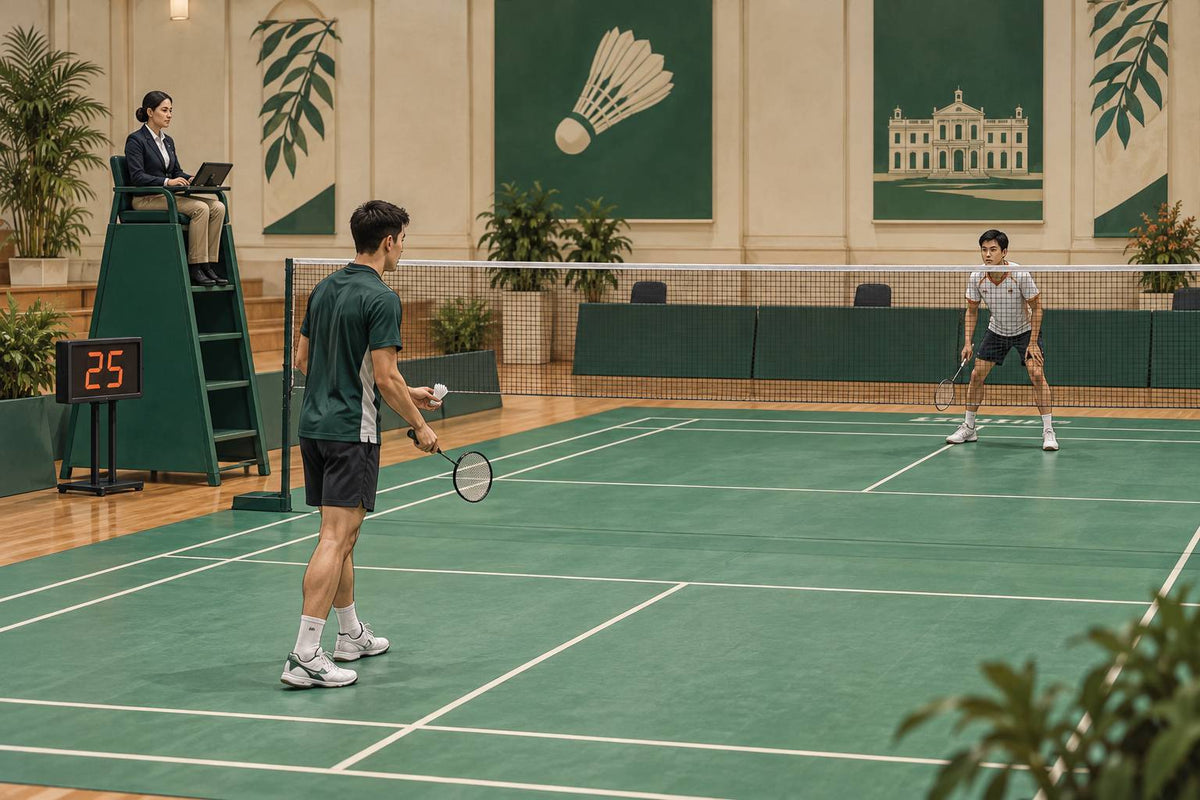
On court, treat your early read as a head start, not a promise. Keep some part of both feet stationary on the court from the start of service until delivery. Use advance cues to prepare without stepping early; once the serve is delivered, move and let the shuttle’s actual flight guide the racket. That two-stage habit keeps you from lunging blindly just because you guessed “flick” or “low.”
Expect small, useful gains before dramatic match changes. Short anticipation blocks can sharpen cue pickup, but they may not significantly improve match-scenario tasks against World-Championship-level opponents, where disguise, consistency, and tempo are far less forgiving. Measure progress by whether you recover earlier, stay balanced, and make cleaner first contacts under realistic serve variation.
Which Anticipation Drill Should You Choose?
Choose the drill that matches the bottleneck in your serve return: earlier pickup, cleaner cue selection, or transfer into movement.
| Training choice | Choose this if... | Why it fits |
|---|---|---|
| Temporal occlusion video | You only recognize the serve after contact. | Clips are stopped before key visual information is complete, forcing predictions from pre-contact movement. |
| Guided-discovery feedback | You watch the whole opponent and miss the useful details. | Feedback can direct attention toward the trunk, racket-holding arm, and racket. |
| Random audio-visual clips | Your reads fall apart when serve types vary. | Randomized practice supports retention, and audio-visual information is generally more accurate than visual information alone. |
| On-court receive reps | Video reads are improving, but your feet stay late. | Use advance cues to set the lower body first, then shuttle flight to guide the racket. |
Get 10% off your first order
Join the Badminton House list and we’ll email you a 10% welcome code — plus training guides, technique advice, and badminton updates.
By subscribing, you agree to receive Badminton House emails and can unsubscribe anytime.
Anticipation improves when you train your eyes, test your guesses, and stay honest about what the server actually shows. We play badminton too, so if you want a second opinion on how your racket setup affects your ability to react after the read, contact us and we’ll help you think it through.
A responsive racket will not create anticipation for you, but it can help you act on earlier reads with less hesitation.
Shop Badminton Rackets

Leave a comment
This site is protected by hCaptcha and the hCaptcha Privacy Policy and Terms of Service apply.