
Last reviewed: July 2026 · By Badminton House’s player-led team
Quick Answer: Badminton Conditioned Games
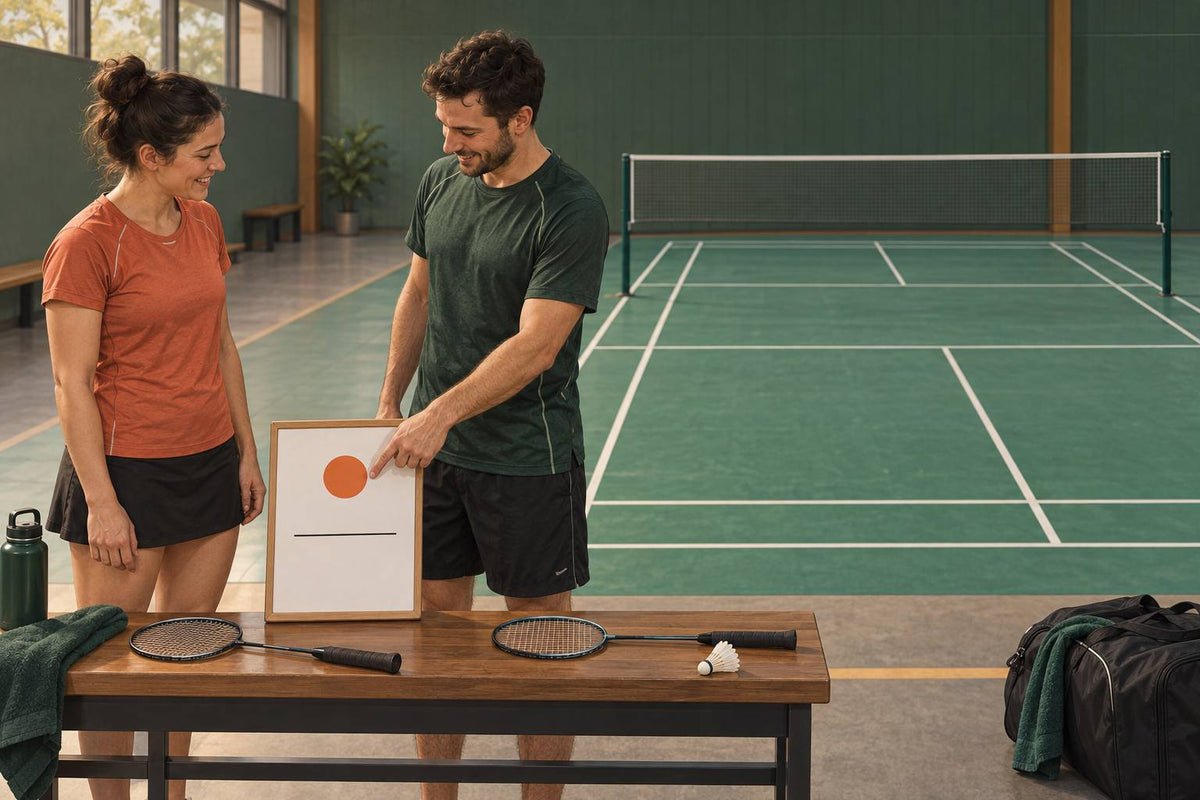
Identify one repeated habit from the last game, announce one rule and its scoring, play a short game or to 5, then play one normal game and ask whether the target choice appeared.
Shot choice
Default: use when players lift predictably or pass up net pressure.
Return & move
Choose this when serve returns and front-court recovery are passive.
Rotation & call
Use this when partners collide, hesitate, or begin points without a plan.
Free doubles often lets the same habits hide: a safe lift after the serve, a late move to the net, or two partners hoping the other player takes the middle. Badminton conditioned games change one rule so the behaviour you avoid becomes the decision you must make under a live rally. They are a practical bridge between drills and matches: competitive enough to expose choices, focused enough to make the better choice repeatable.
Use the seven games below in short rounds, then remove or soften the condition once players can carry the habit into normal play. The named variations are practical practice rules based on cited condition categories, not published protocols or performance guarantees.
In This Guide
- Why use conditioned games instead of another free doubles match?
- Which badminton conditioned games challenge passive net play and predictable shot choice?
- Which conditioned games make serve returns and front-court movement harder to avoid?
- How can a rule change improve rotation and pre-point communication?
- Which conditioned game should you choose?
Why use conditioned games instead of another free doubles match?
Conditioned games preserve the competitive choices and chance to win that make club-night matches engaging, while bending one rule or reward toward a behaviour worth practising. They bridge isolated technique and free play, so the condition supplies coaching focus between rallies. As Badminton Andy’s guide to conditioned games notes, unfamiliar rules can initially feel unrealistic.

The five categories are scoring adjustments, restricted strokes, compulsory strokes, amended rules, and self-awareness or psychological-skill requirements. Keep two guardrails: players must still be able to win points, and the rule should reward positive play rather than punish everything.
Run short half-court singles blocks or several games to 5, then return to full-court free play. That keeps the condition a learning tool—not the tactic you carry into every rally.
Which badminton conditioned games challenge passive net play and predictable shot choice?
Use a net reward when your pair passes up loose shuttles, then restrict a predictable high clear only when it is the repeated escape shot. These conditions sharpen recognition of an attacking moment without demanding a forced winner.
In a 60-match analysis, net shots accounted for 30.0% of advantage-creating shots, while lobs accounted for 27.9% of damaging shots in Hammes and Link’s analysis.

- Double-Point Net Kill. Habit to change: passing up loose net shuttles. Say: “A rally win is worth one point, but a rally won with a net kill is worth two.” Rule boundary: agree before starting what qualifies as a net kill. Progress from two points to ordinary scoring once players spot and take the chance without chasing it recklessly.
- No-Clear Attack. Habit to change: defaulting to clears under pressure. Say: “No player may hit a clear; all other legal shots are allowed.” Rule boundary: agree that any high defensive shot is a clear. Progress by allowing one clear per rally, then remove the restriction in full-court play while retaining the decision cue.
Now play one normal game. Keep the behaviour, not the rule; ask which attacking choice became easier to notice.
Which conditioned games make serve returns and front-court movement harder to avoid?
These games force openings players bypass: a compulsory return interrupts automatic lifts, court markers reveal poor length, and a reduced front court exposes retreat. Announce one condition before a short game; soften or remove it once players recognise the tactical moment without prompting.

- Net Return Required. Habit to change: lifting or driving every return. Say: “Every return of serve must be a net shot; after that return, play normally.” Rule boundary: agree what counts as a net shot. Progress: selected serves only, then free choice when tactically available.
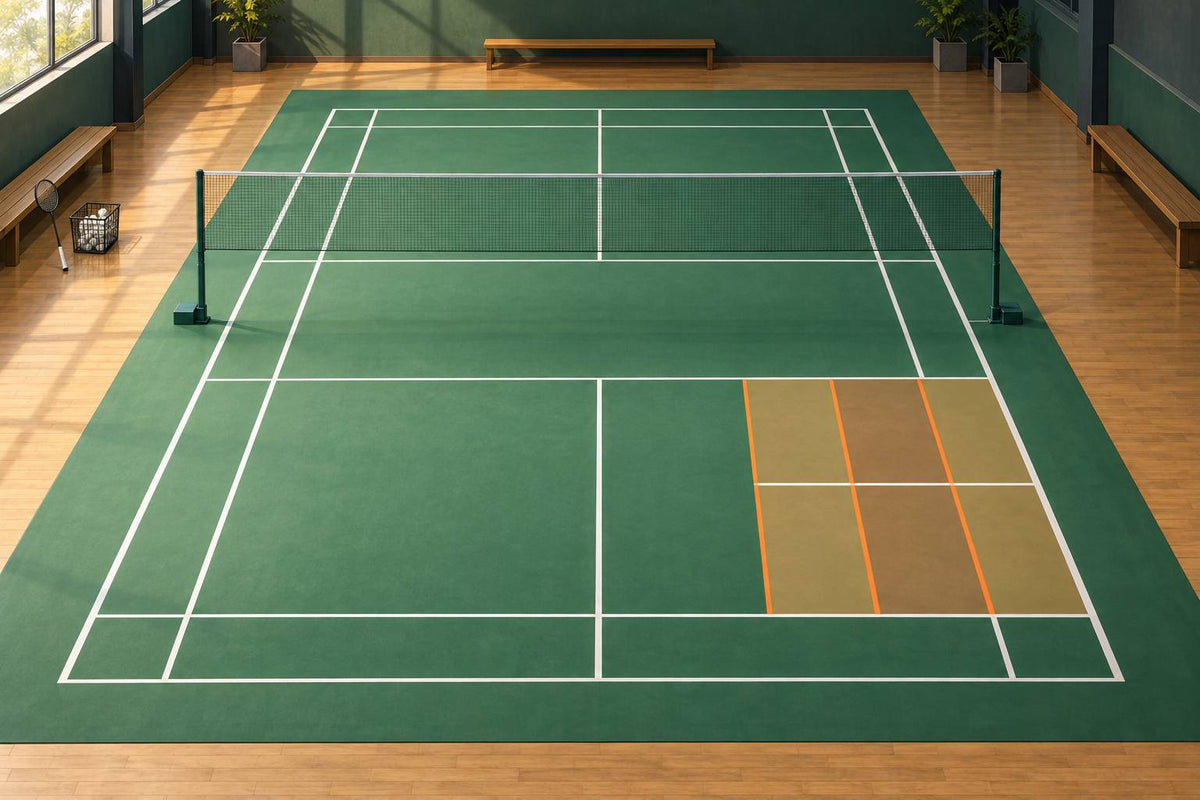
- No-Go Half-Court Singles. Habit to change: long drops and short lifts or clears. Mark no-go areas with shuttles or shuttle boxes to show when a drop is too long or a clear is too short. Say: “From the front court, play only lifts or drops; from the rear court, only clears or drops.” This comes from Badminton Wales’ Junior Games sheet. Progress: shrink areas, then return to full court. Do not overuse it: half-court singles does not develop full-court tactics.
- Table-Tennis Net Doubles. Habit to change: retreating from front-court exchanges. Say: “Play two v two between the net and service line. Everyone starts outside this area; begin with a serve or throw-in, then hit alternately with normal scoring.” For this game only, alternating hits replaces normal doubles shot order. Progress: touch the back doubles service line after each shot, or use three players per side. A lowered net is a beginner regression, deliberately below the BWF Laws’ 1.524 m centre height.
Now play one normal game. Keep the behaviour, not the rule; ask which return or recovery cue became easier to notice.
How can a rule change improve rotation and pre-point communication?
These two rules expose slow recovery and unspoken plans by controlling entry and a brief pause before service. They make movement and communication observable in live rallies, then fade the condition so the pair carries the habit into ordinary doubles.

- Crocodile Singles. Say: “Play 3 v 3 half-court singles. Each player hits one shot, leaves from the side, and the next player enters from the baseline.” Players may enter only from the baseline and leave only to the side. Keep games short and count every player’s points. Adjust court size, starting score, or scoring areas, then return to doubles.
- Pre-Serve Partner Call. Before your side serves, make one clear, brief call to your partner during the pause; never during an opponent’s stroke. Start with optional calls, then remove the rule while retaining it at important points. Keep calls directed to your partner so they do not distract opponents. For a fuller routine, see pressure-training drills.
Now play one normal game. Keep the behaviour, not the rule; ask whether the pair recovered and communicated earlier.
| Habit | Condition |
|---|---|
| Passed-up loose net shuttle | Double-Point Net Kill |
| Automatic clear | No-Clear Attack |
| Lift/drive serve return | Net Return Required |
| Poor depth control | No-Go Half-Court Singles |
| Retreating from net exchanges | Table-Tennis Net Doubles |
| Rotation timing | Crocodile Singles |
| Silent pre-point plan | Pre-Serve Partner Call |
Which conditioned game should you choose?
Choose the condition that makes the unwanted decision costly while leaving a credible route to win. Start with an amended-rule or bonus-point game for visible tactical habits; use stroke restrictions only when the mistake is clear, then remove the rule before it becomes the new habit.

| Choose this condition | When it fits |
|---|---|
| Bonus or penalty points | You want players to notice and repeat one positive tactical outcome. |
| Restricted stroke | One predictable or damaging escape shot keeps appearing. |
| Compulsory stroke | Players avoid a shot they need to recognise and use. |
| Amended rules | Court area, rotation, or serving structure is the real problem. |
| Psychological-skill requirement | The aim is a pre-point routine or partner communication habit. |
If two choices fit, use the one that preserves more normal shot choice.
Get 10% off your first order
Join the Badminton House list and we’ll email you a 10% welcome code — plus training guides, technique advice, and badminton updates.
By subscribing, you agree to receive Badminton House emails and can unsubscribe anytime.
We play badminton too, and we know the best condition is the one your group will actually use consistently. If you want help adapting a game to your level, court space, or doubles group, contact us for practical advice.
Short, competitive games mean plenty of resets—and plenty of shuttle contact. Prepare for your next club night with a fresh supply.
Shop Shuttlecocks

Leave a comment
This site is protected by hCaptcha and the hCaptcha Privacy Policy and Terms of Service apply.