
Last updated: July 2026 · Written by the team at Badminton House
Quick Answer: Why Doubles Players Stopped Serving Forehand
If you play doubles seriously, make the backhand low serve your default because it gets the shuttle across faster, flatter, and harder to attack.
Backhand
Best choice: compact front-of-body motion, shorter backswing, better precision, and less reaction time for the receiver.
Forehand low
Still legal, but higher-risk in fast doubles unless you have exceptional touch or want a rare placement change.
High serve
Mostly gone in doubles because the shorter rear service box and aggressive receivers make long, rising serves easy to punish.
If your low serve keeps sitting up, don't blame only your wrist. In doubles, the serve is a first-attack setup, and the returner is waiting close enough to punish anything that climbs. That is why modern pairs mostly choose the short backhand low serve: the swing is compact, starts in front of the body, and sends the shuttle over a shorter, flatter path. The old forehand motion did not become illegal; it lost tactical value. The sections below explain the shift through trajectory, service-box pressure and the situations where a forehand variation can still help.
In This Guide
Doubles Serving Became a First-Attack Contest

In modern doubles, the serve is rarely treated as a point-winning shot by itself. Its job is to set the next exchange: make the receiver hit up, play loose at the net, or hesitate just long enough for the serving pair to take the first attack. That is why the low serve became the default pattern. After crossing the net, it starts dropping below net height, so the receiver has less chance to attack it cleanly.
This matters because doubles rallies often turn on the opening touches. In Badminton Insight’s coaching analysis of more than 200 professional and amateur doubles matches, 59% of rallies ended within the first four shots, with service errors contributing. That makes the serve-and-return phase disproportionately important: if your serve gives away height, time, or a readable rhythm, the rally may be effectively lost before your pair gets into rotation.
Why the Backhand Low Serve Beat the Forehand Motion

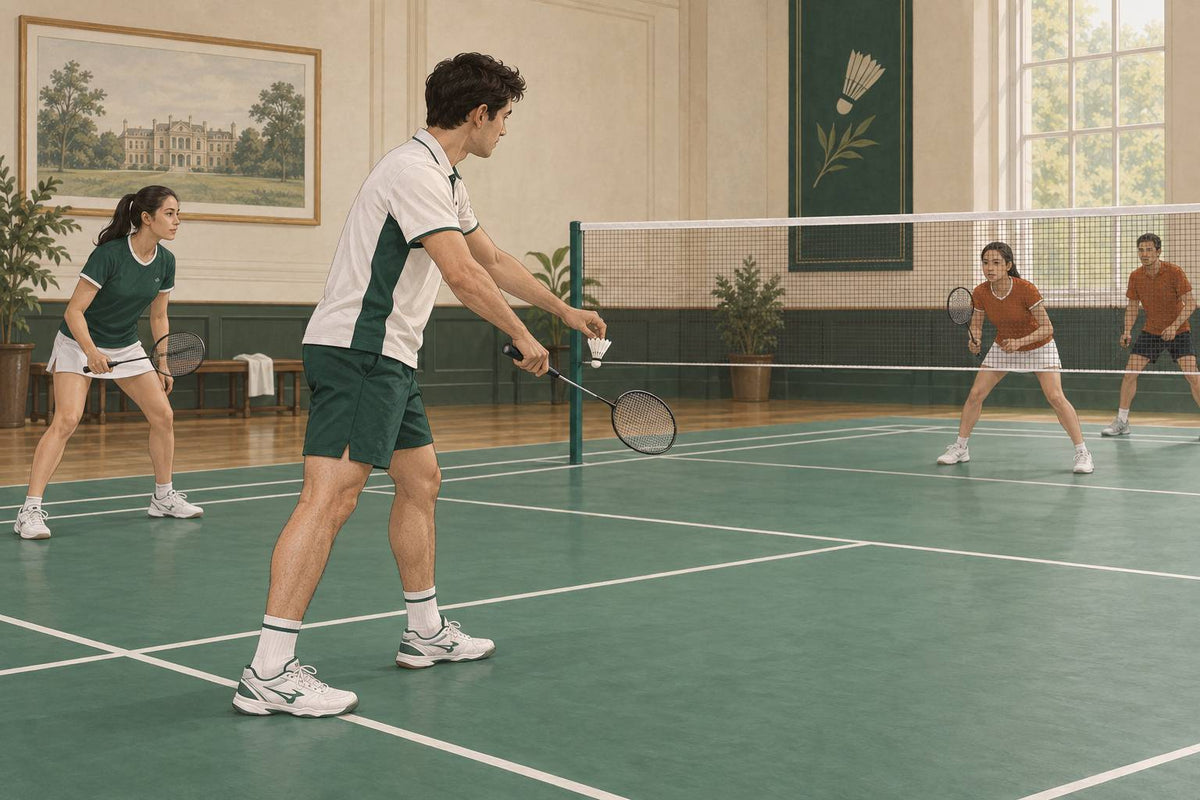
The backhand low serve won because its mechanics are built for doubles pressure. It is played in front of the body, so the shuttle starts closer to the net and has a shorter distance to travel. The backswing is also much shorter than a forehand serve, which makes the action more compact, flatter, and harder to read.
That matters most on the straight low serve. Because the straight serve travels the shortest route across the net, it reaches the receiver quicker and gives them less time to react. In a service situation where the receiver is already hunting for a loose shuttle, even a fractionally slower or higher serve can invite an immediate attack.
The other advantage is control: a shorter, more precise swing makes it easier to keep the shuttle tight to the tape without over-hitting. For a practical how-to breakdown, see our doubles low and flick serve guide.
Why the Forehand Serve Lost Value in Doubles

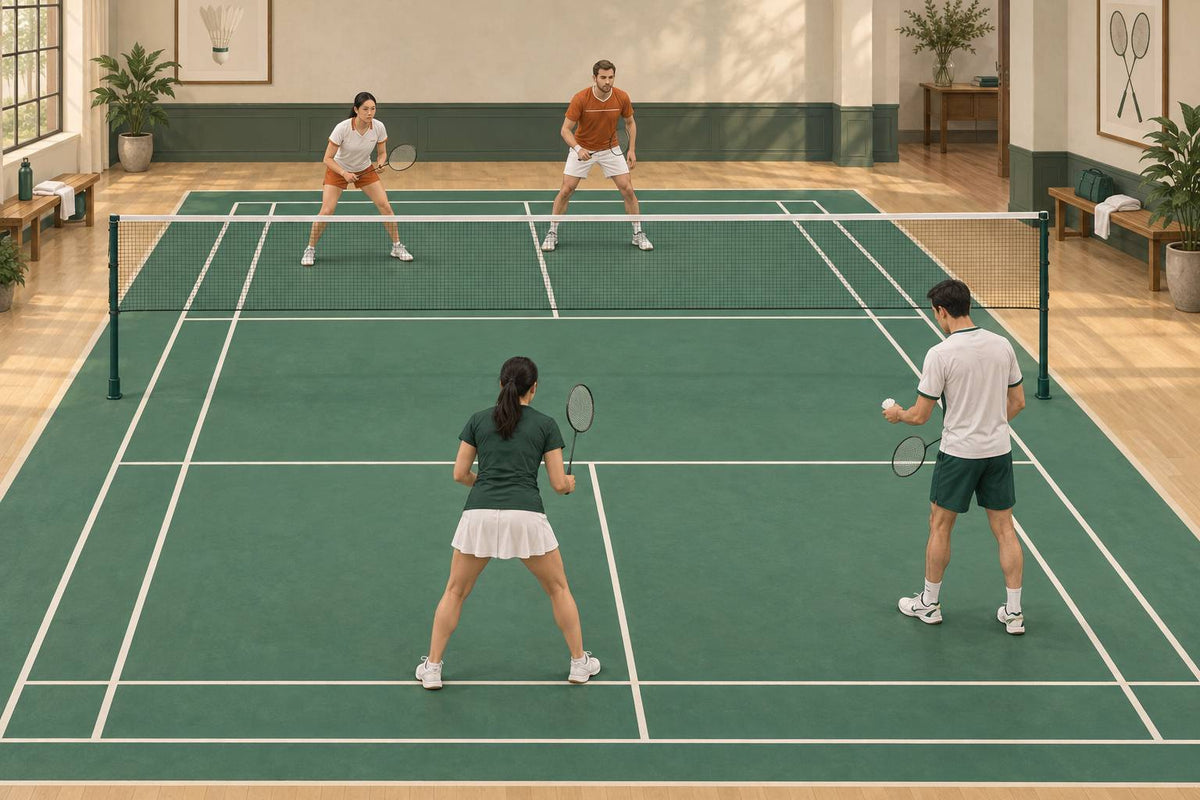
The forehand serve did not disappear because players forgot how to use it. It lost value because doubles punished its old strengths. The doubles service box is shorter than singles, so a high or long forehand serve gives less reward: the shuttle has less deep court to threaten, while the receiver is already standing forward and ready to pounce.
Modern doubles receiving is aggressive. Anything that rises above a tight net path can be pushed, driven, or killed before the serving pair has established the attack. That changed the serve from a “start the rally safely” action into a first-contact fight for net control.
That is why the high forehand serve has diminished almost entirely to women’s singles at professional level. In doubles, the serve that matters is the one that stays low, arrives quickly, and forces the receiver to lift or play up.
Badminton Doubles Forehand Serve History: Evolution, Not a Ban

Forehand serving remains legal. Its reduced use in doubles reflects tactical preferences, so a rules change alone does not explain the shift.
The backhand serve has older roots than many players assume. Ong Poh Lim, a Malayan/Singaporean player active from the late 1940s to early 1960s, is credited with inventing the backhand flick “crocodile serve.” In March 2018, BWF began testing a fixed service height: the whole shuttle had to be below 1.15 m at contact. That replaced the body-relative height limit in the trial; it did not ban the forehand action.
So the forehand serve remains legal in doubles when it follows service rules. Its decline is simply evolution: compact backhand serving fit modern doubles pressure better.
When a Forehand Serve Still Makes Sense

The forehand low serve is rare in modern doubles, but it is not extinct. Some professionals, including Jwala Gutta of India, have used it effectively, and the motion can still have value when it creates a different release point or a very specific angle. You may still see it occasionally in mixed doubles, where serving patterns and receiver positions can vary more, or when a server wants pinpoint placement into the far box rather than the standard straight low serve rhythm.
The key is intent: if the forehand action is slower, higher, or easier to read, it becomes a gift to an aggressive receiver. If it stays tight, low, and purposeful, it can still be a useful variation for players who have the touch to keep it low and deceptive.
Which Serve Should You Choose?

For modern doubles, make the short backhand low serve your default. It gives the receiver less time, is easier to control with a compact swing, and helps you fight for the first attack.
| Serve | Choose it if... |
|---|---|
| Backhand low | You want the safest doubles default: short, flat, precise, and hard to attack. |
| Backhand flick | The receiver crowds forward and is ready to pounce on every low serve. |
| Forehand low | You need occasional placement variation, especially in mixed doubles or to a far-box target. |
| High forehand | Use sparingly in doubles; the shorter service box and aggressive receivers reduce its value. |
Get 10% off your first order
Join the Badminton House list and we’ll email you a 10% welcome code — plus training guides, technique advice, and badminton updates.
By subscribing, you agree to receive Badminton House emails and can unsubscribe anytime.
If this history changes how you think about serving, bring it into practice: compact motion, clean contact, and a racket you can control under pressure. We play badminton too, so if you are unsure how your racket setup affects touch, timing, or serve consistency, contact us and we will help you think it through.
Build your serve around control.
Explore rackets matched for fast doubles exchanges and precise short-serve feel.
Shop Badminton Rackets

Leave a comment
This site is protected by hCaptcha and the hCaptcha Privacy Policy and Terms of Service apply.