
Last updated: July 2026 · Written by the team at Badminton House
Quick Answer: Doubles Partner Position During Serve
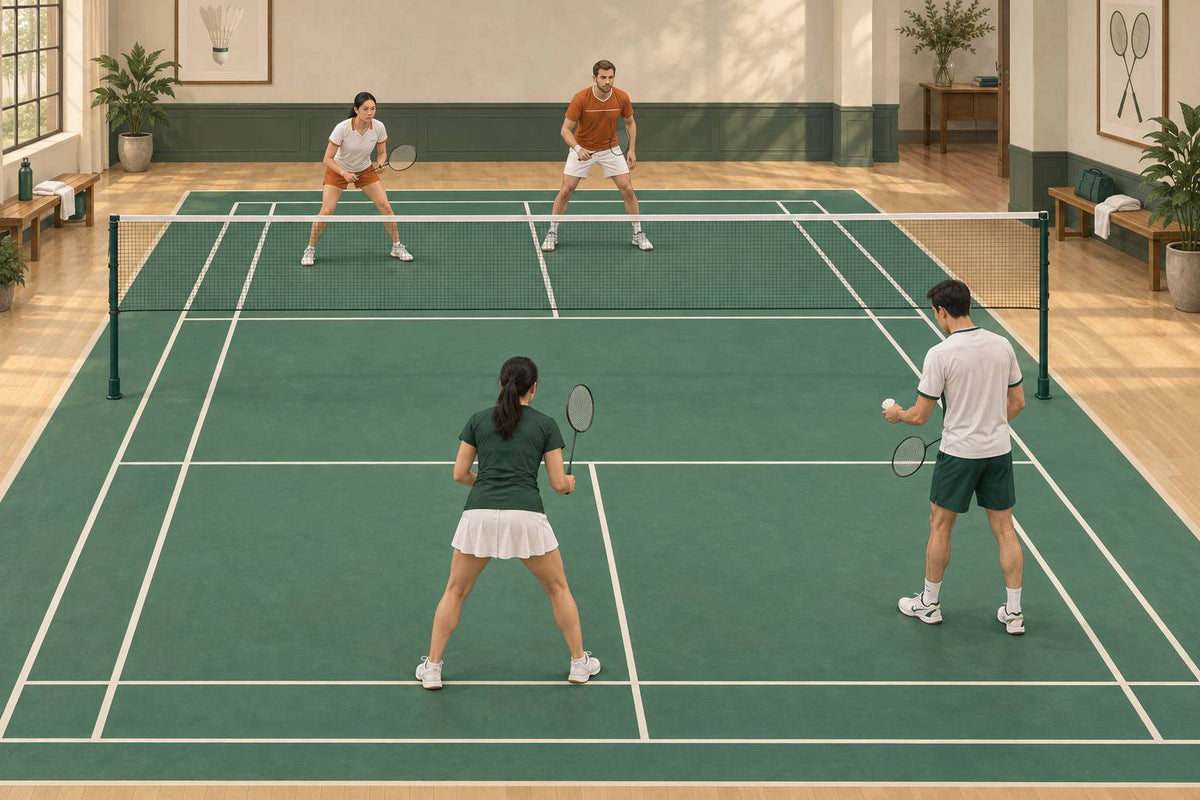
Your partner can stand almost anywhere on your side of the net during serve, including across the centre line, as long as they do not block the opponent’s view.
Default
Best choice: stand behind or beside the server where both opponents can clearly see the shuttle and racket.
Aggressive
Legal if your partner crowds forward, but keep sight lines open for the receiver and server.
Unusual
Crossing toward the server’s court is allowed for the partner; only the server and receiver are boxed in.
If your doubles partner is hovering beside you, standing across the middle line, or crowding the net before you serve, it can look illegal to newer players. In most cases, it is legal. During the serve, the tight positioning rules apply to the server and receiver; the two partners have much more freedom as long as they stay on their own side of the court and do not block the opposing server’s or receiver’s view of the serve.
That makes partner positioning a tactical choice, not just a rules question: stand where you can cover the likely return without creating a sight-blocking problem.
In This Guide
The Rule: Partners Can Stand Almost Anywhere on Their Side

Law 9.5 gives the simple answer: in doubles, during the delivery of service, the partners may take up any positions within their respective courts, as long as they do not unsight the opposing server or receiver.
In plain language, the non-serving partner and the non-receiving partner are not locked into a specific service box. They can stand in positions that look unusual to newer players, including close to the centre line or behind their teammate, provided they remain on their own side of the net and do not block anyone’s view of the serve.
This applies to the partners on both teams, so the answer to “where can my doubles partner stand during serve?” is: almost anywhere on your side. For the broader serve, scoring, and court-side framework, see our badminton rules and scoring guide.
Who Is Actually Restricted During the Serve?

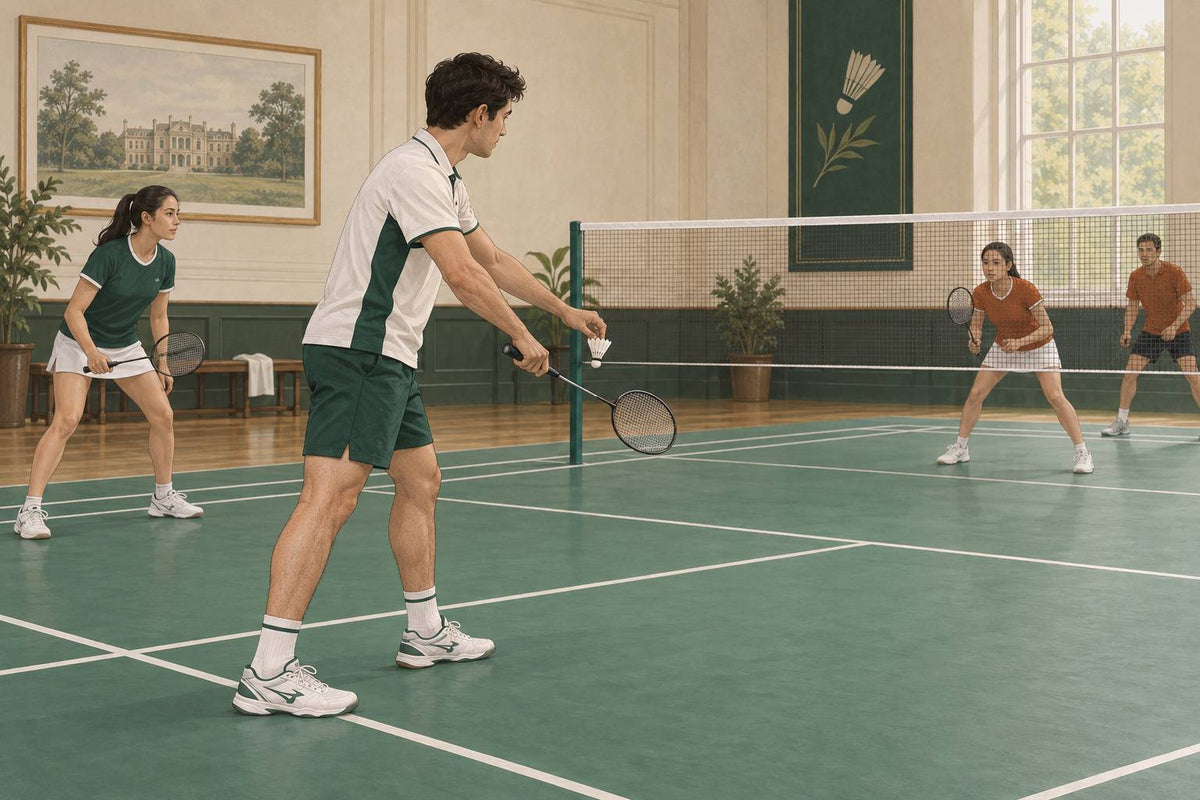
The strict positioning rules apply to two players only: the server and the receiver. They must stand in diagonally opposite service courts, must not touch the boundary lines of those service courts, and must keep some part of both feet stationary on the court from the start of service until it is delivered.
Which box is correct depends on the server’s score in that game. If the server has not scored yet, or has an even score, the serve is made from the right service court. If the server’s score is odd, the serve is made from the left service court.
The partners are different. They are not confined to one side of the centre line within their own half, so a partner may stand in a formation that looks unusual as long as it stays legal. For the actual serving motion, see our badminton serve guide.
The One Big Limit: Do Not Block Sight of the Serve

The key word in Law 9.5 is “unsight.” In practical terms, your partner cannot take a position that obscures the opposing server’s or receiver’s view during the delivery of service. That is the hard limit on partner placement.
So the question is not, “Does that position look normal?” It is, “Can the opposing server or receiver still see the serve?” A partner standing across the centre line, close to the net, or in a position that newer players find unusual is not automatically at fault. Those positions remain legal as long as they are within the player’s respective court and do not block sight of the service action.
For beginners, this is the cleanest way to judge it: strange is allowed; sight-blocking is not. If the position prevents the opponent who matters to the serve from seeing the delivery, it crosses from unusual into a service fault issue.
What Happens Once the Serve Is Hit?

Once the service is delivered, the special serve-position restrictions end. Any player can move to any position in or outside of their half of the court, just like a normal rally. That means the server’s partner can rush forward, the receiver’s partner can rotate, and both pairs can react immediately after the serve is put into play.
A common edge case: if the serve hits the body of the non-receiving partner while that partner is standing on their court, it is a fault on the receiving side. The server wins the point, even if the partner’s starting position looked unusual but was otherwise legal.
Which Serve Setup Should You Choose?

Use the rule this way: pick the position that gives your pair a clear starting shape while keeping the opposing server or receiver able to see the serve.
| Partner setup | Choose it if... | Legality check |
|---|---|---|
| Conventional side-by-side or staggered | You want the least confusion for newer players. | Legal if the server and receiver are in the correct diagonal service courts. |
| Partner across the centre line | Your pair wants a different starting shape before the shuttle is struck. | Legal for the non-serving partner, provided they stay on their side of the court and do not unsight anyone. |
| Standing where the serve path may hit you | Only choose this if you understand the risk. | Legal to stand there, but see the fault note above — a serve that strikes you there is scored against your side. |
| Blocking the server or receiver’s view | Do not choose this. | Not allowed under Law 9.5 because partners must not unsight the opposing server or receiver. |
Get 10% off your first order
Join the Badminton House list and we’ll email you a 10% welcome code — plus training guides, technique advice, and badminton updates.
By subscribing, you agree to receive Badminton House emails and can unsubscribe anytime.
Doubles service rules feel picky until you test them on court. We play badminton ourselves, so if your partner setup, serve routine, or match habit still feels unclear, send us a note through our contact page and we’ll help you reason it out without overcomplicating the rule.
Practicing legal serve patterns? Keep a tube ready so both partners can repeat the setup under realistic rally conditions.
Shop ShuttlecocksCheck live availability.

Leave a comment
This site is protected by hCaptcha and the hCaptcha Privacy Policy and Terms of Service apply.