

Last updated: July 2026 · Written by the team at Badminton House
Quick Answer: Badminton Doubles Serve
Use the backhand low serve as your default in doubles, then add the flick only when the receiver starts leaning in or rushing your short serve.
Low
Best choice: a tight backhand low serve that skims the net and lands just past the front service line, forcing the receiver to lift, net, or push instead of attacking freely.
Flick
Use a flick serve as a change-up from the same stance and preparation as your low serve, especially when the receiver is standing close and trying to pounce.
Place
Serve tight to the centre line to reduce return angles, then mix in wide serves carefully so the receiver cannot settle into one return pattern.
If your badminton doubles serve floats even a little, the rally can feel over before it starts. The receiver steps in, takes the shuttle early, and suddenly you are defending from the first shot instead of setting up your attack.
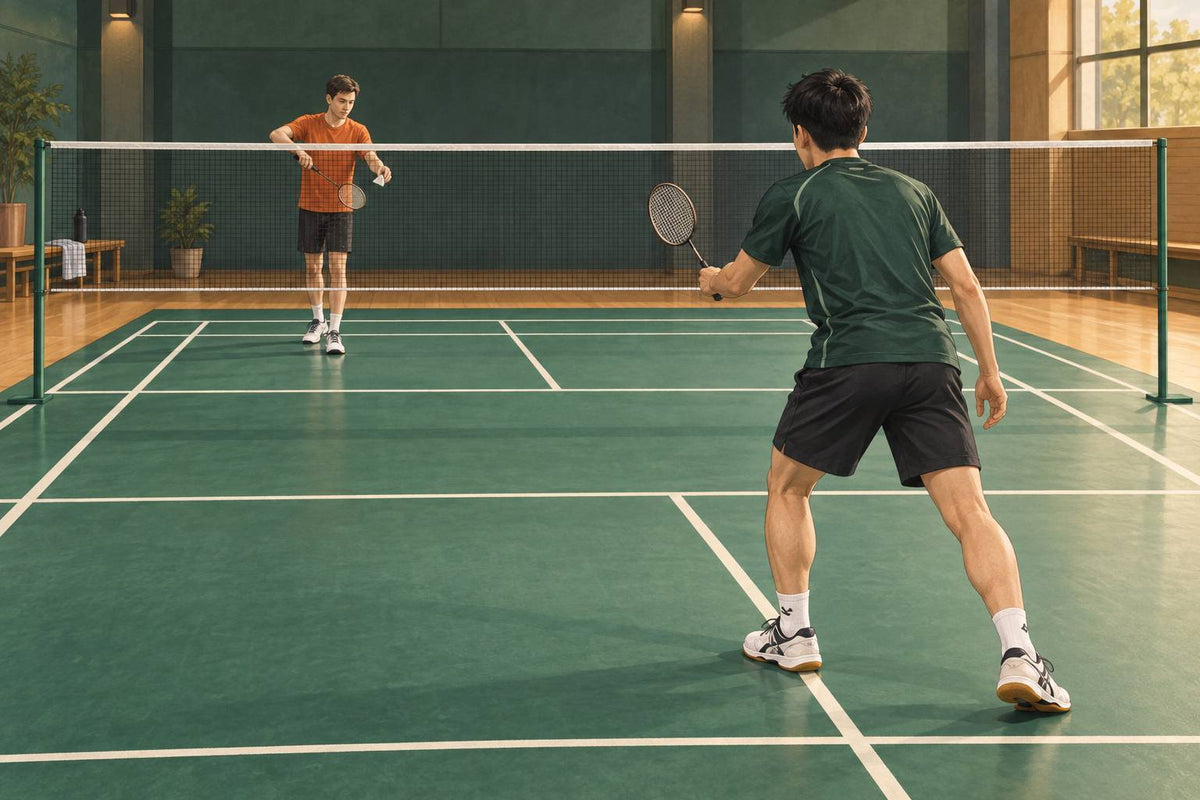
That is why the badminton doubles serve is so important. The backhand low serve is the main serve used in doubles because its short, controlled action gives you precision, and a good start to the rally makes you more likely to win it. The low serve should skim the net and land just past the front service line; the flick uses the same preparation to catch a receiver who is leaning forward.
This guide is for Canadian club, league, and tournament players who want a serve that stays legal, stays tight, and creates the next shot. You will learn how to keep the low serve down, build a disguised flick, choose centre-line or wide placement, and practise the serve as part of a real doubles rally pattern.
Dial in the serve, then trust your setup. If your current racket feels hard to control on short pushes and fast third shots, browse our badminton racket collection. Badminton House ships across Canada.
In This Guide
- Why Does the Backhand Low Serve Dominate Doubles?
- How Do You Stop Low Serves from Floating Up?
- How Do You Make the Flick Look Like a Low Serve?
- Where Should You Place Your Doubles Serve: Centre Line or Wide?
- Low Serve and Flick Serve Mistakes to Fix
- Practice the Serve as a Rally Pattern
- Which Doubles Serve Should You Choose?
Why Does the Backhand Low Serve Dominate Doubles?
In doubles, the backhand low serve is the default because the serve is not just a way to start play — it is the first tactical shot of the rally. If your serve gives the receiver height, time, or a clean angle, you may be defending before your partner has even moved. If your serve stays tight, short, and controlled, you reduce the quality of the receiver’s attack and give your side a better chance to take the first lift or weak push.
That is why the badminton doubles serve is usually built around the backhand low serve first, with the flick added later as a threat. The low serve’s job is simple: skim the net, land just past the front service line in the correct diagonal service court, and make the receiver hit upward or play a softer shot instead of attacking freely.
The doubles serving goal
Do not think of the serve as a standalone skill. Think of it as a way to steal time from the receiver. A good doubles serve makes the return late, cramped, or less aggressive.
The backhand action helps because it is compact. Compared with a larger forehand service motion, the backhand serve uses a shorter swing and gives many players better precision. Holding slightly higher on the grip shortens the lever, and a small backswing makes the shuttle easier to guide. The power should feel more like a thumb push toward the target than a hit.
This matters especially at Canadian club nights and league matches, where many points are decided by the first three shots: serve, return, and the server’s side’s next reply. A serve that sits up invites the receiver to pounce. A serve that stays low and controlled forces a more careful return, which lets the serving pair stay organized in front-and-back attacking shape.
- Shorter action: less moving parts, easier to repeat under pressure.
- Better precision: easier to guide the shuttle tight over the tape and into the service box.
- Less time for the receiver: the shuttle arrives low, so the receiver has fewer clean attacking options.
- Better disguise later: once the low serve looks reliable, the same preparation can support a flick serve threat.
For the basic rules and mechanics of serving in general — including the difference between low and high serves — use our broader guide: How to Serve in Badminton. This doubles guide stays focused on the low serve and flick serve patterns that matter most when the receiver is standing close and ready to attack.
One equipment note: a racket that feels stable in the hand and easy to control can make repeated low serves feel cleaner, especially when your grip pressure stays relaxed. If you are comparing frames for doubles, you can browse the badminton racket collection, but your serve will still improve most from better rhythm, shuttle control, and pressure practice — not from changing rackets alone.
How Do You Stop Low Serves from Floating Up?

The most common club-doubles serving problem is simple: the serve looks low from your hand, then floats above tape height and gets killed. A good badminton doubles serve should skim the net and drop just past the front service line, not travel as a soft arc through the receiver’s hitting zone.
Fixing that usually means making the action smaller, not harder. Keep the backswing short, keep the follow-through short, and create the serve with a controlled thumb push plus a slight wrist flick. If your arm is swinging like a mini clear, the shuttle has too much time to rise.
Serve lower by serving cleaner. The goal is not to “poke” the shuttle downward; it is to push it forward on a tight, repeatable line that crosses the tape and starts dropping immediately.
1. Shorten the swing before changing anything else
A floating low serve often comes from too much racket travel. The longer the backswing, the more likely you are to add unwanted lift or slice. Start with the racket already close to the shuttle, then make a compact push toward your target.
- Backswing: only a small take-back, just enough to load the thumb.
- Contact: clean, quiet, and in front of the body rather than cramped into your hip.
- Follow-through: stop the racket shortly after contact instead of chasing the shuttle upward.
Think of it as a push serve, not a swing serve. Your thumb supplies most of the power, with only a slight wrist flick to finish the shuttle forward.
2. Check the shuttle tilt in your fingers
Shuttle angle has a huge effect on trajectory. If the cork is presented in a way that encourages the shuttle to climb, even a tidy motion can float. Hold the feathers steadily and adjust the cork angle deliberately until the shuttle travels flatter and starts dropping after the tape.
A useful test: hit ten serves without changing power. Change only the shuttle tilt. You will usually see the flight path change immediately. Once you find the angle that produces a tight line, keep the same finger position for every serve.
Quick troubleshooting table
| What happens | Likely cause | Fix |
|---|---|---|
| Serve floats above the tape | Too much backswing or follow-through | Start closer to the shuttle and finish shorter. Let the thumb push, not the arm swing, create the pace. |
| Serve lands short | Not enough forward push, or the shuttle angle is killing the flight | Keep the same compact motion, then add a slightly firmer thumb push and adjust the shuttle tilt. |
| Serve is inconsistent left and right | Contact point is moving, or the shuttle is being thrown instead of dropped | Hold the shuttle still, release it cleanly, and meet it at the same contact point each time. |
| Receiver kills the serve even when it lands in | The serve crosses too high or drops too deep into the service box | Aim for a serve that skims the net and drops just past the front service line, forcing the receiver to hit upward or play a tight net reply. |
3. Keep the contact legal while you lower the trajectory
Do not fix a floating serve by contacting the shuttle higher and chopping down on it. The whole shuttle must be struck below the legal service height at the moment of contact. Build a flatter serve with better racket control, shuttle tilt, and thumb pressure instead.
Also remember the doubles target: the serve needs to land beyond the short service line and inside the rear doubles service line. A beautiful tight serve that falls short is still a fault; a legal serve that sits up too high is playable but dangerous.
4. Use a repeatable pre-serve routine
Before each serve, quickly check three things: grip pressure, shuttle angle, and racket distance from the shuttle. This matters on busy Canadian club nights when you are rotating partners, switching courts, and serving under pressure rather than in a quiet drill.
- Grip pressure: relaxed enough to feel the thumb push, not so tight that the wrist locks.
- Shuttle angle: consistent in the fingers so the same stroke produces the same flight.
- Racket distance: close enough for control, with room to push forward cleanly.
If your grip is slipping or you cannot feel the thumb controlling the serve, revisit your handle setup in our badminton grip guide. Small grip changes can make the short backhand serve much easier to repeat.
How Do You Make the Flick Look Like a Low Serve?

A good flick serve in doubles is not a separate, obvious motion. It is a fake low serve: you show the receiver the same backhand setup, the same calm preparation, and the same early racket path, then add enough wrist at the end to send the shuttle quickly toward the rear service area.
That is why the flick belongs after the low serve in your development order. If your backhand low serve is still floating, falling short, or changing shape under pressure, the receiver does not need to respect it. Build the tight low serve first, then use the flick to punish the receiver who starts leaning forward too aggressively.
Need the full serve foundation first? Review the basics in our How to Serve in Badminton guide, then come back to the flick once your low serve is reliable.
Why the flick works in doubles
The flick serve is used mostly in doubles because receivers often stand close to the service line, ready to pounce on a low serve. If they move early or load too much weight forward, a quick flick forces them to turn, recover, and play the shuttle from behind their body or above shoulder height instead of attacking straight down at the net.
Make the low serve and flick look identical
Your opponent should not be able to tell low serve or flick from your stance, shuttle position, grip, or backswing. Keep the same backhand serve preparation you use for your low serve: compact racket action, stable body, controlled shuttle hold, and no extra shoulder lift before contact.
| Serve element | Low serve | Flick serve |
|---|---|---|
| Setup | Backhand grip, compact preparation, receiver sees a short serve threat. | Same backhand grip, same preparation, same short-serve picture. |
| Racket action | Short push with controlled thumb pressure and minimal follow-through. | Same action, with extra wrist at the end to create the lift. |
| Shuttle position | Comfortable in front of the body so the contact is clean and repeatable. | Still comfortable in front of the body, with enough distance from the arm to generate momentum. |
| Receiver's read | They expect the shuttle to skim the tape and land short. | They should still expect low until the shuttle has already left your strings. |
Use the same backhand action, then add wrist
For the low serve, power comes from a controlled thumb push with only a slight wrist action. For the flick, keep that same base action but add a sharper wrist finish. The mistake is trying to swing bigger with the whole arm; that makes the serve readable before contact.
The shuttle also needs to sit at a comfortable distance from your body and arm. If it is jammed too close, you cannot create the small burst of momentum the flick needs. If it is too far away, your contact becomes stretched and inconsistent. Aim for a position that lets your racket move forward cleanly without changing your posture.
- Keep the backswing small: the receiver should not see a wind-up.
- Use the thumb and wrist: the flick is quick, not muscular.
- Hold the shuttle deliberately: shuttle tilt affects the flight, so do not let it change randomly between low and flick serves.
- Recover immediately: after the flick, expect a flat return, a drop, or a pressured lift rather than admiring the serve.
Keep it legal and repeatable
Keep the legal basics simple: strike the shuttle below the current service-height limit, and make sure the serve lands in the correct doubles service box. Your disguise only matters if the serve is legal and repeatable under match pressure.
This is also why deception should be used selectively. If you flick too often, club opponents start waiting for it and your low serve loses protection. Mix it in when the receiver is creeping forward, when they have attacked several low serves in a row, or when you want to make them pause before committing to the net.
Shop Badminton Rackets for Faster Doubles Hands
Ships across Canada · 14-day returns
If you want to go deeper on hiding intention, the same principle applies across net shots, lifts, drops, and drives: make different shots look the same for as long as possible. See our badminton deception technique guide for more ways to train that skill without becoming predictable.
Where Should You Place Your Doubles Serve: Centre Line or Wide?

In a good badminton doubles serve, placement is not just about “getting it in.” A low serve tight to the centre line, especially toward the receiver’s backhand side, limits the receiver’s attacking angles and can give them less time to turn. A wider serve changes the problem: it pulls the receiver away from the middle, but if they read it early, it can also give them more angle to attack.
Whichever target you choose, keep the doubles service box in mind: a legal doubles serve must land beyond the short service line, which is 1.98 m from the net, and inside the long service line for doubles, which sits 0.76 m in from the back boundary line.
| Target | What it does | Best use | Main risk |
|---|---|---|---|
| Centre line / T | Reduces the receiver’s attacking angles. When aimed down the middle toward the backhand side, it can make the receiver turn under time pressure. | Your default target when you want a tight, percentage serve and a simpler first defensive read. | If it sits up, the receiver can still pounce straight or push flat before your side is set. |
| Wide | Changes the receiver’s contact point and attacking angles by pulling them away from the centre. | A variation when the receiver is overcommitting to the T or leaning in to kill the low serve. | If the receiver reads it early, the wider contact can open sharper attacking replies. |
Your serve target also needs to match your partner’s first step. If you serve tight to the T, your side can often prepare for a more limited reply. If you serve wider, be ready for a different angle and a faster adjustment. For the bigger picture of how the serving pair covers the next shot, see our badminton doubles positioning and rotation guide.
Gear will not fix a loose serve, but stable racket control helps in the fast serve-and-net exchange that follows. If you are comparing options later, browse the Badminton House badminton racket collection.
Low Serve and Flick Serve Mistakes to Fix
Most badminton doubles serve problems are not mysterious. If your low serve floats up, gets killed at the tape, or falls short before the service line, the issue is usually in the contact point, stance, shuttle release, or how much you are trying to “do” with the racket. Fix those first before adding more deception.
Use this as a quick correction checklist at club night or practice: make one change, hit a small batch of serves, then check the flight. The goal is a calm, repeatable serve that lets your partner prepare for the next shot instead of guessing what will happen.
| Mistake | What it causes | Practical fix |
|---|---|---|
| Contacting the shuttle too high | The serve becomes easier to attack and can also drift into legality problems. | Keep your contact controlled and comfortably below the legal service height. Under the current service-height law, the whole shuttle must be below 1.15 m from the court surface when struck. |
| Standing with feet parallel and facing the net | Your body feels square and stiff, which often makes the serve arm push across the shuttle instead of toward the target. | Set your feet so you feel balanced and slightly turned, with your racket and shuttle lined up to the intended target. You should be able to serve and recover without rocking backward. |
| Throwing the shuttle instead of dropping it | The shuttle arrives at the strings unpredictably, so the same swing produces different heights and lengths. | Hold the feathers steadily, then release the shuttle cleanly into the same contact zone each time. Think “drop and push,” not “toss and hit.” |
| Serve goes too high | The receiver can pounce and attack down into your front court. | Shorten the backswing and follow-through. Use more thumb push and less arm swing, and check the shuttle tilt in your fingers because the angle strongly changes the trajectory. |
| Serve falls short | In doubles, the serve must land beyond the short service line and within the rear doubles service line, so a short serve gives away the point. | Keep the action small, but do not baby the shuttle. Push through the shuttle toward the front service area and make the follow-through finish in the direction of the target. |
| Flick serve has a different setup | The receiver reads the flick early and turns before the shuttle is struck. | Make the stance, shuttle hold, backswing and first movement match your low serve. Add the extra wrist only at the end. |
If the low serve keeps floating up
A floating low serve usually means the racket path is too big, the shuttle angle is wrong, or the contact is not stable. Start by reducing motion. A doubles serve should not feel like a mini clear; it should feel like a compact push with the thumb, a quiet wrist, and a very short finish.
- Check the shuttle tilt: if the cork points too far upward or outward, the serve can climb. Adjust the angle deliberately and watch how the flight changes.
- Stop swinging from the shoulder: the more the arm travels, the harder it is to control height. Keep the racket face calm through contact.
- Aim past the tape, not over the receiver: the low serve is designed to skim the net and drop just beyond the front service line, not travel with a high safety margin.
If the flick serve is getting punished
A flick serve should support your low serve, not replace it. If you flick too often, the “surprise” disappears and the receiver starts waiting for it. In that situation, even a technically decent flick becomes predictable because your pattern gives it away.
Use the flick when the receiver is leaning forward, crowding the service line, or trying to take the low serve too early. The purpose is usually to set up the next one or two shots, not to win a clean ace. That means the flick needs enough speed and depth to rush the receiver, but it still has to begin from the same preparation as your low serve.
Simple rule: if your low serve is not reliable yet, keep the flick rare. Build the low serve first, then use the flick as a punishment for receivers who overcommit forward.
One correction at a time
Do not change your grip, stance, shuttle hold, target, and rhythm all at once. If the serve is too high, adjust only the shuttle tilt or only the racket action for the next ten serves. If it falls short, adjust the push length or target. This keeps practice useful because you can connect each change to the shuttle flight.
Once the serve is landing consistently, connect it to the next shot and your partner’s positioning. A strong badminton doubles serve is not just a legal delivery; it is the first step in your front-back attacking shape. For the next layer, pair these serve fixes with doubles positioning and rotation so your side is ready for the return.
Practice the Serve as a Rally Pattern
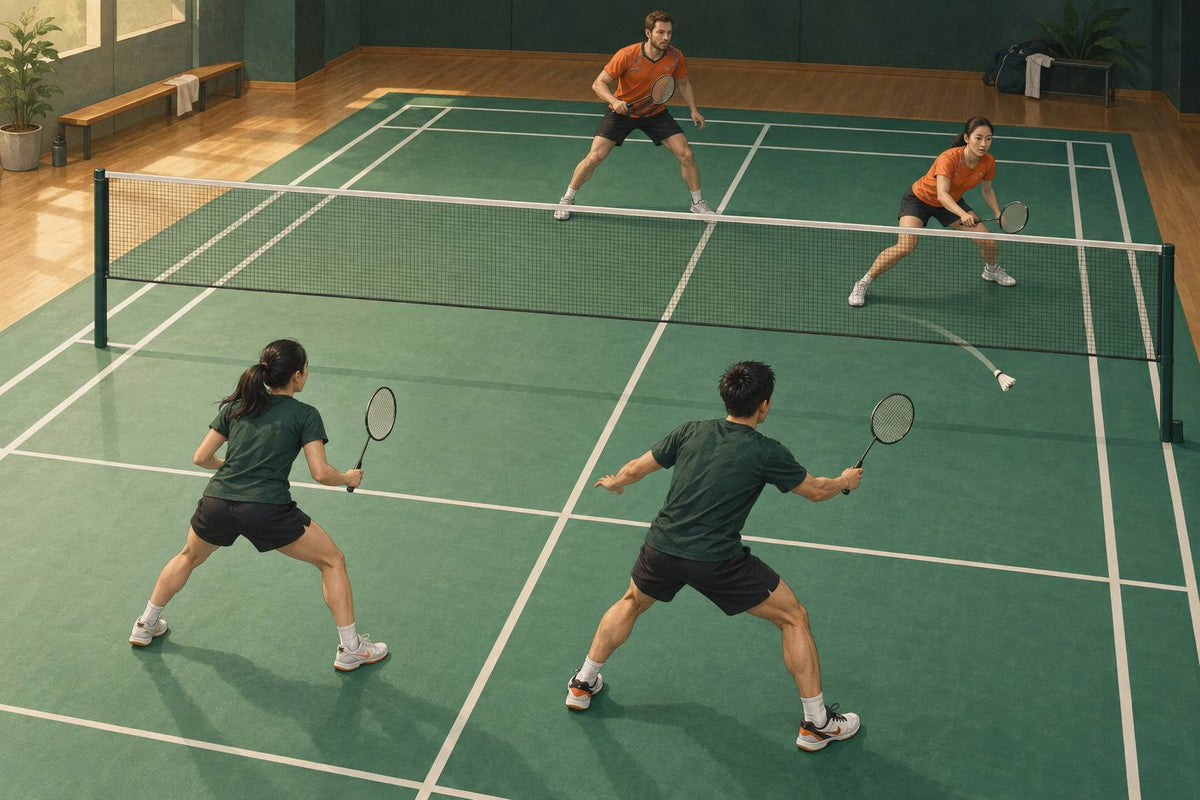
A badminton doubles serve is not a one-shot skill. It is the most repeated opening sequence in doubles: serve, read the return, then play the next shot with your partner. The low serve is designed to skim the net, land just past the front service line, and push the receiver toward lifting so the serving side can attack.
That does not mean every receiver will lift. Good receivers may answer with a tight net shot or a flat push toward the rear court, so your serve practice should include those responses instead of stopping when the shuttle crosses the net. The flick serve fits the same idea: it is usually a setup for the next shot, not a serve you expect to win outright.
Train the First Three Shots
Build your practice around the first pattern of the rally. One player serves, one player receives, and the serving pair must respond to the return as if it is a real doubles point.
- Low serve to lift: the serving side looks to attack the third shot rather than admire the serve.
- Low serve to net return: the server stays ready to move forward and play the next net exchange.
- Low serve to flat push: the serving side reacts quickly to the rear court instead of assuming every return will go up.
- Flick serve: use the same preparation as the low serve, then be ready for the receiver’s pressured reply.
| Receiver’s Reply | What You Practise | Rally Goal |
|---|---|---|
| Lift | Serve tight, then prepare to attack the third shot. | Turn the serve into attacking pressure. |
| Net shot | Serve, hold your balance, and be ready for the next net touch. | Avoid giving away an easy lift. |
| Flat push to the rear | Serve, recover, and respond to the fast push instead of freezing at the front. | Stay in the rally without losing the attack immediately. |
| Rushed flick return | Flick from the same low-serve setup, then prepare for the next shuttle. | Create pressure without relying on an ace. |
Add Pressure, Not Just Repetition
Serving feels easy when nothing is at stake. Make it match-like by adding consequences for misses: if the serve floats, falls short, lands outside the doubles service box, or is struck above the legal service height, the server loses the rep. Keep the legal reminder simple: at contact, the whole shuttle must be below 1.15 m from the court surface.
- Score the drill: count only serves that are legal, land beyond the short service line, and stay within the rear doubles service line.
- Use a consequence: a miss can reset the score, switch servers, or add a short footwork penalty before the next attempt.
- Practise both choices: mix low serves and occasional flicks from the same preparation so the receiver cannot settle into one read.
- Finish the pattern: every serve must be followed by one realistic return and one realistic third shot.
Dial in control before you chase deception. If your racket feels hard to guide on low serves, net replies, and fast third shots, browse badminton rackets with control and quick handling in mind. Badminton House ships across Canada.
For the tactical side, pair this serve work with doubles positioning and rotation, deception and disguise, and the broader badminton serving guide.
Serve-Pattern Decision Helper
Choose the drill based on what is costing you points in doubles.
Default
Low serve plus third shot: best for most doubles players because it trains the serve as the start of your attacking pattern.
Net Return
Use this if receivers keep playing tight to the tape and forcing you to lift.
Flat Push
Use this if your serve is good but your side gets surprised by fast returns to the rear court.
Flick
Use sparingly when the receiver is leaning in and your low serve preparation is already reliable.
Which Doubles Serve Should You Choose?
For most doubles points, start with the backhand low serve. It is the main serve in doubles because the shorter backhand action gives better control, and a quality low serve can deny the receiver an immediate attack. Add the flick only after your low serve is reliable enough that the receiver genuinely expects it.
| Choose this | Best use | Why it works | Key cue |
|---|---|---|---|
| Backhand low serve | Your default badminton doubles serve, especially when you want a controlled start to the rally. | It should skim the net and land just past the front service line, making it harder for the receiver to attack and encouraging a lift. | Use a short backswing, short follow-through, and thumb push toward the target. |
| Flick serve | Use it when the receiver is crowding the service line or leaning forward for the low serve. | The flick is a deceptive fake low serve. In doubles, it is mainly used to set up the next one or two shots, not simply to win a clean ace. | Keep the same stance, movement, and position as your low serve, then add the wrist action late. |
| Serve to the centre line / T | Use it when you want to reduce the receiver’s attacking angles. | Serving straight down the middle to the backhand side can give the receiver less time to turn and limits the angles they can use. | Aim tight and legal: the serve must land beyond the short service line and inside the rear doubles service line. |
| Occasional wide serve | Use as a change-up when the receiver is overcommitting to the middle or reading your rhythm too easily. | Changing placement can alter the receiver’s contact point and the angles available on the return. | Do not make the pattern too obvious; deception loses value when it becomes predictable. |
If your doubles serve is floating, choose the low serve as your practice priority before adding the flick. Check contact height, avoid throwing the shuttle, and adjust the shuttle’s tilt in your fingers because that angle strongly affects the serve trajectory. Under the current service-height rule, the whole shuttle must be below 1.15 m from the court surface when struck.
For gear context, a responsive racket can help with the quick serve-and-next-shot rhythm in doubles, but technique comes first. Browse the Badminton House badminton racket collection; the Yonex Astrox 100 ZZ is a premium head-heavy example built for players who want the frame to add pace rather than absorb it.
Get new badminton guides by email
Join the Badminton House list for occasional emails with new guides, technique tips and news from our club in Moncton.
By subscribing, you agree to receive Badminton House emails and can unsubscribe anytime.
A better badminton doubles serve is not just a technique project — it is a setup project. The low serve, flick, first step forward, and first three shots all work better when your racket feels predictable in your hand. We play badminton ourselves, so if you are not sure whether your current setup is helping your short serve control or your fast doubles exchanges, contact us and we will help you choose a practical next step.
Dial in your doubles setup
Browse badminton rackets for faster hands, cleaner contact, and a more confident first shot of the rally.
Shop Badminton RacketsShips across Canada · Canadian badminton specialty shop

Leave a comment
This site is protected by hCaptcha and the hCaptcha Privacy Policy and Terms of Service apply.