
Last updated: July 2026 · Written by the team at Badminton House
Quick Answer: Repeat, Change, or Randomize
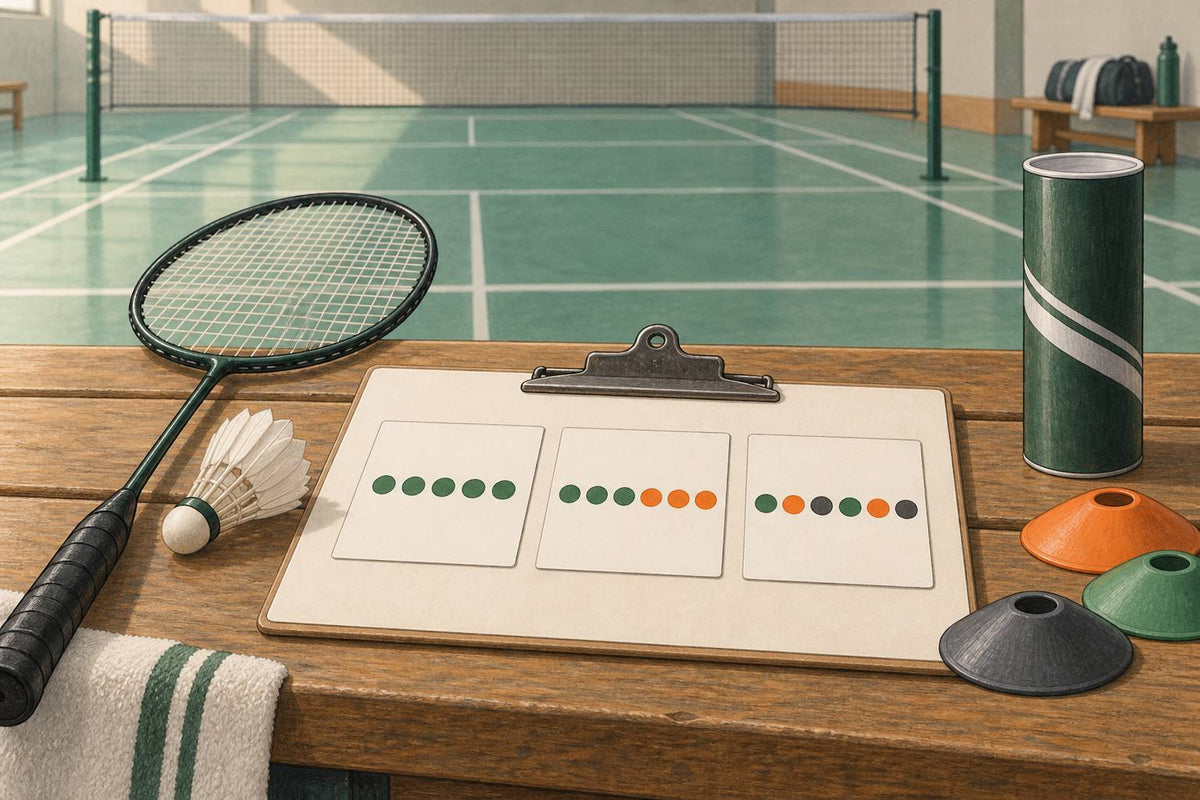
Choose the smallest practice schedule that keeps execution improving; use execution, attention, error pattern, and transfer need—not fixed rep counts.
Repeat
Best choice: stay blocked when contact, timing, or footwork shape is unstable at speed.
Change
Alter one condition when reps look clean but the same error or boredom returns.
Randomize
Interleave cues when you need match transfer, not just prettier drill scores.
Badminton drill variety vs repetition is one of those practice choices that looks simple until your session stalls. If every feed looks the same, your timing may feel clean but disappear once the rally becomes messy. If you change the drill too early, the player never gets enough clean contacts to feel the movement. The practical answer is not a fixed number of reps. Watch for stable execution, the same error showing up, attention drifting, or a clear need to carry the skill into a game-like situation.
In This Guide
Why repetition still has a job
Blocked practice means completing all trials of one skill variation before moving to the next: for example, staying with the same smash feed, target, and movement pattern long enough to clean up one recurring fault. That is useful when the player is still searching for the correct contact, timing, grip squeeze, or recovery shape. Too much variety at that stage can hide the pattern you are trying to fix.
Look for stability across the whole action, not one clean winner. Contact should arrive in a similar place, the shuttle should follow the intended shape, and balance should remain controlled through recovery. If the result alternates between two different misses, the movement problem is still noisy; keep the feed predictable long enough to identify which miss belongs to the technical fault.
Repetition has done its job when the intended movement and result remain stable enough that another identical feed provides little new information. That is the point to test a small change, not an invitation to keep counting for its own sake.
When one change beats more reps
Change the drill when the stroke is no longer falling apart, but the player has stopped learning from the repetition. Good cues are stable contact, a repeated error that is not improving, drifting attention, or a flat line in quality despite more shuttles. At that point, keep the same skill and alter one condition: feed height, start position, target zone, recovery step, or the decision cue before hitting.
This is not full random practice yet. It is closer to serial or progressive practice: a fixed or gradually changing sequence that adds interference without turning the drill into a guessing game. For example, a forehand overhead lob drill might keep the same shot but alternate between two feed depths.
Change only one variable so the response stays readable. A deeper feed can reveal late preparation; a narrower target can reveal racket-face control; starting from base can reveal whether recovery and timing survive movement. If quality collapses everywhere, the new condition is masking the original skill rather than testing it. Return to the last stable version, then choose a smaller change.
One beginner PB Pinang Masak club study reported improved forehand overhead-lob ability after varied-drill practice, using a single-group pretest/posttest design. Treat that as a useful coaching clue, not proof. Without a concurrent control group, the improvement could also reflect general training, testing familiarity, or natural adaptation.
When randomizing tests transfer
Random or interleaved practice means rapidly changing randomized trials: clear, drop, punch clear; straight, cross, body; serve return, lift, drive. That raises contextual interference because the player cannot solve the same problem on autopilot. Use it when the stroke or movement is already executable, but the match problem is choosing correctly from live cues.
That does not make random practice a universal upgrade. A 2023 contextual-interference review concluded that the expected sport-practice effects held only under very limited conditions. A 2024 retention review also needs caution: the young-participant subgroup was negligible, the laboratory-only subgroup was large, heterogeneity was high, and pooled results were sensitive to outliers. In practice, randomize to test transfer, not to decorate a drill. If the player reads late or chooses the wrong shot under pressure, connect the drill to cue-reading as explained in Why Badminton Drills Don't Transfer to Matches.

Which Should You Choose?
Use the drill structure that matches the problem in front of you. The goal is not to chase a universal rep count; it is to adjust difficulty when execution, attention, error pattern, or transfer need tells you to.
| Choice | Choose it when | Main caution |
|---|---|---|
| Repeat | The player is still finding the movement, contact, or timing. Blocked practice can make short-term acquisition look clearer. | Good-looking reps may not prove retention or match transfer. |
| Change | Execution is stable, but one recurring error or attentional drift appears. Alter one condition instead of rebuilding the whole drill. | Changing too much at once makes feedback hard to read. |
| Randomize | The skill must survive cue-reading, changing feeds, or opponent-like uncertainty. | Random practice is not universally superior; retention and transfer effects depend on context and learner group. |
Get 10% off your first order
Join the Badminton House list and we’ll email you a 10% welcome code — plus training guides, technique advice, and badminton updates.
By subscribing, you agree to receive Badminton House emails and can unsubscribe anytime.
Drill planning is never just “more reps” or “more variety.” Watch the player: stable execution, drifting attention, a repeated error, and whether the skill survives a game-like cue. The right amount of variety is the smallest change that reveals whether the skill still works. We play badminton too, so if you are unsure how to structure a practice block, contact us and we’ll help you think it through.
Running shuttle-heavy sessions?
Overhead lob, clear, and smash work can burn through shuttles quickly. Keep the tube bag ready.
Check Live Shuttlecock Availability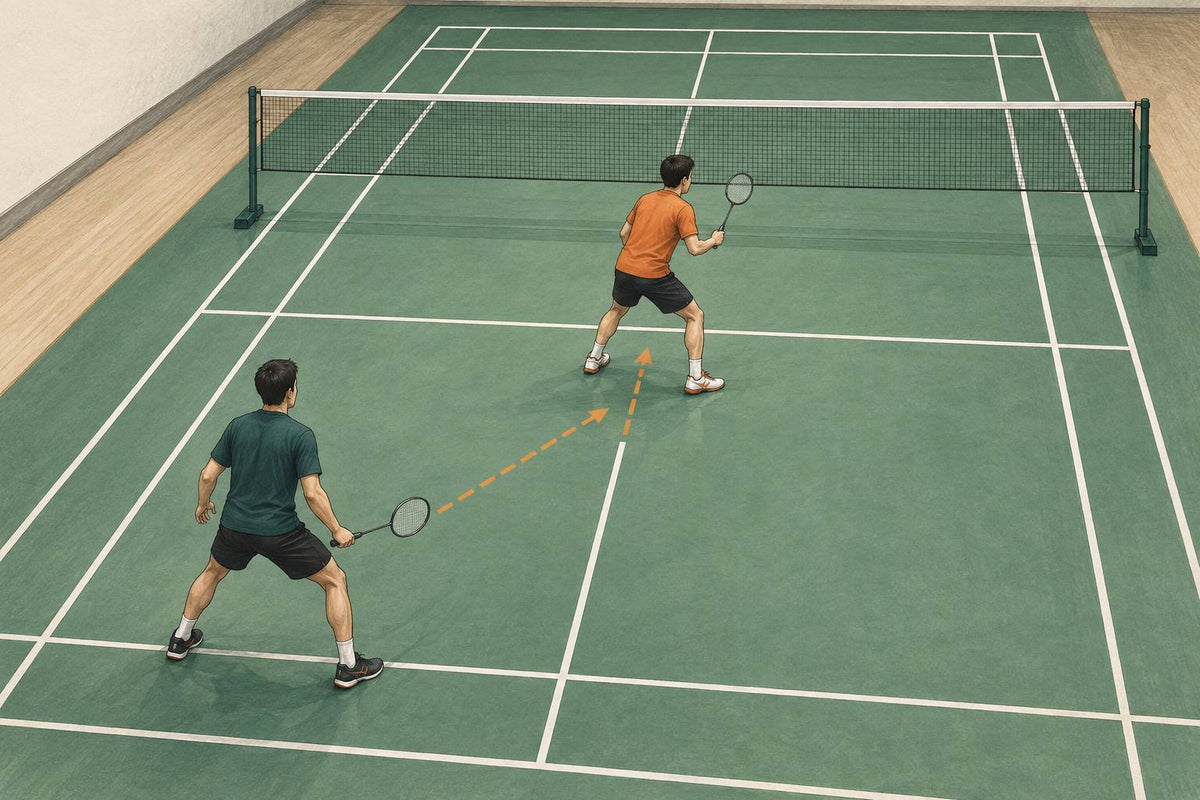

Leave a comment
This site is protected by hCaptcha and the hCaptcha Privacy Policy and Terms of Service apply.