
Last updated: July 2026 · Written by the team at Badminton House
Quick Answer: Badminton Eye Protection Eyewear
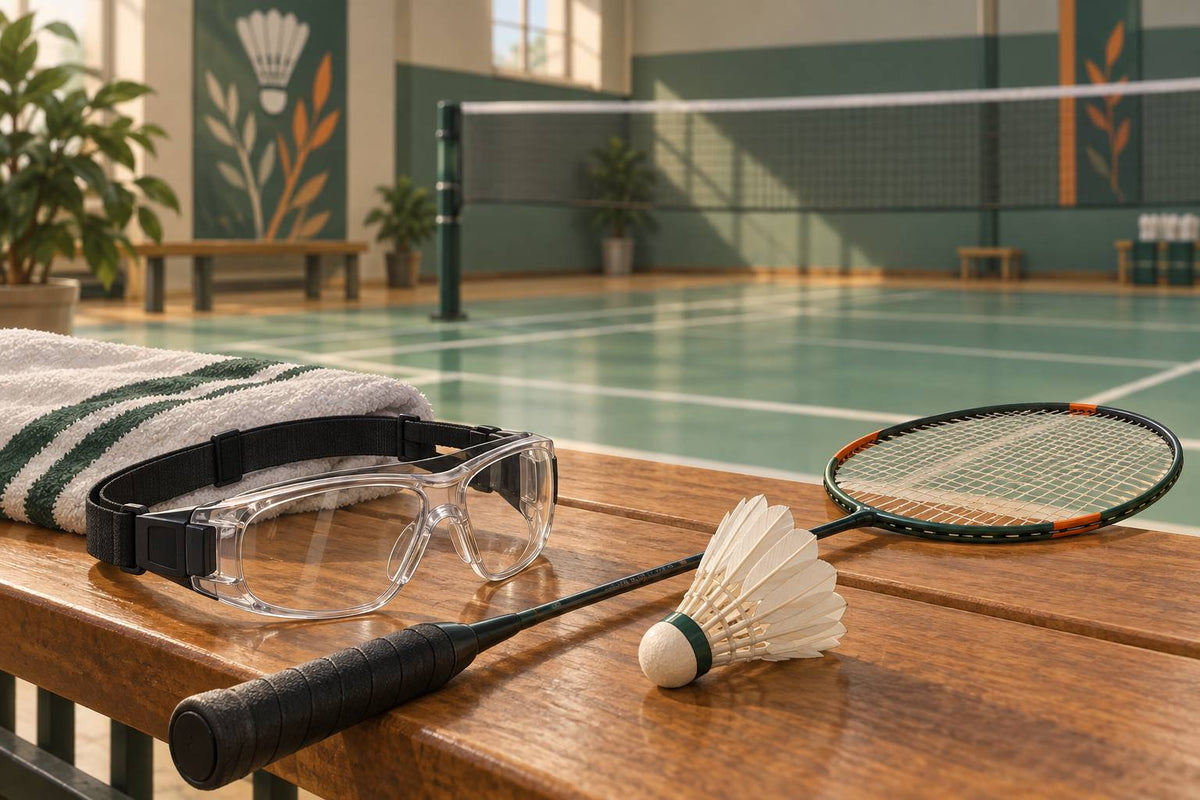
If a shuttle to the eye would be a serious problem for you, choose ASTM F803-rated badminton eye protection eyewear—especially for doubles, juniors, and spectacle wearers.
Default
Wear it: ASTM F803-rated sports goggles are the safest default when pace, doubles traffic, or junior rules raise the risk.
Singles
Adults playing slower singles may decide by comfort and risk tolerance, but documented injuries still come from shuttlecock strikes.
Glasses
Regular prescription glasses do not count; use over-glasses protection or prescription sports goggles instead.
Badminton eye protection eyewear is easy to ignore until a flat drive or body smash catches you too late. The main danger is not usually the racket; documented badminton eye injuries are caused mostly by shuttlecock strikes, often with players wearing no eye protection. Because the shuttle can reach your face before you can react, the practical question is not “am I tough enough?” but “would ASTM F803-rated sports goggles make this session safer for me, my child, or my doubles partner?”
In This Guide
What the Injury Data Shows
Badminton eye injuries are not just theoretical. In a University of Malaya Medical Centre case series reviewing records from 2010–2021, 17 patients were treated for badminton-related eye injuries. The shuttlecock caused 86% of those injuries; where the setting was identified, all recorded cases were linked with doubles play (9/9), and where eyewear use was recorded, none of the injured players had eye protection (13/13).
A separate Malaysian tertiary-hospital audit of 23 injured eyes points in the same direction: all injuries were shuttlecock hits, and 96% of players were not wearing protective eyewear. That does not mean every doubles player needs to panic, but it does make badminton eye protection eyewear a serious safety decision rather than a cosmetic accessory.
For a wider look at injury patterns beyond the eye, see our guide to common badminton injuries and prevention.
Why the Shuttlecock Is the Main Eye Risk

The main eye-risk mechanism in badminton is the shuttlecock, not usually the racket. In the Malaysian tertiary-hospital audit, the recorded trauma source was an opponent in 78% of cases, a partner in 17%, and a bystander in one case; there was no recorded ocular injury caused by a badminton racket in that study.
A shuttle slows rapidly after impact, so launch speed alone cannot tell you how long it takes to cross the court. The practical concern is the short distance in close-range exchanges: a player may have little time to respond, and relying on reactions is not a substitute for appropriate eye protection.
What Counts as Real Badminton Eye Protection Eyewear?


Real badminton eye protection eyewear means eye guards that meet ASTM F803 for racket sports. The key features are not just clear lenses: the guards should use durable polycarbonate plastic and be shaped to protect the eye area from impact on all sides, including awkward angles common in doubles exchanges.
Noncertified eye guards are not the same thing. Regular prescription eyeglasses are also not enough protection; they can break, and one badminton eye-injury case series included a penetrating wound from shattered spectacles. If you wear glasses, the safer options are prescription sports goggles from an optometrist or protective goggles designed to fit over your glasses.
A simple buying rule: if the eyewear does not clearly state ASTM F803 racket-sport protection, do not treat it as protective badminton eyewear.
Who Should Consider Wearing Protective Eyewear?

The strongest case for badminton eye protection eyewear is risk-based, not fear-based. If you play doubles, you spend more time close to fast, flat exchanges and partner/opponent shuttle deflections, so certified eyewear is worth serious consideration.
- Young players: some junior sanctioned settings require ASTM F803 eyewear whenever more than two players are on the same court.
- Spectacle users: regular glasses are not designed as sports impact protection, and shattered spectacles have been reported in badminton eye trauma.
- Competitive or supervised programs: if certified eyewear is required by the event, club, school, or coach, treat it like court shoes: part of being ready to play.
Discomfort, cost, and “it probably won’t happen to me” are common barriers, but more than 90% of sports eye injuries are preventable with protective eyewear.
When to Stop Playing and Seek Urgent Eye Care

Stop playing after any direct strike to the eye if you notice blood in the eye, pain, blurred or reduced vision, or unusual light sensitivity. Do not try to “walk it off” or finish the match; those symptoms warrant urgent assessment by an eye-care professional or emergency service.
Hospital case series of badminton eye injuries commonly describe hyphema — blood in the front chamber of the eye — as the most frequent presentation. Reported injuries range from subconjunctival hemorrhage and traumatic uveitis to commotio retinae and open-globe injury, with more severe trauma linked to poorer visual outcomes. Safety guidance also warns that more than half of badminton ocular-injury patients may not regain full visual acuity.
If vision feels abnormal after impact, treat it as urgent and get assessed before returning to play.
Which Eye Protection Should You Choose?
| Situation | Choose this | Why |
|---|---|---|
| Doubles play | ASTM F803 protective eyewear | Case-series data repeatedly links badminton eye injuries to shuttlecock strikes, doubles play, and lack of eye protection. |
| Junior sanctioned events | Certified ASTM F803 eyewear | Some junior competitive settings require it whenever more than two players are on court. |
| Prescription glasses | Sports goggles over glasses, or prescription sports goggles | Regular prescription lenses are not sufficient protection and can shatter. |
| Singles or casual play | Still consider ASTM F803 eyewear | Do not dismiss the risk: documented injuries came from shuttlecock strikes, not just court crowding. |
Get 10% off your first order
Join the Badminton House list and we’ll email you a 10% welcome code — plus training guides, technique advice, and badminton updates.
By subscribing, you agree to receive Badminton House emails and can unsubscribe anytime.
We play badminton too, so our safety advice is practical: protect your eyes first, then tune the rest of your setup around how you train and compete. If you’re unsure about eyewear fit, glasses, or what gear belongs in your bag, contact us and we’ll help you think it through before your next session.
Protect the whole setup
We do not currently carry certified protective eyewear, but you can check live availability on grips, bags, socks, and other on-court accessories.
Check Live Accessory Availability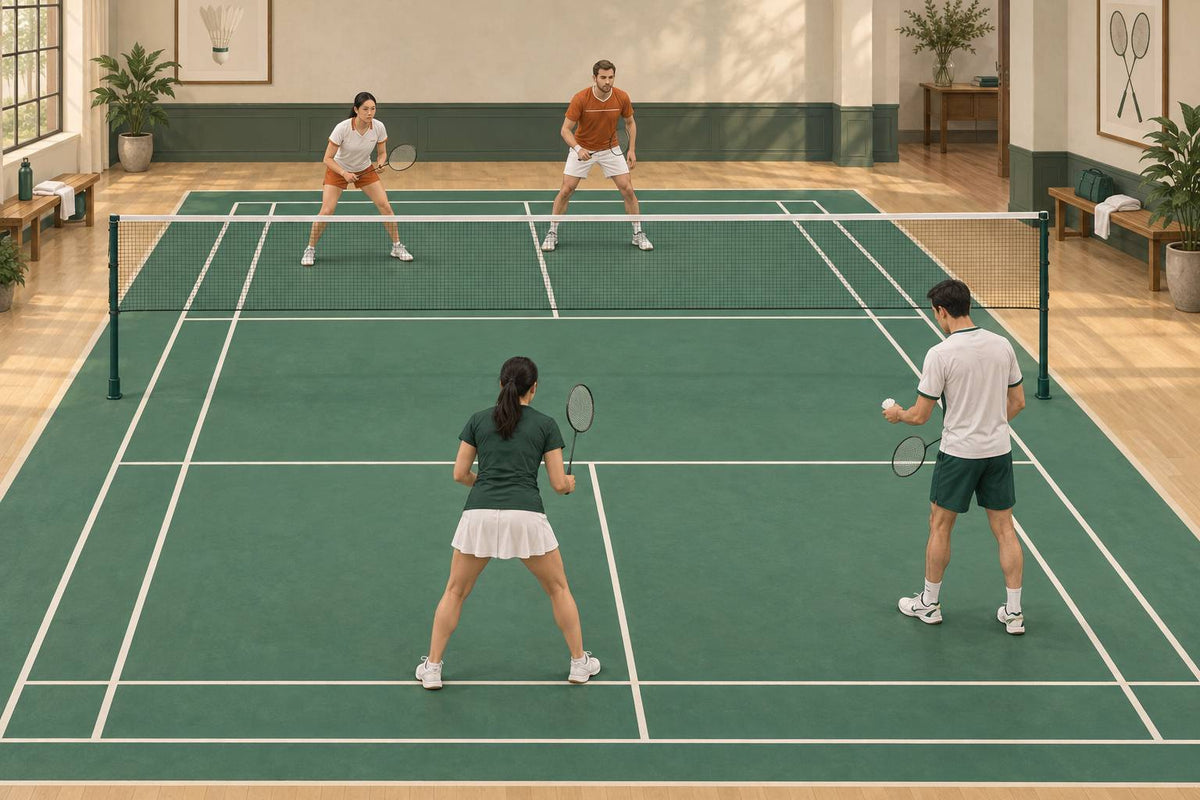

Leave a comment
This site is protected by hCaptcha and the hCaptcha Privacy Policy and Terms of Service apply.