
Last updated: July 2026 · Written by the team at Badminton House
Quick Answer: Badminton Hand Blisters
Start by fixing the racket-hand friction source: grip size, grip freshness, and sweat control before adding tape or blister care.
Default
Fresh grip + fit check: replace slick grip tape, then confirm a small finger gap so the handle does not twist or force over-gripping.
Sweaty palms
Switch to towel grip when synthetic overgrip turns slippery mid-session; add a wristband if sweat runs down your forearm.
Hot spots
Tape known palm or finger rub points on clean, dry skin before play so the tape takes friction instead of skin.
If your racket hand starts burning before your legs do, look at the handle first. Badminton hand blisters usually mean your skin is sliding, pinching, or re-gripping against the racket: a grip that is too small can make you squeeze harder, a worn overgrip turns slick, and heavy sweat can make the handle move in your palm.
Calluses are your skin’s tougher response to repeated pressure, but a raised callus can also hide a painful blister underneath. This guide keeps the fix practical: check size and wear, choose the right grip texture for your sweat, and tape known hot spots before the first rally.
Start with the grip, not the bandage. If your handle feels slick, too thin, or wrong for sweaty sessions, compare fresh overgrips and towel grips in our badminton accessories collection.
In This Guide
Why Hand Blisters and Calluses Happen in Badminton

A badminton hand blister is usually a friction problem. When the racket handle rubs against your skin, shear forces can separate the outer skin layer from the layer underneath; fluid then fills that gap and forms the raised blister. Calluses are the slower version of the same story: repeated friction and pressure make the skin thicken and harden over time.
In badminton, the common trigger is not one single bad shot. It is repeated handle contact across a full session: long rallies, extra games, or coming back after weeks away before your skin has toughened again. Sweat makes the handle more likely to slip, so the hand re-grips and rubs more. Holding the racket too tightly can also increase friction, especially if the handle feels too small, slick, or unstable in your fingers. For the technique side of that issue, see our relaxed grip pressure guide.
Check Grip Size and Grip Wear First


Before blaming your swing, inspect the handle. A grip that is too small can twist in your hand, which makes you squeeze harder and re-grip more often. A grip that is too large or too small can also increase rubbing because your fingers cannot settle naturally around the handle.
Use the badminton finger-gap check: hold the racket normally and look for a small gap between your fingertips and palm. If your fingers overlap your palm, the grip is likely too small; if the gap is wide, it is likely too large. For a deeper fit check, see our G4, G5, and G6 grip size guide.
Also check wear. A smooth, shiny, hardened, or flattened grip can slide against your skin and create hot spots. If the size is close but slightly small, one overgrip can build the handle by about 1/16 inch; our grip build-up guide explains how to do that cleanly.
Match Your Grip Type to Sweat Conditions

Micro re-grips are the problem: every time your hand slips, twists, or readjusts on the handle, the skin takes another small rub. Over a long session, those tiny corrections can turn into the same hot spot on your thumb, index finger, or palm.
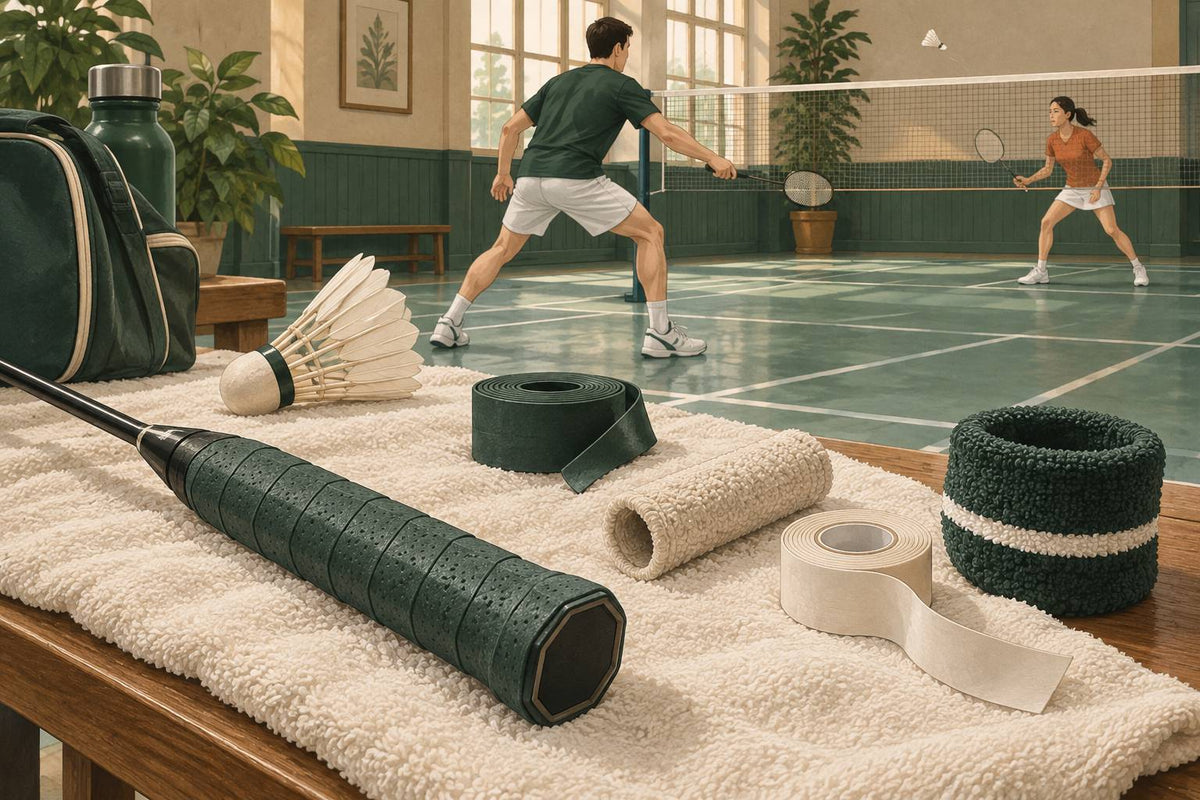
For many players, a fresh synthetic overgrip is the simplest comfort fix because it adds a softer contact layer and can help reduce blister formation. If your palms or forearms sweat heavily, a towel grip may feel safer because it is made from dense cotton and absorbs moisture well. The trade-off is upkeep: towel grips can get stiffer and dirtier faster, so they need closer attention if you are blister-prone.
For the full overgrip, replacement grip, and towel grip comparison, read our badminton grip guide.
Tape Known Hot Spots Before You Play

If the same part of your racket hand always burns first, tape it before warm-up. Athletic tape works as a sacrificial friction barrier: the grip rubs against the tape instead of directly against the pressure-prone skin on your palm, finger tops, or finger joints.
Choose rigid tape when you want the most restriction and compression over a small hot spot. Choose elastic tape when you still want flexible support while protecting a moving area of the hand. Apply it to clean, dry skin before friction starts, not after the skin is already irritated. Round the cut edges with scissors so corners are less likely to peel during grip changes.
After play, remove tape slowly because sweaty skin can be fragile. Taping helps, but it works best alongside a calmer, relaxed hold on the handle between rallies rather than a constant squeeze.
Simple At-Home Care for Existing Blisters and Calluses

For most badminton hand blisters, don’t pop them. The fluid cushion protects new skin forming underneath, and the blister “roof” helps keep raw skin covered. Wash the area, pat it dry, and cover it with a nonstick dressing or blister cushion before daily activity.
Only consider draining a blister if it is large, painful, or likely to be rubbed again. If you do, wash your hands and the blister with soap and water, apply antiseptic, clean a sharp needle with rubbing alcohol, puncture near the edge, let fluid drain, leave the roof in place, then cover with petroleum jelly or antibiotic ointment and a nonstick bandage.
If blisters keep forming under a callus, gently file the callus down and lubricate it so it adds less pressure. For a raised blister, cut a moleskin “donut” that surrounds, not covers, the blister. Build court time back gradually. Seek medical care for spreading skin color changes, warmth, pus, or increasing pain; do not self-drain if you have diabetes, vascular disease, neuropathy, or a weakened immune system.
Which Fix Should You Choose?
Use the closest match first.
| Choose this | If this is happening | Why |
|---|---|---|
| Fresh synthetic overgrip | Your handle feels smooth or shiny, tackiness is gone, or blisters appear where thumb and fingers slide. | Worn or hardened overgrips can cause blisters; synthetic overgrips add comfort and help reduce hand blisters. |
| Towel grip | Your palms or forearms sweat heavily and the handle turns slick mid-session. | Cotton towel grip absorbs sweat better than PU or synthetic grip, but it can feel heavier and needs replacing sooner. |
| Build up grip size | The racket twists unless you squeeze constantly, or your fingers overlap your palm in the finger-gap check. | A too-small grip can twist and make you over-grip; an overgrip can add about 1/16 inch. |
| Pre-tape hot spots | The same palm or finger spot burns every session even with a fresh grip. | Tape acts as a sacrificial friction layer, especially when applied to clean, dry skin before play. |
Get 10% off your first order
Join the Badminton House list and we’ll email you a 10% welcome code — plus training guides, technique advice, and badminton updates.
By subscribing, you agree to receive Badminton House emails and can unsubscribe anytime.
If blisters keep coming back, treat the grip as part of the diagnosis: size, surface, sweat control, and hot-spot protection all matter. We play badminton too, so if you are unsure whether to build up your handle, change grip type, or replace a slick overgrip, contact us and we will help you narrow it down.
Ready to re-grip?
Browse grips, overgrips, towel grips, and other racket-hand essentials, then check live availability before your next session.
Shop Badminton Accessories


Leave a comment
This site is protected by hCaptcha and the hCaptcha Privacy Policy and Terms of Service apply.