
Last updated: July 2026 · Written by the team at Badminton House
Quick Answer: Badminton Groin Strain
If a wide lunge or split step causes sudden sharp inner-thigh pain, treat it as a possible adductor strain and stop playing.
Stop play
Best choice: use relative rest, ice 15–20 minutes, gentle compression, and avoid testing deep lunges.
Dull ache
A different, gradual pattern — see how to tell it apart below.
Get assessed
Seek urgent advice for severe or worsening pain, a new lump, nausea/vomiting, major bruising, or loss of function.
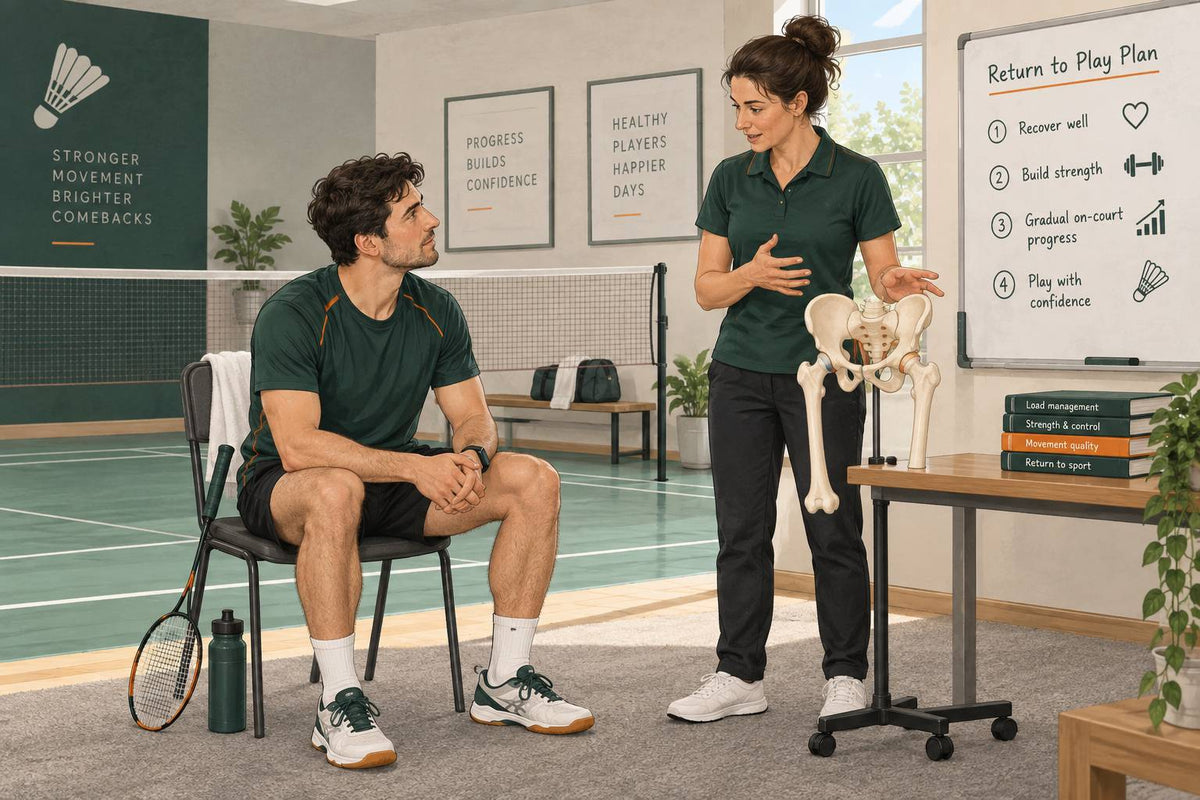
That sharp inner-thigh grab after a wide lunge, split step, or desperate rear-court recovery is not something to “run off.” In badminton, the adductors help pull the thigh inward and stabilize the pelvis when your foot is planted, so a sudden change of direction can expose weakness, fatigue, or poor positioning fast. This guide focuses on the badminton groin strain problem players actually face: how to tell an acute strain from gradual tightness, what to do in the first 48 hours, how severity grades change recovery, and how to return without guessing.
In This Guide
Why Badminton Loads the Hip Adductors

A badminton groin strain usually means an injury to the hip adductor group: the muscles on the inner thigh that pull the thigh inward. The adductor longus is the adductor most often involved, but the wider group also includes muscles such as the adductor brevis, adductor magnus, pectineus, gracilis and obturator externus.
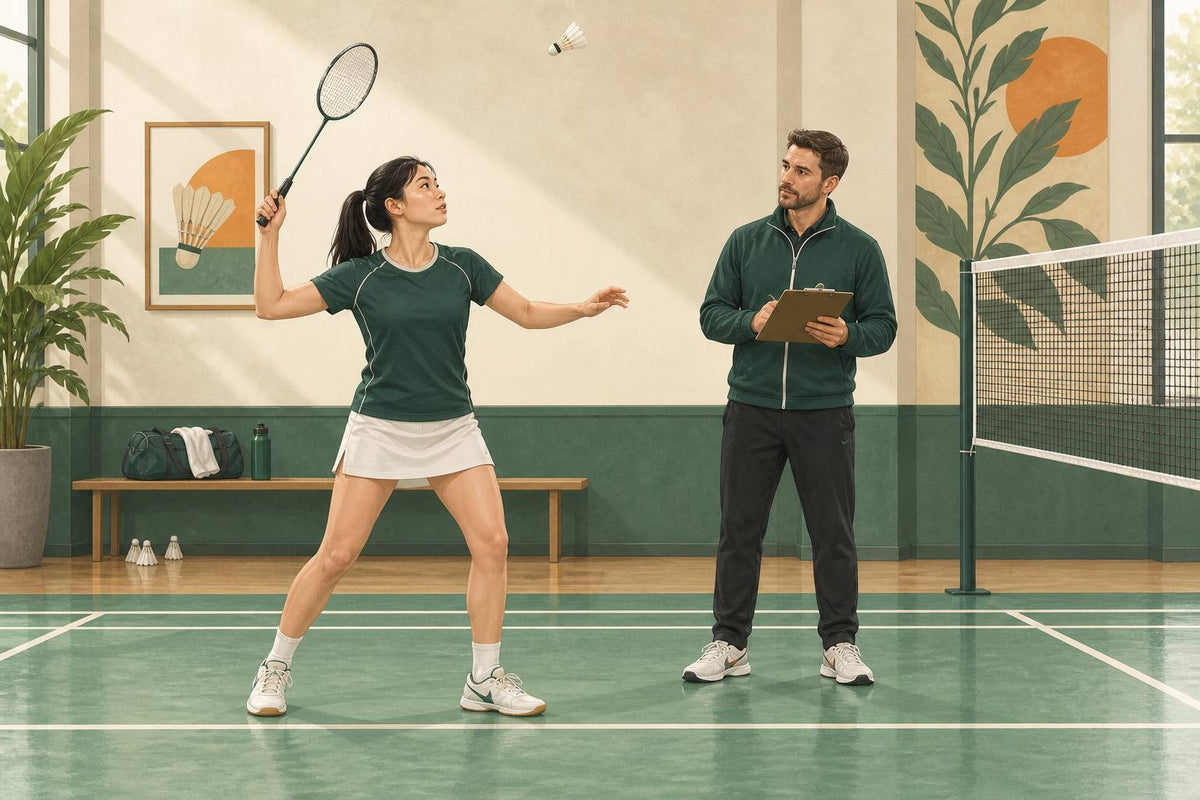
Those muscles are not just “leg-closing” muscles. When your foot is planted, they help stabilize the pelvis and lower extremity during stance. That matters in badminton because the sport repeatedly asks you to plant, reach, brake and push off at awkward angles: wide lunges, late retrievals, jumps, short bursts, sudden direction changes and split-step recoveries. Lunges alone account for over 15% of match movements, so the adductors are loaded again and again while lengthened, bracing and helping you change direction.
How to Recognize a Badminton Groin Strain

Most acute badminton groin strains announce themselves in the moment: a sudden sharp, ripping, or stabbing pain in the inner thigh or groin during a specific movement, such as a wide lunge, split-step recovery, or fast direction change. The player often stops because pushing off, reaching wide, or squeezing the thighs together feels immediately worse.
Gradual adductor-related groin pain feels different: more like a nagging dull ache in the groin or inner thigh that builds over sessions and worsens with sprinting, twisting, or squatting, rather than one clear “pop” moment. After a more severe tear, swelling may develop and bruising can show up two or three days later. Do not label every groin pain as a strain, though. Hip joint issues, hernia, avulsion fracture, osteitis pubis, and other problems can also cause groin pain, so worsening, unusual, or persistent symptoms deserve a proper medical assessment.
Groin Strain Grades and Recovery Timelines

A badminton groin strain is usually graded by how much the adductor muscle or tendon is damaged and how much function you lose. Use the grade as a rough guide, not a return-to-court permission slip.
| Grade | What it usually means | Typical recovery |
|---|---|---|
| Grade 1 | Mild pull or tiny tearing, with little or no strength loss. | Usually about 1–3 weeks. |
| Grade 2 | More fibre tearing, strength loss, and painful walking or thigh squeeze. | About 3–6 weeks. |
| Grade 3 | Rare full tear with severe pain, bruising, and major loss of function. | About 9 weeks on average with focused rehab, and 3–4 months or longer in some cases; a few tears need surgery. |
If symptoms feel worse than the grade suggests, or function drops suddenly, get assessed before trying to push through footwork again.
First Aid in the First 48 Hours

If you feel sudden, sharp groin or inner-thigh pain during a lunge, split step, or push-off, stop the rally immediately. Do not “test it” with one more point; continuing can turn a minor strain into a larger tear.
- Protect and relatively rest: avoid painful strides, wide lunges, and side shuffles, but keep nearby joints moving gently if it is pain-free.
- Ice: apply ice or a cold pack for 15–20 minutes every 1–2 hours during the first 48 hours, with a cloth barrier against the skin.
- Compress and elevate: use gentle compression that does not restrict circulation, and elevate the leg where practical.
Modern guidance has shifted away from complete rest toward relative rest and pain-free motion within a day or two. Seek urgent assessment for a new lump, worsening pain, nausea or vomiting, severe pain, or any suspected complete tear.
Return to Play and Prevention

Return should be a progression, not a calendar date. Start when normal movement is clinically pain-free, then rebuild with controlled badminton patterns: easy split steps, short shadow lunges, and low-speed recoveries. Only then add full training volume, sharper direction changes, and fatigue. Straight-line jogging can feel fine before the groin is ready for speed, late-rally lunges, and repeated lateral pushes.
Prevention is mostly about capacity. A low adductor-to-abductor strength ratio is a known risk factor; below 80% has been linked with future strain risk. Previous strain also matters, with one Australian Rules football study reporting a 32% re-injury rate. Reduced hip rotation range of motion is another risk factor, so keep warm-ups and stretching consistent rather than saving them for tournament days.
For the strength-building side that lowers future risk, work through the Copenhagen plank progression in our gym prehab guide for badminton.
Which Path Should You Choose?
Choose the path that matches the pain pattern, not your motivation to keep playing. A badminton groin strain usually announces itself differently from general tightness, and the safest next step changes with severity.
| Situation | Choose this if... | Next move |
|---|---|---|
| Acute strain response | Sudden, sharp pain during a lunge or change of direction (see recognition guide above). | Stop play and prioritize protection, ice, gentle compression, elevation, and relative rest. |
| Load-management approach | A gradual dull ache instead of one sharp moment (same recognition guide above). | Reduce provocative court work and assess strength, range of motion, and recovery habits. |
| Medical assessment | Pain is severe, function drops sharply, bruising is significant, or a new lump, nausea, vomiting, or worsening pain appears. | Get assessed; groin pain can come from more than an adductor strain. |
| Prevention block | You are healthy or returning gradually and want to reduce future risk. | Build adductor capacity through structured gym work — see the prevention section above. |
Get 10% off your first order
Join the Badminton House list and we’ll email you a 10% welcome code — plus training guides, technique advice, and badminton updates.
By subscribing, you agree to receive Badminton House emails and can unsubscribe anytime.
We play badminton, so we know how tempting it is to test the leg too early after a suspected groin strain — but deciding between rest, rehab, or a return to court is a call for a qualified clinician or physiotherapist, not a gear shop. If footwear, warm-up routine, or training-load questions are part of your prevention plan, contact us and we will help you think it through.
Support the movements that load your hips.
Check Badminton FootwearBadminton-specific court shoes are a sensible complement to strength work, warm-ups, and cleaner footwork.

Leave a comment
This site is protected by hCaptcha and the hCaptcha Privacy Policy and Terms of Service apply.