
Last updated: July 2026 · Written by the team at Badminton House
Quick Answer: Badminton Grip Pressure
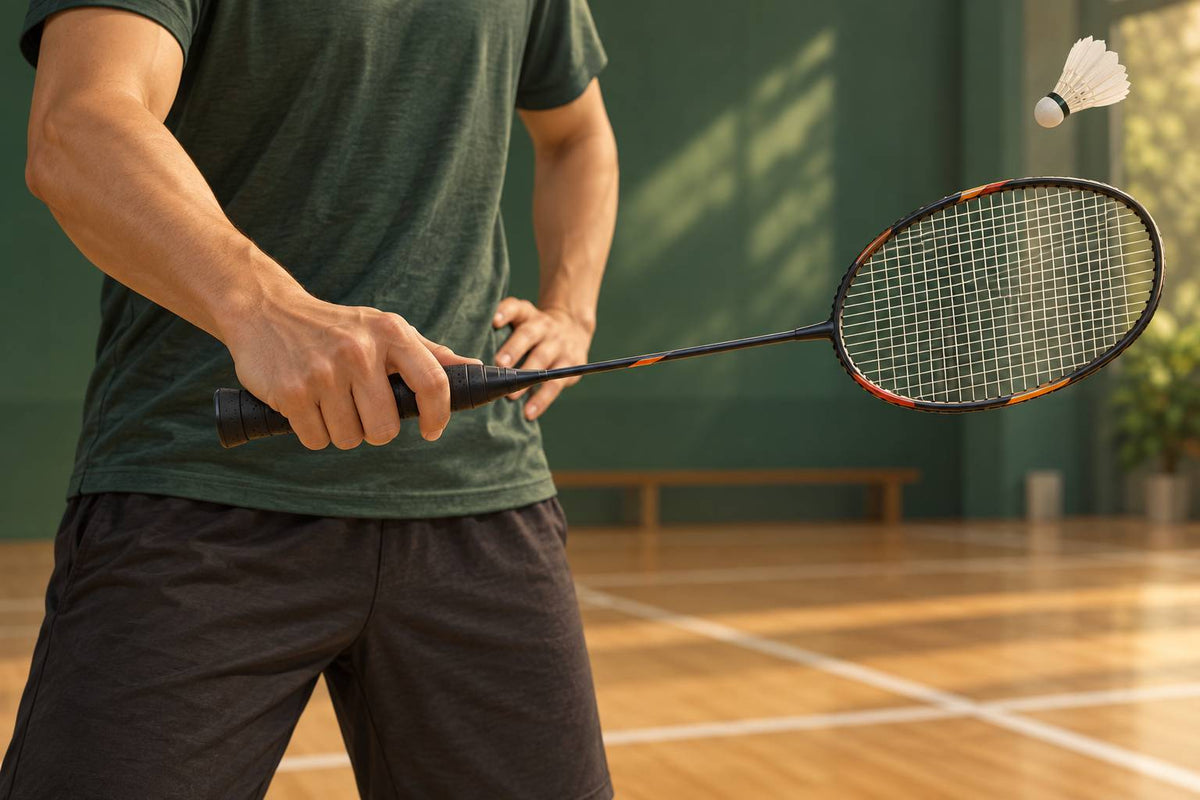
Hold the racket loosely — about 2–3 out of 10 tightness — between shots, squeeze with your fingers at shuttle impact, then relax immediately so you stay fast for the next shot.
Default
Relax-squeeze-relax: keep a light finger hold with a small palm gap, then squeeze mainly with the thumb and last three fingers at contact while the index finger acts as a light trigger and guide.
Too tight
If your forearm gets tired, your grip changes feel slow, or your shots feel pushed instead of whipped, loosen your hand before the swing and save the squeeze for impact.
Too loose
If the racket face twists at contact, add a sharper finger squeeze from the thumb and last three fingers instead of clamping the whole palm around the handle.
If your clear feels flat, your smash feels forced, or your forearm burns after a few games, the problem might not be “weak wrist” — it may be badminton grip pressure.
Many players hold the racket tight from the ready position all the way through the swing. That feels safer, but it actually slows grip changes, limits wrist and forearm rotation, and makes the arm work harder than it needs to. The better feel is loose in the hand, fingers controlling the handle, then a short squeeze at the moment the strings meet the shuttle.
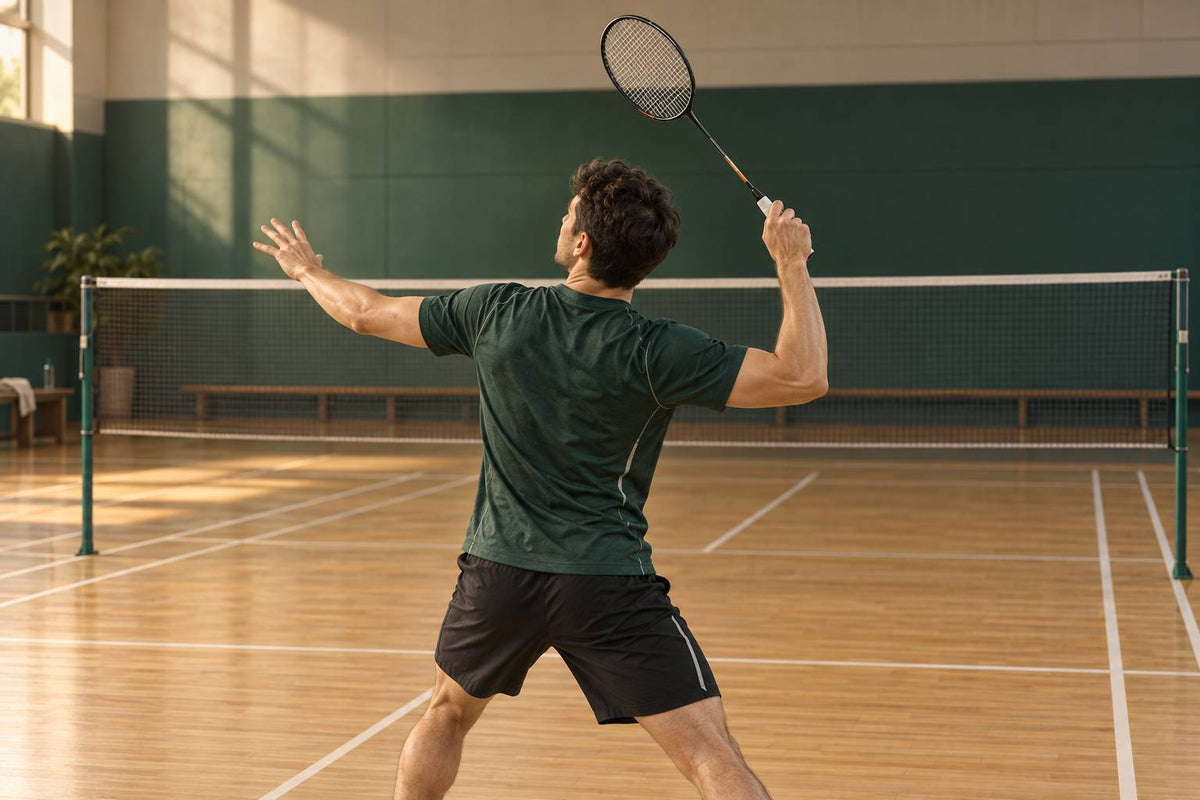
Think of it as relax → swing → squeeze → impact → relax. Between shots, your hand should stay soft enough to change quickly between forehand, backhand, and neutral grips. At contact, the fingers firm up to stabilize the racket face and send energy into the shuttle. Immediately after, you release the pressure again so you are ready for the next shot.
Dial in the racket side of the feel. Grip pressure is a technique skill, but racket weight, handle size, and string setup all affect how relaxed you can stay. Browse our badminton racket collection; Badminton House ships across Canada.
In This Guide
- What Should Badminton Grip Pressure Feel Like?
- Why Does a Tight Grip Kill Power and Tire Your Arm?
- Squeeze at Impact for Repulsion and Control
- Use Your Fingers, Not a White-Knuckle Clench
- Keep a Gap in the Palm for Fast Grip Changes
- Grip Tackiness and Size Affect How Lightly You Can Hold
- Practice the Relax-Squeeze-Relax Reflex
- Which Grip Pressure Should You Choose?
What Should Badminton Grip Pressure Feel Like?

Good badminton grip pressure means holding the racket at roughly 2–3 out of 10 tightness between shots, then adding a brief finger squeeze only at the moment of shuttle contact. It should feel alive, not locked. The simplest timing cue is:
Relaxed arm → swing → squeeze → impact → relax. Hold the racket lightly while you prepare, tighten only as you strike the shuttle, then soften your hand again so you are ready for the next shot.
Between shots, your hand should feel loose enough that the racket can move quickly with your fingers, wrist, and forearm. That relaxed hold helps you adjust the racket face, react faster, and switch from defence to attack without feeling stuck. If you are waiting for the shuttle with a fully tense hand, you are already late: your wrist has less freedom, your grip changes slow down, and your arm starts doing extra work before the stroke even begins.
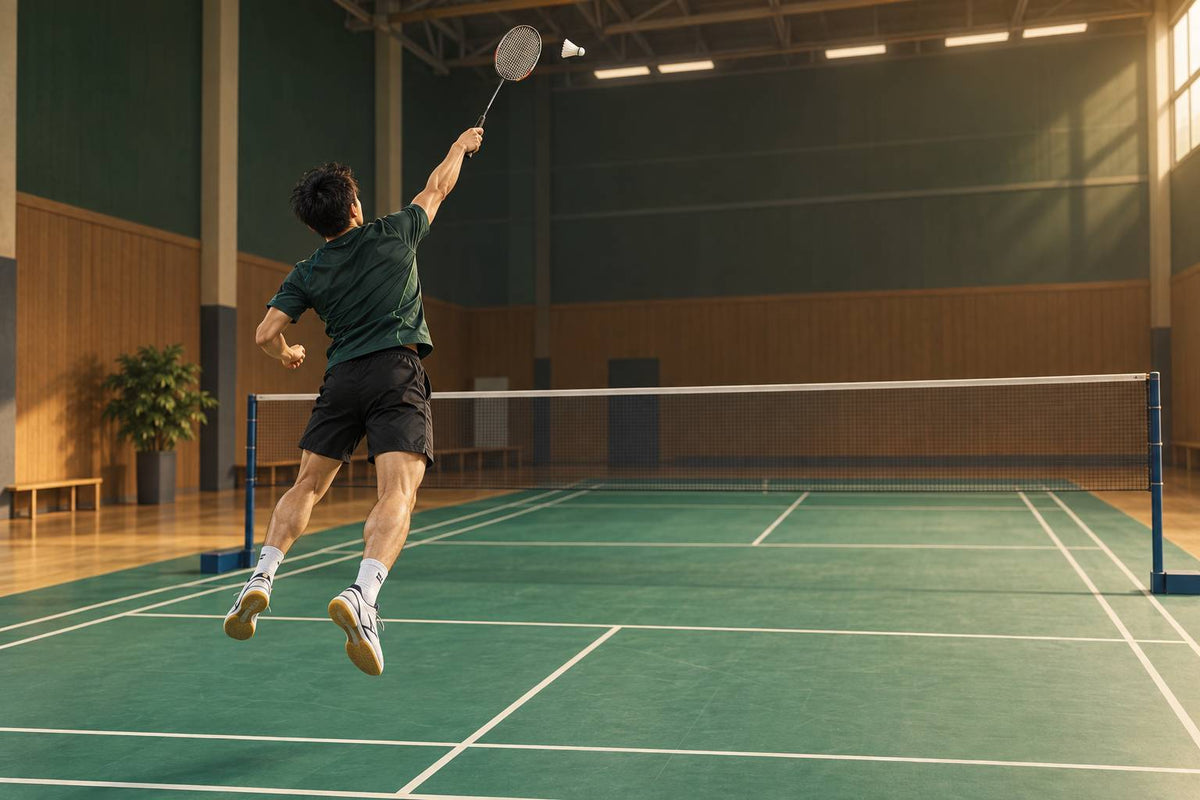
At contact, the feeling changes for a split second. You squeeze the handle firmly enough to stabilize the racket face and send the swing energy into the shuttle. That short squeeze is what gives the shot its crisp, clean feeling: the shuttle leaves the strings, the racket face stays controlled, and then your hand relaxes again immediately.
| Moment | Grip feeling | Why it matters |
|---|---|---|
| Waiting between shots | Light, mobile, not clenched | Keeps the wrist flexible and improves reaction speed. |
| During the swing | Still relaxed as the racket accelerates | Lets the arm and wrist move like a whip instead of a stiff lever. |
| At shuttle contact | Brief, firm squeeze | Stabilizes the racket face for power, repulsion, and control. |
| After contact | Relax again right away | Helps you recover for the next shot instead of carrying tension into the rally. |
A good way to check yourself is to notice what happens after you hit. If your hand stays tight after the shuttle is gone, you are gripping too long. If the racket face wobbles or twists at contact, you may be relaxing through the hit instead of squeezing at the right moment. The goal is not “loose all the time” or “tight all the time”; it is a quick change from relaxed to firm and back to relaxed.
This matters on every shot, not just smashes. On a clear, the relaxed swing helps the racket accelerate before the squeeze. On a drive, the brief squeeze keeps the face stable through a fast exchange. On a net shot or block, relaxing again after contact keeps your hand ready to adjust for the next reply.
If you are still building your basic hold, start with our badminton grip how-to guide. If your main problem is a weak overhead, pair this timing cue with the badminton smash technique guide, because grip pressure works best when the swing path and forearm rotation are also clean.
Why Does a Tight Grip Kill Power and Tire Your Arm?
If your arm gets tired quickly or your shots feel weak even when your swing looks big, check your badminton grip pressure before blaming your racket. A tight grip locks the small joints that should be helping the racket accelerate, so your arm ends up muscling the shot instead of letting the racket whip through contact.
The problem is not that you are “not strong enough.” Over-gripping restricts wrist movement, tires the hand, reduces racket-head speed, and stops the arm and wrist from acting like a whip. That is why a player can swing hard and still produce a flat, heavy-feeling clear or smash.
Quick self-check: if your forearm feels tense before you even start the forward swing, your grip is probably too tight too early.
What over-gripping does to your swing
| What you feel | What is happening | On-court result |
|---|---|---|
| Stiff wrist | The racket handle is locked in the hand, so the wrist cannot move freely. | Less angle control and less late adjustment. |
| Tired hand or forearm | The gripping muscles stay switched on between shots instead of resting. | You fatigue faster during drives, defence, and long rallies. |
| Weak shot despite effort | The arm and wrist cannot build whip-like racket-head speed. | Clears fall short, smashes feel pushed, and drops become harder to disguise. |
| Slow grip changes | The racket cannot rotate easily in the fingers. | Forehand-to-backhand changes feel late, especially in doubles defence. |
Why tight hands reduce power
Badminton power depends on speed at the racket head, not just effort in the shoulder. In overhead strokes, forearm rotation is a key part of producing a powerful forehand smash, and a relaxed forehand grip lets the wrist and forearm rotate freely. If the hand clamps down too soon, that rotation becomes stiff and the shot turns into more of a slap or push.
This is especially noticeable on smashes and rear-court clears. You may feel like you are swinging harder, but the racket head is arriving slower because the whip has been taken out of the motion. For a deeper breakdown of that power chain, read our badminton forearm pronation guide and the badminton smash technique guide.
Why tight hands tire faster
A tight grip also keeps your hand working when it should be relaxed. Between shots, the racket should sit lightly enough that your fingers can adjust the face and prepare the next grip. If you hold hard through the whole rally, the hand and forearm never get that small recovery window.
There is another practical benefit to relaxing after contact: a looser hand lets racket vibration dissipate in the hand instead of carrying more of that vibration up the arm. That does not replace proper technique or sensible loading, but it is one more reason not to stay clenched after every hit.
Fix the pressure before you blame the racket
A more powerful racket cannot fully solve a hand that is locked from start to finish. Before changing weight, balance, or shaft feel, test whether you can keep the handle loose enough to move in your fingers, then firm it only at contact. If the grip itself feels slippery or too large, you may be squeezing harder than necessary just to keep control.
For gear-side help, see our G4, G5, and G6 grip size guide and our overgrip vs replacement grip vs towel grip guide. Badminton House is a Canadian badminton specialty shop; for grip products outside our range, check a Canadian specialty retailer or your local club pro shop.
Use the same rhythm from the previous section as your cue: loose before the hit, firm at contact, then loose again so your hand is ready for the next shot.
Squeeze at Impact for Repulsion and Control
The impact squeeze is not about holding the racket harder for the whole swing. Its job is much narrower: at contact, your fingers briefly firm up the handle so the racket face does not wobble and your swing energy goes into the shuttle.
That momentary tightening is what makes a clean hit feel crisp. If the handle is too loose at contact, the racket face can twist and the shuttle may leave weaker or at the wrong angle. If the hand is clenched too early, you lose the loose, fast feeling that helps the racket accelerate in the first place.
Think “stable at contact,” not “tight all the time.” The squeeze is a short stabilizing action that helps repulsion and racket-face control at the exact moment the shuttle meets the strings.
On smashes and clears, this squeeze supports repulsion: the racket face stays square enough for the string bed to rebound through the shuttle instead of leaking energy through a loose, unstable contact. If you are working on overhead power, pair this grip-pressure idea with the full badminton smash technique guide and the companion guide to forearm pronation for badminton power.
The same principle also scales down for touch shots. A net shot, block, or soft push does not need a big squeeze; it needs a smaller finger firming that keeps the racket face steady without making the shot jump off the strings. The amount changes, but the purpose stays the same: control the face at contact.
| Shot type | Impact squeeze feel | What it helps |
|---|---|---|
| Smash or clear | A brief, firm finger squeeze at contact | Stabilizes the racket face so energy transfers into the shuttle |
| Drive or punch block | Quick, compact finger pressure | Keeps the face stable during fast exchanges |
| Net shot or soft block | Small squeeze, then soft hands | Controls the angle without adding unwanted pop |
A useful test: after contact, ask whether the shuttle went where the racket face was pointing. If your good swings still spray sideways, your impact squeeze may be late, too weak, or too much of a palm clench instead of a coordinated finger action.
Use Your Fingers, Not a White-Knuckle Clench

Good badminton grip pressure is not the same as squeezing the whole handle with your entire fist. The action should feel more like a quick, coordinated finger squeeze: relaxed before the shot, firm at contact, then relaxed again.
Think of the index finger as your control finger. On a forehand grip, it gives a light trigger-like feel that helps you guide the racket face, especially when you are changing angle for a block, lift, drop, drive, or sliced shot. It should not be jammed stiff against the handle; it should stay sensitive enough to feel the racket head.
The main tightening pressure comes from the last fingers and the thumb. The ring and little fingers help anchor the handle, so when you squeeze at impact the racket does not wobble in your hand. That anchoring is what makes the hit feel sharp and connected without turning into a white-knuckle clench.
Finger action checklist
- Index finger: light trigger and steering feel for racket-face control.
- Thumb: supports the squeeze and helps stabilize the racket, especially on backhand-side actions.
- Middle, ring, and little fingers: provide the main closing pressure when you tighten at contact.
- Palm: stays loose enough that the racket can move, rotate, and change grip quickly between shots.
A useful test: hold the racket in your normal forehand grip and make a small shadow swing. If your whole forearm feels locked before the swing even starts, you are squeezing too early. Now loosen the hand, keep the racket supported by the fingers, and tighten only for a split second where impact would happen. The racket should feel faster, not weaker.
This matters most in fast exchanges. In doubles drives, defence, and net interceptions, you rarely have time to reset a frozen fist. A finger-led grip lets you make small racket-face changes quickly, then add pressure exactly when the shuttle meets the strings.
Common mistake: players try to create power by clenching harder from the start of the swing. Instead, keep the hand loose, let the racket accelerate, then squeeze with the fingers at impact. For more on how grip connects to overhead power, see our badminton smash technique guide.
If the handle feels slippery or too large, finger action becomes harder because you instinctively squeeze more for security. That is why grip size and grip condition matter. If you are unsure whether your handle build-up is helping or hurting, compare the basics in our G4, G5, and G6 grip size guide and our overgrip vs replacement grip guide.
Keep a Gap in the Palm for Fast Grip Changes

A good badminton grip is not the same as grabbing a hammer. The racket should sit mainly in the fingers, with the palm not fully pressed flat against the handle. When you look down at your hand, you should be able to see a small V-groove between your index finger and thumb.
That small space matters because it gives the handle room to rotate and adjust. If the racket is buried deep into your palm, forehand-to-backhand changes become slower, and small racket-face angle changes feel clumsy. If the handle is held lightly in the fingers, you can tilt the face for blocks, drives, net shots, lifts, and quick defensive changes without resetting your whole hand.
Palm-gap check
- Look for the V: the V-groove between thumb and index finger should be visible, not crushed shut.
- Feel the fingers working: the index finger steadies the racket while the ring and little fingers help anchor and squeeze at contact.
- Test a quick change: move from forehand grip to backhand grip and back again. If the racket feels glued to your palm, loosen the hold and create more space.
This is especially important in doubles defence and flat exchanges, where you may need to move from a forehand block to a backhand drive in a split second. A finger-led hold lets the racket face change first; a palm-clenched hold makes the entire hand, wrist, and forearm fight the adjustment.
If you are still learning where the thumb and index finger should sit, use our badminton grip how-to-hold guide as a reference. If the handle feels too bulky to leave a gap, or too thin to control without squeezing, compare G4, G5, and G6 in our badminton grip size guide.
Grip Tackiness and Size Affect How Lightly You Can Hold
Technique matters most, but the grip surface can quietly change your badminton grip pressure. When a grip is worn, shiny, or slippery, your hand starts compensating: you squeeze earlier, hold tighter between shots, and lose the relaxed finger control that makes fast grip changes possible.
A fresh-feeling grip gives your fingers enough traction to stay loose until the shuttle arrives. That does not mean the handle should feel glued to your palm; it means you can hold the racket lightly without feeling like it might twist on a block, drive, net shot, or overhead swing.
Check tackiness before blaming your technique
- If the grip feels slick: you may squeeze harder than necessary just to stop the handle from moving.
- If the grip feels uneven or compressed: your fingers may not settle naturally into the same relaxed hold every time.
- If sweat makes the handle unreliable: you may need a different grip type, not more forearm tension.
For a practical breakdown of overgrip, replacement grip, and towel grip options, use our badminton grip guide. For reminders on when to inspect and replace worn gear, see the badminton gear maintenance checklist.
Handle size changes how your fingers work
Grip size is personal, but the goal is consistent: your fingers should be able to control the racket without turning the hold into a full-palm squeeze. If the handle build-up makes it hard to keep the small palm gap described earlier in this guide, your hand will often default to clenching instead of using a quick finger squeeze at impact.
Badminton House currently does not list badminton grips or overgrips in Accessories. If you are reviewing your full racket setup rather than just the grip wrap, the relevant store collection is badminton rackets.
Simple test: hold the racket in your ready position and loosen your fingers slightly. If the handle immediately feels unsafe or slippery, the grip surface may be pushing you toward too much pressure before the rally even starts.
Practice the Relax-Squeeze-Relax Reflex
The best way to improve badminton grip pressure is not to stand still and squeeze the handle harder. Train it inside easy rallies, where your hand has to stay loose, change grips, strike, and reset.
Use this simple cue: relax between shots, change grip early, squeeze at contact, relax immediately after. Practising grip changes during rallies builds muscle memory, so your hand starts adjusting automatically in fast exchanges instead of waiting for a conscious instruction.
Rally Drill: Loose Hand, Quick Change, Clean Contact
- Start with half-court clears or drives. Keep the racket in a neutral ready grip between shots, with the fingers relaxed enough that the racket can move in the hand.
- Call the grip change silently. As the shuttle comes, move into forehand, backhand, or neutral grip before the swing. Do not wait until the shuttle is already beside you.
- Squeeze only as you strike. The firm pressure should happen at contact, not through the whole preparation. Think of the fingers closing the handle for one instant to stabilize the racket face.
- Release right away. After contact, let the hand soften again so you can recover for the next shot and change grip without fighting your own tension.
- Repeat without chasing power. Start at rally pace. If the arm tightens or the grip becomes a clench, slow the rally down and rebuild the timing.
A good check is whether your next grip change feels easy. If you hit a forehand, then cannot quickly move to a backhand block or neutral ready position, you probably held the squeeze too long. The goal is not “soft grip forever” or “hard grip forever” — it is a fast reflex: loose, firm, loose.
For smashes and clears, this grip-pressure rhythm works best when it supports proper rotation rather than replacing it. If you are rebuilding overhead power, pair this habit with the timing and pronation ideas in our badminton smash technique guide and forearm pronation guide.
If your grip changes feel slow even when your hand is relaxed, check whether the handle size is working against you. Our G4, G5, and G6 grip size guide and overgrip, replacement grip, and towel grip guide explain how size and surface feel affect how lightly you can hold the racket.
Which Grip Pressure Should You Choose?
Use the lightest grip that still keeps the racket stable, then add a short finger squeeze at contact. If your shots feel weak, late, or tiring, the fix is usually not “hold tighter all rally” — it is choosing the right moment to tighten.
| Choose this feel | Best if... | What to focus on |
|---|---|---|
| Loose between shots | You are slow switching between forehand, backhand, and neutral grips. | Keep the racket in the fingers with a small space between the palm and handle so the racket face can change quickly. |
| Squeeze at impact | Your clears, drives, or smashes feel weak even when your swing is big. | Use the sequence relaxed arm, swing, squeeze, impact, relax. The squeeze stabilizes the racket face so energy transfers into the shuttle. |
| Finger squeeze | You tend to white-knuckle the handle and your forearm tires quickly. | Let the index finger steady the racket like a trigger, while the last three fingers and thumb provide the main pressure at contact. |
| Fresh, secure grip | You have to squeeze harder because the handle feels slippery or worn. | Replace worn grips regularly so you can hold the racket lightly without losing traction. For setup details, see our badminton grip guide and G4, G5, and G6 grip size guide. |
| Grip-change practice | You understand the idea but tighten too early in rallies. | Practise switching between forehand, backhand, and neutral grips during rallies so the loose-to-firm reflex becomes automatic. |
Gear context: A head-heavy power racket can reward a clean impact squeeze, but it will not fix an all-rally death grip. For example, the Yonex Astrox 100 ZZ is a stiff, power-oriented frame; even with a racket like that, the useful habit is still relaxed hand, fast swing, squeeze at contact, then relax. If your grip is worn, use our gear maintenance checklist to decide when it is time to replace it.
Get 10% off your first order
Join the Badminton House list and we’ll email you a 10% welcome code — plus subscriber-only restock alerts, giveaways, and honest gear advice from players.
By subscribing, you agree to receive Badminton House emails and can unsubscribe anytime.
Grip pressure is one of those small technique details that changes everything once it clicks: stay loose, squeeze at contact, then relax again for the next shot. We play badminton too, so if you are unsure whether your racket, grip size, or setup is making you squeeze too hard, contact us and we will help you think it through in plain badminton terms.
Ships across Canada · 14-day returns · Canadian badminton specialty shop

Leave a comment
This site is protected by hCaptcha and the hCaptcha Privacy Policy and Terms of Service apply.