
Last checked: August 2026 · Written by the Badminton House player-led team.
Quick answer: handicap the game, then adjust after one short test
Start
Use one change: try a modest points head start first, then watch whether both sides can build real rallies.
Adjust
After one game, move the handicap by a small amount. Do not make a permanent judgement from one scoreline.
Separate
Call local rules local. A social handicap is not automatically an official BWF handicap match.
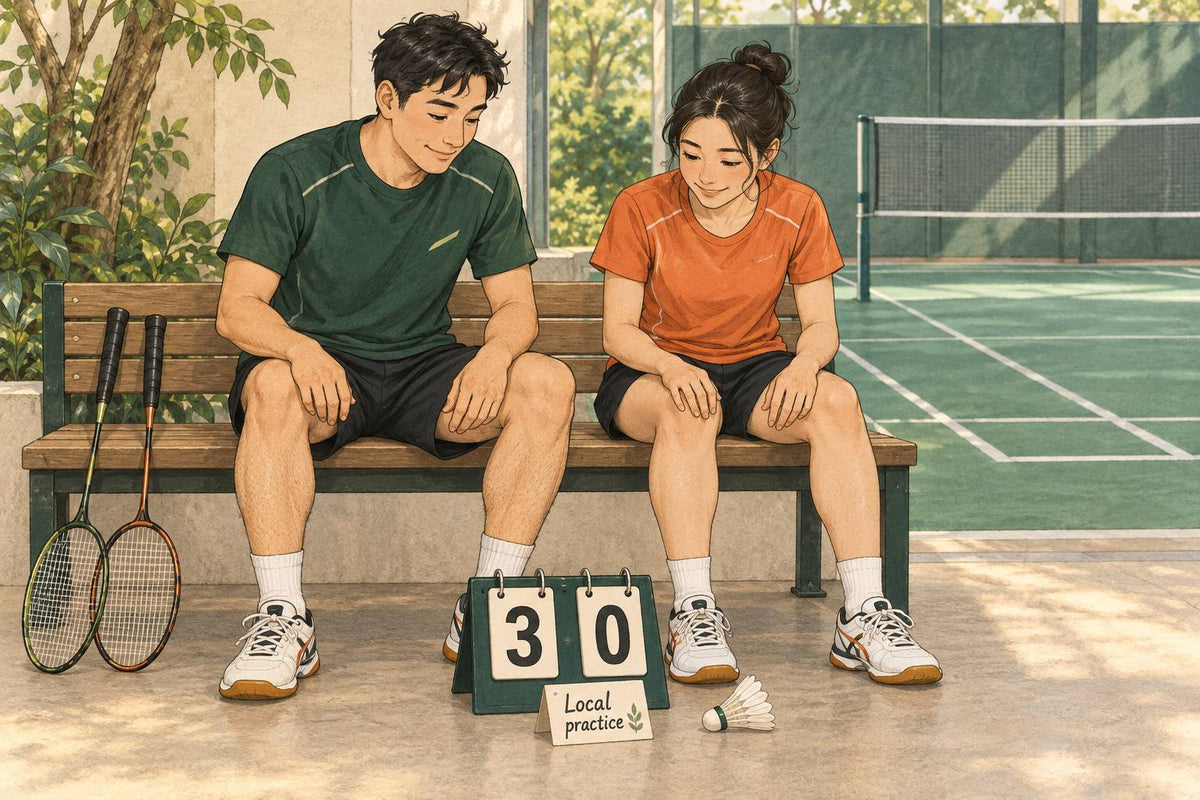
Badminton handicap scoring gives an uneven match a fairer starting point or a focused condition, so both sides still have decisions to make after the serve. The aim is not to make a stronger player lose politely. It is to create rallies in which the weaker side can practise, defend, attack, and occasionally win on its own play.
Related reading: If your group also needs a short format that fits a busy session, see our guide to short badminton scoring formats.
What should badminton handicap scoring achieve?
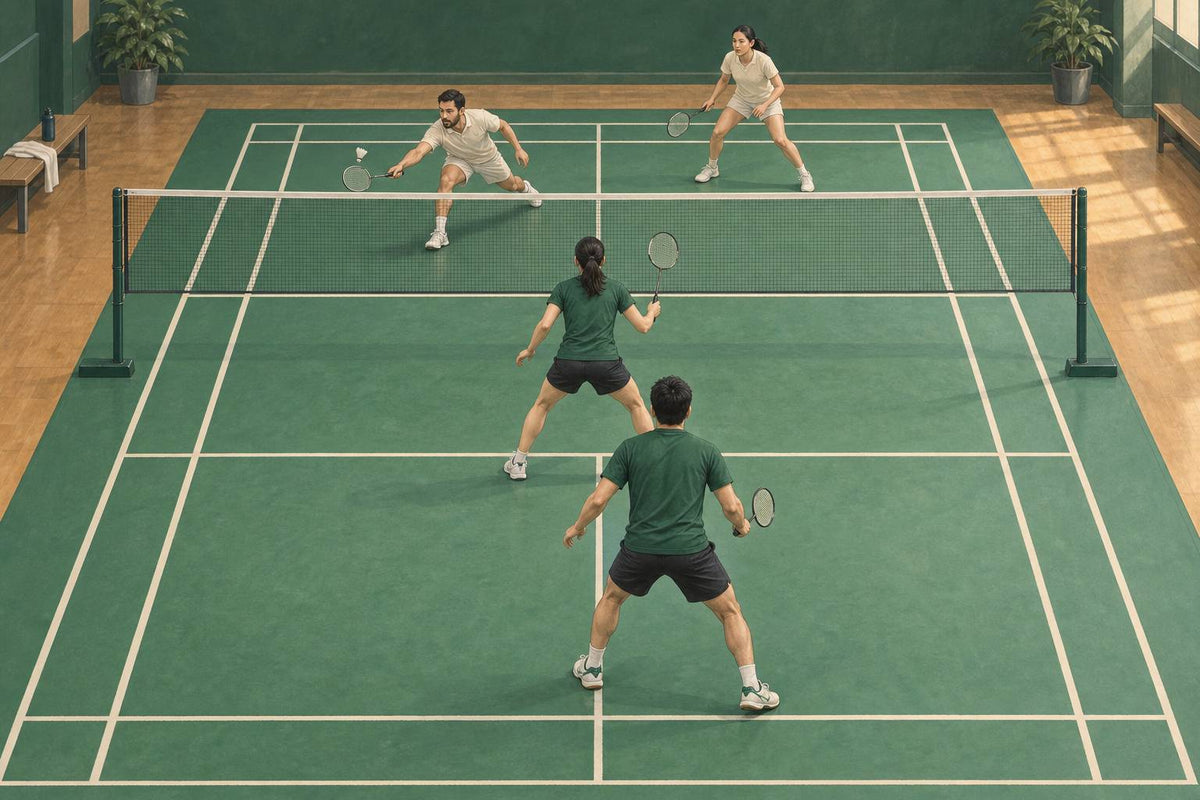
A useful handicap makes the score uncertain without removing normal badminton choices. The weaker side should reach more playable exchanges, while the stronger side should still need good serves, movement, placement, and shot selection. If every rally ends after one forced lift or one smash, the handicap is too small or aimed at the wrong problem.
Use handicap scoring for a local game between people or pairs with a clear gap that night. It can work at a drop-in, a family game, a practice pairing, or an informal club ladder. It is less useful when the gap is mostly temporary, such as an unfamiliar partner pairing or a player returning from a short break. Play one ordinary warm-up game first if you are unsure what gap you are trying to address.
Agree the format before the first serve: the target score, the close-finish rule, the one handicap method, and when you will review it. A local game to 11 can be a practical test because it ends quickly, but it is a group convention. Write down what happens at 10-all rather than assuming everyone means the same thing.
Keep the language neutral. Say, “Let’s make this one competitive,” rather than assigning a permanent rank. The result is information about that matchup and that format, not a verdict on either player.
Which local handicap should you try first?
Choose one local handicap that addresses the visible mismatch, then leave ordinary rules in place. A points head start is usually the clearest first test because it changes the scoreboard without changing strokes or court geometry. Use a restriction only when it creates a skill task rather than an artificial trap.
| Local method | Worked example | Best use and failure mode |
|---|---|---|
| Points head start | Play to 11; the developing player begins at 4–0. | Best first choice when rallies are already possible. Too large a start can decide the game before it develops. |
| Different local targets | The stronger player needs 11; the developing player needs 8. | Useful when the group wants a visible race. Define the close-finish rule first, because this is a local format. |
| Shot restriction | The stronger player may not smash from the rear court in the first three shots of a rally. | Useful when one finishing shot ends every exchange. A blanket smash ban can flatten the stronger player’s normal game. |
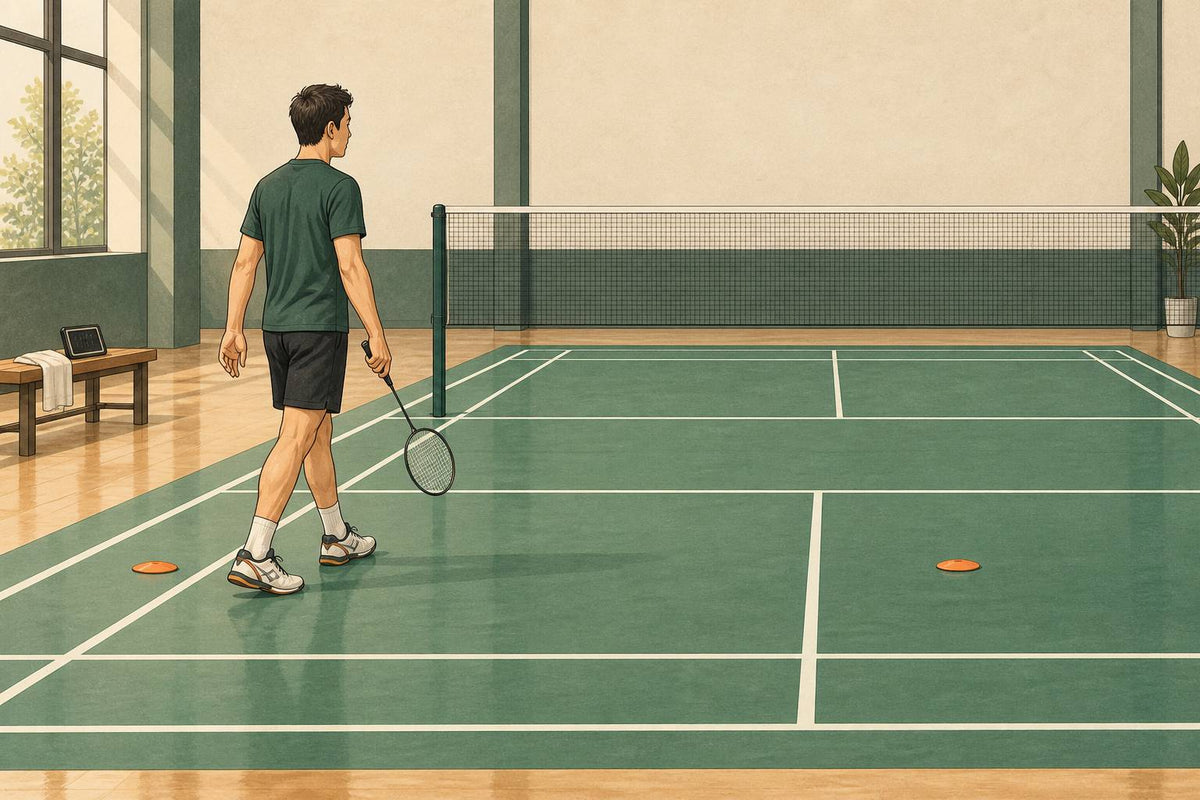
| Court-area condition | The stronger player uses the singles sidelines while the developing player uses the full doubles width. | Useful only when both players understand the boundary. It becomes confusing in doubles, so keep it for a deliberate singles practice game. |
Use the table as a choice order rather than a menu. Start with points when normal badminton is already possible. Choose a shot condition only when one repeated finishing pattern is preventing the weaker side from learning. Save the court-area condition for a planned singles practice game, where both players can remember the boundary without an umpire. If the group keeps disputing the condition, simplify back to a points head start for the next game.
Do not stack methods at the start. A four-point lead plus a smash ban plus a court restriction gives you no useful information when the game feels wrong. Try one method, record the score and the rally quality, then make one change for the next game.
How do you set a handicap without overthinking it?
Set a modest starting handicap, play one short game, then adjust from what happened rather than from player labels. The score matters, but the better diagnostic is whether the weaker side had repeatable chances to serve, return, move into a rally, and make a purposeful next shot.
- Name the mismatch. Say what is happening now: “The serve return is ending the rally,” or “The stronger pair reaches every lift early.” Avoid broad labels such as “beginner versus advanced.”
- Choose one test. For example, start the weaker side at 3–0 in a local game to 11. Confirm the target, who serves first, and what happens if the score becomes tied near the end.
- Play the full game. Do not change the rule halfway through because one side wins three rallies. Let the group see whether the original balance produces meaningful play.
- Review two observations. Record the final score and one rally-quality note, such as “the weaker side reached four-shot rallies but could not return flick serves.”
- Move one step. If the game was still lopsided, add one or two more starting points or choose one targeted condition. If the stronger side could barely score, reduce the start by one or two points.
A sample sequence might be 3–0, then 5–0, then 4–0 after a close game. The numbers are not a universal scale. They are a small, reversible way to find a match that both sides want to play again.
If a club repeats the process, keep a simple local note: pairing, format, starting handicap, score, and one adjustment. That helps the organiser apply a consistent starting point without pretending that the note is an official player ranking.

When is a handicap game an official match?
Treat a local head start, target race, or shot restriction as a local rule unless the event organiser has specified a formal handicap format. Official BWF handicap provisions are narrower than many social-game ideas: they retain the Law 7 score required to win a game and specify related changes such as the end-change point.
The current BWF Handicap Matches provision says the score required to win does not vary from Law 7. It changes the change-of-ends point in a third game or a one-game match to half the points required to win, rounded up when necessary. Follow the published event rules when an organiser calls a match official; do not import a casual club rule into a sanctioned draw.
The underlying Laws also state that a match is best of three games unless otherwise arranged and that the side winning a rally adds a point. The BWF Laws of Badminton are the reference for ordinary scoring, service, faults, lets, and court rules. A local handicap should change only what your group has actually agreed to change.
For a club round robin, publish the local scoring and handicap rule before the first match, alongside the format and tie-breakers. Our badminton round-robin guide covers the organiser side of making those local rules visible.
A two-sentence pre-game script
“Let’s play one game to 11. You start at 3–0, and we will review the score and rally quality before the next game.”
“This is our local practice rule for this pairing. If it is still one-sided, we will change one thing, not three things.”
The best handicap is the smallest adjustment that makes the next rally worth playing. Keep the format clear, let one short game give you evidence, and change the rule with the same respect you would want when the matchup is reversed.

Leave a comment
This site is protected by hCaptcha and the hCaptcha Privacy Policy and Terms of Service apply.