
Last updated: July 2026 · Written by the team at Badminton House
Quick Answer: Badminton Nutrition Before Match
For most club players, the best badminton nutrition before match play is a carbohydrate-rich meal 2–3 hours before, a light snack 30–60 minutes before, and fluids adjusted to your sweat rate and gym conditions.
Default
Best choice: eat a carb-focused meal 2–3 hours before play with moderate protein and vegetables, keep heavy fried or high-fat foods away from match time, and drink about 500 ml of fluid roughly 2 hours before exercise.
30–60 min
If you are close to court time, choose a light, familiar, easy-to-digest snack such as a banana or toast with peanut butter and banana instead of trying a new food on game day.
Long night
For tournaments or long club nights, bring quick-digesting carbohydrates for breaks and consider electrolytes when the session is long, hot, humid, or in a poorly ventilated Canadian gym.
Badminton nutrition before a match is easy to overlook until your legs feel heavy halfway through a club night, your focus drops in a third game, or you finish a tournament day feeling completely drained. Badminton is a high-intensity sport built on quick sprints, sharp changes of direction, fast reactions, and repeated rallies, so your body needs usable fuel and enough fluid before you step on court.
The goal is not to eat like a professional athlete or force supplements into your routine. For most Canadian club players, the practical win is simpler: eat a carbohydrate-focused meal a few hours before play, use an easy-to-digest snack closer to court time, hydrate early enough that you are not chugging water at the last minute, and recover with carbohydrates plus protein after the session.
Canadian gym conditions can vary a lot, too. A winter drop-in in a cold community centre feels different from a humid summer club night or a poorly ventilated tournament hall, so your fluid and electrolyte needs may change by venue, season, session length, and sweat rate.
Fuel your body, then check your court setup. Badminton House does not sell food, drinks, or supplements, but we do help Canadian players get match-ready gear with free shipping in Canada; start with our badminton racket collection if your equipment also needs an upgrade.
In This Guide
- Why Fueling Matters for Badminton Energy and Recovery
- What Should You Eat Before Playing Badminton?
- How Much Should You Drink Before and During Badminton?
- What Should You Eat During Long Club Nights or Tournaments?
- What Should You Eat After Badminton to Recover?
- Use the 4 R’s: Rehydrate, Refuel, Repair, Rest
- Gear Note: Pack Fuel, But Don’t Force Supplements
- Which Fueling Plan Should You Choose?
Why Fueling Matters for Badminton Energy and Recovery
Badminton is not a steady jog. A normal game asks for quick sprints, sharp reflexes, explosive changes of direction, repeated lunges, and constant movement. That stop-start intensity is exactly why pre-match badminton nutrition matters: you are trying to arrive on court with enough usable energy and fluid to compete well, not just survive the first game.
For amateur players in Canada who train or play club nights several times a week, fueling is also about the next session. Better pre-play food and hydration can help sustain energy, support concentration, reduce the chance of fatigue getting ahead of your footwork, and make recovery between matches or training nights easier.
Think of nutrition as part of your training plan. Court fitness still matters, but food and fluids help you express that fitness during rallies. If stamina is your bigger limiter, pair this guide with our badminton fitness and stamina guide.
Badminton House does not stock food, drinks, water bottles, electrolyte products, or supplements, so this guide focuses on practical habits you can build with normal grocery-store or pharmacy options. Choose foods and fluids you already tolerate well, especially before league nights or tournaments.
What Should You Eat Before Playing Badminton?

Good badminton nutrition before match play is mostly about timing: eat enough carbohydrate early enough to feel fuelled, then keep the final snack light so you are not stepping on court with a heavy stomach.
| Timing | What to eat | Why it helps |
|---|---|---|
| 2–3 hours before | A balanced meal built around carbohydrates, with moderate protein, vegetables, and minimal fat. | Gives you time to digest while topping up energy stores for repeated rallies, footwork bursts, and recovery between games. |
| 30–60 minutes before | A light, easy-to-digest snack such as a banana, toast, oats, or another familiar carb-based option. | Provides quick fuel without sitting heavily in your stomach when warm-up starts. |
The 2–3 Hour Meal: Carbs First, Not Grease First
Your pre-play meal should be carbohydrate-focused, because carbs are the easiest fuel source to use for high-intensity movement. Reliable options include rice, pasta, oats, whole-grain bread, bananas, potatoes, and similar foods that you already tolerate well.
A practical plate could be brown rice with grilled chicken and vegetables. Another simple option is whole-wheat toast with peanut butter and a banana, keeping the peanut butter portion modest so the meal does not become too heavy. The goal is not to feel stuffed; it is to feel steady, comfortable, and ready to move.
Before a match, club ladder night, or tournament block, avoid making the meal high in fat, fried foods, or very high-fibre foods. Those can slow digestion or leave you feeling bloated when you need to lunge, jump, and recover quickly.
Simple Canadian club-night rule: if you are leaving work or school for a 7 p.m. session, aim for your main meal in the late afternoon, then use a small familiar snack closer to court time.
The 30–60 Minute Snack: Keep It Familiar and Easy
Closer to play, the snack should be small and easy to digest. A banana, a piece of toast, a small bowl of oats, or another familiar carbohydrate snack is usually a safer choice than a heavy meal. If you are playing multiple matches, the snack should help you arrive on court energized without feeling full.
This is especially useful for players training several nights a week, because arriving under-fuelled can make footwork feel flat before the session is even halfway done. For the physical side of building that repeat-rally engine, see our Badminton Fitness Training: Stamina Guide for Canadians.
Do Not Test New Foods on Match Day
Match day is not the time to experiment with a new drink, a new bar, a new supplement, or a meal you have never tried before. Stick with foods and drinks you already know sit well during hard movement. The best pre-match food is not the trendiest option; it is the one that gives you steady energy and lets you forget about your stomach once the rally starts.
How Much Should You Drink Before and During Badminton?
Hydration is part of your pre-match nutrition routine, not something to fix after the first game when your mouth is already dry. A practical starting point is to drink about 500 ml of fluid roughly 2 hours before exercise, which gives your body time to absorb fluid and pass any excess before you step on court.
Another useful guideline is 5–7 ml of fluid per kilogram of body weight in the 4 hours before exercise. Treat that as a range, not a rule: your best amount depends on your body weight, sweat rate, how hot the gym is, how long you are playing, and whether you are coming straight from work, school, or a long commute.
Canadian gym reality: indoor badminton courts can feel very different by season and venue. A humid summer club night, a poorly ventilated school gym, or back-to-back tournament matches may increase your sweat and electrolyte needs compared with a short winter drop-in.
| When | Simple hydration target | How to adjust it |
|---|---|---|
| 4 hours before play | Use 5–7 ml per kg body weight as a starting range. | Increase carefully if you know you sweat heavily, the gym is hot, or the session will be long. |
| About 2 hours before play | About 500 ml of fluid is a practical benchmark. | This timing helps you hydrate while still leaving time for a bathroom break before warm-up. |
| During games and breaks | Sip enough to avoid large fluid losses, rather than chugging at once. | The goal is to prevent excessive dehydration above 2% body-weight loss from water deficit. |
| Long club nights or tournaments | Plan fluid across the whole session, not only the first match. | If you sweat heavily or play for hours, consider sodium-containing foods or electrolyte options from grocery stores or pharmacies. |
During badminton, drinking is about staying ahead of excessive dehydration without making your stomach feel heavy. Small, regular sips between rallies, games, or matches are usually easier to tolerate than trying to catch up with a large amount all at once.
If you want a more personal check, weigh yourself before and after a typical hard session and note roughly how much fluid you drank. A large drop in body weight after play usually means you are not replacing enough fluid for your sweat rate. This is especially useful for players who train several nights per week or compete in multi-match events.
More is not always better. Overdrinking before play can lead to disruptive urination, and in extreme cases can contribute to hyponatremia, where blood sodium becomes too low. Start with the guidelines above, then adjust based on your body, your schedule, and how you actually feel on court.
What Should You Eat During Long Club Nights or Tournaments?
For a normal drop-in night, you may not need much food during play if you ate well beforehand. But once the session stretches into multiple games, league matches, or a tournament day, small top-ups can help you avoid that late-session fade.
During breaks between games or matches, choose quick-digesting carbohydrates: fuel that gives fast energy without sitting heavy in your stomach. A banana, a simple carb-based snack, or another food you already know you tolerate is usually a better court-side choice than something greasy, very high in fibre, or completely new on match day.
| Situation | Better choice | Why it works |
|---|---|---|
| Break between games or matches | Quick-digesting carbohydrate you already tolerate | Provides fast energy without feeling heavy during rallies. |
| Long club night | Water plus small carb top-ups as needed | Helps maintain energy and hydration across repeated games. |
| Hot or poorly ventilated gym | Fluid plus an electrolyte source if the session is long or you sweat heavily | Long or hot sessions can increase electrolyte needs, especially when sweat loss is high. |
| Tournament day | Familiar snacks packed in your bag | Reduces the chance of stomach surprises when the match schedule changes. |
Canadian indoor badminton can vary a lot: one winter gym may feel cool and dry, while another summer club night can be warm, humid, and poorly ventilated. If you know a venue runs hot, plan your fluids, towel, and snack access before you step on court.
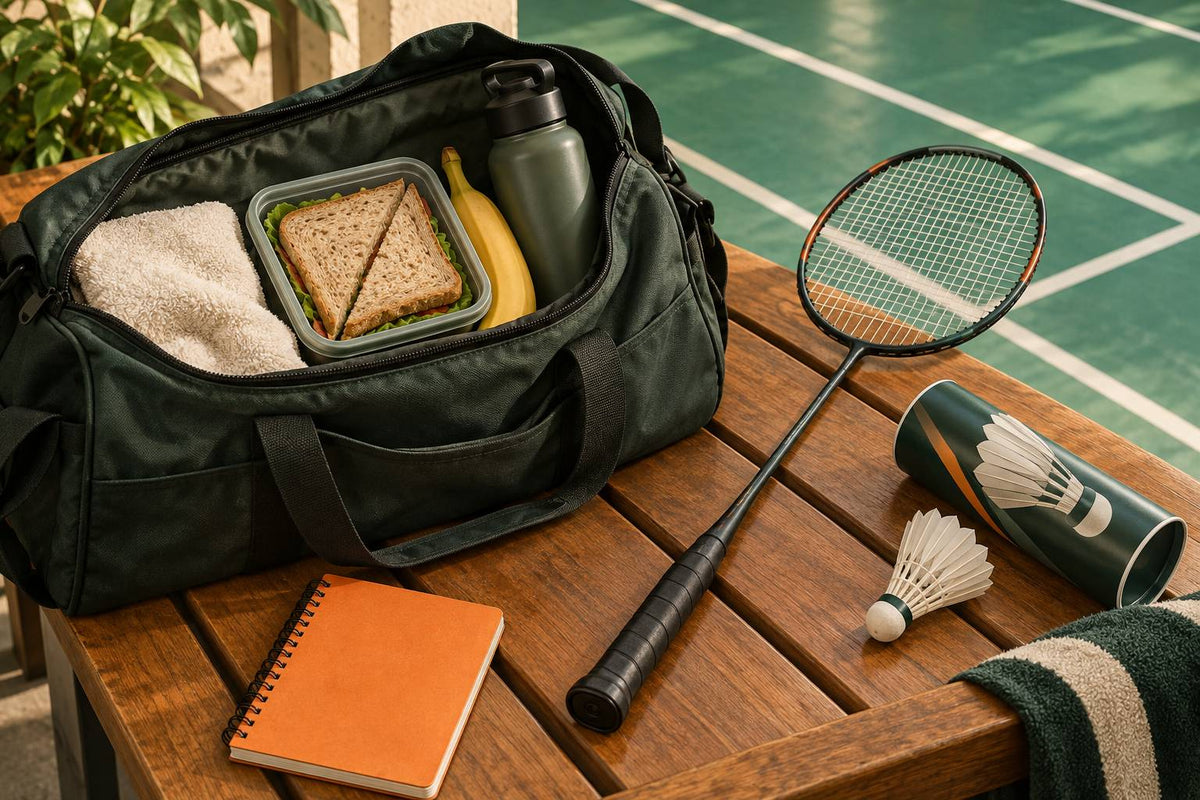
Pack it before you need it. For practical court items like a water bottle and towel, use our Badminton Tournament Bag Checklist before your next club night, league match, or tournament.
Badminton House does not stock food, drinks, water bottles, electrolyte products, or supplements, so keep this simple: buy fuel you trust from grocery stores or pharmacies, test it in practice, and pack it in a way you can actually reach between games.
What Should You Eat After Badminton to Recover?
After a hard badminton session, your first goal is simple: replace the carbohydrate you burned, add protein for muscle repair, and get fluids back in. This matters most if you play long club nights, train several times a week, or have another match later the same day.
The most useful recovery window is the first 30–60 minutes after exercise, when your muscles are especially ready to take up carbohydrate and start restoring glycogen. For a demanding session, a practical target is:
- Carbohydrate: about 1.0–1.5 g per kg of body weight after play to support glycogen restoration.
- Protein: about 0.3–0.4 g per kg of body weight after play to support muscle protein synthesis.
You do not need to turn this into a spreadsheet after every drop-in. For most amateur players, the takeaway is easier: within an hour, choose a carb-plus-protein snack, then eat a proper meal within 1–2 hours.
| Recovery option | Why it works | Best fit |
|---|---|---|
| Chocolate milk | Convenient mix of carbohydrate, protein, and fluid. | Fast recovery after a late club night. |
| Smoothie with fruit, Greek yoghurt, and oats | Fruit and oats provide carbohydrates; Greek yoghurt adds protein. | Players who struggle to eat a full meal right away. |
| Tuna sandwich | Bread covers carbohydrates; tuna adds protein. | Easy packed option for leagues or tournaments. |
| Chicken and rice | Rice helps refill carbohydrate stores; chicken adds protein. | Your proper meal within 1–2 hours after play. |
| Protein bar with fruit | The bar adds protein; fruit adds quick carbohydrate. | A backup in your bag when you are going straight from court to transit or work. |
If you only played a light social hour, you may not need a large recovery snack. If you played repeated games, trained hard, or have another session soon, be more intentional with the carbohydrate and protein targets above.
Pack recovery food before you leave home. A small snack is easy to forget when you are focused on rackets and shoes, so add it to your club-night packing routine alongside your towel and water bottle. For a full packing list, see our badminton tournament bag checklist.
For multi-day events, recovery is not just about one snack. Get something useful in within the first hour, then follow it with a real meal that you already know agrees with your stomach.
Use the 4 R’s: Rehydrate, Refuel, Repair, Rest

If the previous section tells you what to eat after badminton, the 4 R’s give you a simple way to organize recovery after club night, league play, or a tournament day: rehydrate, refuel, repair, and rest.
| Recovery step | What it means after badminton | Practical habit |
|---|---|---|
| Rehydrate | Replace fluid lost through sweat and help restore normal hydration. | Drink water after play, and pair it with food containing sodium to help replenish electrolyte losses. |
| Refuel | Use carbohydrates to rebuild the glycogen stores you used during fast rallies, footwork, and repeated games. | Choose the carbohydrate part of your recovery meal or snack first, especially if you play again soon. |
| Repair | Include high-quality protein to support tissue growth and repair after hard movement and repeated lunges. | Add a protein source to the recovery food pattern from the previous section rather than relying on carbohydrates alone. |
| Rest | Recovery is not only food and fluid; rest gives your body time to adapt before the next session. | Treat sleep and a calm post-play routine as part of training, not an optional extra. |
The nutrition side works best when it is paired with a physical reset. A short, sensible cool-down can complement your recovery meal and hydration plan; see our badminton cool-down stretches guide for a simple post-play routine.
Gear Note: Pack Fuel, But Don’t Force Supplements
Good badminton nutrition before a match is mostly about planning: bring food you already tolerate, drink enough before and during play, and avoid turning club night into a supplement experiment. For most club players eating a balanced diet, supplements are not essential.
Badminton House does not stock food, drinks, water bottles, electrolyte products, or supplements. Our accessories collection is for badminton accessories, not nutrition or hydration products, so buy match snacks, drinks, and hydration items from grocery stores or pharmacies.
Keep the kit simple. Pack your usual snack, your own drink, and a towel in your badminton bag. If you are building a full club-night setup, use our badminton tournament bag checklist for the gear side.
A practical shopping rule
- Food and hydration: buy from grocery stores or pharmacies, and stick with items you have used successfully before playing.
- Supplements: do not treat them as required for badminton. Balanced meals, familiar snacks, and sensible hydration cover the needs of most club players.
- Badminton gear: if you need help choosing rackets, strings, grips, shoes, bags, or shuttlecocks, contact Badminton House for gear advice. We can help with badminton equipment decisions, not personal nutrition advice.
Canadian players ordering badminton gear should still buy nutrition items separately: get fuel locally, then pack it with the badminton equipment you already trust.
Which Fueling Plan Should You Choose?
Use your start time, session length, and stomach comfort to choose the simplest plan that fits. The safest default for badminton nutrition before match play is still: familiar carb-focused food, steady hydration, and no game-day experiments.
| Choose this if... | Best match-day approach | Hydration cue | Watch out for |
|---|---|---|---|
| You have 2–3 hours before play | Eat a balanced, carb-rich meal with moderate protein and vegetables. Practical examples include brown rice with grilled chicken and vegetables, or whole-wheat toast with peanut butter and a banana. | A common pre-exercise target is about 500 ml of fluid roughly 2 hours before exercise, or 5–7 ml per kg body weight in the 4 hours before exercise. | High-fat, fried, or very high-fibre meals can slow digestion or cause bloating. |
| You only have 30–60 minutes | Choose a light, easy-to-digest snack. A snack about an hour before playing gives your body time to digest and use the nutrients. | Sip fluid rather than forcing a large amount right before warm-up. | Trying a new food or drink on match day. Stick with what you already know works. |
| You are playing a long club night or tournament | Bring quick-digesting carbohydrates for breaks between games or matches so you can top up energy without food sitting heavy in your stomach. | In long or hot sessions, electrolytes can matter because plain water alone may not replace electrolyte losses. | Warm, humid, or poorly ventilated indoor gyms can raise sweat needs, so adjust to your own sweat rate and schedule. |
| You train several nights a week | Prioritize recovery after play: carbohydrates plus protein within 30–60 minutes can support glycogen replenishment and muscle repair. | Rehydrate after play with enough water and food containing sodium to help replace electrolyte losses. | Skipping recovery food when the next session is soon. A proper meal within 1–2 hours is a useful follow-up. |
| You are unsure what your stomach can handle | Keep it familiar and simple: whole-grain bread, rice, pasta, oats, bananas, or potatoes are common carbohydrate options before play. | Individualize your plan. Sweat rates vary, and weighing before and after exercise can help estimate fluid loss. | Overdrinking before play, which can lead to disruptive bathroom trips and, in extreme cases, low blood sodium. |
Pack the plan, not just the food. Use the Badminton Tournament Bag Checklist to remember basics like a water bottle and towel. For nutrition items, grocery stores or pharmacies are the right stop.
If you are also replacing court gear for club nights or tournaments, Badminton House ships free within Canada.
Get new badminton guides by email
Join the Badminton House list for occasional emails with new guides, technique tips and news from our club in Moncton.
By subscribing, you agree to receive Badminton House emails and can unsubscribe anytime.
Fueling is personal, but the badminton part is where we can help. We play the sport, understand long club nights and tournament days, and can point you toward gear that fits how often you train, how hard you move, and what you are trying to improve. If you want a second opinion on rackets, shoes, strings, grips, or what to pack for match day, contact us and we’ll help you choose with a player’s eye.
Build a match-day setup that supports your game from warm-up to recovery.
Shop Badminton GearFree shipping in Canada · 14-day returns · Canadian badminton specialty shop

Leave a comment
This site is protected by hCaptcha and the hCaptcha Privacy Policy and Terms of Service apply.