
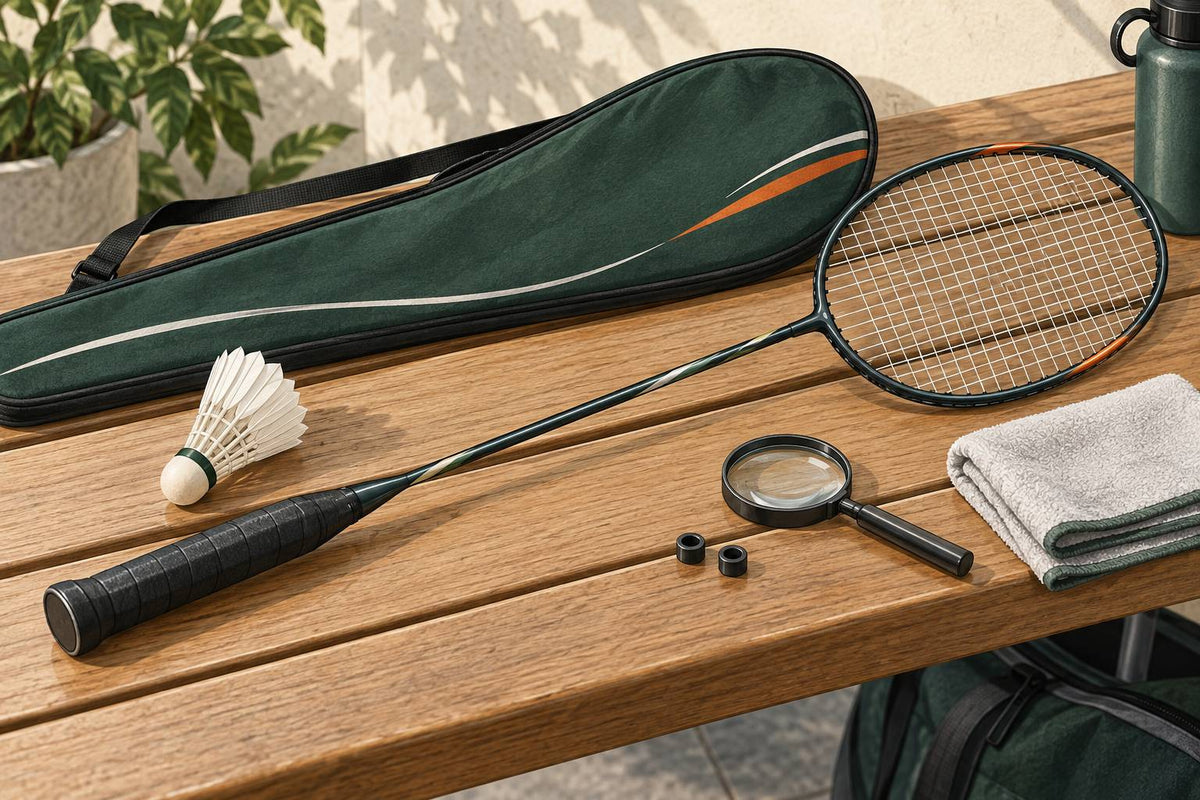
Last updated: July 2026 · Written by the team at Badminton House
Quick Answer: Racket Care
Protect your badminton racket by avoiding clashes, cold-car storage, extreme tension jumps, cracked grommets, and loose bag transport.
Daily
Best habit: use a case, keep the racket dry, and do not leave it loose in a packed bag.
Monthly
Inspect frame, grommets, strings, grip, and bumper areas before small damage becomes expensive.
Stringing
Stay within a sensible tension range for your racket, technique, and stringer recommendation.
Most racket damage is not mysterious. It comes from clashes, bad storage, old grommets, high tension on tired frames, and Canadian temperature swings. A little care helps prevent cracked frames, warped heads, premature string breaks, and grip problems.
This badminton racket care guide focuses on prevention. If you are choosing a new racket, start with our racket buyer guide. If you are unsure about tension, use the string tension guide. To keep every piece of your kit in shape, follow our badminton gear maintenance checklist.
How Should You Store and Transport a Badminton Racket?

Keep the racket in a sleeve or dedicated compartment, dry damp gear after play, and avoid long storage in a hot or freezing car. Let cold equipment return to indoor conditions before play, and ask the stringer about visible damage or repeated breakage.
| Risk | What Happens | Better Habit |
|---|---|---|
| Cold car | Strings, grip, and frame materials can become less forgiving. | Bring rackets indoors after winter play. |
| Hot car | Heat can age grips, adhesives, and strings faster. | Avoid trunk storage during summer errands. |
| Loose bag | Frame rubs against shoes, bottles, and other rackets. | Use a sleeve or racket compartment. |
| Damp storage | Grip breaks down and the bag smells fast. | Open the bag and dry gear after play. |
Need a backup racket or accessories? Browse badminton rackets and racket accessories, or ask us before you restring a questionable frame.
Why Do Frames Crack and Strings Break Early?

Frame clashes cause obvious damage. Grommet and string issues are sneakier. A small cracked grommet can create a sharp edge that breaks strings early, and repeated high-tension stringing can punish a frame that already has damage.
| Inspection Point | Look For | Action |
|---|---|---|
| Frame edge | Paint chips with soft spots, raised cracks, or dents. | Ask a stringer before increasing tension. |
| Grommets | Cracked, sunken, missing, or sharp plastic. | Replace damaged grommets during restringing. |
| Strings | Deep notching, fraying, and strings that stay badly misaligned. | Plan a restring before a tournament or league match. |
| Grip and cap | Loose finishing tape, twisting grip, or cap movement. | Regrip and inspect before it affects swing control. |
Stop using a racket with a broken stringbed and arrange a restring with a frame and grommet inspection. Calendar rules based on weekly sessions are only planning aids; string condition, response and use determine whether an earlier change is needed.
String advice · Racket care reminders · Canadian badminton specialty shop
When Should You Inspect Your Racket?
- After any racket clash: check the impact area immediately and again before restringing.
- Before raising tension: inspect grommets and frame condition first.
- Before tournaments: check your primary and backup racket at least a week early.
- After winter travel: let the racket warm up indoors before hard hitting.
- When strings break repeatedly in the same area: suspect grommet or frame issues, not just bad luck.
The BWF Laws cap a competition racket at 680 mm in length and 230 mm in width, but they do not protect your frame from everyday neglect. Racket care is a player habit: inspect, store, transport, and restring with the frame condition in mind.
Badminton Racket Care FAQ
Can I leave my badminton racket in the car?
Try not to. Canadian winter cold and summer heat are both rough on performance gear. Bring the racket indoors and avoid long trunk storage.
Do small paint chips mean the racket is cracked?
Not always. Paint chips can be cosmetic, but raised cracks, soft spots, dents, or repeated string breaks near the same area deserve a stringer inspection.
Why do my strings keep breaking near the frame?
Common causes include damaged grommets, mishits near the edge, old strings, or tension that is too high for the setup. Ask your stringer to inspect the grommet strip.
"A racket that is inspected before stringing is much less likely to surprise you during a match."
— Badminton House, Canada
Ask About Racket CareGear advice · Check current shipping and return terms

Leave a comment
This site is protected by hCaptcha and the hCaptcha Privacy Policy and Terms of Service apply.