
Last updated: July 2026 · Written by the team at Badminton House
Quick Answer: How Often to Restring
Inspect string wear and response regularly, and restring when the setup no longer performs predictably or a string breaks. The calendar ranges below are editorial planning examples, not fixed service requirements or measured lifespans.
Casual
Every 6-12 months, or sooner if the strings feel dull, frayed, or hard to control.
Weekly
Planning example: every 3-4 months for steady Canadian club play, depending on string type and tension.
2-3x/week
Every 1-3 months, especially if you train, play league matches, or use thinner strings.
Tournament
Before key events if the string bed has lost confidence, even when nothing is broken.
If you are wondering how often should you restring a badminton racket, the useful answer is not only a calendar date. Restring when your strings stop giving you predictable feel. For many players, that happens long before a string breaks.
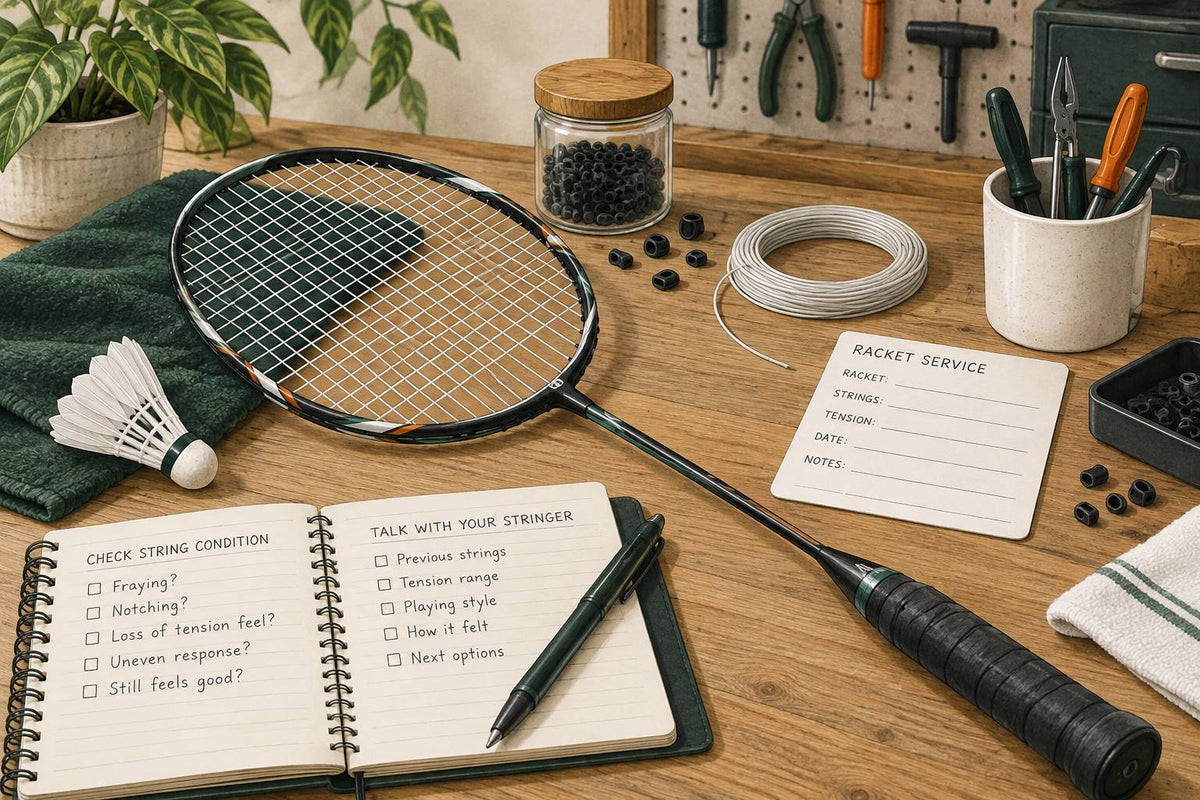
This badminton restringing guide uses practical ranges for casual play, weekly club sessions, training, and tournaments. It also shows how to spot dead badminton strings, what tension loss feels like, and what to ask your stringer so your next setup is easier to repeat.
Need local help? Our Moncton stringing service can help you choose a practical string and tension for your racket, playing level, and schedule.
In This Guide
How Often Should You Restring by Play Frequency?
A simple rule is to match restringing to how often you play and how much the feel has changed. Badminton strings lose tension through use, shuttle impact, temperature changes, and time in the bag. They can still look intact while playing flat.
- Occasional players: check feel every few months and consider restringing around 6-12 months.
- Once-a-week players: 3-4 months is a practical starting point.
- Two or three sessions per week: 1-3 months is more realistic, especially for sharper tensions.
- Competitive players: restring around important matches when the racket no longer feels predictable.
These are ranges, not guarantees. A nylon shuttle social player using durable strings may go longer. A hard-hitting doubles player using a thin string may need service much sooner.
How Do You Know Your Strings Are Dead?
Dead badminton strings usually announce themselves through feel before they announce themselves by snapping. If your racket used to feel lively and now feels vague, heavy, or inconsistent, the strings may be past their best window.

Your clears land shorter
You swing normally, but the shuttle does not travel as easily from back court to back court.
The sound changes
Fresh strings often sound crisp. Dead strings can sound lower, flatter, or uneven across the string bed.
Control feels vague
Blocks, drops, pushes, and net shots start floating or sitting up more than expected.
You see fraying, notching, or string movement
Visible wear between the mains and crosses means the strings are closer to breaking and may already feel tired.
When to restring badminton racket strings is partly about confidence. If you are adjusting your swing to compensate for the strings, the setup is already costing you consistency.
Restring Frequency Table
Use this table as an editorial planning aid. Condition, response and actual use take priority over these example intervals; they are not manufacturer replacement requirements.
| Player type | Typical play | Check restringing around | Main signs |
|---|---|---|---|
| Casual player | A few times per month | 6-12 months | Fraying, dull feel, shorter clears |
| Weekly club player | One session per week | 3-4 months | Loss of pop, uneven response |
| Regular training player | Two or three sessions per week | 1-3 months | Notching, lower control, less bite |
| League or tournament player | Frequent hard matches | Before key events or when feel drops | Confidence loss on touch, drives, and defence |
Practical string advice · Local service · Free shipping on $200+ for online gear orders
Tension Loss vs Breakage

Stop using a broken stringbed and arrange service. Tension loss is quieter. A racket can lose its crisp response while every string is still in place, which is why waiting for a snap is not always the best plan.
Tension drops most noticeably after a fresh restring, then continues to settle with play. That does not mean the racket becomes unusable right away. It means the feel changes gradually, and the right time to restring depends on when that change starts affecting your shots.
Breakage Depends on More Than Time
- Thin strings can feel lively but may wear faster.
- Higher tensions can feel crisp but leave less margin for mishits.
- Hard doubles drives and repeated off-centre contact can speed up wear.
- Grommet issues can cut strings faster and should be checked during service.
If you are also adjusting tension, read our badminton string tension guide before choosing a number. Change one variable at a time when possible: string model, tension, or racket.
Why Beginners Should Not Wait Forever

Beginners often assume restringing is only for advanced players. In reality, a very old or loose string bed can make learning harder because the shuttle response becomes inconsistent. You may blame your swing when the racket is no longer giving useful feedback.
You do not need an aggressive high-tension setup. A beginner-friendly restring can make the racket feel cleaner without becoming harsh. If your racket came with unknown factory strings and you have been playing regularly for months, a fresh practical setup is often worth considering.
New racket note. If your frame is old, cracked, warped, or outside its recommended tension range, ask before restringing. A good stringing decision protects the racket as well as the feel.
If your current racket no longer suits your level, compare options in our badminton rackets collection or read how to choose a badminton racket before replacing strings on the wrong frame.
What to Ask Your Stringer
A good restring is easier when you give the stringer context. You do not need technical language. Describe how often you play, what feels wrong, and what you want the racket to do better.
| Tell the stringer | Why it helps |
|---|---|
| How often you play and whether it is casual, club, league, or tournament play | Helps balance durability, feel, and restring frequency. |
| Your current string and tension, if you know them | Makes it easier to repeat what worked or adjust what did not. |
| Whether you want more power, control, comfort, or durability | Guides string and tension choice without guessing. |
| Any arm discomfort or recent string breakage pattern | Helps separate equipment questions from symptoms that need appropriate clinical advice; a stringer can check the frame, strings and grommets. |
For Moncton players, bring the racket in or contact Badminton House with your playing schedule and goals. For online shoppers elsewhere in Canada, keep a simple note in your phone with the string, tension, date, and how it felt after the first few sessions.
Related Guides
These guides pair naturally with restringing decisions, especially if you are rebuilding your setup instead of only replacing old strings.
Badminton String Tension Guide for Beginners
Choose a practical first tension.
How to Choose a Badminton Racket
Match frame, weight, and feel to your game.
Shop Badminton Rackets
Free shipping on $200+.
FAQ
How often should you restring a badminton racket if you play once a week?
The 3–4 month range above is a planning example. Inspect regularly and base the decision on wear, changed response and your own use, not the date alone.
Do badminton strings go dead if they do not break?
Yes. Strings can lose tension and response while still looking intact. Dead badminton strings often feel dull, move more, sound flatter, or make timing harder.
Should beginners restring before the strings break?
Often, yes. Beginners do not need high tension, but they do benefit from a consistent string bed. If old strings make every shot feel different, learning becomes harder.
What is the easiest way to know when to restring badminton racket strings?
Watch for a pattern: less pop, shorter clears, more string movement, fraying, or less control on touch shots. One bad session may be timing; repeated signs usually mean the strings deserve attention.
Can Badminton House help choose the string and tension?
Yes. Tell us your racket, playing level, and schedule. Our Moncton stringing service can recommend a practical setup instead of guessing from a tension number alone.
Fresh strings should make your racket feel predictable again.
Visit Badminton House for Moncton restringing, practical setup advice, and Canadian badminton gear for club, school, and tournament play.
Get Stringing HelpLocal stringing advice · Free shipping on $200+ · Canadian badminton specialty shop
Get 10% off your first order
Join the Badminton House list and we’ll email you a 10% welcome code — plus subscriber-only restock alerts, giveaways, and honest gear advice from players.
By subscribing, you agree to receive Badminton House emails and can unsubscribe anytime.

Leave a comment
This site is protected by hCaptcha and the hCaptcha Privacy Policy and Terms of Service apply.