
Last updated: July 2026 · Written by the team at Badminton House
Quick Answer: Grommet Replacement
Inspect carefully before play and before restringing; damaged grommets should be handled by a qualified stringer.
Inspect
Best choice: look for split, flattened, flared, sharp, sunken, or missing grommets.
Replace one
For one bad hole in an otherwise sound set, ask your stringer to swap that grommet.
Full check
Use when several grommets are failing, or any fitted protective strip is worn through, before new strings go in.
When a fresh restring snaps near the frame after only a few hits, the string may not be the real culprit. Check the tiny plastic tubes in each string hole before blaming tension or technique. Those grommets keep the string from rubbing the frame edge; once one is cracked, crushed, or missing, the next string job starts with a weak point. The right move is not to poke at a tensioned string bed or improvise a repair. Inspect the frame, note the bad hole, and have a qualified stringer replace the part before restringing.
Not sure if it is safe to restring? Send clear photos of the head and damaged hole through our contact page before booking work.
In This Guide
Why Grommets Matter More Than They Look
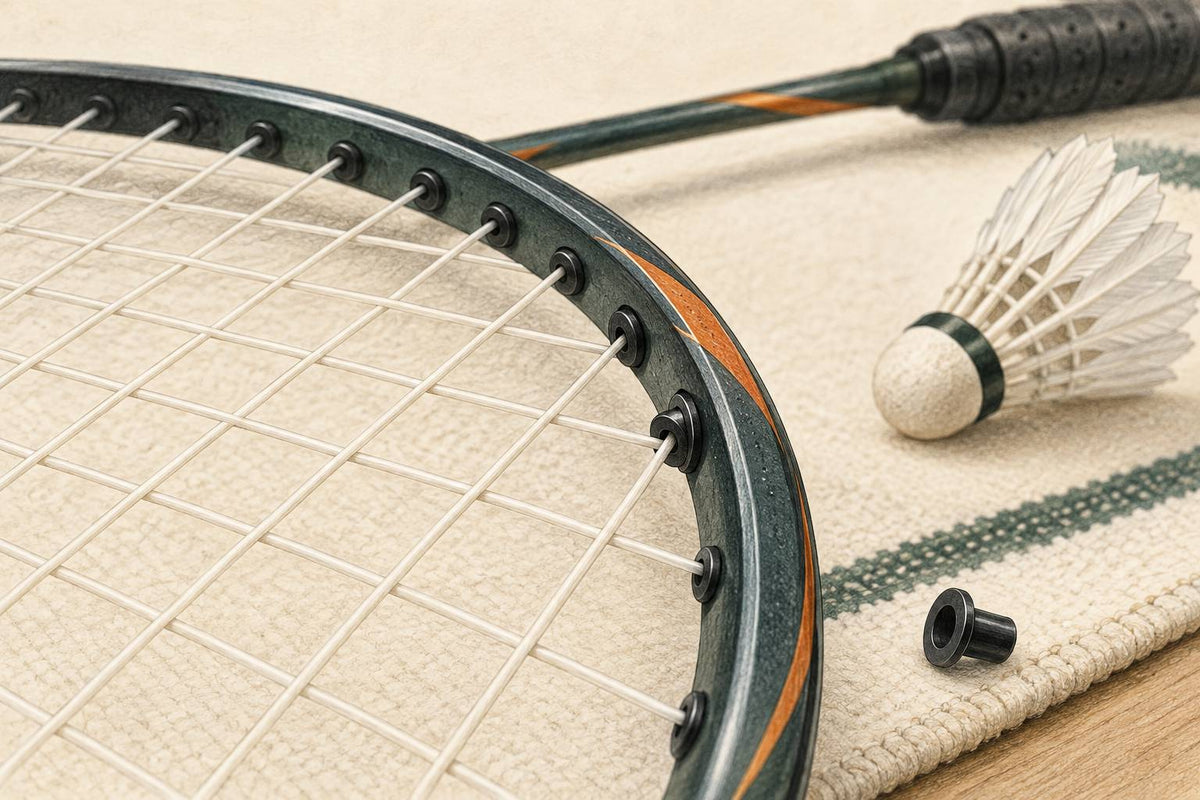
A badminton racket grommet is the small plastic tube seated in the frame hole where the string passes through. Its job is simple but important: it acts like a bumper between the string and the racket, so the string is not pulling directly against the frame edge.
Yonex safety guidance tells players to inspect a racket before use for wear, deterioration, and cracks, and specifically includes worn grommets in that pre-use check. Yonex also treats grommets as consumable parts, because a worn grommet can damage the string and make it break more easily.
A damaged grommet removes the smooth barrier at the string hole. GRSA guidance warns that a split grommet can expose the string to the drilled hole’s harsh edge, causing premature breakage. Treat that visible wear as a service signal rather than waiting for a new string job to fail.
Break location adds context. GRSA notes that a break close to the frame can come from an off-centre hit or a split grommet in that area. Record where the string failed and show the racket to the stringer; the location is a clue, not proof of one cause.
The Visual Signs: Split, Flattened, Flared, Sharp, Sunken, or Missing
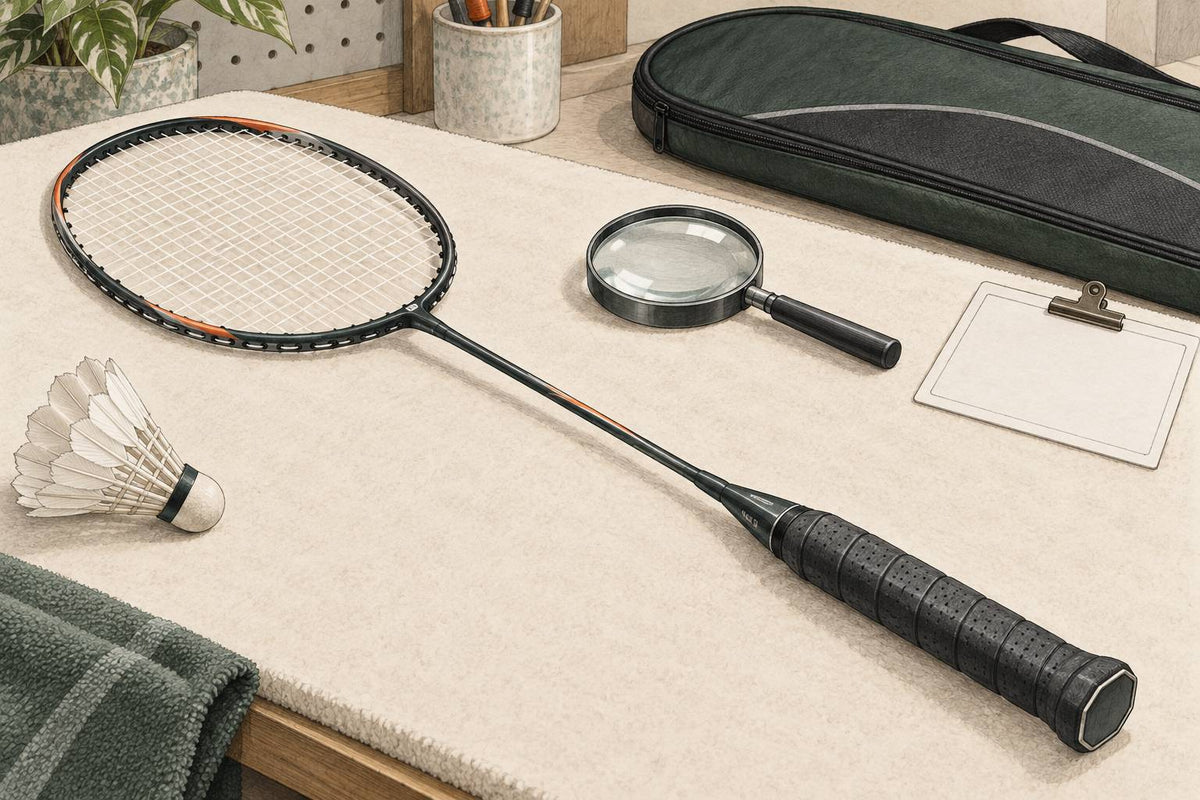
Look around the racket under good light and inspect every hole where the string enters the frame. You are looking for plastic that no longer forms a smooth, protective tube between string and the frame material.
- Split or sharp: a cracked grommet can leave a hard edge pressing into the string.
- Flattened, flared, or sunken: compare the visible shape with neighbouring grommets and flag any obvious mismatch for the stringer.
- Missing: the string may be contacting the bare frame directly, which raises the risk of cutting the string.
- Shared or double holes: check these carefully because two strings pass through one wider bore, making them more vulnerable to wear.
Also look for frame cracks and any fitted protective strip worn through to the frame. If breaks keep appearing near the same area, compare the pattern with our badminton string break location guide.

Badminton Racket Grommet Replacement Before Restringing
Grommets are not automatically swapped at every restring, because replacement adds service time and requires the correct parts. The key moment is the pre-stringing inspection: once the old strings are out, a qualified stringer can see damaged holes clearly and work on an unstrung frame instead of manipulating grommets under string-bed tension.
Model fit matters. Individual grommets must fit the frame holes and stringing pattern; any model-specific strip must also match the racket, so identify the correct parts before removal. If you are planning fresh strings, ask for the grommets to be checked first; a split or broken grommet can expose the new string to the frame-hole edge and cause an early break.
Common Grommet Questions
Can one bad grommet be replaced? Yes. If the other grommets and frame look sound, a qualified stringer can replace an isolated damaged eyelet before restringing.
Does every racket need a full set on a schedule? No universal interval fits every racket. Visible condition, the number of damaged points, any protective-strip wear, string-break location, and model-specific part fit are more useful than the calendar.
Can I adjust one while the racket is strung? Leave it alone. Photograph the area and have a qualified stringer assess it with the string bed removed and the frame properly supported.
Which Should You Choose?
| Choice | Choose this if... | Next step |
|---|---|---|
| Inspect | The frame looks normal and there is no obvious grommet wear. | Keep the pre-use check routine. Grommets are consumable parts, and wear can make strings break more easily. |
| Replace one | One damaged grommet appears in an otherwise sound set. | Ask a qualified stringer to replace it during restringing, before fresh string is pulled across that damaged point. |
| Full check | Several grommets are failing, or a fitted protective strip is worn through toward the frame. | Have the unstrung, mounted frame assessed for model-specific grommet replacement or, where fitted, protective-strip replacement; once a few fail, more often follow. |
Get 10% off your first order
Join the Badminton House list and we’ll email you a 10% welcome code — plus training guides, technique advice, and badminton updates.
By subscribing, you agree to receive Badminton House emails and can unsubscribe anytime.
If one grommet looks different from its neighbours, record the location and make that observation part of your next service conversation. The stringer can then judge the whole unstrung frame, confirm the part fit, and protect the new string job at the point that needs attention.
Keep your maintenance kit ready before small wear becomes a bigger racket problem.
Browse AccessoriesExplore racket-care essentials.

Leave a comment
This site is protected by hCaptcha and the hCaptcha Privacy Policy and Terms of Service apply.