
Last updated: July 2026 · Written by the team at Badminton House
Quick Answer: Badminton Racket Rattle
A new rattle is not something to play through; stop, inspect safely, then sort it into one of three states.
Stop play
Default: cracks, looseness, impact marks, or a failed twist/flex check mean no court use until inspected.
External part
Noise near butt cap, cone, grip layers, or grommets may be serviceable after confirmation.
Internal noise
Sound inside the handle or shaft needs professional or warranty inspection; keep strings intact.
If your badminton racket rattles when you shake it, do not jump straight to “the frame is cracked.” In the shop, we first ask where the sound seems to travel: butt cap, cone area, grip layers, grommets, handle, shaft, or the T-joint between head and shaft. A small loose part can sound dramatic, while a quiet internal click can be the one that deserves caution.
The goal is triage, not guesswork. Stop using the racket if the noise appears with looseness, cracking, impact marks, or a change in feel. If it sounds external and the racket feels solid, work through safe checks before assuming structural damage.
Need a second opinion? Send a clear photo/video and what you hear through our contact page before you keep playing.
In This Guide
Why a badminton racket rattle has multiple possible sources
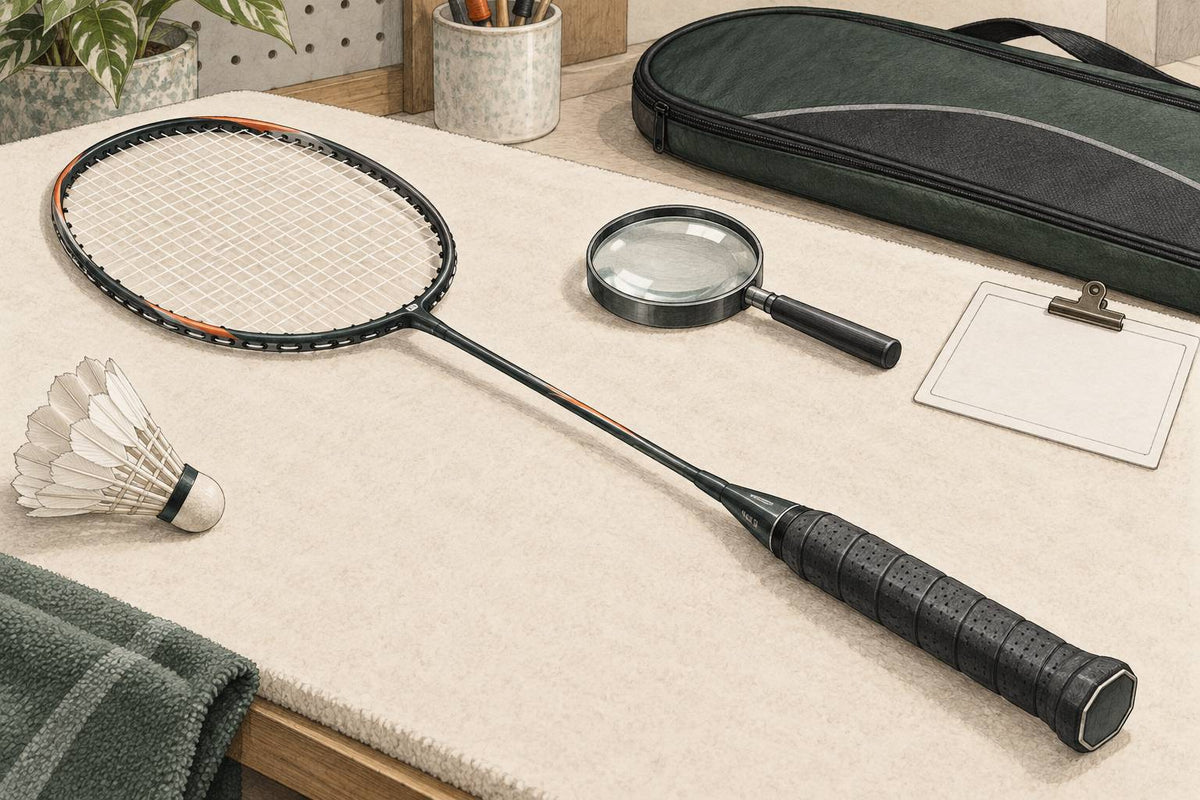
A badminton racket is a small object, but it is not one simple solid part. It includes a strung head or hoop, a shaft, and a head-to-shaft junction whose construction varies by model; a separate tubular T-joint is one older design. The handle assembly adds more layers: the shaft’s lower end is seated into a drilled hole in the handle, a cone sits between handle and shaft as a retainer, an end cap closes the base, and grip material wraps over the outside.
That construction is why a badminton racket rattle should be treated as a location problem, not an instant diagnosis. The sound could be near the head, around the T-joint, through the shaft, at the shaft-to-handle bond, at the cone, under the grip, or at the end cap. The joint area deserves particular respect because impact forces travel from the head into the shaft largely as twisting stress. For a deeper look at that part of the frame, see our guide to the badminton racket T-joint.

Start with a non-destructive safety check
Before playing again, inspect the racket in good light. Look over the frame, shaft, cone, handle, grommets, and grip area for cracks, deterioration, wear, dents, loose parts, or anything that simply looks different from normal. Then hold the frame in one hand and the grip firmly in the other. Keep the frame from rotating and twist the grip two or three times. After that, apply only moderate flex and twist to the shaft; this is a check, not a stress test.
Treat any new rattle more cautiously after a clash with another racket, floor contact, or years of storage: impact from anything other than the shuttle can reduce durability even when the racket survives the moment, and damage may show up later.
External parts to rule out before assuming internal damage
Before you treat a badminton racket rattle as frame or shaft damage, isolate the parts you can see. Press around the butt cap/end cap at the base of the handle; if it shifts, clicks, or sits proud of the handle, the noise may be from that cap rather than the racket core. At the top of the handle, check that the cone is seated cleanly against the shaft and not lifting or rotating.
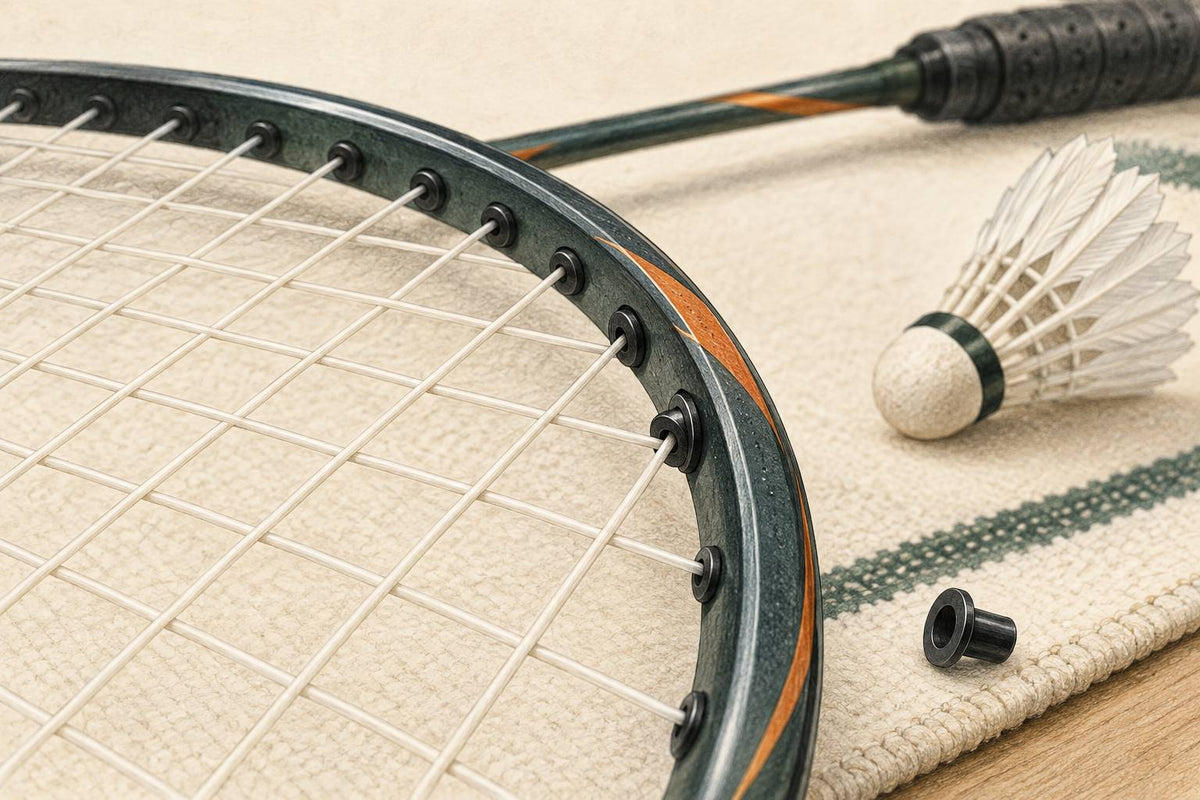
Grip layers can also fool you. A loose overgrip tail, thick build-up at the handle base, or tape edge under your palm can make a small knock feel like something inside the handle. Finally, inspect the grommets around the frame. Grommets and grips are consumable parts, and worn grommets can damage strings; loose or broken small plastic grommet pieces may create a shake noise. For the grommet-specific path, see our badminton racket grommet replacement guide.
When an internal noise needs professional inspection
If the click or rattle seems to come from inside the handle or shaft after you have ruled out the end cap, cone, grip layers, and grommets, stop treating it as a home repair. The shaft is seated into the handle, and the bond at that junction can be a possible loosening point; internal movement there needs hands-on assessment, not casual handle dismantling.
Before you bring it in, look for clues. A noise with no visible impact signs is different from a racket that also shows cracks, dents, paint damage, crushing, or other impact marks. For a warranty-safe assessment, leave the strings intact, take clear photos of the suspicious area, and record a short video that captures the sound and when it happens.
Warranty terms vary by manufacturer and region. Check the applicable policy before repair; coverage for material or workmanship defects does not automatically cover wear, impact damage or modification.
Which path should you choose?
Treat a badminton racket rattle as a triage problem, not a remote diagnosis. Pick the closest condition below, then stop escalating once the safer next step is clear.
| Choice | Choose this if... | Next move |
|---|---|---|
| Stop play | You see cracks, deterioration, wear, dents, paint damage, or the racket feels abnormal during a gentle grip-twist or shaft-flex check. | Do not keep hitting with it. Have it inspected before use. |
| External part | The noise points to the butt cap, cone, grip layer, or worn grommets rather than the shaft or handle interior. | Have a stringer or repair professional confirm and service the visible component. |
| Internal noise | The click or rattle seems to come from inside the handle, shaft, or joint area with no loose external part found. | Do not cut the strings if an assessment may be needed; keep photos or video of the defect. |
Get 10% off your first order
Join the Badminton House list and we’ll email you a 10% welcome code — plus training guides, technique advice, and badminton updates.
By subscribing, you agree to receive Badminton House emails and can unsubscribe anytime.
If the rattle points to a confirmed defect or a racket you no longer trust in play, compare replacements by weight, balance, and flex.
Browse Badminton RacketsCheck live availability before choosing your next setup.

Leave a comment
This site is protected by hCaptcha and the hCaptcha Privacy Policy and Terms of Service apply.