
Last checked: August 2026 · Written by the player-led team at Badminton House
Quick answer
The cited Laws and model do not establish what a grommet-hole count independently changes. BWF has no hole-count rule, and the cited model studied string interval and frame shape rather than grommet count as stiffness variables.
Start with Hole count is not a BWF equipment requirement
Treat hole count as a frame-specific stringing detail, not a BWF legality rule or a proven feel shortcut. The cited Laws do not require a count, and the cited model examines string interval and frame shape—not independent grommet-count effects.
- Record the exact frame before discussing the number of holes.
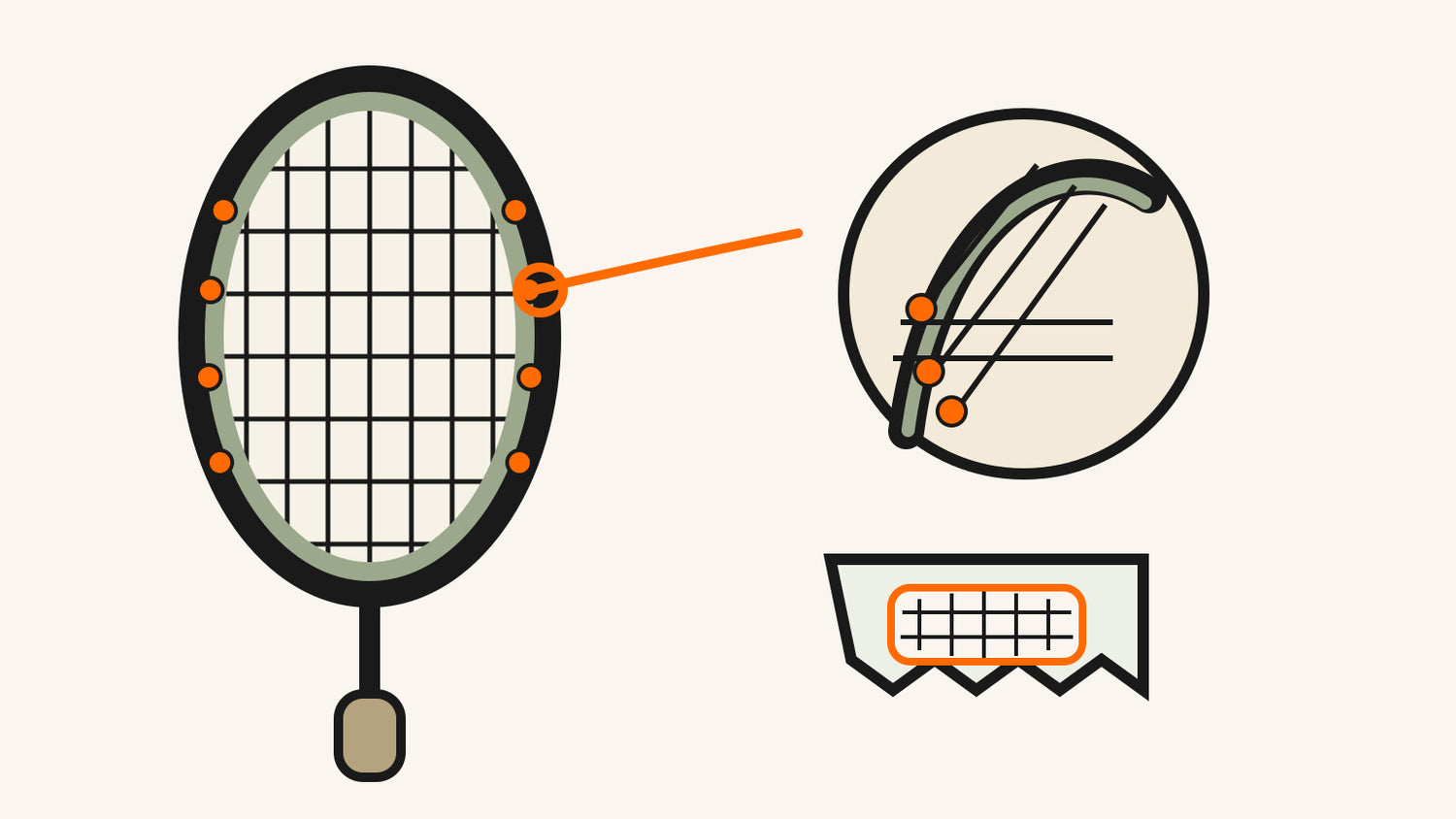
- Check the manufacturer’s stringing pattern and matching grommet strip with a qualified stringer.
- Compare published specifications without inferring stiffness, feel, or durability from count alone.
- Keep any preference personal and model-specific rather than calling hole count a proven performance rule.
Related reading: Badminton Racket Grommet Replacement: When to Act — for the frame-specific grommet condition behind a restring decision.
Hole count is not a BWF equipment requirement
BWF Laws specify stringed-area construction and maximum dimensions, not a racket grommet-hole count. Law 4.2 covers the stringed area without a hole-count requirement. It does not turn a club custom into a Law. BWF Laws of Badminton

Hole count cannot decide BWF legality because the cited Law describes the stringed area without requiring a particular number. A player should therefore not treat a count as an official quality or compliance category.
String interval and frame shape are not hole count
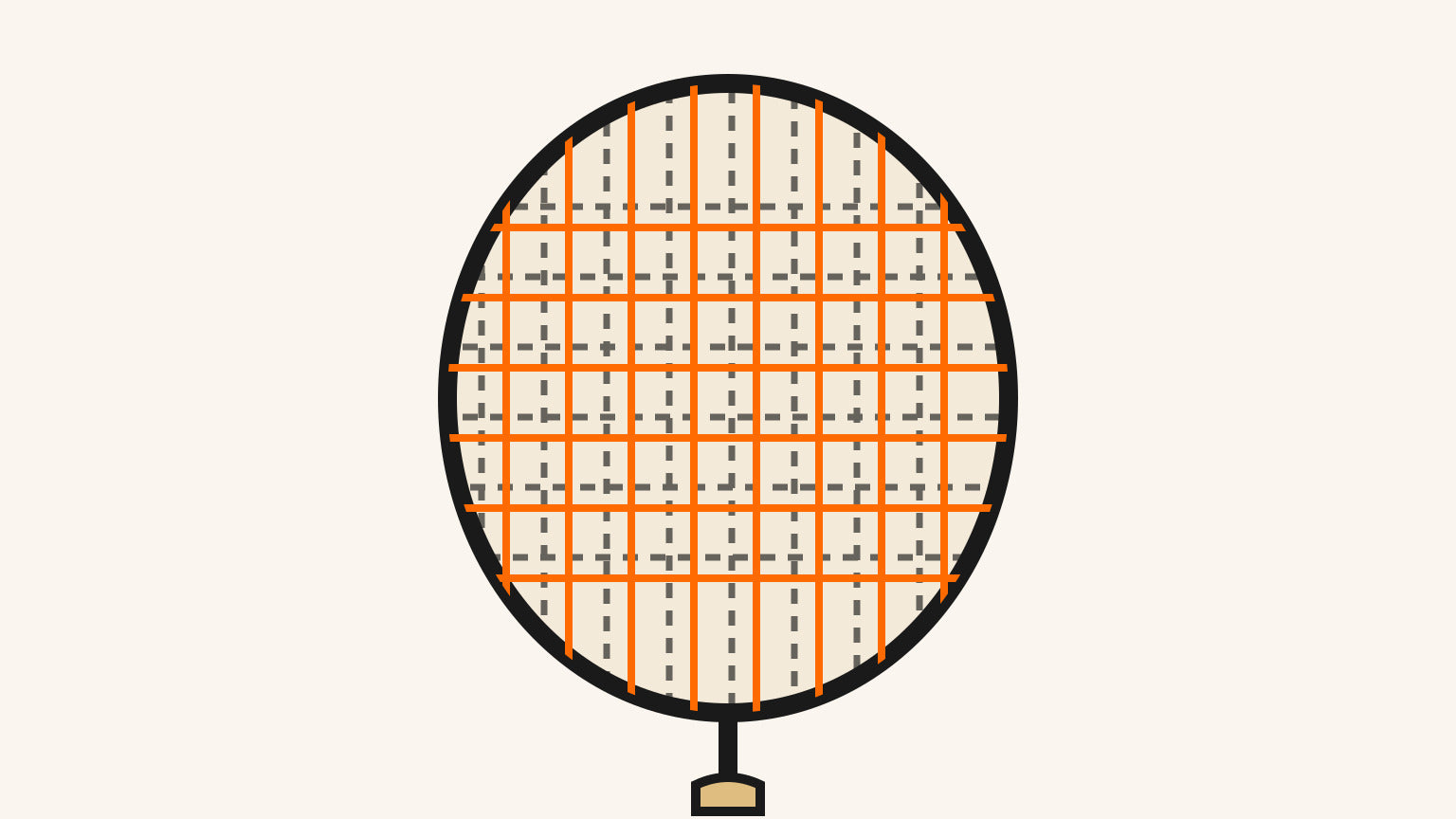
A finite-element study found that string interval and frame shape affected modeled out-of-plane string-plane stiffness. The study identifies string interval and frame shape as modeled variables. Its result is limited to the specific study design and variables tested. string-plane stiffness study
| Question | What it can tell you | What it cannot tell you |
|---|---|---|
| BWF legality | The Laws describe a stringed area without a hole-count requirement. | Whether one count is better. |
| The cited model | It studies string interval and frame shape. | An independent grommet-count effect. |
| A real frame | Which pattern and grommet strip to confirm locally. | A universal feel, stiffness, or durability result. |

The cited modelling work varies string interval and frame shape. Those are not the same as independently testing a hole count, so the result cannot answer what a particular count will feel like or predict on another frame.
Confirm the frame-specific pattern and grommet strip
The study does not test grommet-hole count as an independent variable, so it cannot establish hole count alone as the cause of feel or durability. Hole count is not one of the evaluated variables. A different player, product, or task needs its own evidence. string-plane stiffness study

Local service-record format: choose to record the exact model, confirmed pattern, grommet information, and observed condition. That is not a BWF requirement or a conclusion from the cited model. A count can help identify the part, but it does not replace model information or a qualified stringer’s check.
Hand a stringer a frame-specific record
- Start with the exact racket model and version, plus a clear description of the frame in hand. Treat the hole count as a possible identification detail, not as the heading of the record or the conclusion of the comparison.
- Add the manufacturer pattern and matching grommet information only when those details are confirmed for that frame. If a detail is unknown, leave the field open rather than copying it from a similar-looking racket or a generic diagram.
- Keep the frame condition separate from the stringing pattern. A note about a worn grommet, an irregular area, or a personal after-stringing impression can be useful, but it should not be converted into a rule, a stiffness result, or a durability prediction.
- Finish with the specific handoff question: confirm this pattern, identify the matching grommet strip, or inspect this area of this frame. That gives a qualified stringer a practical request without asking one printed count to explain feel or suitability.
Before a restring, add a short condition line: what the player can see on this frame, what has been confirmed, and what requires inspection. That line gives the service conversation a concrete object while protecting the difference between a pattern detail and a performance claim. If an answer is received from a stringer or manufacturer, add it only to the matching model card. The next owner of the racket can then see what was checked for this frame, what was merely observed, and what still should not be inferred from a similar count or another racket's setup.
That restraint is especially useful when a player has more than one racket. Each frame gets its own condition and pattern record, so a later service question remains attached to the actual racket rather than to a remembered count or another model's diagram.
Two rackets with a similar count still receive two separate records. The reader leaves with a service-ready frame card rather than a ranking built from a construction detail the cited material did not independently test.
Bring a frame card to a stringer
- Start with the exact racket model and version, not the hole count.
- Add the confirmed manufacturer stringing pattern and matching grommet information.
- Leave any unknown detail blank instead of copying it from a similar-looking frame.
- Keep a personal after-stringing impression in a separate field from the frame specification.
- Ask the stringer to confirm the pattern and grommet strip for that exact frame.
Questions the cited sources do not settle
- A universal grommet-count performance hierarchy.
- That a hole count alone predicts sweet spot, frame strength, or player suitability.

Leave a comment
This site is protected by hCaptcha and the hCaptcha Privacy Policy and Terms of Service apply.