
Last updated: July 2026 · Written by the team at Badminton House
Quick Answer: Badminton Racket Max Tension Rating
A racket's max tension rating is a structural ceiling, not your ideal string tension; stay within it and ask a qualified stringer to assess the frame and suitable playing setup.
Stay below
Best choice: choose a playing tension based on level and feel, then make sure it sits inside the racket's printed limit.
Near max
Consider only if you are advanced, hit the sweet spot reliably, and accept more frame and string stress.
Over max
Avoid it: manufacturers say not to exceed the stated limit because the frame can crack, break, or lose coverage after improper restringing.
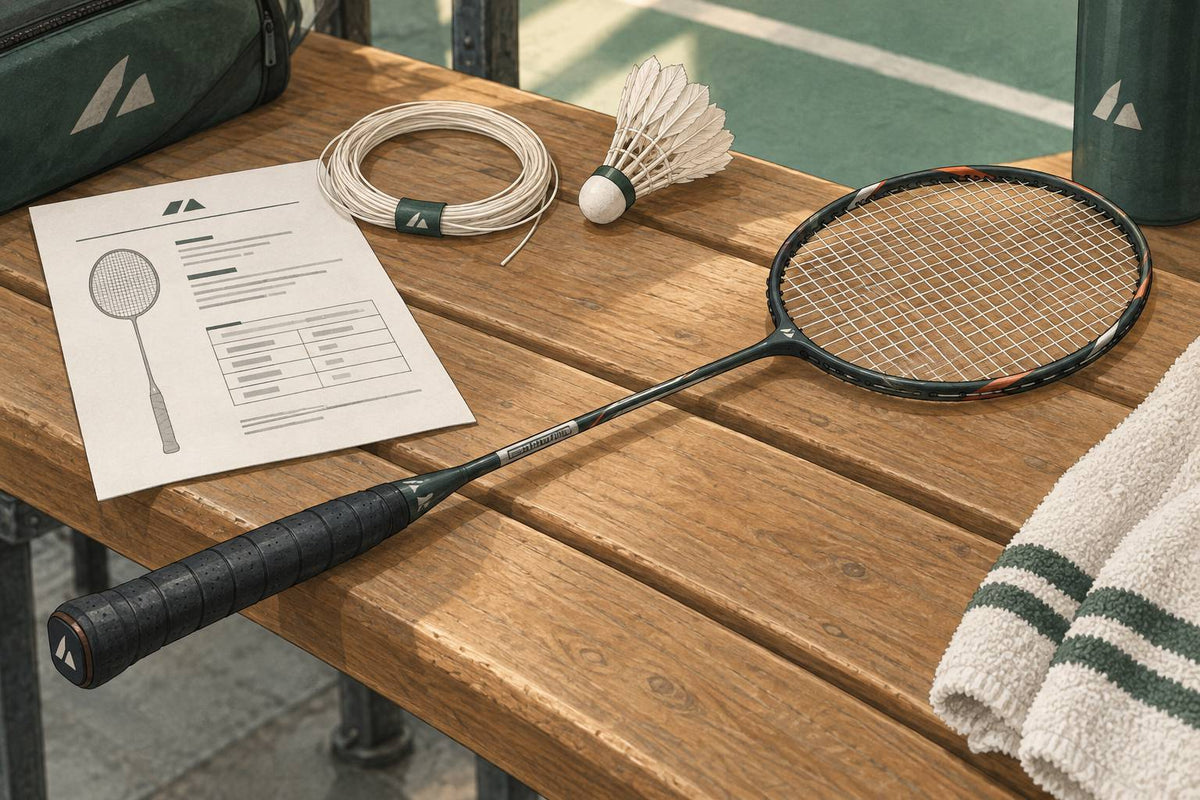
If you see “Max tension 30 lbs” printed on a badminton racket, don’t treat it like the best stringing choice. That number is the frame’s structural ceiling: a manufacturer-specified limit for that model and variant, not the tension your arm, timing, or sweet spot will necessarily enjoy. In the shop, we use the max rating as a safety boundary first. Then we choose playable tension based on level, swing speed, technique, and whether you need easier power or tighter control.
This guide explains what the badminton racket max tension rating actually tells you before a restring or new racket purchase.
Choosing a frame? Browse badminton rackets and check each model’s stated tension rating before you buy; if you are unsure, choose the racket first and set tension conservatively.
In This Guide
What the Printed Max Tension Rating Actually Means

A badminton racket max tension rating is the manufacturer’s stated upper stringing limit for that model and variant. It is usually printed on the racket shaft or frame and commonly sits around 25–35 lbs, depending on the model and construction. In plain language, it sets a limit to follow; it is not a published breaking point or a guarantee that a damaged frame is safe below it.
That number is not a personalized playing recommendation. Manufacturers establish specifications for their frames, but the printed rating alone does not disclose a standardized test protocol or failure threshold. A frame that is rated to tolerate a high number is not automatically better for every player, and it does not mean the racket will feel good when strung at that number. Think of the printed max as the ceiling for the frame, not the target for your game.
Max Rating vs Recommended String Tension

The max tension rating is the racket frame’s ceiling. It tells you the upper limit the frame is rated to withstand; it does not tell you what tension will feel best when you play.
Recommended string tension is personal. It depends on your swing speed, technique, and how consistently you hit the sweet spot. Lower tension often feels more forgiving, while higher tension changes the response and demands on contact. Power and control also depend on the string, racket, stroke and player; neither follows a universal one-way rule.
That is why two players can use the same racket safely at different tensions. Treat the printed number as a limit, then choose your playable setup based on level and feel. For a broader tension-selection walkthrough, see our badminton string tension guide.
Why Most Players Should Not String at the Max

Useful playing tension is usually much lower than the frame’s structural ceiling. As a rule, less experienced players benefit from a larger sweet spot and lower tension, while only advanced players with consistent, repeatable contact gain anything from tension close to the rated max (see the ranges in the table below). Professional setups vary and are not a reliable starting prescription for a club player.
That gap is the key: the max rating tells you what the frame can tolerate, not what will make your shots better. Higher tension gives a crisper, more controlled response only if you consistently hit the sweet spot and generate your own power. If you copy a pro-style setup without the timing, strength, and technique to support it, you may lose power or mistime shots; a professional’s tension is not a reliable shortcut to a faster smash. For a deeper breakdown, read Why Some Pros String at 30-40 lbs — Should You Copy Them?.
What Can Happen If You Exceed the Rated Limit

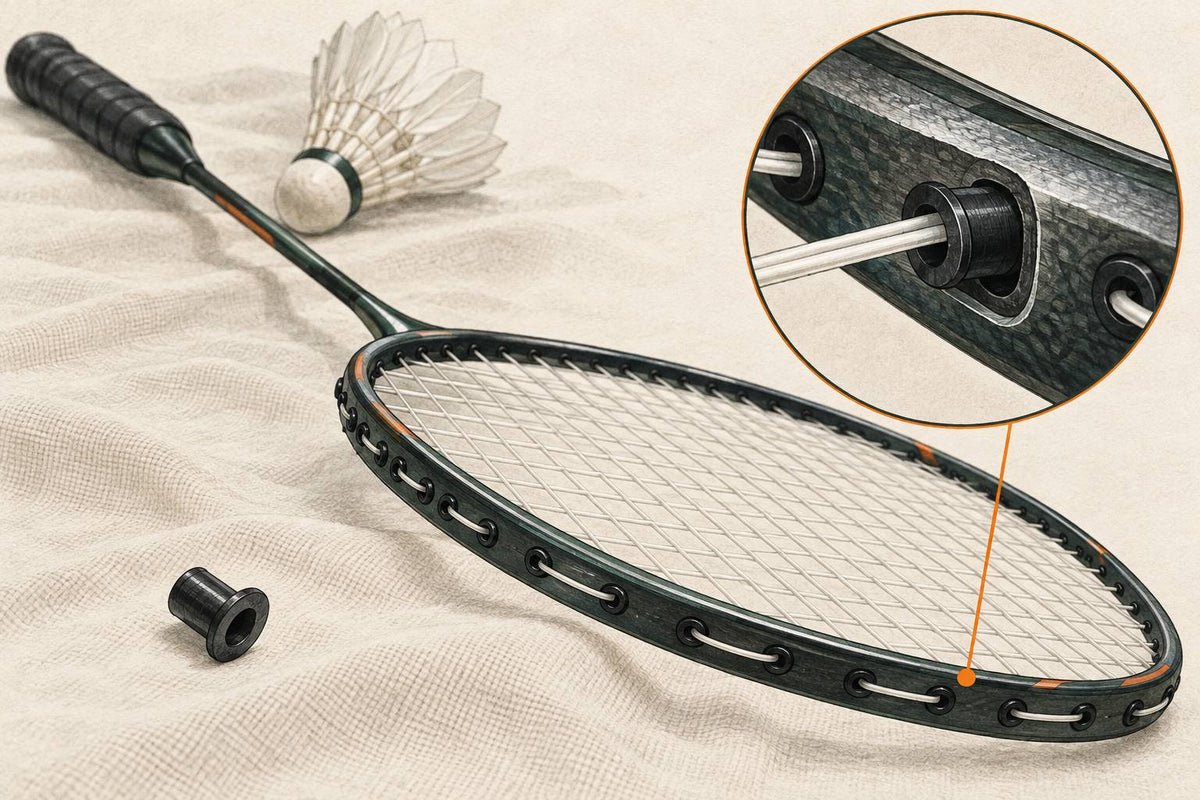
Stringing above your racket’s individual rated range turns the printed number from a safety boundary into a stress test. The most serious risk is frame damage: the head can deform, develop cracks around shared grommets or weak points, or fail completely during stringing or play.
Even if the frame survives, very high tension puts extra load on the strings. That can shorten string life because the string bed wears faster and is more likely to snap, especially after mishits or repeated hard impacts near the edge of the frame.
There is also a warranty angle. Yonex USA’s warranty policy covers manufacturing defects in materials and workmanship, but excludes improper restringing, including deviation from the official stringing pattern. In practical terms: exceeding the rating or using poor stringing practice can leave you with damage that is treated as preventable, not a defect.
How to Use the Rating Before You Buy or Restring

Use the printed max tension rating as a guardrail, not a target. Before buying or booking a restring, run through this simple checklist:
- Find the printed max rating on the frame or manufacturer spec, then treat it as the upper structural limit.
- Choose a playable tension for your level, swing speed, and clean-contact consistency. Better technique can usually handle tighter strings; developing technique usually benefits from more forgiveness.
- Keep the restring within the rated limit. A different tension is fine only if the final setup stays inside the racket’s stated maximum.
- Account for tension loss. Settling and tension loss vary with the string, process and use; do not exceed a limit to compensate for expected loss.
- Ask about mains and crosses. Follow the exact model’s stringing instructions; a blanket 10% cross increase is not a universal rule.
Work through that checklist before every restring, whether you keep the same frame or switch to a new one.
Which Should You Choose?
Use the printed max tension rating as a safety ceiling, then choose your playing tension below it based on skill and consistency. The right pick is the one your frame can safely hold and your timing can actually control.
| Choose this | Typical range | Why it fits |
|---|---|---|
| Beginner-friendly setup | 18–21 lbs | Most forgiving option when clean contact is still developing. |
| Club-player setup | 22–25 lbs | Balanced choice for players who want clearer feedback without going near the limit. |
| Advanced setup | 26–30+ lbs | Best reserved for repeatable sweet-spot contact and a frame rated for it. |
Whichever tier fits you, keep the number your stringer sets comfortably inside the frame’s printed max — frame condition, correct support and the specified pattern still matter.
Get 10% off your first order
Join the Badminton House list and we’ll email you a 10% welcome code — plus training guides, technique advice, and badminton updates.
By subscribing, you agree to receive Badminton House emails and can unsubscribe anytime.
Max tension is a safety boundary, not a challenge. We play badminton ourselves, and if you are unsure whether a frame suits your usual tension, swing speed, or restringing plans, send us a note before you buy or cut out the strings. We will help you choose a sensible setup without treating the printed max as your target.
Ready to compare frames?
Check each racket’s specs, then choose the frame that fits your tension range and playing style.
Browse Badminton RacketsGenuine badminton gear · Player-led advice · Check live availability

Leave a comment
This site is protected by hCaptcha and the hCaptcha Privacy Policy and Terms of Service apply.