
Last updated: July 2026 · Written by the team at Badminton House
Quick Answer: Why Badminton Strings Keep Moving
Judge the pattern, not one crooked string. Movement can be ordinary settling, accumulated wear, or a sudden impact clue; appearance alone does not measure tension or prove poor workmanship.
Occasional shift
Keep playing: a string that returns or straightens easily is usually a normal clue.
Stays crooked
Plan a restring: persistent displacement is a reason to inspect notching and changes in feel.
Sudden change
Inspect first: one-shot movement can follow a mishit, worn grommet, frame issue, or cold shock.
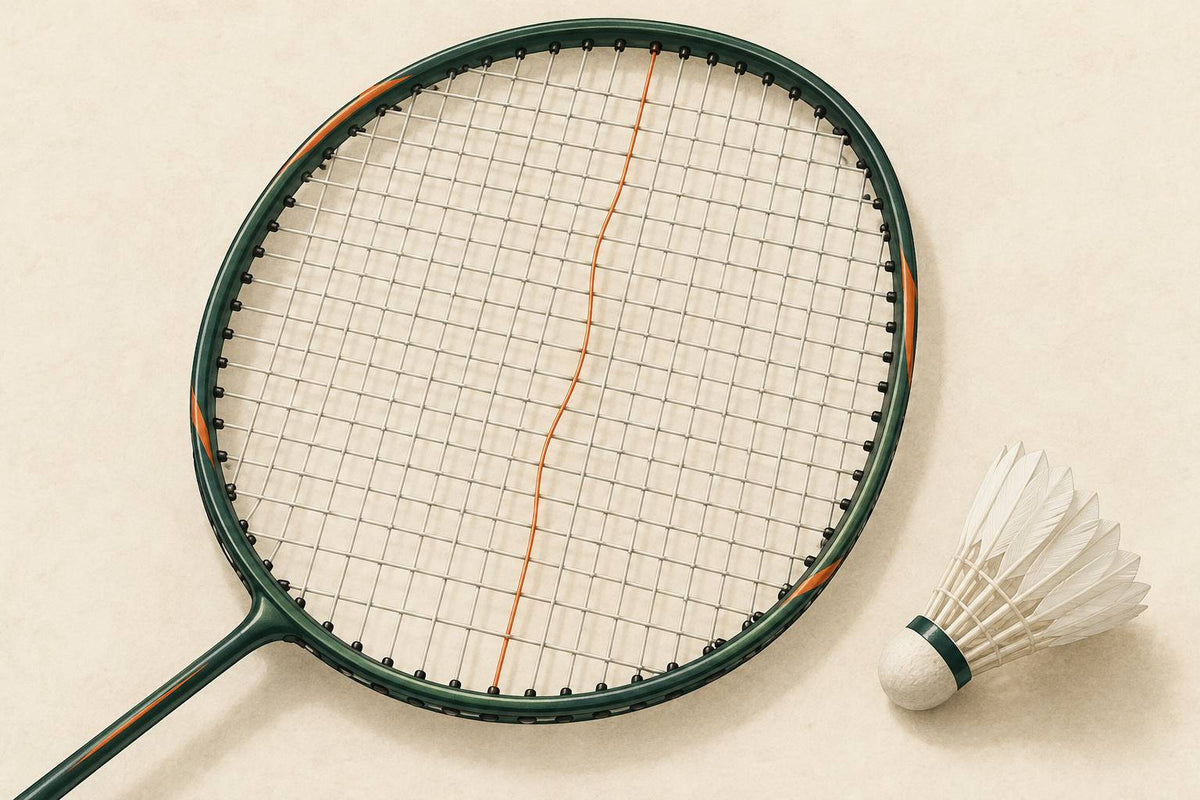
If your badminton strings keep moving, do not judge the racket by one crooked main string. Start by asking what changed: fresh restring, slippery coating, a few hard slices, an edge mishit, or strings that now refuse to spring back. As the racket is played, the mains and crosses slide against each other, relax, and wear at the intersections. The important question is whether the movement is occasional and easy to straighten, or whether the strings stay displaced and the bed feels inconsistent.
Unsure if it is normal or near breakage? Send a clear photo through contact and we can help you decide what to check next.
In This Guide
Quick answer: why badminton strings keep moving
Badminton strings keep moving because the string bed is a live grid, not a set of wires glued into place. During stringing, each string is pulled to a reference tension within the racket’s recommended range, but the mains and crosses still sit on top of one another and can slide at their intersections when the shuttle loads them.
BWF frames some movement during play as normal. How much you see depends on string construction, surface coating, gauge, reference tension, friction between mains and crosses, wear at the intersections, and how recently the racket was strung. Racket-string physics studies in tennis are useful here qualitatively: strings relax after tensioning, friction controls whether intersections slide or hold, and the first hours plus the first few hits tend to produce the fastest settling.
When occasional string movement is normal
If a main or cross string shifts slightly during a rally, then springs back or can be nudged straight with a fingertip, treat it as a normal clue rather than a defect. Watch whether the string returns consistently and whether the bed still feels predictable during play.
What you are seeing is friction at the main-and-cross intersections. Some coatings are slicker, so the strings slide and settle more; rougher coatings, abrasion-resistant finishes, and textured surfaces tend to grip more. Gauge matters too: badminton strings commonly sit around 0.63–0.70 mm. Gauge affects feel and durability, but coating, construction and wear also matter; thickness alone does not tell you how quickly a displaced string will return.
Why strings start staying crooked
The classic wear pattern is notching. As the mains and crosses slide against each other, they gradually cut grooves into one another at the intersections. Once those grooves get deeper, the string can settle into the notch instead of snapping cleanly back into line. That is why a racket can go from “strings move during rallies” to “I have to straighten them after every rally.”
Treat persistent displacement as a reason to inspect wear, rather than a direct measurement of elasticity. The string bed may still play, but the intersections are no longer moving freely. If the same few mains keep leaning after lifts, smashes, or slice shots, inspect those crossing points closely; deeper grooves are also a common path toward eventual breakage.
If this happens often, compare restring timing in how often to restring a badminton racket, or look at durable badminton string options.
Sudden crooked strings after one shot: what changed?
If the string bed looked normal, then one shot left several mains or crosses sitting diagonally, think impact event first. A mishit near the top or edge of the frame loads the string bed where support is weakest; near the top, the string can be stretched in an area beyond the protection of the last cross strings. Off-centre contact near the frame also puts abnormal stress into a small part of the bed, so the strings may shift hard, notch further, or break.
Do a quick safety check before continuing: look for worn or split grommets, exposed sharp edges, frame cracks, shaft irregularities, and a grip that has loosened. Worn grommets can damage strings and make breakage easier, so use the grommet replacement guide if the shift happened near a grommet strip.
Temperature can be the hidden trigger. Cold makes nylon string contract, raising tension, and cold nylon can become brittle; a racket taken from a cold place straight into hard hitting is at higher risk. If a string snapped, compare the break location with the break-location diagnosis or follow what to do after a broken string.

Which should you choose?
| What you see | Choose this response | Why |
|---|---|---|
| Occasional shift | Straighten by hand between rallies and keep playing. | Movement and new-string settling can be normal; inter-string friction lets crossings slide without proving a bad string job. |
| Stays crooked | Plan a restring soon. | Persistent displacement often points to wear and notching, where strings cut grooves into each other before breakage. |
| Sudden change | Stop and inspect after a one-shot shift. | Top-edge mishits can over-stretch strings; worn grommets can damage strings, so inspect the frame, grommets, and break area before hard play. |
Get 10% off your first order
Join the Badminton House list and we’ll email you a 10% welcome code — plus training guides, technique advice, and badminton updates.
By subscribing, you agree to receive Badminton House emails and can unsubscribe anytime.
Crooked strings are a clue, not a verdict. If your string bed keeps drifting, look at the pattern: new-settling, notching, mishits, grommets, or a cold-temperature shock all point to different fixes. We play badminton and are happy to help you decide whether to keep playing, restring, or inspect the frame — send us a note through our contact page so you can choose the right next step without guessing.
Ready for fresh string or stringing gear?
Browse Accessories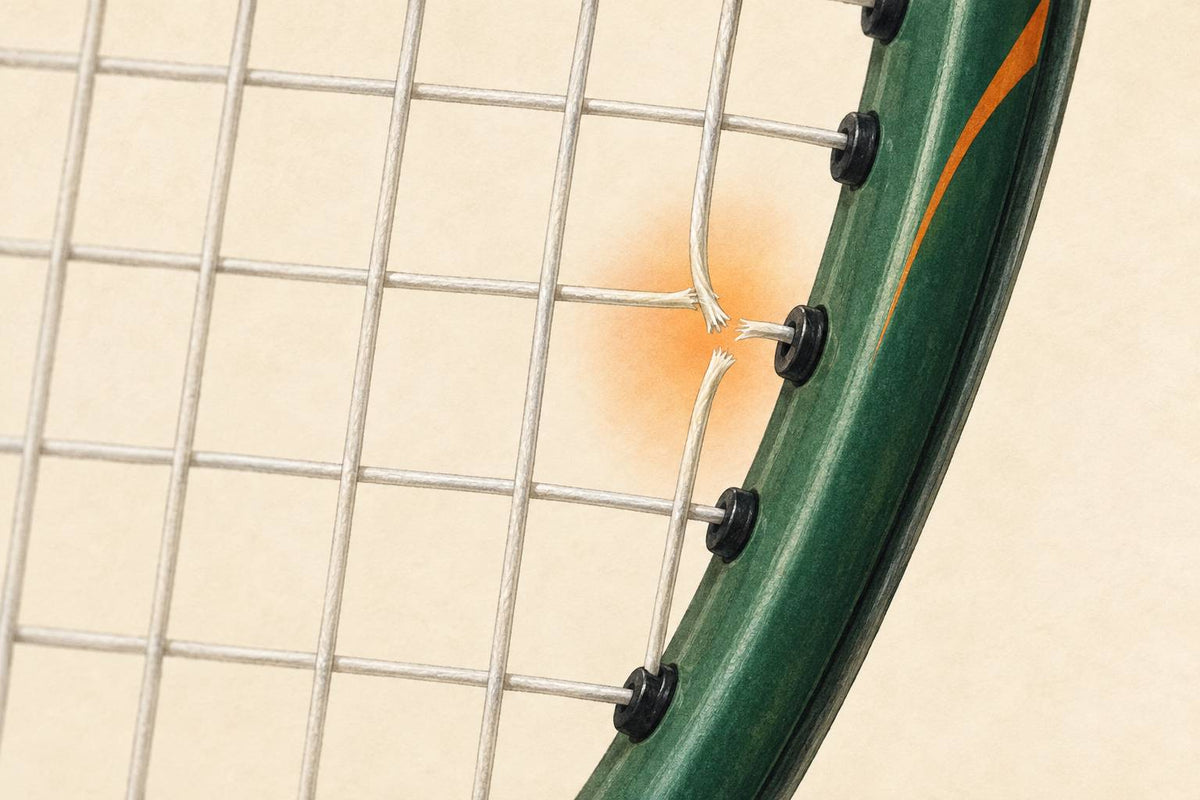


Leave a comment
This site is protected by hCaptcha and the hCaptcha Privacy Policy and Terms of Service apply.