

Last checked: August 2026 · Written by the player-led team at Badminton House
Quick Answer: Badminton Taping
Tape can be a short-term support for a known, assessed problem. It should not be the thing that lets you ignore a fresh injury, numb hand, unstable thumb, or ankle that cannot tolerate normal movement.
Ankle
Use ankle tape: only as part of a previously assessed plan, with a circulation check before court.
Thumb
A tape spica is support, not a way to self-clear a new thumb injury. Loss of grip or instability needs assessment.
Finger
Buddy tape only where it has been judged appropriate, keep the joints able to bend, and stop for colour change or tingling.
Badminton taping has a narrow job: it can add external support around a known issue while you follow the plan that actually addresses it. The decision is different for an ankle, thumb, and finger. An ankle-tape setup can provide external support; thumb and finger strapping should protect a specific problem without strangling circulation or disguising a new injury.
Start with the decision, not the roll. If this is a fresh ankle roll, use our badminton ankle-sprain guide for red flags and recovery context before considering a return to court.
Choose the right tape job before you start
Choose tape by the body part and the clinical purpose, not by whichever roll is in your bag. Rigid ankle tape has a mechanical support role. Thumb and finger tape can protect a position or pair of digits after appropriate assessment. Do not assume that a tape job for one body part can be copied to another.
There are two very different situations. Prophylactic support is a planned choice before activity, usually for someone with a known history and a clinician or physio’s return-to-play plan. Injury treatment starts with figuring out what happened. Tape is not an assessment, and feeling steadier after wrapping something does not establish that it is safe to play.
| Situation | Tape’s limited role | Better next decision |
|---|---|---|
| Previously assessed ankle | Rigid tape may add external restriction as part of a return plan. | Use the agreed technique and keep strength, balance, and workload work in the plan. |
| New ankle or thumb injury | At most, temporary protection while you arrange advice. | Stop play and assess symptoms rather than testing it in another game. |
| Finger already cleared for buddy tape | Pairs it with a neighbour for protection while preserving controlled movement. | Keep tape between creases and recheck colour, feeling, and movement. |
For ankle history, the evidence is specific: a systematic review of randomized trials found lower odds of a further inversion sprain with tape in athletes who had already sprained an ankle. It did not promise prevention for every player or replace rehabilitation. Read the systematic review of external ankle supports as support for a targeted history-based decision, not a reason to tape a fresh injury.
Ankle tape is for controlled support, not self-treatment
An ankle-tape setup is appropriate only when you already know why you are using it and have been cleared to load the ankle. Its purpose is to add external support around the joint during play. It cannot diagnose a sprain, prove readiness, or build the capacity that reduces repeat problems.
Use an ankle-tape technique only if a qualified clinician, athletic trainer, or physiotherapist has taught it for your situation. This article deliberately does not give a strip count, anchor placement, heel-lock variation, or tension instruction: those details depend on the joint, the skin, the shoe, and the plan for returning to activity.
Before court: use the taught setup, confirm that the shoe still fits without pressure, and check that the toes feel and look normal. A support that creates pain, altered sensation, colour change, or a new restriction is not ready for play.
The practical court check is simple. You should feel supported, not numb, throbbing, or progressively squeezed. If your gait changes because of pain, if normal toe and ankle movement is suddenly difficult, or if the ankle feels less stable as you warm up, stop. Tape is a bridge inside a wider plan; it is not permission to increase match volume because the ankle is wrapped.
Do a first trial away from a competitive game. Put the tape on at home or before a gentle warm-up, walk normally, make a few controlled badminton footwork movements, and remove it if the warning signs appear. That rehearsal is not a fitness test or a clearance test. It simply gives you a chance to find obvious pressure points before you are focused on the score.
Keep the tape decision separate from the shoe decision. A court shoe must still fit comfortably over the taped ankle and allow normal lace adjustment. Do not force a swollen or tightly wrapped ankle into a shoe. If your usual shoe suddenly feels too small, that change is information to act on, not a problem to solve with looser laces or another tape layer.
For a planned return, decide the session boundary before you start: warm-up only, drills without full lunges, a short controlled game, or no court time. Tape does not choose that boundary for you. Use the limit already agreed with the person guiding your recovery, and stop when the session asks more of the ankle than that limit allows. This keeps the tape from becoming a last-minute reason to play a full, unpredictable match.
Be equally careful about what happens between rallies. Do not retension a wrap after every point because it feels less noticeable once you are warm. Take time out if the ankle feels different, inspect the support away from the court edge, and make a fresh decision rather than trying to solve uncertainty with another layer. If the only way to feel confident is to keep tightening the tape, the useful conclusion is that the session is not appropriate today.
A coach or playing partner can help with the practical side of this decision. Tell them before the session that you may stop early, rather than waiting until a close score makes that harder to say. Their role is not to diagnose the ankle or judge a tape job. It is to make the planned limit easier to respect and to avoid the common pressure to take one more rally on an uncertain joint.
Thumb spica and buddy tape solve different hand problems
Thumb and finger tape should never be treated as miniature ankle tape. A thumb spica is used to support the thumb while limiting selected movement after assessment; buddy tape joins a finger to its neighbour while leaving the finger joints able to move. Neither is a safe way to push through a new impact injury.
Thumb: protect first, then get the right plan
The thumb does not have a neighbouring digit that can simply act as its buddy. A spica-style arrangement goes around the wrist and thumb to support the thumb’s base. In clinical care, the exact position and duration depend on what was injured. That is why a player should not copy a random social-media wrap after a thumb bend, fall, or collision.
AAOS guidance on sprained thumbs notes that a thumb ligament injury can weaken pinch or grasp, and that a moderate sprain may be immobilized with a thumb-spica bandage, cast, or splint after evaluation. That is the distinction to keep in view: support follows diagnosis rather than replacing it. If you already have a clinician-taught strapping plan, use its anchor and tension instructions exactly. Do not use a racket-grip check to decide that a new thumb injury is safe to play.
Finger: buddy tape only after the injury has been judged appropriate
Buddy tape is useful because it can protect an appropriate injured finger while allowing controlled bending and straightening. It is not a generic answer to every jammed, crooked, or swollen finger. Severe pain, a snap or pop at injury, loss of movement or sensation, or a finger that changed shape or colour needs assessment rather than a quick court-side wrap, as the NHS finger-pain guidance sets out.
- Remove rings first. Swelling can make them difficult to remove later.
- Use the adjacent finger chosen in your care plan. Place a small piece of soft gauze between the fingers if rubbing is a problem.
- Apply narrow tape between the finger creases. That position keeps the joints available to bend and straighten.
- Move and check. Flex and extend gently, then check colour, warmth, sensation, and swelling after a few minutes.
These details match Oxford University Hospitals NHS buddy-strapping guidance, including placement between joints, the option of gauze, and a colour-and-pins-and-needles check. The important boundary is that this is advice for an assessed injury, not a diagnosis tool for a badminton collision.
On court, keep the finger plan modest. The tape should not turn the racket handle into something you must grip harder to control, and it should not leave the finger trapped straight. If the change is large enough that you are altering your swing or protecting the hand on every contact, end the session. A temporary support is not meant to create a new technical compensation.
Make tape last by respecting its checks and limits
A good tape job is one you can monitor, remove, and replace without damaging skin or hiding a worsening problem. Start with clean, dry, intact skin; smooth each strip without wrinkles; and do a movement, colour, warmth, and sensation check before play and again if the area starts to feel different.
Tape can become wet, creased, or irritating during a session. Do not try to rescue a loosening job by repeatedly winding another layer around the limb. If a taught support no longer feels right, stop and remove it rather than asking a partner to pull it tighter.
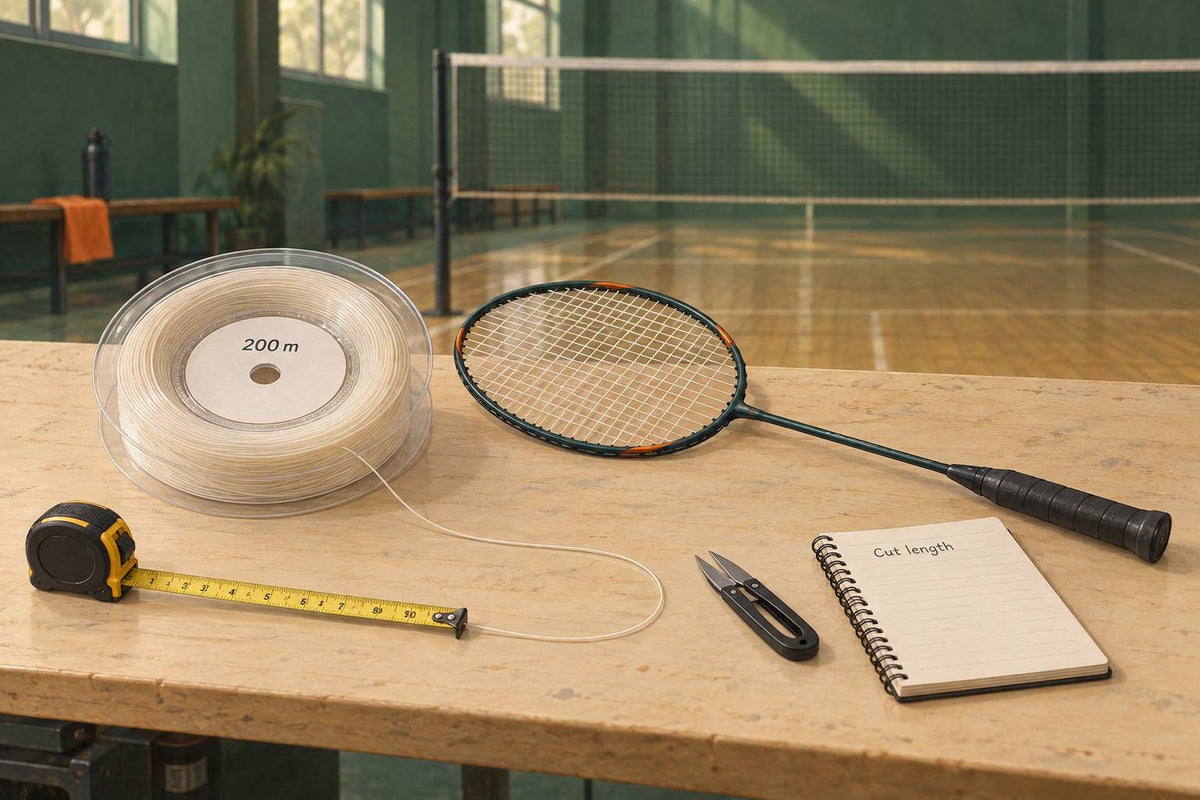
A useful packing routine is deliberately simple: bring scissors, the tape you have already tolerated on your skin, and a clean separator for an approved buddy-tape setup. Do not let a rushed doubles rotation turn application into a guess. If you cannot apply the planned support calmly and check it, skip that game.
After removing tape, look at the skin and notice how the joint feels without the external support. Persistent tingling, worsening pain, swelling, or a skin reaction changes the decision for the next session. Pause and get advice rather than repeating the same setup more tightly.
Stop and remove the tape for new colour change, numbness or pins and needles, increased swelling, increased pain, or a red and itchy skin reaction. Oxford University Hospitals and Northern Care Alliance NHS buddy-strapping guidance identify these as reasons to remove strapping and seek advice if symptoms persist.
When tape is the wrong answer
- Fresh injury with serious symptoms: severe pain, deformity, loss of feeling, colour change, inability to move the thumb or hold objects, or a snap/grinding/popping sound needs urgent assessment.
- Unexplained or recurrent instability: repeated ankle rolls or a thumb that feels loose needs an assessment and a rehabilitation plan, not more tape layers.
- Pain at rest or progressive swelling: sit out and seek advice. Do not use tape to get through a league night.
- Skin, circulation, or sensation concerns: do not tape over open skin, rash, known adhesive reactions, or known circulation/sensation problems without individual clinical guidance.
For thumb injuries, seek urgent assessment for severe pain, deformity or colour change, lost feeling, inability to move the thumb or hold objects, and a snap, grind, or pop at the time of injury. Use that decision framework rather than trying to decide from a tape test.
A sensible badminton-taping routine
- Name the actual job: planned ankle support, clinician-directed thumb support, or cleared buddy taping.
- Use the least restrictive, correctly taught setup that preserves normal circulation and the movement you need.
- Recheck after warm-up and stop for any warning sign.
- Keep the real plan in view: assessment for a new injury, rehabilitation for a recurring one, and sensible workload decisions for both.

Leave a comment
This site is protected by hCaptcha and the hCaptcha Privacy Policy and Terms of Service apply.