
Last updated: July 2026 · Written by the team at Badminton House
Quick Answer: Badminton Ankle Sprain
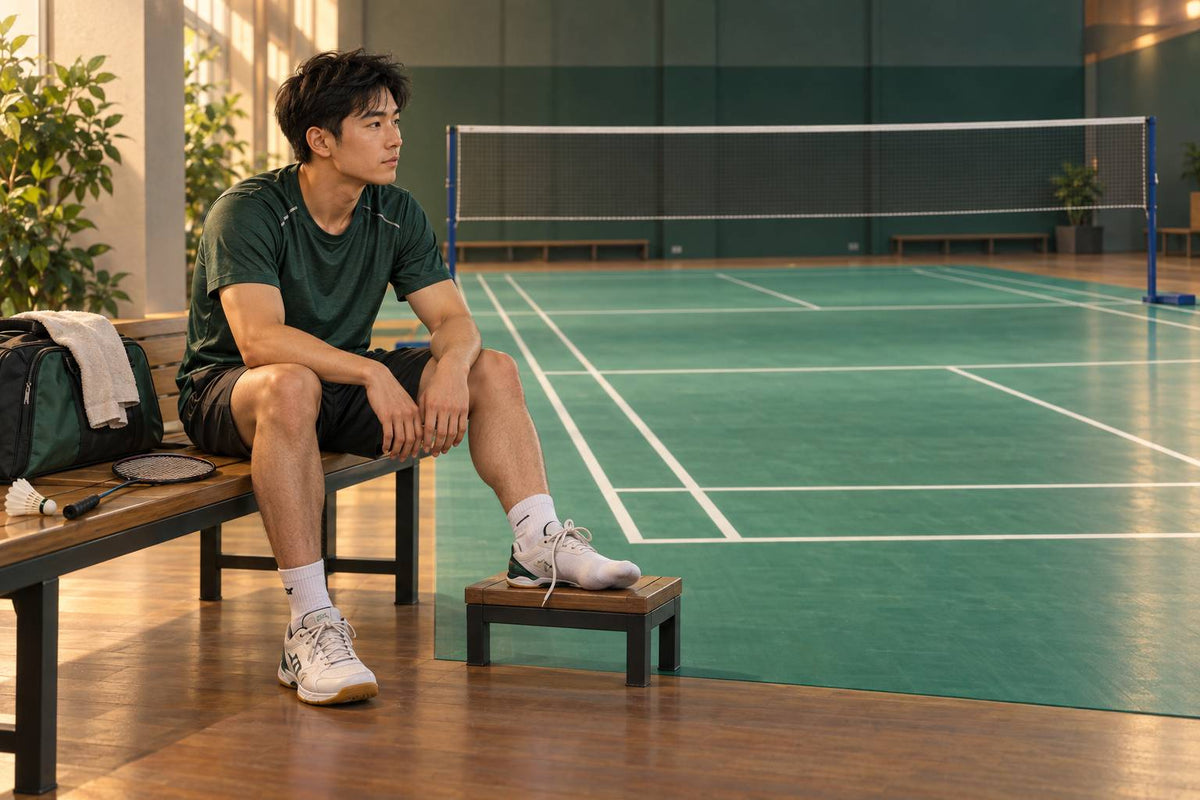
For most players, the best plan is to prevent the roll before it happens: use badminton-specific court shoes, train balance and landing control, and stop immediately if the ankle gives way.
Prevent
Best choice: wear badminton-specific non-marking court shoes with lateral support, then build single-leg balance and soft, controlled landings; running shoes are not designed for badminton’s repeated sideways cuts. See our ankle-support shoe guide or browse badminton footwear in CAD.
Injured
If you roll your ankle during play, stop the session and use PRICE/RICE: protect and rest it, ice with a towel wrap for 20 to 30 minutes 3 or 4 times daily, add compression, and elevate.
Red flags
Get assessed before returning to court if you cannot bear weight for 4 steps or have bone tenderness at the back edge or tip of either ankle-bone bump (malleolus), the navicular, or the base of the 5th metatarsal.
A badminton ankle sprain can turn a normal club night into weeks away from the court. It often happens fast: an awkward landing after a smash, a sharp change of direction at the net, or a defensive lunge where the ankle suddenly gives way. Lateral ankle sprains are very common among badminton players, and they occur when the ankle ligaments are overloaded or pushed past their limits.
Badminton may be non-contact, but it is not gentle on your ankles. The sport asks you to brake, push sideways, jump, land, and recover in a split second — often while tired. This guide focuses on practical prevention and recovery for Canadian players: the shoe choices that matter, the footwork habits that reduce risk, what to do right away after a roll, and how to return to play without turning one sprain into a recurring problem.
Start with court-stable footwear. Browse our badminton footwear collection for non-marking indoor court shoes listed in CAD, with free shipping within Canada on orders over $200.
In This Guide
- Why Do Badminton Ankle Sprains Happen?
- Badminton Ankle Sprain Symptoms and Red Flags
- Prevention Starts With Badminton-Specific Shoes
- Footwork, Balance, and Landing Control
- RICE and PRICE: What to Do Right Away
- Return to Play Without Rushing the Ankle
- Decision Helper: Which Ankle-Sprain Prevention Path Should You Choose?
Why Do Badminton Ankle Sprains Happen?

A badminton ankle sprain usually is not caused by one simple mistake. It is the combination of speed, direction change, landing angle, and fatigue.
The basic mechanism is ligament overload: the ankle is pushed past what the supporting ligaments can control. In badminton, that often happens during a forefoot landing with the ankle in a plantarflexed and internally rotated position. In plain English: you land more on the front of the foot while the ankle is pointed down and turned inward. That position can create a rapid inversion torque, where the foot tips inward under the leg and stresses the outside ankle ligaments — most often the anterior talofibular ligament (ATFL), the most commonly injured ligament in the ankle.
Common on-court moments that raise risk
- Smash landings: jumping, rotating, and landing on the forefoot can leave the ankle in a vulnerable angle if the foot does not set cleanly.
- Net direction changes: split-step, push-off, brake, and re-accelerate movements ask the ankle to control force sideways, not just forward.
- Defensive lunges: reaching late for a smash or drive can put the foot outside your base of support, making it easier for the ankle to roll.
- Fatigue: after repeated high-intensity actions, badminton players can show greater plantarflexion and inversion angles and higher peak inversion moments, which can increase lateral ankle sprain risk.
This is why ankle sprain prevention in badminton needs to be sport-specific. Straight-line running fitness helps, but it does not fully prepare the ankle for repeated lateral pushes, backward recovery steps, forefoot landings, and emergency lunges. For the bigger injury-prevention picture beyond ankles, see our Common Badminton Injuries: Canadian Prevention Guide.
Badminton Ankle Sprain Symptoms and Red Flags
A badminton ankle sprain usually shows up quickly after the ankle rolls or gives way. The most common pattern is lateral ankle pain on the outside of the ankle, followed by swelling, bruising, and a feeling that the joint is unstable when you try to stand, walk, lunge, or push off.
Use the symptoms to decide what happens next. Mild soreness after a bad landing is one thing; sharp outside-ankle pain with swelling and instability is a sign to stop playing, not “walk it off” between rallies.
| Symptom or sign | What it can mean for a badminton player |
|---|---|
| Lateral ankle pain | Pain on the outside of the ankle after a roll, awkward landing, net change of direction, or defensive lunge. |
| Swelling | The ankle may puff up soon after the incident, making shoes feel tight and side-to-side movement uncomfortable. |
| Bruising | Discolouration can appear around the outside of the ankle or foot after the ligament injury. |
| Instability | A loose, wobbly, or “giving way” feeling when standing, changing direction, or trying to return to badminton footwork. |
Red flag rule of thumb. If pain, swelling, bruising, or instability makes normal walking difficult, treat it as more than a routine tweak and stop the session.
Ottawa Ankle Rules: when imaging may be needed
The Ottawa Ankle Rules are the key red-flag screen for a possible fracture after an ankle injury. Imaging may be needed to rule out a fracture if there is bone tenderness at the posterior edge or tip of either malleolus, the navicular, or the base of the 5th metatarsal, or if you are unable to bear weight for 4 steps.
- Malleolar tenderness: pain when pressing along the back edge or tip of either ankle-bone bump (the medial or lateral malleolus).
- Navicular tenderness: pain over the inner-midfoot area.
- Base of the 5th metatarsal tenderness: pain on the outside edge of the foot near the little-toe side.
- Unable to bear weight for 4 steps: you cannot take four steps immediately after the injury or during assessment.
For badminton players, that means a painful roll during a jump-smash landing or defensive lunge should not be judged only by whether you can finish the game. If one of these red flags is present, the priority is ruling out a fracture before planning a return to court.
Severe sprains need more caution
Grade I and II sprains are typically managed with accurate diagnosis, early RICE, range-of-motion work, and ankle support. A grade III sprain, where there is a complete tear, may require surgical intervention.
If you are looking beyond this ankle-specific section, our Common Badminton Injuries: Canadian Prevention Guide covers the broader injury picture without replacing proper care for a suspected fracture or severe sprain.
Gear note after the ankle has been assessed
Shoes will not diagnose or treat a sprain, but they matter once you are thinking about prevention and return to play. For stable badminton-specific options, see our Best Badminton Shoes Ankle Support Picks in Canada or browse badminton footwear. If you compare the Babolat Shadow Tour Men’s Badminton Shoes, check the product page for current sizes and pricing.
Prevention Starts With Badminton-Specific Shoes

If you play regularly, your shoes are one of the simplest places to reduce badminton ankle sprain risk. Badminton asks your feet to brake, push sideways, recover backward, lunge forward, and land from jumps in quick succession. Many recreational players still use running shoes or non-specialized footwear, but that type of shoe may not provide the lateral stability or anti-torque protection needed for badminton’s dynamic movements.
The key difference is not just cushioning. For ankle protection, look for an indoor court shoe that helps keep the foot secure during hard side steps and sudden changes of direction. When the shoe lets the foot slide, twist, or spill over the edge of the sole, the ankle has to absorb more of that force. That is exactly the situation that can turn a fast recovery step or defensive lunge into a rolled ankle.
Start with proper indoor court footwear. Browse current badminton shoes in our footwear collection, or read the dedicated badminton shoes ankle support guide for a deeper breakdown of stability features.
What to Check Before You Play
- Lateral hold: your foot should feel contained when you push side to side, not like it is sliding across the footbed.
- Stable base: the shoe should feel planted during lunges, split steps, and recovery steps.
- Non-marking indoor outsole: badminton shoes should grip clean indoor courts without leaving marks.
- Secure midfoot fit: laces and upper structure should hold the midfoot firmly, especially during aggressive sideways movement.
- Condition of the outsole: if the tread is worn smooth or the shoe feels unstable, do not wait for an ankle scare before replacing it.
If you are coming from running shoes, the change can feel noticeable right away: a good badminton shoe should feel more secure when you cut laterally, not just softer under the heel. For a full explanation of the difference, see our guide to badminton shoes vs running shoes.
Brief Product Note: Babolat Shadow Tour
The Babolat Shadow Tour Men’s Badminton Shoes – Orange include Power Straps structural midfoot support for aggressive sideways lateral movements, plus a Michelin non-marking outsole tailored for sudden sprints and rapid lateral movements. Check the product page for current sizes and pricing.
Canadian orders over $200 ship free, so many players combine footwear with grips, strings, or shuttlecocks when stocking up for club season.
Shoes cannot guarantee you will avoid a badminton ankle sprain, especially when fatigue, awkward landings, or past instability are involved. But proper badminton-specific footwear gives your foot a more stable platform, which makes the footwork and landing-control work in the next section much easier to apply on court.
Footwork, Balance, and Landing Control
Good shoes help, but they do not replace ankle control. A badminton ankle sprain often happens in the split second after a fast change of direction, lunge, or jump-smash landing, so your prevention work should train the ankle to stay stable when your foot hits the floor under pressure.

The key target is controlled forefoot landings, especially when you are moving sideways and backward at the same time. That pattern shows up constantly in doubles defence, rear-court recovery, round-the-head movement, and desperate late lunges. Instead of letting the foot slap down or roll outward, think: quiet landing, knee slightly bent, ankle stacked, and body weight under control before the next push-off.
Build the base before you chase speed. If your warm-up is rushed, start with the badminton warm-up exercises guide, then add the balance and landing habits below.
Train Proprioception: Teach the Ankle Where It Is
Proprioception is your body’s sense of joint position. In badminton terms, it is what helps your ankle react when you land a little off-centre, reach late for a shuttle, or recover from a lunge without rolling over the outside edge of the foot.
A simple starting point is single-leg balance work on a foam surface. Keep the foot tripod grounded, the knee softly bent, and the hips level. Once that feels controlled, make it more badminton-specific by adding a racket hold, gentle head turns, or a small reach with the non-racket hand while keeping the ankle steady.
Make Strength and Balance Look Like Badminton
Generic ankle work is useful, but the best prevention work should transfer to the court. That means strengthening and balance exercises should resemble the positions you actually use: split-step, side-step, chasse, rear-court recovery, and lunge.
| Practice focus | What to do | What to watch |
|---|---|---|
| Single-leg balance | Balance on one foot, then progress to a foam surface when you can stay controlled. | Avoid wobbling onto the outside edge of the foot. Keep the knee slightly bent. |
| Side-step control | Shadow side-steps from base to the mid-court and back without a shuttle. | Land quietly before pushing off again. Do not let the ankle collapse outward. |
| Lunge stability | Shadow front-court lunges with a controlled stop, then recover to base. | The landing foot should point in the direction of travel, not twist across the body. |
| Lateral-backward movement | Shadow a rear-court recovery pattern that combines a sideways and backward step. | Control the forefoot landing before turning or pushing back toward base. |
For off-court practice ideas that fit Canadian winter training, use the badminton drills at home guide to keep your footwork sharp without needing a full court every day.
Condition the Jump-Smash Landing, Not Just the Jump
A jump smash is not finished when you hit the shuttle. For ankle-sprain prevention, the landing matters just as much as the swing. Practise jump-smash conditioning with soft landings, knees slightly bent, and enough control that you can recover into the next movement instead of stumbling backward or sideways.
Keep the cue simple: land softly, absorb through the legs, and reset your balance before the next step. This matters most late in games, when tired legs make landing control harder. If the landing gets noisy, stiff, or unstable, reduce the intensity before adding more jumps.
Use Shoes as Support, Not a Shortcut
Footwork training works best when paired with badminton-specific indoor court shoes. Running shoes and non-specialized footwear are not built for badminton’s repeated lateral cuts, sudden stops, and anti-torque demands.
If your current shoes feel unstable during side-steps or rear-court recovery, read our best badminton shoes ankle support guide. In the Badminton House footwear collection, compare models for midfoot support, non-marking grip, and lateral stability, then check the live product page before ordering.
Do Not Skip the Warm-Up or Cool-Down
Cold starts are risky in badminton because the first rally can demand a full-speed lunge, jump, or recovery step. Before games, warm up gradually with movement that resembles badminton: light jogging, dynamic ankle and calf work, split-steps, side-steps, and controlled lunges.
After play, cool down instead of walking straight to the car. Gentle stretching and easy movement help you leave the court less stiff, which is especially useful during colder Canadian gym seasons. For a broader injury-prevention view beyond the ankle, see the Common Badminton Injuries: Canadian Prevention Guide.
RICE and PRICE: What to Do Right Away

If you roll your ankle during a rally, the first win is simple: stop playing. For most acute badminton injuries, the initial response follows the PRICE principle: Protection, Rest, Ice, Compression, and Elevation. For a badminton ankle sprain, RICE should start as soon as possible to help control pain and swelling in the early stage.
Do not test it with “one more game.” Rest means not walking on the ankle and not returning to sport right away. If you need court shoes that better match badminton’s sideways movement once you are ready to play again, see our ankle-support badminton shoe guide.
| Step | What to do right away |
|---|---|
| Protection | Protect the ankle from more stress immediately after the injury. |
| Rest | Do not walk on the ankle, and do not return to badminton that session. |
| Ice | Apply ice immediately to help keep swelling down: 20 to 30 minutes, 3 or 4 times daily. |
| Compression | Use compression as part of the PRICE approach. |
| Elevation | Elevate the ankle as part of the PRICE approach. |
One detail matters: never apply ice directly to your skin. Wrap it in a towel or use an icepack with a barrier. That is especially important when you are sitting in a cold Canadian gym after a club night and the ankle already feels numb or stiff.
PRICE is the first response, not permission to rush back on court. Once the swelling and pain settle, the next decision is whether your ankle can handle badminton-specific movements again: split steps, lunges, sideways recovery steps, and landings. For the bigger injury-prevention picture, our Common Badminton Injuries: Canadian Prevention Guide covers how ankle sprains fit into the rest of badminton’s injury risks.
Return to Play Without Rushing the Ankle
With a badminton ankle sprain, the danger point is often when the ankle feels “good enough” for one more club night. Pain may settle before the ankle has rebuilt the strength, range of motion, balance, and landing control needed for fast split steps, lunges, jump smashes, and emergency direction changes.
Practical recovery range: a three-phase ankle sprain program may take about 2 weeks for a minor sprain, while more severe sprains may take 6 to 12 weeks. Even after you return to court, ligament strength can take months to come back fully.
What should be true before your first session back?
For grade I and grade II sprains, the early priorities are straightforward: get an accurate diagnosis, use RICE early, maintain ankle range of motion, and use appropriate ankle support. That does not mean rushing into full-speed doubles as soon as swelling improves. It means progressing from controlled movement to badminton-specific movement without a setback.
| Stage | What to prioritize | Badminton-specific checkpoint |
|---|---|---|
| Early recovery | Protection, rest, swelling control, and not returning to sport too soon. | No games yet. Let the ankle calm down before adding court movement. |
| Rebuild movement | Maintain range of motion, restore balance, and use ankle support when recommended. | Controlled side-steps, lunges, and shadow footwork before live rallies. |
| Return to play | Gradual court exposure, landing control, and careful monitoring after sessions. | Start with light hitting or half-court patterns before hard jump smashes, deep rear-court recovery steps, and competitive doubles rotations. |
Why recurrence is the real risk
Ankle sprains have the highest recurrence rate of any musculoskeletal injury. Repeated sprains that are not fully rehabilitated can develop into chronic ankle instability, where ligament laxity and weakened stabilizing muscles make the ankle feel unreliable during fast movement.
That matters in badminton because the sport keeps asking the ankle to do the same high-risk jobs: push off laterally, stop suddenly, land on the forefoot, and recover backward or sideways under fatigue. If the ankle still feels unstable, if swelling returns after play, or if you are mentally protecting one side, treat that as a sign to step back and rebuild before increasing intensity.
Taping, bracing, and shoes during early return
Early return to sporting activities may require ankle taping or bracing. If your physiotherapist or clinician recommends a dedicated brace, use that guidance first. Badminton House is not a medical bracing supplier, so source dedicated ankle braces through an appropriate medical or sports bracing provider.
Footwear still matters, but it is not a substitute for rehab. If you are replacing worn court shoes, see our Best Badminton Shoes Ankle Support Picks in Canada guide for shoe-fit and support pointers, then check current sizes and pricing in the live footwear collection.
A safer first week back
- Choose controlled drills before full games: side-steps, lunges, and shadow footwork are better tests than jumping straight into match play.
- Keep jump-smash work conservative at first and focus on soft landings with the knees slightly bent.
- Warm up and cool down every session, especially in colder Canadian gyms where the first few rallies can feel stiff.
- If the ankle gives way, swells again, or feels unstable, stop the session and return to rehab rather than pushing through.
If you are comparing ankle sprains with other badminton injury patterns, our Common Badminton Injuries: Canadian Prevention Guide is the broader hub. For this injury, though, the main takeaway is simple: return when the ankle can handle badminton movement, not just when it can handle walking around normally.
Decision Helper: Which Ankle-Sprain Prevention Path Should You Choose?
A badminton ankle sprain can come from one awkward landing, but prevention is usually a mix of the right shoes, better landing control, balance work, and not rushing back after injury. Use this table to choose the next step that matches your situation.
| If this sounds like you | Choose this | Why it fits |
|---|---|---|
| You play in running shoes or general gym shoes | Switch to badminton-specific court shoes first | Non-specialized footwear can lack the lateral stability and anti-torque support needed for badminton’s fast side steps, lunges, and jumps. |
| You want a shoe with lateral-support features | Babolat Shadow Tour Men’s Badminton Shoes – Orange | Check the product page for current price and sizes. Its Power Straps Technology provides integrated midfoot support for aggressive sideways movement, and the non-marking Michelin rubber outsole is built for sudden sprints and rapid lateral movement. |
| You already have proper court shoes but the ankle feels unstable | Add support and train balance | Supportive taping or bracing can help the ligaments, while proprioception drills such as single-leg balance work help improve control around the ankle. Badminton House is not a medical bracing supplier. |
| You just rolled the ankle during play | Stop playing and use PRICE/RICE | Protect and rest the ankle instead of testing it mid-session. Use the PRICE/RICE steps covered earlier before thinking about a return to court. |
| You cannot bear weight or have sharp bony tenderness | Get assessed before returning | The Ottawa Ankle Rules use inability to take 4 steps or specific bony tenderness as imaging triggers to rule out fracture. |
| You feel better and want to play again soon | Return gradually, not by the calendar alone | Minor sprains may recover in about 2 weeks, while more severe sprains can take 6–12 weeks. Ligament strength can take months to return, and ankle sprains are known for high recurrence. |
For a deeper footwear comparison, read Best Badminton Shoes Ankle Support Picks in Canada. For the broader injury-prevention picture, see Common Badminton Injuries: Canadian Prevention Guide.
Canadian gear note. Prices at Badminton House are listed in CAD, and orders over $200 ship free within Canada. Check each footwear product page for current pricing, sizes, and availability before building a cart.
Get 10% off your first order
Join the Badminton House list and we’ll email you a 10% welcome code — plus subscriber-only restock alerts, giveaways, and honest gear advice from players.
By subscribing, you agree to receive Badminton House emails and can unsubscribe anytime.
An ankle sprain can derail your season, but the right mix of recovery discipline, footwork control, and badminton-specific footwear goes a long way. We play badminton too, so if you are unsure which shoe setup makes sense for your level, court surface, or return-to-play stage, contact us for advice and we will help you choose without overselling.
Protect your ankles with proper badminton court shoes.
Shop Canadian-priced indoor court footwear built for lateral movement, quick stops, and non-marking gym floors.
Shop Badminton FootwearFree shipping on $200+ · 14-day returns · Canadian badminton specialty shop

Leave a comment
This site is protected by hCaptcha and the hCaptcha Privacy Policy and Terms of Service apply.