
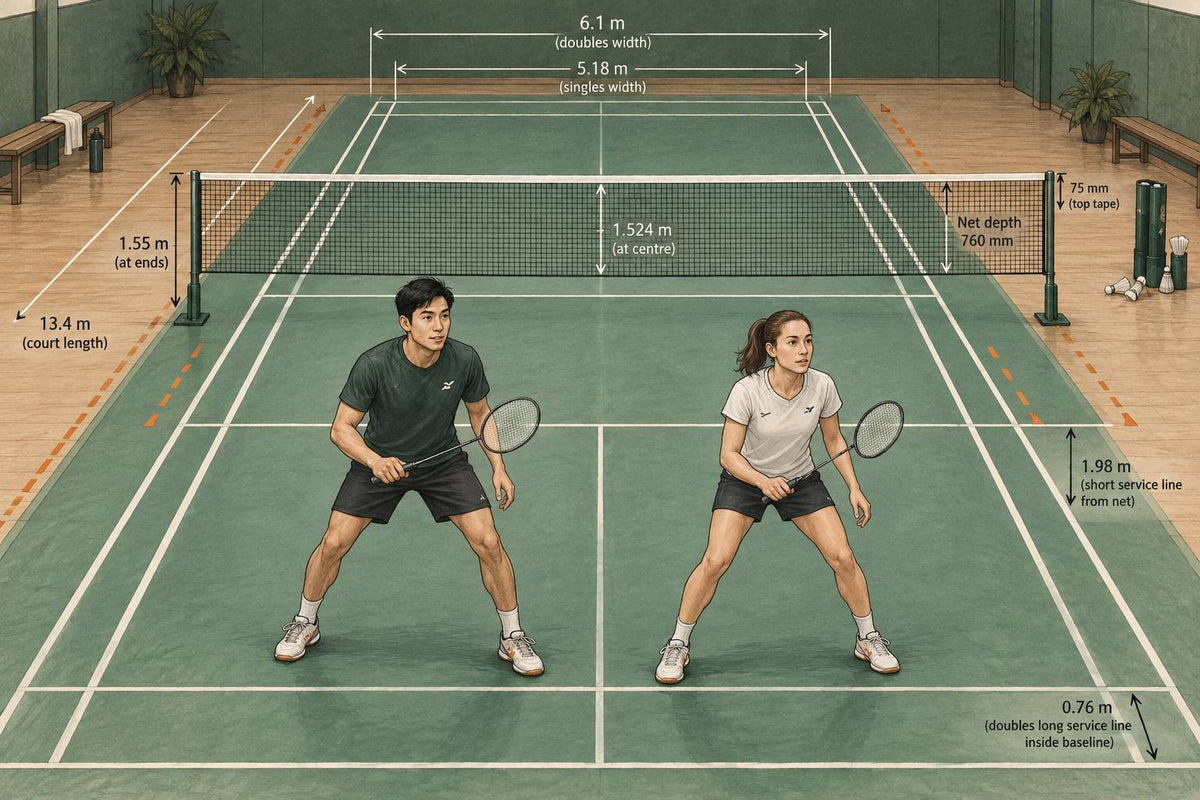
Last updated: July 2026 · Written by the team at Badminton House
Quick Answer: Best Doubles Racket Specs
For most Canadian club and league players, the best badminton racket for doubles is a 4U racket with head-light or even balance and medium flex.
Default
Best choice: 4U (80-84 g), even balance or slightly head-light, medium flex, and moderate string tension (20-26 lbs) for quick drives, defence, and rotation.
Front
Choose a fast badminton racket for doubles: 4U-5U, head-light, and responsive enough for interceptions, pushes, and net kills.
Rear
Choose 3U or 4U with even to slightly head-heavy balance if your job is clears, steep drops, and repeated smashes.
Defence
Choose 4U or 5U, head-light, and medium flex if you win points by lifting, blocking, counter-driving, and staying alive.
Doubles badminton is faster, tighter, and more reactive than singles. You defend smashes at the body, trade flat drives through the mid-court, change grip under pressure, and rotate from front to rear court in a few steps. That is why the best doubles badminton racket is rarely the heaviest smash racket on the wall.
Use these profiles as comparison starting points for club and league doubles. Players rotate through different positions, so test each setup on attack, defence and recovery; the budget bands are illustrative, not current price quotes.
Ready to narrow your shortlist? Browse our badminton racket collection and use the specs below before choosing. Free shipping is available in Canada on orders $200+.
In This Guide
Why Are Doubles Rackets Different?
In singles, you often have more time to load a full swing. In doubles, you spend more rallies with the racket up, the shuttle below eye level, and your partner only a step away. The racket has to recover quickly after every block, drive, lift, push, and half-smash.
A doubles racket should help you do three things well: prepare early, change direction quickly, and stay accurate under pressure. Extra power helps only if the racket is still fast enough for the next shot.
The best doubles racket is the one that gets back to ready position before your opponent hits again.
| Doubles Need | Racket Spec That Helps | Why It Matters |
|---|---|---|
| Fast defence | 4U or 5U, head-light to even balance | Helps you block body smashes, counter-drive, and recover after late contact. |
| Flat drives | Stable frame, medium to stiff shaft | Keeps the shuttle low and controlled during fast mid-court exchanges. |
| Front-court pressure | Head-light handling, smaller grip build-up | Makes grip changes, interceptions, and net kills easier. |
| Rear-court attack | 3U or 4U, even to slightly head-heavy balance | Adds mass and swing weight for clears, drops, and repeated smashes. |
If you want the broader spec foundation first, read our badminton racket choosing guide.
Best Specs by Doubles Role
Your role matters more than the label on the racket. A badminton racket for front court play should feel quick in the fingers. A rear-court doubles racket can carry a little more weight if you still defend comfortably. If you rotate constantly, choose the middle lane.

| Doubles Role | Best Spec Profile | Look For | Avoid |
|---|---|---|---|
| Front court | 4U-5U, head-light, medium to stiff | Fast handling, quick grip changes, clean net interceptions, compact swing speed. | Very head-heavy frames that feel late on net kills and body defence. |
| Rear court | 3U-4U, even to slightly head-heavy, medium-stiff | Enough swing weight for clears and smashes without slowing your recovery. | Extra-stiff rackets if you cannot generate fast, clean contact repeatedly. |
| Rotating all-rounder | 4U, even balance, medium flex | A neutral doubles badminton racket for mixed duties in club nights and league play. | Extreme power or extreme speed builds before you know your preference. |
| Defensive player | 4U-5U, head-light, medium flex | Comfort, quick recovery, easy lifts, and confidence under pressure. | Heavy rackets that make the third and fourth defensive shots late. |
General racket families can also give useful clues. Speed-focused lines are usually better for defence and front court. Control or all-round lines are safer if you rotate. Power-focused lines can work from the rear court if you can still defend quickly. For a deeper comparison, see our Astrox, Arcsaber, and Nanoflare comparison.
Get Gear Checklist and Restock Alerts
Free shipping on $200+ · Canadian badminton specialty shop
Is 3U or 4U Better for Doubles?
U categories are useful weight shorthand, but check the manufacturer’s exact specification. A manageable 4U model is one starting point for doubles; compare it with alternatives on repeated drives, defence and recovery rather than deciding from mass alone.
A useful test: after a hard smash or late block, can you recover to ready position before the next shuttle arrives? If not, the racket may be too heavy or too head-heavy for your doubles pace.
| Weight | Best For | Trade-Off |
|---|---|---|
| 3U | Rear-court attackers, stronger players, or players coming from singles. | More solid power, but slower reactions and more fatigue in fast defence. |
| 4U | Most doubles players, mixed doubles, league nights, and rotating partnerships. | Best balance of speed and power, but not as heavy through the shuttle as 3U. |
| 5U | Front-court players, defensive players, juniors, and comfort-first players. | Excellent speed, but less natural punch from the rear court. |
Need a full explanation of the U system? Read our 3U, 4U, and 5U badminton racket weight guide.
Balance, Flex, and String Tension for Doubles

Weight is only the first filter. Balance decides how fast the racket feels in your hand. Flex decides how forgiving the shaft feels. String tension decides how crisp or comfortable the contact feels.
Balance
Head-light rackets are easiest for front court, defence, and drive exchanges. Even-balance rackets are the safest all-round choice. Slightly head-heavy rackets can help rear-court attack, but they should not make your defence late.
Flex
Medium flex works for many doubles players because it gives useful help on lifts and clears without feeling too soft during drives. Stiffer shafts suit faster swings and cleaner contact. Flexible shafts suit comfort-first players, developing players, and anyone who wants easier depth.
String Tension
Treat 20–26 lb as an example equipment range, not a target for every club player. Choose within the exact frame’s guidance and compare response with the string and contact quality in mind.
Frame safety first. Always stay within your racket manufacturer's recommended stringing range, especially on lighter 5U frames.
| Spec | Doubles Default | Adjust If... |
|---|---|---|
| Balance | Even or slightly head-light | Go head-light for defence and front court; go slightly head-heavy for rear-court attack. |
| Flex | Medium | Go stiffer for crisp drives; go more flexible for comfort and easier depth. |
| Tension | Moderate, based on level and frame limit | Go lower for comfort; go higher only when your timing is clean. |
How Much Should You Spend on a Doubles Racket in Canada?
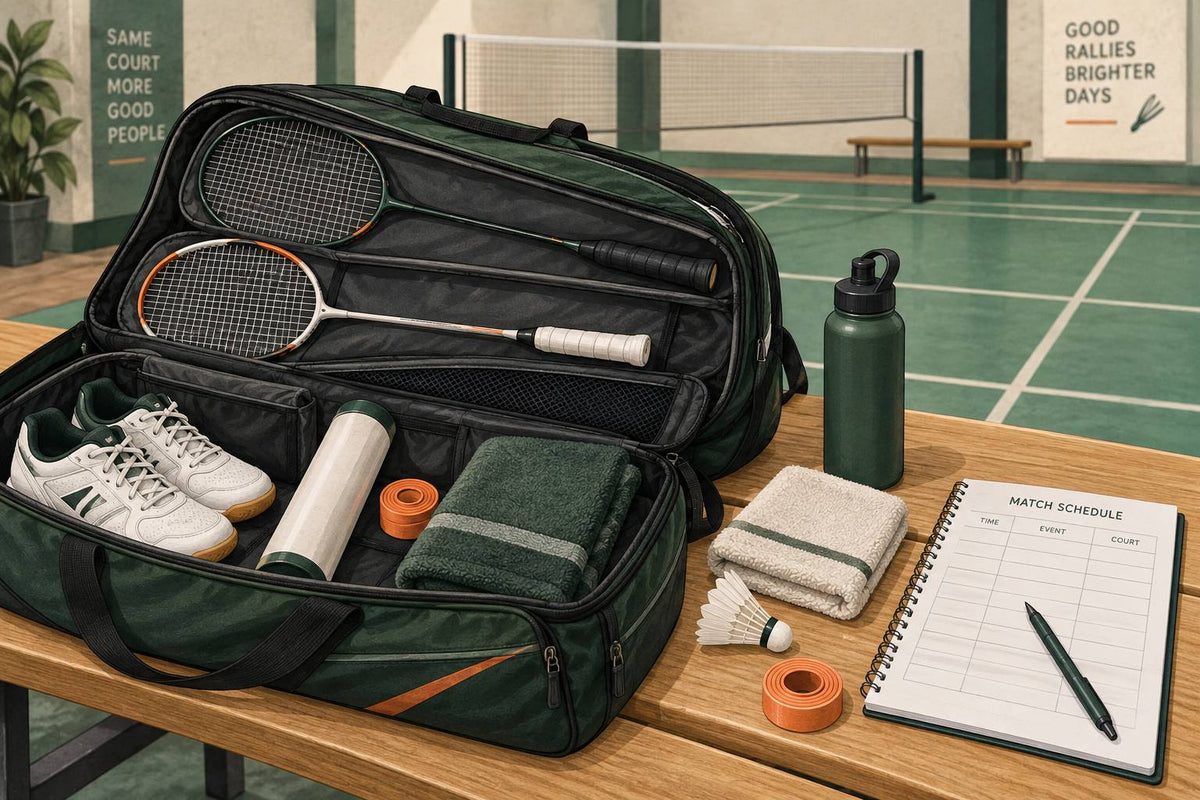
Do not buy by price alone. A practical doubles setup includes the racket, stringing, grip, shuttlecocks, and proper indoor court shoes. If your total order is near $200 CAD, free Canadian shipping on $200+ can also change the better-value choice.
| Budget Range | Best Use | Buying Advice |
|---|---|---|
| Under $100 CAD | Casual doubles, school play, or spare racket | Prioritize genuine construction, comfortable weight, and durability over premium materials. |
| $100-$200 CAD | Most weekly club and league doubles players | Look for 4U, even or head-light balance, and specs that match your role. |
| $200+ CAD | Specific performance preferences | Worth it when you know whether speed, control, or rear-court power is your priority. |
For many Canadian players, the smartest upgrade is not always the most expensive racket. If you play fast doubles twice a week, a well-matched mid-range racket plus fresh strings and a good grip may help more than a demanding pro-level frame.
Common Doubles Racket Mistakes
Mistake 1: Buying a singles smash racket for doubles
A heavy, head-heavy racket can feel great on one full smash and still cost you the next three shots. Doubles punishes late preparation more than it rewards occasional extra power.
Mistake 2: Choosing extra stiff too early
Extra-stiff shafts reward fast, clean swings. If your contact is rushed in defence, medium flex is often more practical for league doubles.
Mistake 3: Ignoring grip size and overgrip build-up
A grip that becomes too thick can slow finger control. Doubles players often benefit from a grip setup that stays secure without blocking quick forehand-backhand changes.
Mistake 4: Copying a partner's racket without copying their role
Your partner's rear-court power racket may not be your best front-court option. Match the racket to the tasks you perform across changing positions, not just to the player you admire.
Mistake 5: Forgetting counterfeit risk
If a premium racket deal looks unrealistic, be careful. Genuine products, warranty support, and local Canadian advice are part of the value. Our racket guide can help you spot whether the specs even make sense for your game.
Simple Buying Flow

If you are stuck between two rackets, start with the decision that affects doubles most: speed. A racket that is slightly less powerful but much faster is usually easier to live with in club doubles.
Choose in This Order
- Identify your main tasks: front court, rear court, rotating all-rounder, or defence-first.
- Choose weight: 4U for most players, 3U for stronger rear-court attackers, 5U for maximum speed.
- Choose balance: head-light for speed, even for all-round, slightly head-heavy for attack.
- Choose flex: medium if unsure, stiffer for crisp control, more flexible for comfort.
- Set up strings and grip: stay within the frame limit and keep the grip quick in the fingers.
Still comparing racket families? Pair this guide with our Yonex Astrox, Arcsaber, and Nanoflare comparison, then check the weight details in our 3U vs 4U vs 5U guide.
Doubles Badminton Racket FAQ
What is the best badminton racket for doubles?
For most players, the best badminton racket for doubles is 4U, even or slightly head-light, medium flex, and quick enough for defence. Rear-court attackers may prefer a little more head weight; front-court players usually prefer faster handling.
Is 3U or 4U better for doubles?
4U is better for most doubles players because it balances speed and power. 3U can work for strong rear-court players, but it can feel slow in fast drive exchanges and body defence.
What is a good badminton racket for front court doubles?
A good badminton racket for front court doubles is usually 4U or 5U with head-light balance and a responsive shaft. The goal is quick interceptions, fast grip changes, and easy recovery after net kills.
Should doubles players use head-heavy rackets?
Some rear-court doubles players like slightly head-heavy rackets for attack. Most players should avoid very head-heavy frames unless they can still defend, drive, and recover quickly.
How much should I spend on a doubles racket in Canada?
The $100–$200 CAD band above is an illustrative budget, not a current market promise. Compare the exact quotes and include strings, grips, shuttles and court shoes as needed.
Can one racket work for both singles and doubles?
Yes. A 4U even-balance racket with medium flex is the safest crossover choice. It may not be the most powerful singles racket or the fastest specialist doubles racket, but it works well for players who switch formats.
Need help choosing a doubles racket?
Badminton House is a Canadian badminton specialty shop run by players. We can help you match weight, balance, flex, and strings to your club-night or league doubles game.
Get Gear Checklist and Restock AlertsCheck current shipping and return terms · Canadian badminton specialty shop
Get 10% off your first order
Join the Badminton House list and we’ll email you a 10% welcome code — plus subscriber-only restock alerts, giveaways, and honest gear advice from players.
By subscribing, you agree to receive Badminton House emails and can unsubscribe anytime.

Leave a comment
This site is protected by hCaptcha and the hCaptcha Privacy Policy and Terms of Service apply.