Last updated: June 2026 · Written by the team at Badminton House
Quick Answer: 3U vs 4U Badminton Racket Weight
If you are unsure, choose 4U. It is the safest all-round weight for most Canadian club players because it balances power, defence, and comfort.
4U
Best default: choose 4U for a reliable mix of clears, smashes, drives, defence, and lower arm fatigue.
3U
Choose 3U if you want more mass behind smashes, stable blocks, and full-court singles power.
5U
Choose 5U if you value fast handling, doubles defence, easier swings, or a lighter feel for casual play.
Choosing between a 3U vs 4U badminton racket is one of the most common questions for players buying a new frame. Add 5U into the mix and it can feel like every racket is asking you to choose between power, speed, and control before you have even stepped on court.
This badminton racket weight guide explains what the U ratings mean, how a 3U 4U 5U badminton racket comparison actually feels in play, and how to choose the best racket weight for beginners, doubles players, singles players, and Canadian league or club players who need one racket to handle a lot of different nights.
Ready to compare options? Browse our badminton racket collection and use this guide to filter by weight, balance, and play style.
In This Guide
What Do 3U, 4U, and 5U Mean?
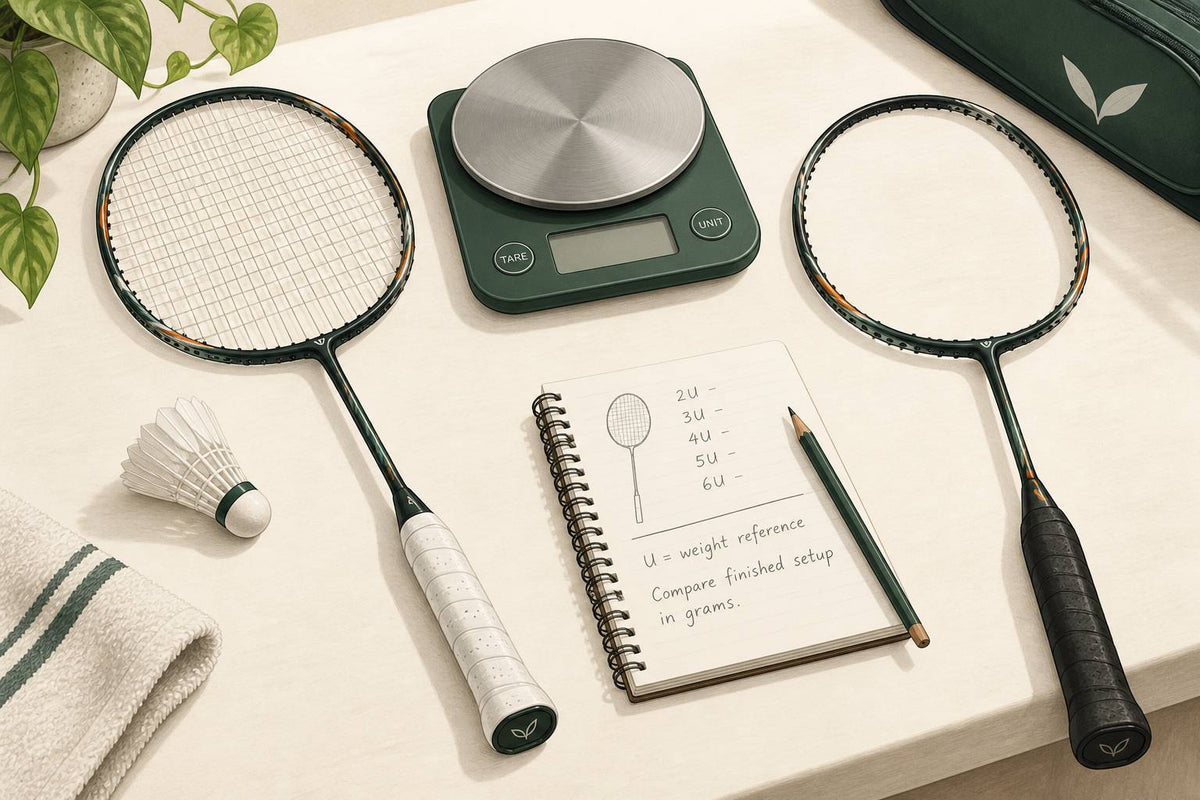
The U rating is a badminton racket weight category. The important rule is simple: a lower U number means a heavier racket. So 3U is heavier than 4U, and 4U is heavier than 5U.
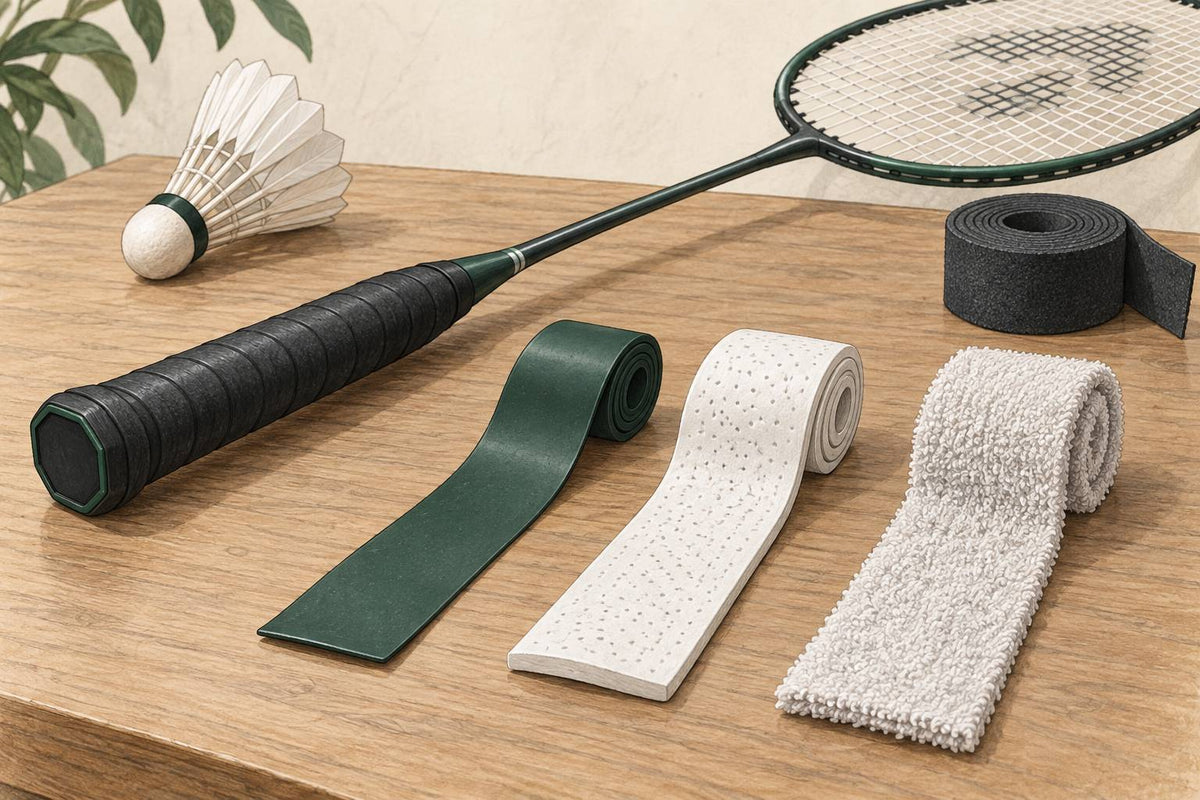
Most brands list the U rating as an unstrung weight range. Strings, grip, overgrip, and even small brand differences can change the final feel in your hand, so treat these numbers as a useful guide rather than a perfect prediction.
| Weight Class | Typical Unstrung Range | Plain-English Feel |
|---|---|---|
| 3U | About 85-89 g | Heavier, more solid, more power potential, slower to recover. |
| 4U | About 80-84 g | All-round, quick enough for defence, strong enough for most club-level power. |
| 5U | About 75-79 g | Very fast, easy to handle, comfortable, but less naturally powerful. |
A 5 g difference does not sound dramatic on paper. On court, it can matter because the racket is moving quickly and your hand has to stop, start, rotate, defend, and recover between shots. That is why two rackets with similar listed weights can feel different during a long doubles game.
3U vs 4U vs 5U Badminton Racket Comparison
Use this table as your first filter. It will not replace actually swinging a racket, but it will help you avoid choosing a weight class that works against your game.
| Spec | 3U | 4U | 5U |
|---|---|---|---|
| Main benefit | Power and stability | Balanced performance | Speed and easy handling |
| Best fit | Strong singles players, power hitters, players who like a solid feel | Most beginners, intermediates, and mixed singles/doubles players | Fast doubles, juniors, casual players, players wanting less fatigue |
| Trade-off | Can feel slower in defence and tiring in long sessions | Not as heavy-hitting as 3U or as quick as 5U | Can feel less stable against hard shots and less powerful from the rear court |
| Doubles defence | Good if your wrist and timing are strong | Very good for most club players | Excellent for fast exchanges and quick recovery |
| Singles clears and smashes | Strongest natural help | Enough for many players with clean timing | Requires more swing speed and technique |
Simple Decision Rule
Choose 4U unless you have a clear reason to move away from it. Go 3U if you consistently want more stability and power. Go 5U if speed, comfort, and defence matter more than rear-court punch.
Best Racket Weight by Skill Level
The best racket weight for beginners is usually 4U, with 5U as a good option for players who want an easier, faster swing. Beginners are still developing timing, grip changes, footwork, and contact consistency, so a heavy racket can turn late preparation into even later contact.
| Player Level | Recommended Weight | Why |
|---|---|---|
| Beginner | 4U for most; 5U for easier handling | Helps with preparation, defence, and confidence while technique develops. |
| Improving club player | 4U as the safest all-round choice | Works well for mixed nights, drills, ladders, and local club play. |
| Advanced power player | 3U or powerful 4U | Can benefit from extra mass if swing speed, timing, and recovery are already strong. |
| Junior or casual player | 5U or easy-swinging 4U | Prioritizes comfort, quick learning, and less arm fatigue. |
If this is your first serious racket, do not treat 3U as the "better" or more advanced choice by default. A racket is better only if it helps you arrive on time, hit cleanly, and recover for the next shot. For more first-racket advice, see our beginner badminton racket guide for Canada.
Get Gear Checklist and Restock Alerts
Free shipping on $200+ · Canadian badminton specialty shop
Weight by Singles and Doubles Play Style
Singles and doubles ask different things from a racket. Singles gives you more court to cover and often rewards deep clears, controlled lifts, and a heavier rear-court attack. Doubles rewards fast drives, blocks, counterattacks, and quick recovery after short swings.
Singles: 3U or 4U
For singles, 3U can make sense if you have the strength and timing to swing it without getting late. The extra mass can feel useful on clears, smashes, and stable defensive blocks. Many singles players still prefer 4U because it keeps them fresher during long rallies and gives enough power when the balance and flex are right.
Doubles: 4U or 5U
For doubles, 4U is the safe default. It is quick enough for most defensive exchanges and still has enough mass for back-court attacks. 5U can be excellent if your game is built around interceptions, drives, net pressure, and fast racket preparation.
Mixed Club Nights: Choose 4U
If you play a bit of everything at Canadian clubs, recreational leagues, school gyms, and community centres, 4U is the practical middle. It handles singles without feeling too light and handles doubles without feeling sluggish.
One-racket setup: choose 4U, even balance or slightly head-heavy, and medium flex if you want one racket for both singles and doubles.
Why Balance and Flex Can Matter More Than Grams
Weight is only one part of the feel. Two 4U rackets can play completely differently if one is head-heavy and stiff while the other is head-light and flexible.
Balance describes where the weight sits. A head-heavy 4U racket can feel more powerful than an even-balance 3U in some swings because more mass is concentrated toward the head. A head-light 4U can feel faster than a 5U that has more weight toward the frame head.
Flex describes how much the shaft bends. Flexible and medium-flex shafts are usually easier for developing players because they help generate length without requiring perfect swing speed. Stiff shafts can feel precise and powerful for strong players, but harsh or underpowered for players who are still building timing.
| If You Want... | Look For... | Avoid... |
|---|---|---|
| Easier power | 4U, medium flex, even or slightly head-heavy balance | Extra-stiff shafts before your timing is consistent |
| Faster defence | 4U or 5U, even or head-light balance | Very head-heavy rackets if you are often late in drives |
| Rear-court punch | 3U or powerful 4U, head-heavy balance, suitable flex | Ultra-light frames if clears already feel short |
| All-round club play | 4U, even balance, medium flex | Extreme specs unless you know exactly why you want them |
After choosing weight, consider string tension too. A forgiving string setup can make a sensible 4U racket feel easier immediately, while overly high tension can make even a beginner-friendly racket feel unforgiving. Read our badminton string tension guide if you are pairing a new racket with fresh strings.
Canadian Buying Notes: Budget, Shipping, and Club Play
For Canadian buyers, the right racket is not only about specs. It is also about final cost in CAD, availability, warranty support, shipping, and whether the racket fits the way you actually play each week.
- Think in total CAD budget: a good first serious racket often sits in the practical mid-range, but leave room for shuttles, overgrips, and restringing.
- Use free shipping thresholds wisely: if your order is close to $200+, adding strings, grips, or shuttles can be more useful than stretching into a racket weight you are unsure about.
- Match local play: Canadian club and league nights often mix doubles, rotation games, and occasional singles, which makes 4U especially practical.
- Consider winter and return convenience: buying from a Canadian badminton shop can simplify delivery, support, and exchanges compared with uncertain overseas listings.
If you are still narrowing the full spec, our how to choose a badminton racket guide covers weight, balance, flex, grip size, and string setup together.
Common Mistakes When Choosing Racket Weight
Mistake 1: Assuming heavier always means better
Heavier rackets can help power, but only if you can swing them on time. If 3U makes you late in defence, your shots may get weaker even though the racket has more mass.
Mistake 2: Buying 5U only because it feels easy in the shop
A 5U racket can feel wonderful in the hand, but rear-court clears and smash stability still matter. If you play singles or often hit from the back, make sure the balance and flex give enough help.
Mistake 3: Ignoring balance point
A head-heavy 4U can feel slower than expected. A head-light 3U can feel quicker than expected. Read the full spec, not just the U rating.
Mistake 4: Choosing advanced specs too early
Newer players often gain more from easy timing, moderate string tension, and comfortable handling than from pro-style stiffness or extreme head-heavy setups.
Mistake 5: Forgetting the full setup
Your racket, strings, grip, shoes, and shuttles all affect how the game feels. A sensible 4U racket with the right strings and grip often beats a premium racket with the wrong setup.
FAQ: 3U, 4U, and 5U Badminton Rackets
Is 3U or 4U better for badminton?
Neither is automatically better. 3U is better if you want more power and stability and can swing it comfortably. 4U is better for most players because it gives a more balanced mix of power, speed, and defence.
What is the best racket weight for beginners?
The best racket weight for beginners is usually 4U. It is light enough for learning defence and fast preparation, but not so light that clears and smashes feel underpowered. Some beginners may prefer 5U if comfort and easy handling are the top priorities.
Is 5U too light for adults?
No. 5U is not too light for adults if it matches your game. It can work well for doubles, fast defence, casual play, and players who want less arm fatigue. It may feel less stable or less powerful for singles players who rely on heavy rear-court shots.
Do professionals use 3U or 4U rackets?
Professional choices vary by player, event, brand, and racket model. For most recreational and club players, copying a professional spec is less useful than choosing a weight you can swing on time for two full games.
Should doubles players use 4U or 5U?
Most doubles players should start with 4U. Choose 5U if your priority is fast drives, quick defence, net interceptions, or easier handling during long sessions.
Should singles players use 3U or 4U?
Singles players who want maximum stability and power may prefer 3U. Many singles players are still better with 4U because it helps recovery, late defensive shots, and long-rally comfort.
How much does stringing change racket weight?
Strings and grip add weight and can change the balance feel. That is why a racket's listed unstrung U rating should be treated as the starting point, not the exact final playing weight.
Find the right racket weight for your game
Start with 4U if you are unsure, then tune balance, flex, strings, and grip around how you actually play.
Get Gear Checklist and Restock AlertsFree shipping on $200+ · Canadian badminton specialty shop
Get the 2026 Canadian badminton gear checklist + restock alerts
Join the Badminton House list for buying checklists, restock alerts, and practical gear advice for Canadian players.
By subscribing, you agree to receive Badminton House emails and can unsubscribe anytime.


Leave a comment
This site is protected by hCaptcha and the hCaptcha Privacy Policy and Terms of Service apply.