
Last updated: July 2026 · Written by the team at Badminton House
Quick Answer: Badminton Shoes for Flat Feet
Choose a badminton-specific indoor court shoe with a stable heel, secure midfoot, removable insole, and non-marking grip.
Default
Best first filter: stable heel counter, planted base, and secure lacing before you compare brand or colour.
Midfoot
Look for firm lockdown around the arch area without crushing the top of your foot.
Insole
Choose removable insoles if you use an orthotic or sport insole recommended by a professional.
Sole
Use a badminton or indoor court outsole for Canadian gym floors, not outdoor runners.
The best badminton shoes for flat feet are supportive badminton shoes that keep your heel steady, hold your midfoot securely, and still let you move laterally on indoor courts. Flat feet, heel discomfort, and plantar fasciitis concerns can make shoe fit feel more complicated, but the buying logic is simple: prioritize stability first, then cushioning, then fit with your preferred insole setup.
This guide is not medical advice. Badminton shoes cannot diagnose, treat, or promise pain relief for heel pain or plantar fasciitis. If you have sharp pain, pain that keeps returning, swelling, numbness, or symptoms that persist, consult a qualified health professional before relying on footwear changes.
Need court shoes for hard gym floors? Browse our badminton footwear collection and use the size guide before ordering. Canadian orders ship free on $200+.
In This Guide
How Do Flat Feet and Heel Pain Change Badminton Shoe Fit?
Badminton footwork is not gentle on shoes. You split-step, push sideways, lunge forward, stop hard, recover backward, and repeat on a firm indoor surface. If your arch sits low or your heel is sensitive, a shoe that feels fine while standing in a store can feel unstable or harsh once you start cutting on court.
Flat feet (pes planus) means the arch of the foot sits low or flattens toward the floor when it bears weight, which makes players more sensitive to midfoot shape and platform stability. Heel pain and plantar fasciitis concerns make players more sensitive to heel cushioning, heel lockdown, and whether the insole supports the foot comfortably. The shoe still has to be badminton-specific because lateral movement matters as much as underfoot comfort.
| Concern | What It Can Change | Shoe Fit Priority |
|---|---|---|
| Flat feet | Foot may spread more through the arch and forefoot during movement. | Stable base, secure midfoot, and enough volume for your foot shape. |
| Heel pain | Hard landings and heel slip may feel more noticeable on gym floors. | Firm heel counter, comfortable heel cushioning, and no rubbing. |
| Plantar fasciitis concerns | Arch and heel comfort may depend on the insole and overall platform. | Removable insole, stable arch area, and professional guidance if symptoms persist. |
| Hard indoor courts | Repeated stops and landings can make soft or unstable shoes feel worse. | Badminton-specific non-marking grip with lateral support. |
The main mistake is shopping only for softness. A very soft shoe might feel comfortable for a few steps, but badminton players also need side support. If the midsole collapses or the heel moves around, the shoe may feel less controlled during rallies.
What Features Should You Prioritize in a Supportive Badminton Shoe?

When comparing badminton shoes for heel pain, flat feet, or plantar fasciitis concerns, think in zones. You want the heel to stay seated, the midfoot to feel held, the forefoot to flex naturally, and the outsole to grip clean indoor courts.
Stable heel counter
The heel counter is the stiff cup built into the back of the shoe that keeps your heel from sliding or lifting. It should hold your heel without pinching; heel movement during lunges creates rubbing and reduces confidence.
Secure midfoot lockdown
The shoe should wrap the middle of your foot so you do not slide over the side during defensive pushes and changes of direction.
Removable insole
A removable footbed makes it easier to use your preferred sport insole or prescribed orthotic without stacking layers.
Court-specific outsole
A clean non-marking badminton sole gives grip on indoor gym floors while supporting lateral movement.
"For flat feet, the question is not only whether the shoe has arch support. It is whether the whole platform stays stable when you move."
For many players, the safest starting point is a balanced all-court badminton shoe rather than the lightest speed shoe. Lightweight models can be excellent, but they are not always the first pick if you want extra heel structure, sidewall support, or room for an insole.
Free shipping on $200+ · Canadian badminton specialty shop · Check sizing before court play
Badminton Shoe Support Zones to Check
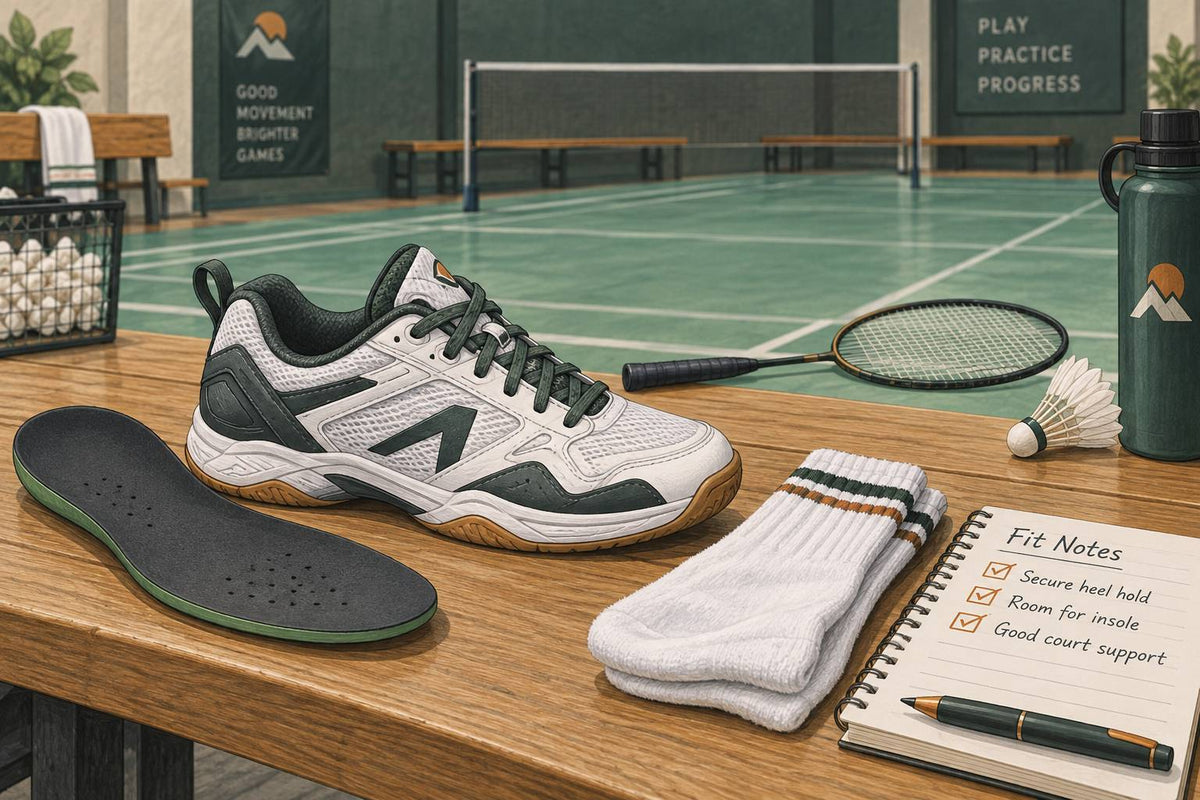
The image below shows the main support zones to compare when plantar fasciitis concerns, flat feet, or heel sensitivity make fit more important.

| Support Zone | What to Check | Badminton Fit Test |
|---|---|---|
| Heel | Cushioning feels comfortable but the heel cup still feels structured. | Do gentle lunges indoors and check that your heel does not lift or rub. |
| Arch and midfoot | Laces hold the midfoot without painful pressure across the top. | Move side to side and feel whether the foot slides over the platform. |
| Lateral sidewall | The shoe resists rolling when you plant hard. | Try controlled shuffle steps on a clean floor before using the shoe on court. |
| Forefoot | Toes have room and the outsole grips without feeling bulky. | Check that toes do not jam forward during split-step and lunge motions. |
If you are deciding between shoe lines, our Yonex vs Victor badminton shoes guide explains the difference between a quicker feel and a more planted feel.
What Features Should You Avoid?

Some shoe traits are risky for badminton even if they sound comfortable. Players looking for badminton shoes for flat feet or heel pain should be especially careful with shoes that feel soft but unstable.
Avoid running shoes for badminton
Running shoes are built mainly for forward motion. Badminton needs lateral grip, edge stability, and a lower, court-ready platform. On indoor courts, running shoes can feel tall, soft, or slippery during sideways stops.
Avoid overly soft midsoles
Soft cushioning can feel good at first, but if the shoe compresses too much side-to-side, it may feel less stable during lunges and defensive recoveries. Look for cushioning paired with structure.
Avoid sizing up only to fit an insole
If adding an insole makes the shoe too tight, a larger size may fix volume but create heel slip. Look for a shoe with a removable insole, enough depth, and a heel that still locks down.
Avoid assuming break-in will solve pressure
A little upper softening is normal. Sharp arch pressure, heel rubbing, or toe crowding should not be ignored. Test shoes indoors while they are clean and reassess if the fit feels wrong.
Plain fit rule
A supportive badminton shoe should feel controlled, not restrictive. You want the shoe to guide your foot, not fight it.
Wide Feet vs Flat Feet: Do You Need a Wide Shoe?

Wide feet and flat feet overlap, but they are not the same thing. A player can have flat feet and a standard-width forefoot. Another player can have high arches and still need a wide toe box. That is why the best fit test separates width, volume, and support.
| Fit Question | More Likely Width Issue | More Likely Support Issue |
|---|---|---|
| Where do you feel pressure? | Pinky toe, ball of foot, or sides of the forefoot. | Arch area, heel, or unstable feeling under the midfoot. |
| Does sizing up help? | It may reduce side squeeze but often creates heel slip. | It usually does not fix instability or poor insole support. |
| What should you try first? | Wide or rounder toe-box badminton shoe. | Stable badminton shoe with removable insole and secure heel. |
| Best related guide | Badminton shoes for wide feet. | This guide, plus a professional recommendation if pain persists. |
If your forefoot feels squeezed, read our wide feet badminton shoe guide. If the forefoot is comfortable but the shoe feels unstable or uncomfortable under the arch and heel, focus on supportive badminton shoes with better lockdown and insole compatibility.
Sizing and Insole Checklist
Use this checklist before buying badminton shoes online in Canada, especially if you plan to use an orthotic or aftermarket insole.
- Measure both feet in centimetres. Use the larger foot and compare it with the brand size chart, not only your casual shoe size.
- Wear your badminton socks. Sock thickness changes heel hold, toe room, and insole fit.
- Remove the stock insole first. If you use an orthotic, replace the stock insole rather than stacking both unless a professional told you to.
- Check shoe depth. The shoe should still close comfortably over your foot with your chosen insole in place.
- Test heel lockdown. Lace normally and do gentle lunges indoors. Your heel should not lift or rub.
- Test side stability. Do slow side shuffles on a clean floor. Your foot should not spill over the edge.
- Keep the outsole clean during testing. Confirm fit before court use so the shoes stay return-friendly.
Before checkout: compare your measurement with the Badminton House size guide. If you are between sizes, prioritize heel hold and midfoot control instead of choosing the longest option automatically.
"A removable insole is not a medical feature by itself, but it gives you more room to make the shoe work with the support setup you already trust."
Canadian Indoor Court Context
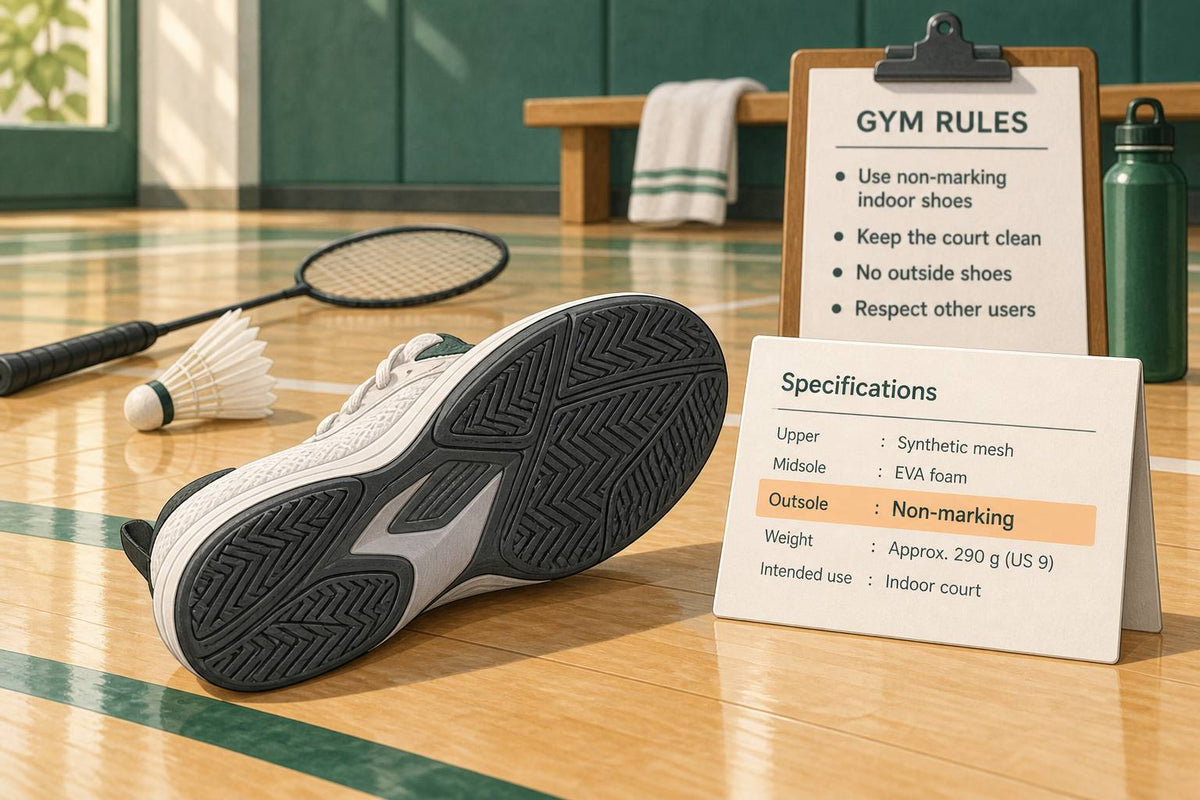
Most Canadian players are choosing shoes for school gyms, recreation centres, private clubs, and indoor badminton facilities. These courts are usually firm, and winter weather makes clean indoor-only footwear even more important. Do not wear outdoor shoes onto the court; grit and salt can reduce grip and damage floors.
For flat feet and heel sensitivity, the hard-floor context matters. You want enough cushioning for repeated landings, but you still need court feel and lateral stability. A shoe that is too tall or squishy can feel less predictable during quick stops.
Indoor-only grip
Use clean non-marking soles for hard gym floors and club courts.
Stable cushioning
Look for impact comfort without losing side-to-side control.
Canadian shipping
Badminton House offers free shipping on $200+ across Canada.
Flat Feet and Heel Pain Badminton Shoe FAQ
Next Step: Choose Support Before Speed
If you are shopping for badminton shoes for flat feet, start with support and fit before chasing the lightest model. A stable heel, secure midfoot, removable insole, and indoor court outsole will matter more than a few grams of weight for most players with heel or arch comfort concerns.
Find supportive badminton shoes for Canadian indoor courts.
Get Shoe Restock AlertsUse the size guide · Free shipping on $200+ · Canadian badminton specialty shop
Still comparing fit types? Read the wide feet badminton shoe guide or compare brand feel in our Yonex vs Victor badminton shoes guide.
Get 10% off your first order
Join the Badminton House list and we’ll email you a 10% welcome code — plus subscriber-only restock alerts, giveaways, and honest gear advice from players.
By subscribing, you agree to receive Badminton House emails and can unsubscribe anytime.

Leave a comment
This site is protected by hCaptcha and the hCaptcha Privacy Policy and Terms of Service apply.